
Devasathan
เทวสถานโบสถ์พราหมณ์ · Thewasathan Bot Phram (RTGS) · Royal Brahmin Office of Thai Royal Court
About
Devasathan (เทวสถานโบสถ์พราหมณ์, 'Abode of the Gods'), also known as the Royal Brahmin Office of the Thai Royal Court, is a Hindu Temple precinct near Wat Suthat in the Phra Nakhon District of Bangkok. It is the official centre of Hinduism in Thailand, founded in 1784 by King Rama I, founder of the ruling Chakri dynasty.
The Temple is the home of the Court Brahmins, a hereditary lineage of priests traditionally traced to Rāmeśvaram in Tamil Nadu, India. The Brahmins of Devasathan officiate at many of the most important state ceremonies of the Thai monarchy each year, from coronations and royal birthdays to seasonal rites of agricultural and cosmic renewal.
Within its white precinct walls stand three large shrines aligned east to west. The southern Phra Isuan Shrine (สถานพระอิศวร) is the centre of Śaiva worship, with a great bronze of Śiva beneath a white canopy, flanked by dancing Śivas and images of Umā and Nandi. The central Phra Phikkhanesuan Shrine (สถานพระพิฆเนศวร) holds five seated Gaṇeśas in granite, sandstone, bronze, and green stone. The northern Phra Narai Shrine (สถานพระนารายณ์) is the centre of Vaiṣṇava worship, with a large image of Viṣṇu accompanied by smaller mūrtis of Lakṣmī and Bhū-devī. A small outdoor shrine to Brahma (Phra Phrom) stands nearby.
In front of the precinct rises the Giant Swing (Sao Chingcha), once used for the Triyamphwāy ceremony, a rite drawn from the south Indian Temple tradition that was last performed in 1935.
History
King Rama I raised Devasathan in 1784, the same year he founded Bangkok itself, to give his new capital a home for the Court Brahmins, a priestly lineage descended from the Temple town of Rameswaram in Tamil Nadu. Those Brahmin families have crowned kings and blessed royal births ever since, and to this day lead the Hindu rites of the annual Royal Ploughing Ceremony each May, sowing the first blessed rice seed at Sanam Luang before the King's own palace. For generations a rite called the Triyampavai-Tripavai sent a priest swinging high above Dinso Road on the great wooden Giant Swing that still stands before the Temple gate, until the ceremony was discontinued in 1935.
Significance
Devasathan is the living centre of Hinduism in Thailand, a place where a Tamil priestly lineage has served a Buddhist throne in unbroken devotion for more than two centuries. Its three shrine halls, raised to Lord Shiva, Lord Ganesha, and Lord Vishnu, stand together with a small golden image of Lord Brahma just inside the entrance, making Devasathan one of the rare precincts on earth where all four of these great forms are honoured side by side.
Architecture
Early Rattanakosin period Thai Temple architecture: three white walled shrine halls under multi tiered orange tiled roofs, set on an east to west axis within a single walled precinct
Visiting
Hours
Hours not listed.
Contact
Engage with Devasathan
Through the four pathways
Seva सेवा — Service
Offer your time and skills here. The following opportunities are open at Devasathan:
No Seva offerings listed yet.
Sādhana साधना — Practice
Learn the worship and practice associated with Devasathan:
No Sādhana offerings listed yet.
Sandhāna सन्धान — Wisdom
Unite with the wisdom of this tradition:
No Sandhāna offerings listed yet.
Sādhya साध्य — Giving
Support this sacred place according to your means:
No Sādhya offerings listed yet.
All giving flows directly to Devasathan. Adisthan does not take a commission.
Gallery
Related sacred places
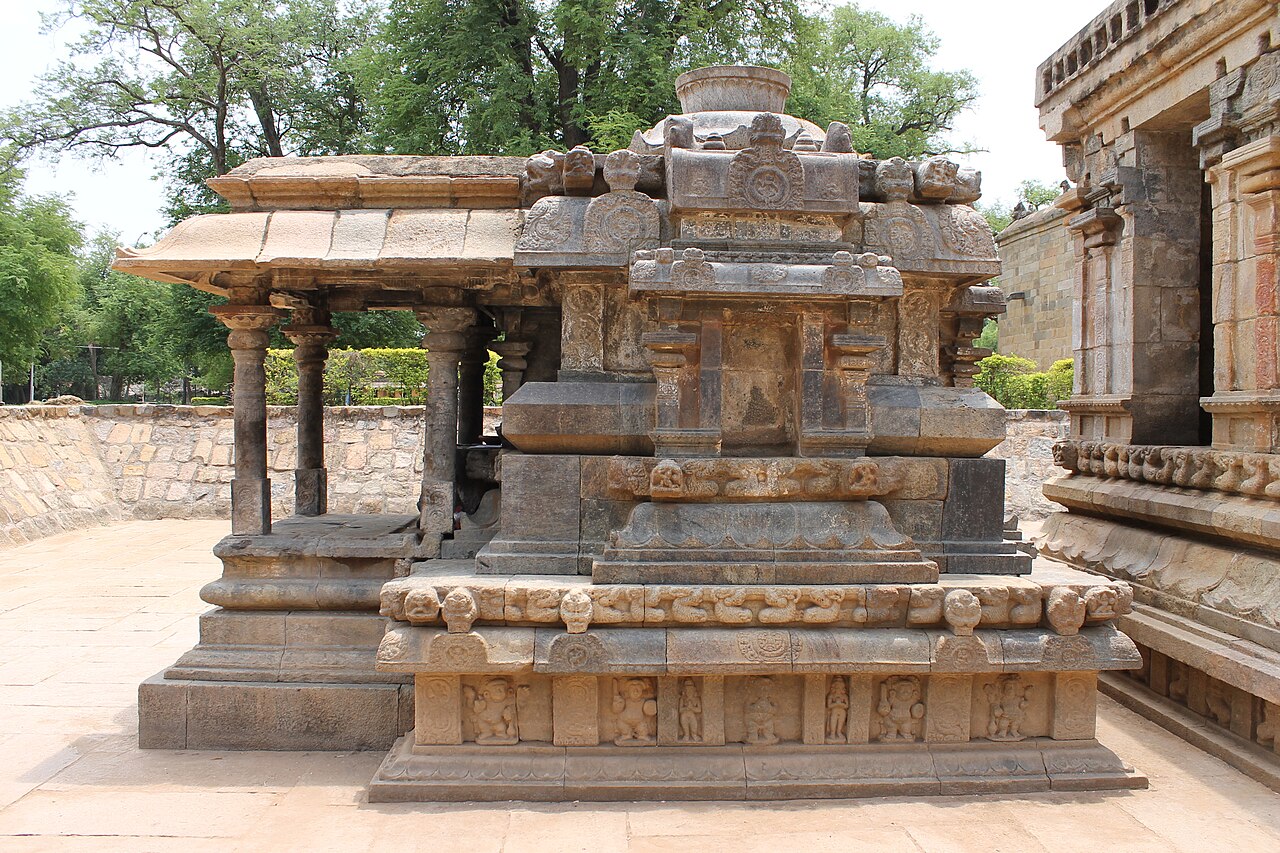 Hinduism
Airavatesvara Temple, Darasuram
Darasuram (Kumbakonam) · India · temple
The third of the Great Living Chola Temples, raised by Rajaraja Chola II around 1166 CE at Darasuram near Kumbakonam: a chariot-form shrine of Lord Shiva as Airavatesvara, famed for its carved stone wheels, its singing steps, and worship that has continued for over eight centuries.
Aisanyesvara Siva Temple
Bhubaneswar · India · temple
A living thirteenth-century Shiva shrine in the Old Town of Bhubaneswar, standing close to the western wall of the great Lingaraj Temple, where a Shivalinga set within a circular yonipitha still receives daily worship in the Kalinga architectural tradition.
 Hinduism
Akhadachandi Temple
Bhubaneswar · India · temple
A tenth-century Kalinga-style shrine on the southwestern bank of Bhubaneswar's sacred Bindusagar tank, Akhadachandi Temple honours Maa Mahishasuramardini, the Goddess in her form as slayer of the buffalo demon, within the dense cluster of ancient shrines that fills the city's Old Town.
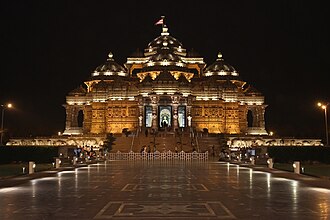 Hinduism
Akshardham
New Delhi · India · temple
A vast contemporary Hindu mandir campus on the Yamuna's west bank in East Delhi, raised without structural steel by 11,000 artisans and volunteers, and recognised by Guinness World Records in 2007 as the world's largest comprehensive Hindu Temple.
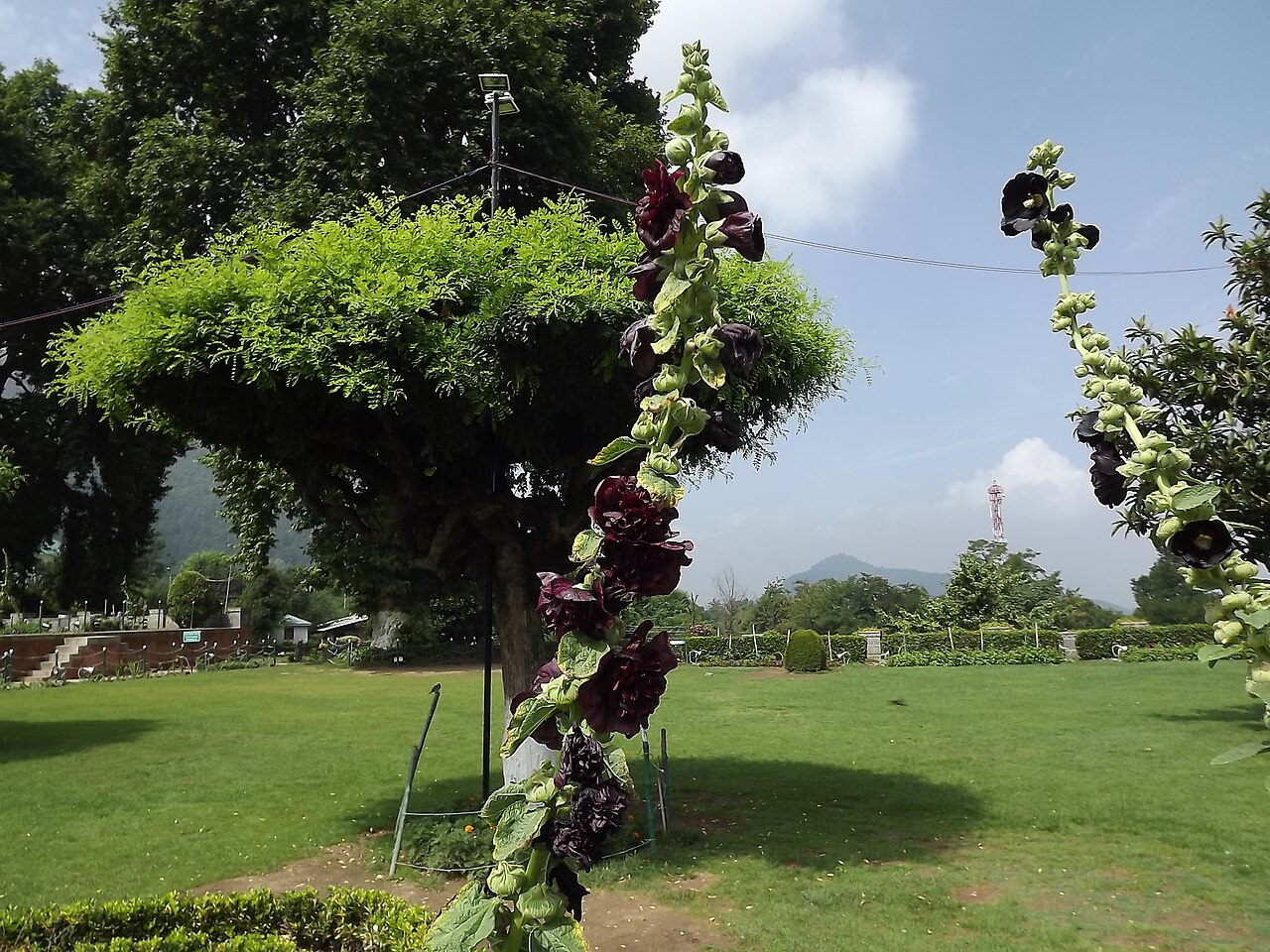 Hinduism
Amarnath Temple
· India · temple
A high Himalayan cave shrine in Jammu and Kashmir where a naturally forming ice lingam is venerated as Lord Śiva, drawing one of India's great seasonal pilgrimages.
 Hinduism
Ambalappuzha Sri Krishna Temple
Ambalappuzha · India · temple
A Vaishnava shrine on the Kerala backwaters consecrated to Sri Krishna in his Parthasarathy form, counted among the seven great Temples of the former kingdom of Travancore and famed across South India for its Ambalapuzha Paal Payasam offering.