
Devi Jagadambi Temple
Devi Jagadambika Temple · Jagadambika Temple · Jagdambi Mandir
About
Situated within the northern cluster of the celebrated Khajuraho complex in Madhya Pradesh, the Devi Jagadambi Temple is widely regarded as among the most ornately adorned sanctuaries in the entire group of roughly twenty-five Temples that define this extraordinary sacred landscape. The presiding presence within the inner sanctum is a grand mūrti of the Goddess, identified with Maa Parvati, embodying Jagadambika, a name meaning "Mother of the Universe," a form of Devī revered across the Hindu tradition.
The exterior walls of the Temple are wrapped in three horizontal registers of stone carvings that encircle the entire structure, creating a dense, continuous visual scripture in relief. These friezes depict celestial beings, divine couples, attendants, and mythological narratives rendered with remarkable sensitivity and skill, exemplifying the mature Chandela style of Nagara architecture at its most expressive. The towering śikhara rises above the garbhagṛha in the characteristic curvilinear silhouette of North Indian Temple design.
Together with the other Khajuraho Temples, this shrine was inscribed on the UNESCO World Heritage List in recognition of its exceptional artistic, architectural, and historical value, a collective acknowledgment of what the Chandela rulers accomplished across two centuries of sacred construction in what is now central India.
History
Inscriptions and the Temple's own carved style place it among the Khajuraho monuments raised between roughly 1000 and 1025 CE, in the great burst of Chandela temple-building that produced most of the surviving shrines by 1030 CE. It stands on the same plinth as the neighbouring Kandariya Mahadeva Temple, on its northern side, and closely echoes the plan of the nearby Chitragupta Temple. Scholars have long noted that the Temple's lower carved bands include depictions of Lord Vishnu and his avataras, leading many to conclude the shrine first honoured Lord Vishnu before its sanctum was rededicated to the Goddess. The Temple survived the same centuries of neglect that overtook the wider Khajuraho complex after the thirteenth century, sheltered by forest until the site was brought back to wider notice in the 1830s.
Significance
The image within the sanctum is venerated as Maa Jagadamba, a name meaning Mother of the Universe, and is worshipped in her form as Maa Parvati. Three unbroken bands of carving wrap the entire building, one of the densest sculptural programs anywhere at Khajuraho, placing this shrine among the most elaborately decorated in the whole World Heritage complex. Devotees still keep Navratri and Durga Puja here, when the Temple's dedication to the Goddess is honoured most fully.
Architecture
Central Indian Nagara Temple architecture, Chandela era, curvilinear sandstone shikhara on the same plinth as the Kandariya Mahadeva Temple
Visiting
Hours
Hours not listed.
Contact
No contact details listed yet.
Engage with Devi Jagadambi Temple
Through the four pathways
Seva सेवा — Service
Offer your time and skills here. The following opportunities are open at Devi Jagadambi Temple:
No Seva offerings listed yet.
Sādhana साधना — Practice
Learn the worship and practice associated with Devi Jagadambi Temple:
No Sādhana offerings listed yet.
Sandhāna सन्धान — Wisdom
Unite with the wisdom of this tradition:
No Sandhāna offerings listed yet.
Sādhya साध्य — Giving
Support this sacred place according to your means:
No Sādhya offerings listed yet.
All giving flows directly to Devi Jagadambi Temple. Adisthan does not take a commission.
Festivals & Events
- Oct
Navratri and Durga Puja
11 October 2026 · annual
The nine nights of the Goddess are kept at the Temple with particular devotion given its dedication to Maa Jagadamba, culminating in Durga Puja and Vijayadashami.
- Mar
Maha Shivaratri
6 March 2027 · annual
The great night of Lord Shiva draws pilgrims across the whole Khajuraho complex, a tradition recorded here since at least the nineteenth century, when the site's British rediscoverers found thousands of Hindus still arriving each year.
Gallery
Related sacred places
 Hinduism
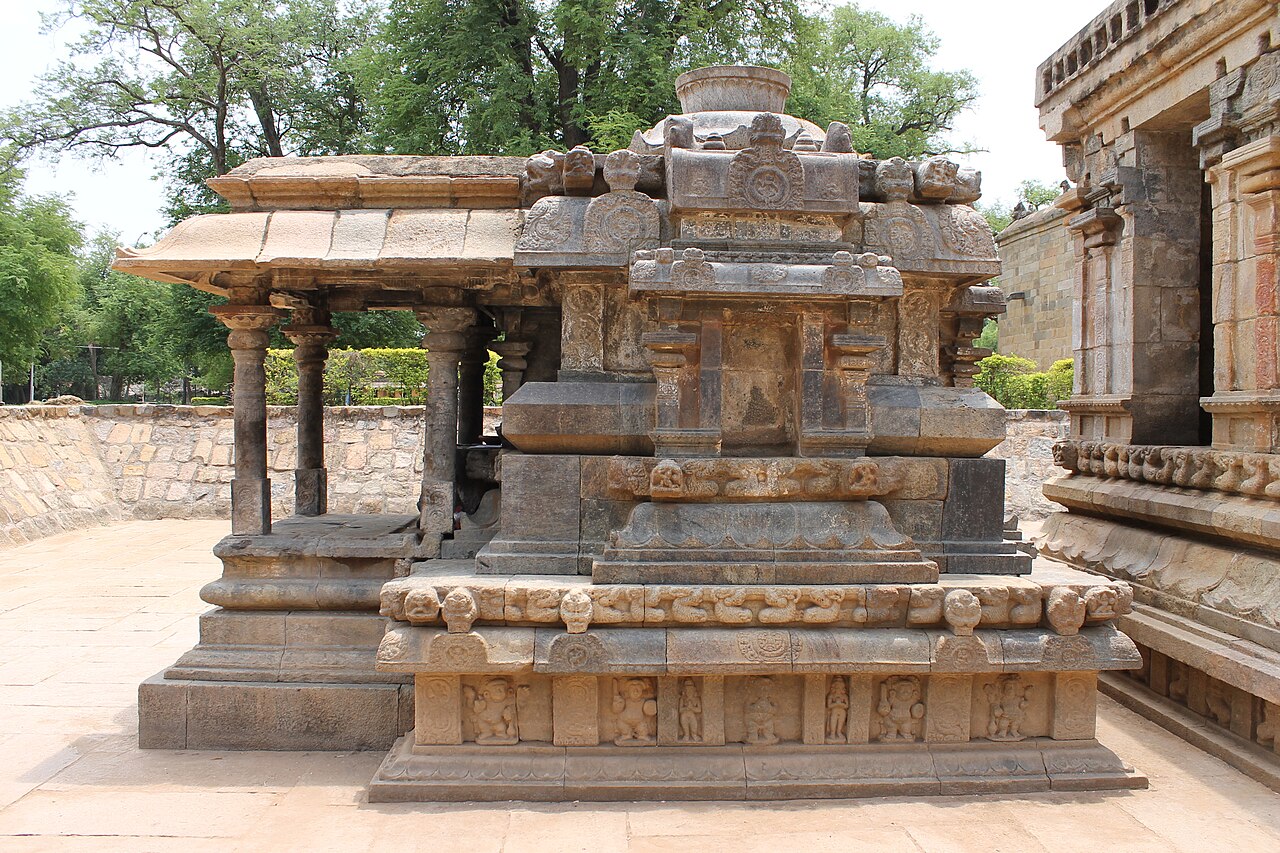
Airavatesvara Temple, Darasuram
Darasuram (Kumbakonam) · India · temple
The third of the Great Living Chola Temples, raised by Rajaraja Chola II around 1166 CE at Darasuram near Kumbakonam: a chariot-form shrine of Lord Shiva as Airavatesvara, famed for its carved stone wheels, its singing steps, and worship that has continued for over eight centuries.
Aisanyesvara Siva Temple
Bhubaneswar · India · temple
A living thirteenth-century Shiva shrine in the Old Town of Bhubaneswar, standing close to the western wall of the great Lingaraj Temple, where a Shivalinga set within a circular yonipitha still receives daily worship in the Kalinga architectural tradition.
 Hinduism
Akhadachandi Temple
Bhubaneswar · India · temple
A tenth-century Kalinga-style shrine on the southwestern bank of Bhubaneswar's sacred Bindusagar tank, Akhadachandi Temple honours Maa Mahishasuramardini, the Goddess in her form as slayer of the buffalo demon, within the dense cluster of ancient shrines that fills the city's Old Town.
 Hinduism
Akshardham
New Delhi · India · temple
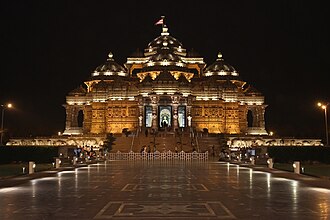
A vast contemporary Hindu mandir campus on the Yamuna's west bank in East Delhi, raised without structural steel by 11,000 artisans and volunteers, and recognised by Guinness World Records in 2007 as the world's largest comprehensive Hindu Temple.
 Hinduism
Amarnath Temple
· India · temple
A high Himalayan cave shrine in Jammu and Kashmir where a naturally forming ice lingam is venerated as Lord Śiva, drawing one of India's great seasonal pilgrimages.
 Hinduism
Ambalappuzha Sri Krishna Temple
Ambalappuzha · India · temple
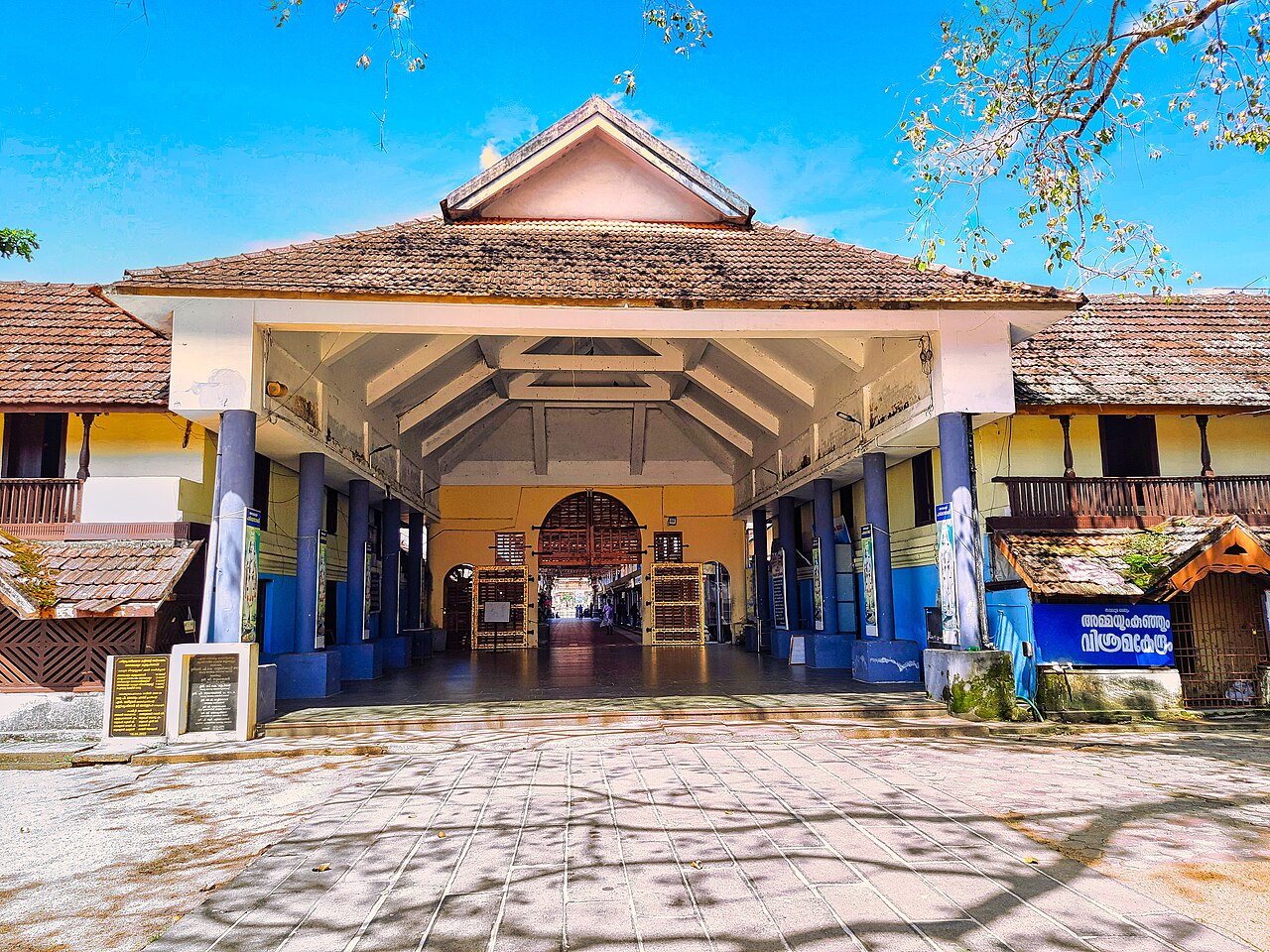
A Vaishnava shrine on the Kerala backwaters consecrated to Sri Krishna in his Parthasarathy form, counted among the seven great Temples of the former kingdom of Travancore and famed across South India for its Ambalapuzha Paal Payasam offering.