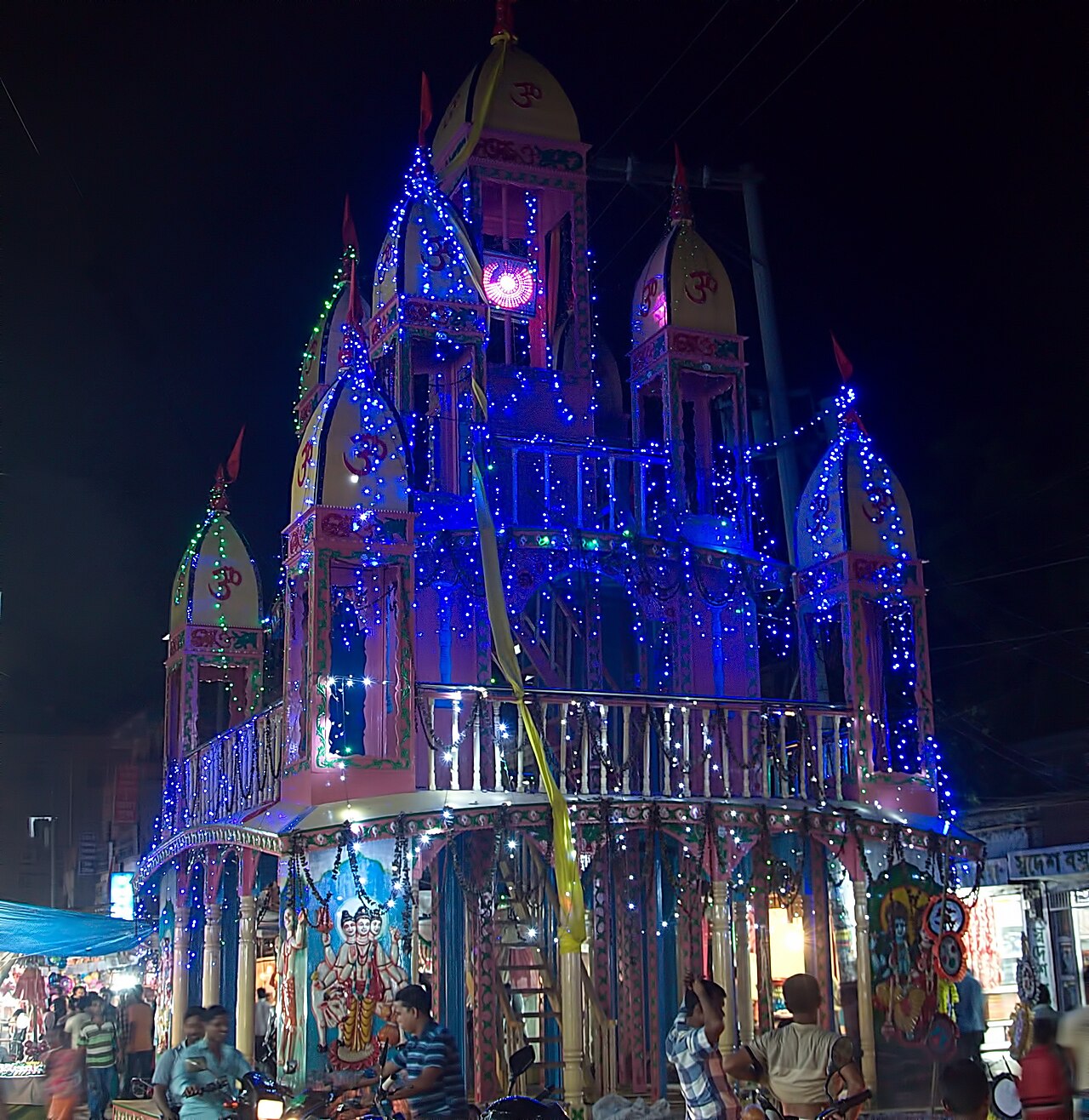
Dhamrai Jagannath Roth
Dhamrai Rathayatra · Dhamrai Jagannath Rath · Sri Madhab Mandir
About
The Dhamrai Jagannātha Rath is a traditional wheeled temple-chariot dedicated to Lord Jagannātha, kept at Dhamrai in the Dhaka district of Bangladesh. It is the focus of the great Rath Yātrā celebrated here each year, one of the most important Hindu festivals in Bangladesh, drawing thousands of devotees who gather to pull the rath through the streets in a procession of song and prayer.
Lord Jagannātha is honoured in the Hindu tradition as a form of Lord Vishnu, and devotees particularly identify him with Krishna; together with Balabhadra and Subhadrā, he presides over the well-known Jagannātha pilgrimage tradition rooted in Puri, Odisha. The Dhamrai festival is part of this larger devotional family, and the Rath Yātrā is the moment in the year when the deity is said to leave the inner sanctum to come among the people in the streets.
For the Hindu community of Bangladesh, the Dhamrai Rath Yātrā has become an important annual gathering and a tangible link to the long Vaiṣṇava tradition of Bengal.
History
Sri Madhab Mandir at Dhamrai was established in 1672, and for its first quarter-century the roth pulled through its streets was woven of bamboo. Feudal landlords of nearby Baliati later commissioned a succession of larger wooden chariots, culminating in a sixty-foot roth on thirty-two wheels that carpenters from Dhamrai, Kaliakoir, Saturia, and Singair jointly completed in 1933. Ray Bahadur Ranada Prosad Shaha sustained the tradition through the Kumudini Welfare Trust until 1970, but during the 1971 Liberation War the Pakistan Army burned the historic roth and killed Shaha himself. A simpler chariot carried the tradition forward until 2010, when a new three-storied roth twenty-seven feet high and set on fifteen wheels was completed with support pledged by Indian High Commissioner Bina Sikri.
Significance
Devotees venerate Lord Jagannath, who travels with Lord Balabhadra and Devi Subhadra from the Madhabbari Temple toward the Gope Nagar Temple, regarded as his in-laws' house, a half-kilometre journey retraced in reverse about a week later as the Ulto Rath. The Dhamrai Rath Yatra is one of the most important gatherings of the year for Bangladesh's Hindu community, drawing thousands who consider even a glimpse of Lord Jagannath on the chariot, or a touch of its ropes, to carry real blessing. It stands as a living link between the Hindu community of Bengal and the wider Vaishnava pilgrimage tradition rooted in Puri, Odisha.
Architecture
Bengali wooden temple-chariot (roth) tradition; the current roth is a three-tiered structure twenty-seven feet high, set on fifteen wheels
Visiting
Hours
Hours not listed.
Contact
No contact details listed yet.
Engage with Dhamrai Jagannath Roth
Through the four pathways
Seva सेवा — Service
Offer your time and skills here. The following opportunities are open at Dhamrai Jagannath Roth:
No Seva offerings listed yet.
Sādhana साधना — Practice
Learn the worship and practice associated with Dhamrai Jagannath Roth:
No Sādhana offerings listed yet.
Sandhāna सन्धान — Wisdom
Unite with the wisdom of this tradition:
No Sandhāna offerings listed yet.
Sādhya साध्य — Giving
Support this sacred place according to your means:
No Sādhya offerings listed yet.
All giving flows directly to Dhamrai Jagannath Roth. Adisthan does not take a commission.
Festivals & Events
- Jul
Dhamrai Jagannath Rath Yatra
5 July 2027 · annual
Devotees pull the roth by rope from the Madhabbari Temple toward the Gope Nagar Temple as Lord Jagannath processes through Dhamrai, with a month of stalls, music and festivity along the route before the Ulto Rath carries him back roughly a week later.
Gallery
Related sacred places
 Hinduism
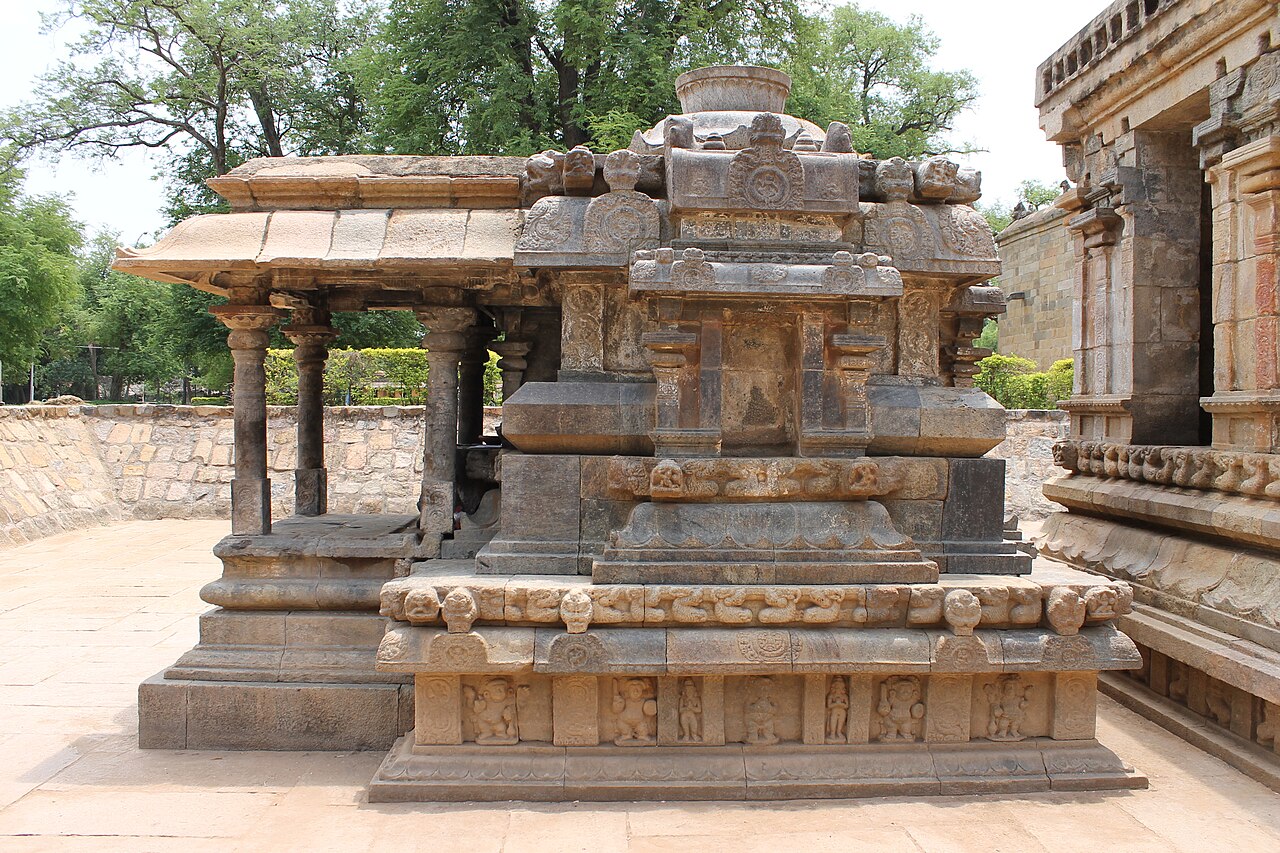
Airavatesvara Temple, Darasuram
Darasuram (Kumbakonam) · India · temple
The third of the Great Living Chola Temples, raised by Rajaraja Chola II around 1166 CE at Darasuram near Kumbakonam: a chariot-form shrine of Lord Shiva as Airavatesvara, famed for its carved stone wheels, its singing steps, and worship that has continued for over eight centuries.
Aisanyesvara Siva Temple
Bhubaneswar · India · temple
A living thirteenth-century Shiva shrine in the Old Town of Bhubaneswar, standing close to the western wall of the great Lingaraj Temple, where a Shivalinga set within a circular yonipitha still receives daily worship in the Kalinga architectural tradition.
 Hinduism
Akhadachandi Temple
Bhubaneswar · India · temple
A tenth-century Kalinga-style shrine on the southwestern bank of Bhubaneswar's sacred Bindusagar tank, Akhadachandi Temple honours Maa Mahishasuramardini, the Goddess in her form as slayer of the buffalo demon, within the dense cluster of ancient shrines that fills the city's Old Town.
 Hinduism
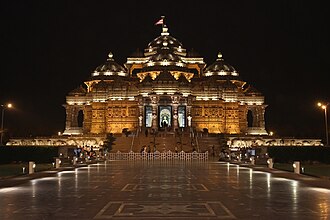
Akshardham
New Delhi · India · temple
A vast contemporary Hindu mandir campus on the Yamuna's west bank in East Delhi, raised without structural steel by 11,000 artisans and volunteers, and recognised by Guinness World Records in 2007 as the world's largest comprehensive Hindu Temple.
 Hinduism
Amarnath Temple
· India · temple
A high Himalayan cave shrine in Jammu and Kashmir where a naturally forming ice lingam is venerated as Lord Śiva, drawing one of India's great seasonal pilgrimages.
 Hinduism
Ambalappuzha Sri Krishna Temple
Ambalappuzha · India · temple
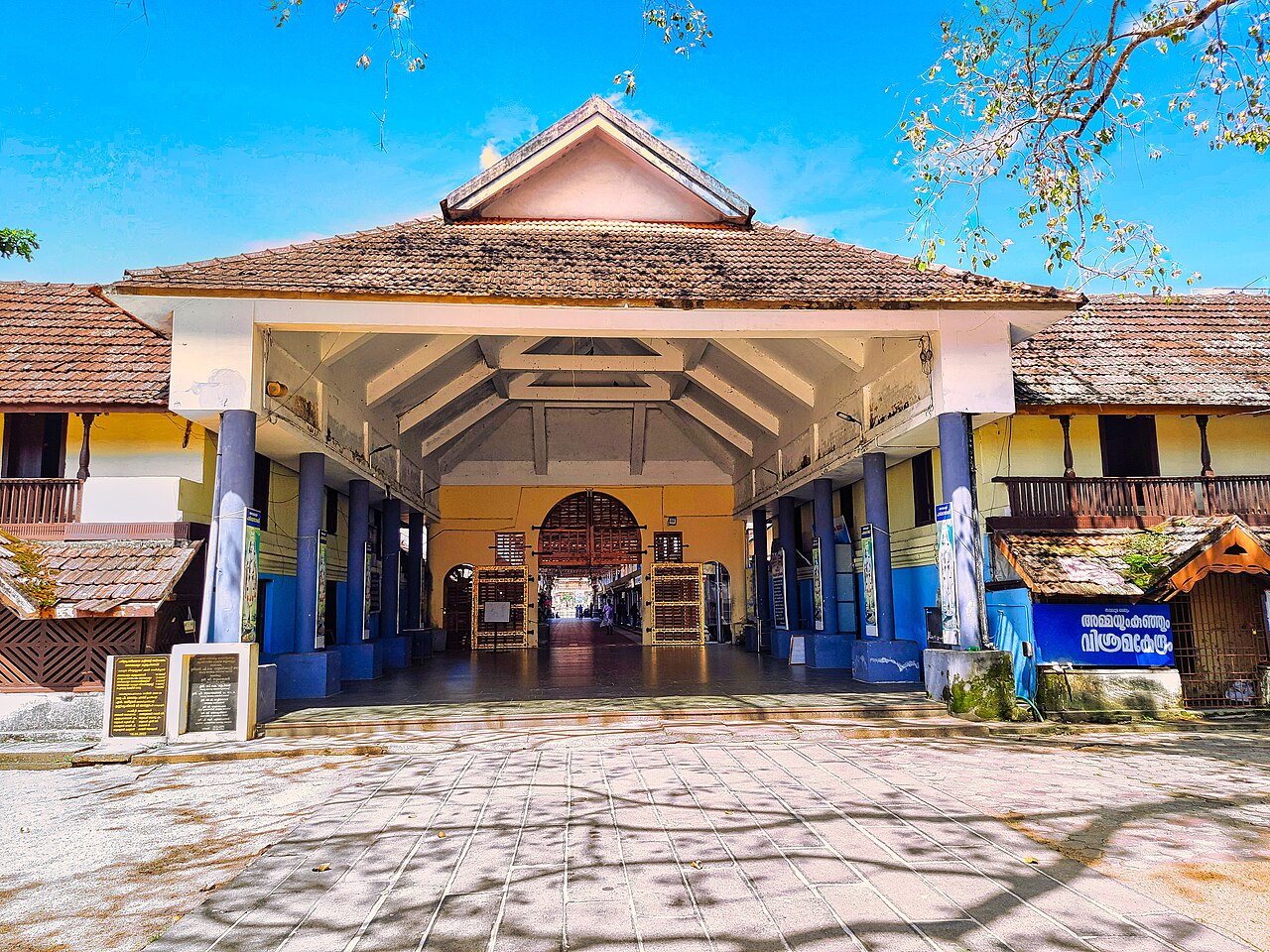
A Vaishnava shrine on the Kerala backwaters consecrated to Sri Krishna in his Parthasarathy form, counted among the seven great Temples of the former kingdom of Travancore and famed across South India for its Ambalapuzha Paal Payasam offering.