Navapashanam murti by Siddha Bhogar Open 5:45 am to 8:00 pm Thai Poosam · 22 Jan 2027 GI-tagged panchamirtham prasadam 693 steps · winch · rope car Free darshan
From the paddy flats of Dindigul district the hill rises alone, a bare shoulder of rock with a Temple balanced on its crown and two winch tracks drawn straight up its face like plumb lines. On the stone steps, pilgrims climb barefoot past turmeric stains and camphor smoke; shaved heads shine with sandal paste; peacock-feather kavadis sway above the crowd murmuring Aro hara. In the small west-facing sanctum at the top waits a Boy with a staff, owning nothing else. And His body is not stone. It is nine poisons, fused by a siddha into medicine.
The third of the Arupadai Veedu, the six abodes of Lord Murugan. Here the Boy who renounced Kailash over the fruit of wisdom was consoled by His parents with two words, Pazham Nee, you are the fruit, and tradition says the hill has carried the name Palani ever since.
The murti is held to be the work of Siddha Bhogar, who fused nine poisonous substances, the navapashanam, into a single amalgam that in right proportion becomes eternal medicine. Bhogar's own shrine stands in the southwestern corridor, said to be linked by tunnel to the cave where he still meditates.
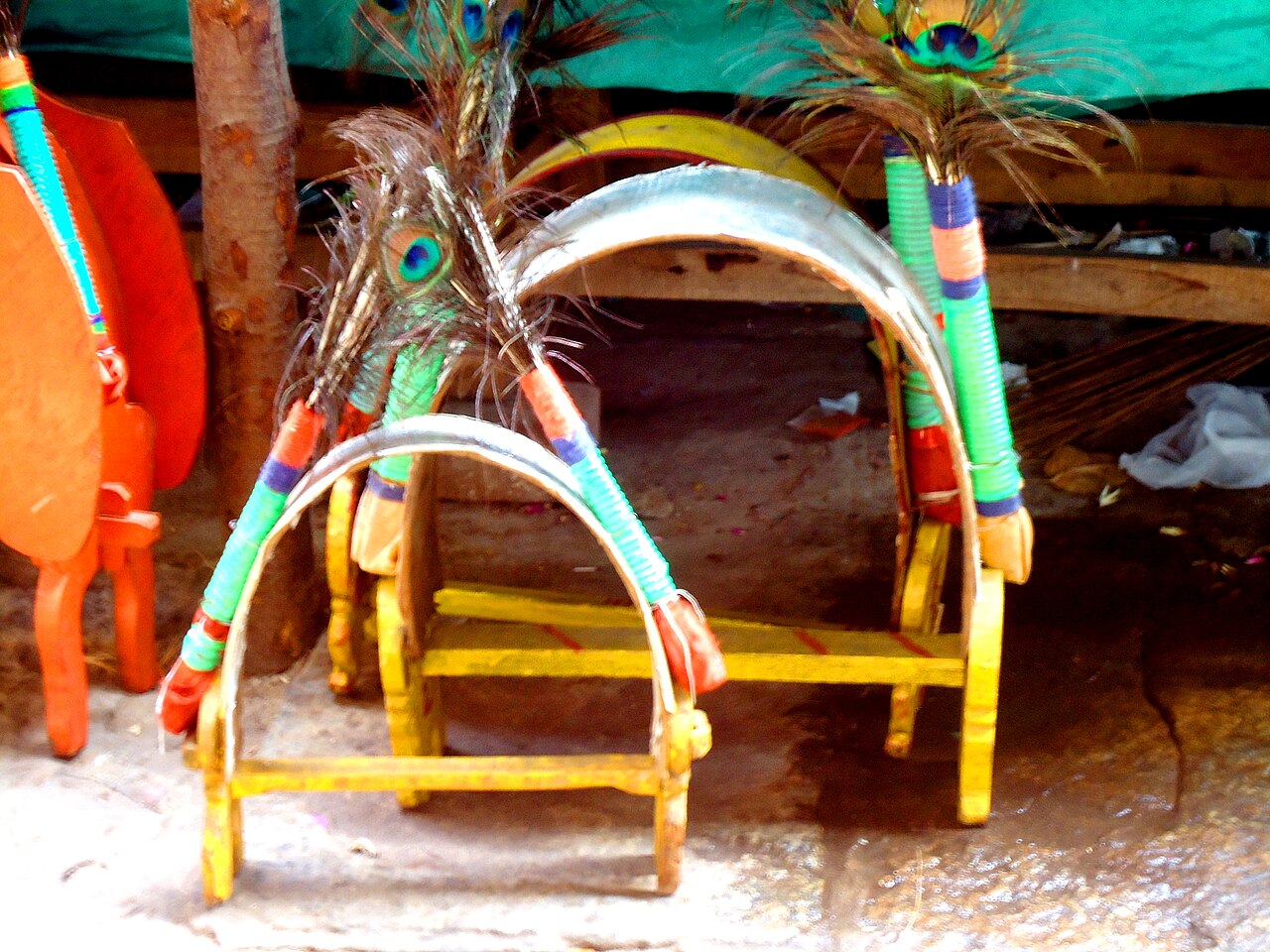
The kavadi itself was born on this hill. Tradition holds that the asura Idumban carried Sivagiri and Sakthigiri slung on a shoulder pole from Kailash, and every kavadi carried anywhere on earth commemorates his burden and his surrender to the Lord.
The fruit, the staff and the nine poisons
The legend says sage Narada brought a single gnana pazham, the fruit of knowledge, to Kailash, and Lord Shiva offered it to whichever of His two sons first circled the world three times. Lord Murugan mounted His peacock and set out around creation. Lord Ganesha simply walked around His parents, saying they were the world, and received the fruit. The young Lord returned to find the contest lost, and in His hurt He renounced everything. He came south and stood on this hill as Andi, a beggar renunciate, head shaven, wearing a loincloth, holding nothing but a staff, the dandam that gives Him the name Dhandayuthapani. Lord Shiva and Maa Parvati followed Him here and consoled Him: Pazham Nee, you are the fruit. Tradition hears in those two words the name of the town, Palani.
A second legend explains the hill itself. Sage Agastya charged the asura Idumban with carrying two hills, Sivagiri and Sakthigiri, to the south, slung from a shoulder pole. At Palani he set them down to rest and could not lift them again; a Boy standing on the summit refused to move, they fought, and Idumban fell, only to rise as the Lord's doorkeeper. From his shoulder pole came the kavadi, and every pilgrim is expected to salute Idumban's shrine on the climb.
The murti in the sanctum is held to be the work of Siddha Bhogar, who fused nine poisonous minerals and herbs, the navapashanam, into one healing body for the Lord. The Cheras raised the Temple between the 2nd and 5th centuries CE, and a stela at the foot of the staircase still remembers a Chera king who took refuge under this hill.
What you'll actually see
1
The climb
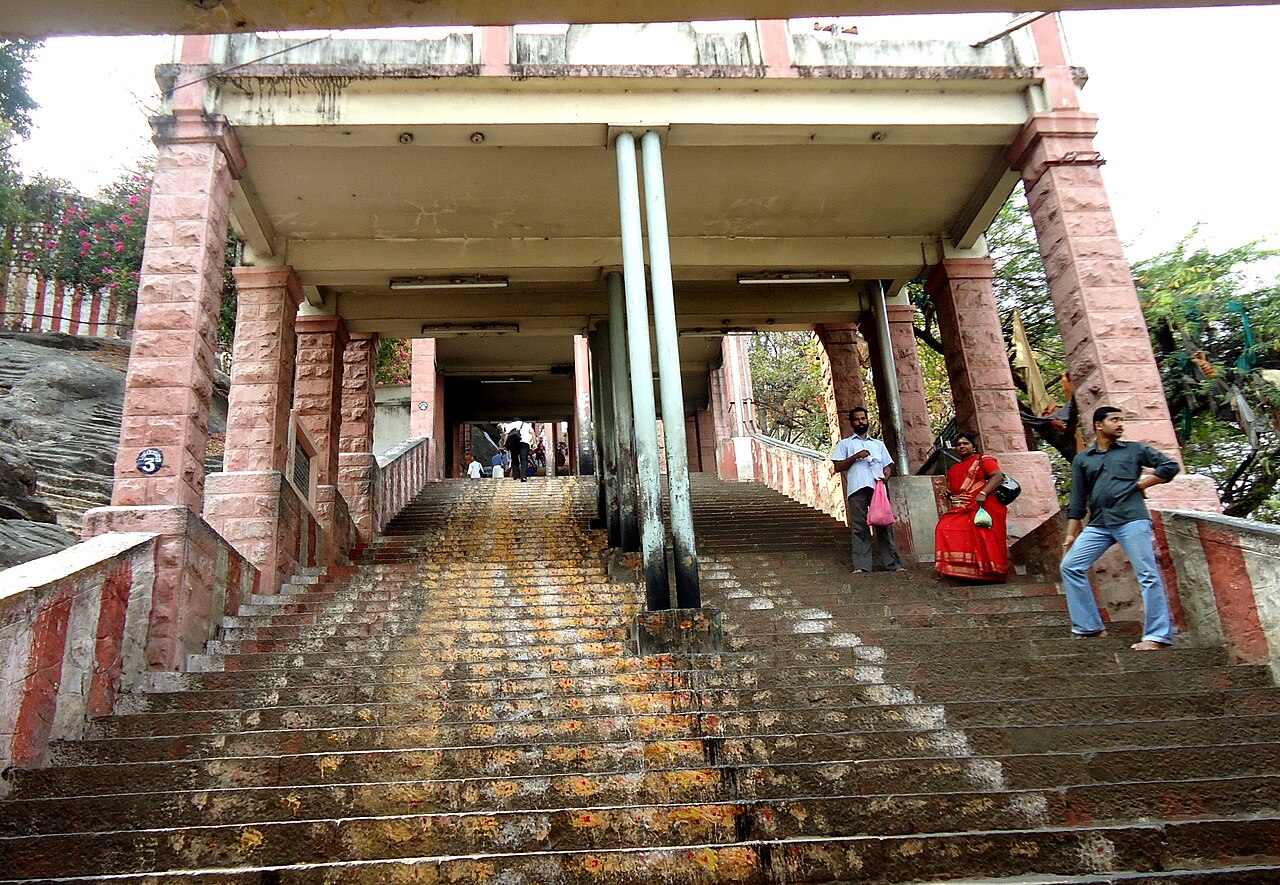
693 stone steps rise from the adivaram, stained gold with turmeric and dotted with pilgrims resting under pillared shelters, the Idumban shrine partway up. A gently sloping yanai padhai, the elephants' path, winds up for those who cannot take steps, and three winch-hauled funicular cars, the first installed in 1966, and a rope car climb the bare rock face.
2
The golden vimana and the small dark sanctum
Above the sanctum the vimana is plated with gold and carved with gods. Within, the Lord stands west-facing as the Andi of Palani, shaven, girt with a loincloth, holding only His staff. Six times a day the renunciate is dressed anew, from sadhu at dawn to hunter, child, priest, then Raja in the evening, and finally in flowers at night.
3
The panchamirtham counters and the tonsure halls
Counters on the hill sell the Temple's panchamirtham, a dense sweet of hill bananas, jaggery, cow ghee, honey and cardamom finished with dates and sugar candy, the first Temple prasadam in India to receive a GI tag. Below, tonsure halls hum as devotees offer their hair, then walk on with sandal-pasted heads in imitation of the Lord.
Pilgrims on the turmeric-stained stone steps that climb Palani hill to the TemplePeacock-feather kavadis, the arched shoulder burdens of Palani pilgrims, kept ready near the hill
The stained steps of the hill path, and peacock-feather kavadis awaiting their bearers · photos CC BY-SA 3.0 Ranjithsiji, Wikimedia Commons
THE KAVADI COMES HOME
Thai Poosam · 22 January 2027
On the full moon of the Tamil month of Thai, the kavadi returns to the hill where it was invented. For ten days the Temple opens its doors at 4:00 am, and lakhs of devotees converge on Palani, many walking padayatra for days from Tiruchirappalli, Madurai, Coimbatore and across Kerala, carrying flower-arched kavadis, pots of milk for abhishekam, and vows sealed with alagu piercings. In 2026 the queues began forming at two in the morning and buttermilk was ladled out along the way; in 2027 the star day falls on Friday 22 January.
On the star day itself waits of several hours are normal and paid darshan may be suspended; come a day or two early, or climb before dawn.
Plan your visit
By air
Madurai and Coimbatore airports both serve Palani, each roughly 110 km away by road.
By rail
Palani station, on the Palakkad to Dindigul line, is about 2.5 km from the adivaram at the foot of the hill.
By road
About 57 km from Dindigul, 109 km from Coimbatore on NH83, and 111 km from Madurai; buses run from cities across Tamil Nadu and Kerala.
Timings
5:45 am to 8:00 pm daily; on Thai Poosam, Panguni Uthiram, Kanda Sashti, Karthigai days, Thai Pongal, both new years, Margazhi and Deepavali the doors open at 4:00 am and may stay open past 9:00 pm.
Darshan
General darshan is free; special-entrance darshan tickets are offered at the Temple and through the HR&CE portal's online booking.
The climb
693 steps, the sloping elephant path, three winch funiculars (from 6:00 am on ordinary days, 4:00 am on festivals), or the rope car, which pauses midday.
Best time
A weekday morning outside festival seasons is quiet; monthly Karthigai star days, Margazhi mornings and the great festivals bring the heaviest crowds.
Tradition reads the name Palani as Pazham Nee, you are the fruit, the words with which Lord Shiva and Maa Parvati consoled the young renunciate; Sangam literature knew the place as Thiruaavinankudi and the old town as Pothini.
The Lord is dressed in six alankarams across the day's six poojas, sadhu, hunter, child, vaideeka, Raja and flowers, so the renunciate of the morning receives His court as a king by lamplight.
At night the murti's head is anointed with sandalwood paste which rests on the navapashanam overnight; distributed the next day as rakkala chandanam, it is treasured by devotees as carrying the murti's healing virtue.
Offering one's hair is a signature vow of Palani: the Temple runs tonsure halls at nominal cost, newborns are brought for first tonsure and ear piercing, and freshly shaved heads are painted with sandal in imitation of the Lord.
Questions pilgrims ask
Is the Palani murti really made of poison?
Tradition holds that Siddha Bhogar fashioned the murti from navapashanam, nine poisonous minerals and herbs fused in proportions that turn them into a single healing amalgam. The Temple's own rituals honour this: substances that touch the murti, like the overnight sandal paste, are distributed as prasadam believed to carry medicinal virtue.
Do I have to climb all 693 steps?
No. The steps are the traditional way, but a gently sloping elephant path serves walkers, and three winch-hauled funicular cars and a rope car carry pilgrims up the rock face for a small fare. The winch starts at 6:00 am on ordinary days and 4:00 am during festivals.
Which of the six abodes is Palani?
The third. The Sangam poem Thirumurugatrupadai sings Thiruaavinankudi, the shrine at this hill's foot where the Kulandhai Velappar Temple stands, and tradition counts Palani, hill and foothill together, as the third of Lord Murugan's Arupadai Veedu.
Why do devotees shave their heads here?
In the form He took at Palani the Lord is shorn of His hair, a boy renunciate with only a staff. Devotees fulfil vows by discarding their own hair in imitation of Him, and walk on with sandal paste on the scalp as the murti itself is anointed each night.
What is the Palani panchamirtham?
The Temple's signature prasadam, a sweet pressed from hill bananas, jaggery, cow ghee, honey and cardamom with dates and sugar candy, prepared by the Temple itself. In August 2019 it became the first Temple prasadam in India to receive a Geographical Indication tag.
Dharamshalas and guest houses near this Sthan, shared by devotees. Adisthan takes no bookings and no money; contact each stay directly.
No stays are listed here yet. Know one that serves pilgrims well?
Are you a priest, trustee or officer of Arulmigu Dhandayuthapani Swamy Temple, Palani? Claim this page to keep darshan hours, winch timings and festival schedules exact for every pilgrim who climbs to the Lord of the hill.