Duladeo Temple
Dulhadeo Temple · Kunwar Math · दुल्हा देव मन्दिर
About
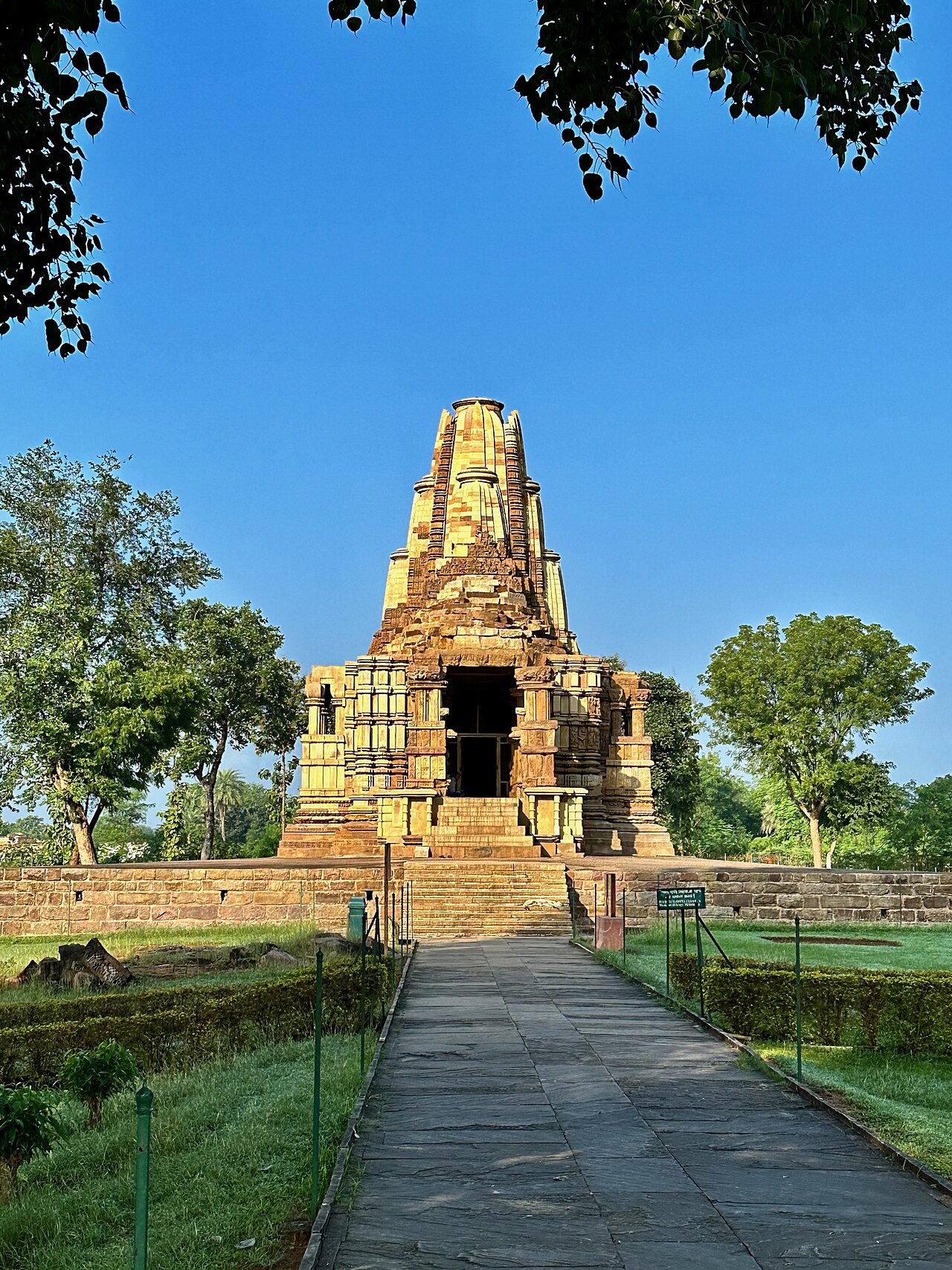
Resting on the southern edge of the celebrated Khajuraho complex in Madhya Pradesh, the Duladeo Temple, also called Kunwar Math, faces east toward the rising sun and is consecrated to Lord Śiva, honoured here through a liṅga set within the innermost sanctuary. The name Duladeo, meaning "Holy Bridegroom", evokes the divine as groom of the cosmos, and devotees continue to offer worship at the shrine today.
The Temple follows the Nāgara architectural tradition, its tall clustered śikhara evoking Mount Kailāsa as the celestial home of Śiva. Laid out according to the saptarata plan, a seven-projecting-chariot scheme, it was built without an ambulatory passage, a form known as nirandhara. The main hall within is notably spacious and octagonal, its ceiling adorned with twenty corbelled brackets, each bearing two or three apsarā (celestial dancer) figures arranged in a sweeping circle overhead.
What distinguishes Duladeo from its Khajuraho siblings is the quality of its figural carving. The sculptures possess a softness of expression and elegance of form, graceful women, figures dancing beneath mango boughs, and the vibrant vidyādhara (supernatural beings) who animate the upper register of the façade. The entrance porch features river-goddesses sheltered by parasols, and a particularly celebrated inner-passage relief shows an apsarā mid-gesture, adorned with a necklace, as if poised to cast dice. Among the carvings is a rendering of the divine trinity: Sūrya, Brahmā, and Śiva together. The central liṅga in the garbhagṛha is a later replacement, yet it carries a remarkable feature, 999 smaller liṅgas encircle its surface, so that a single circumambulation is held to be spiritually equivalent to a thousand.
History
Duladeo was raised between about 1000 and 1150 CE, the closing chapter of the Chandela dynasty's long building programme at Khajuraho, with much of its carving attributed to the reign of Kirttivarman around 1060 to 1100 CE and a sculptor named Vasala, whose name survives in inscriptions cut into the stone. The Moroccan traveller Ibn Battuta found these Temples still standing when he passed through in 1335. By the time British surveyors reached Khajuraho the shikhara and parts of the outer walls had fallen; the repairs they made remain visible today in sandstone left plain, without the carving that covers the rest of the Temple.
Significance
Duladeo was inscribed with the rest of the Khajuraho Group of Monuments on the UNESCO World Heritage List in 1986, and scholars have called it the last glow of Khajuraho's architectural mastery, the point where the Chandela temple-building tradition reached its final, luminous expression. Devotees still circle the linga in the sanctum today, and because nine hundred and ninety-nine smaller lingas are carved around its surface, tradition holds that a single circumambulation carries the merit of a thousand.
Architecture
Nagara Temple architecture of the Chandela era; nirandhara plan (no ambulatory) on a saptaratha (seven-projection) layout
Visiting
Hours
Hours not listed.
Contact
No contact details listed yet.
Engage with Duladeo Temple
Through the four pathways
Seva सेवा — Service
Offer your time and skills here. The following opportunities are open at Duladeo Temple:
No Seva offerings listed yet.
Sādhana साधना — Practice
Learn the worship and practice associated with Duladeo Temple:
No Sādhana offerings listed yet.
Sandhāna सन्धान — Wisdom
Unite with the wisdom of this tradition:
No Sandhāna offerings listed yet.
Sādhya साध्य — Giving
Support this sacred place according to your means:
No Sādhya offerings listed yet.
All giving flows directly to Duladeo Temple. Adisthan does not take a commission.
Festivals & Events
- Mar
Mahashivratri
6 March 2027 · annual
The great night of Lord Shiva, marking his marriage to Maa Parvati; Khajuraho's Temples, this one among them, receive worship and decoration through the night.
Gallery
Related sacred places
 Hinduism
Airavatesvara Temple, Darasuram
Darasuram (Kumbakonam) · India · temple
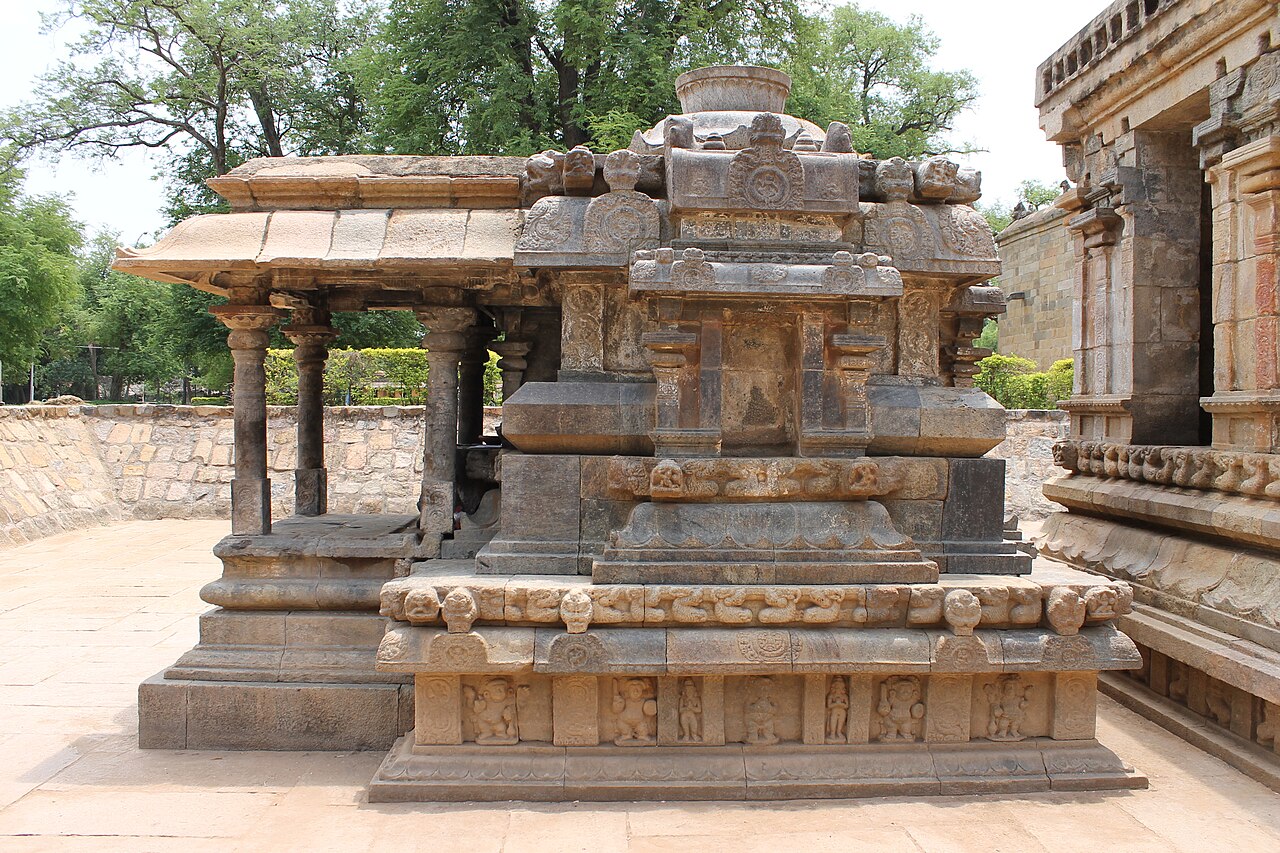
The third of the Great Living Chola Temples, raised by Rajaraja Chola II around 1166 CE at Darasuram near Kumbakonam: a chariot-form shrine of Lord Shiva as Airavatesvara, famed for its carved stone wheels, its singing steps, and worship that has continued for over eight centuries.
Aisanyesvara Siva Temple
Bhubaneswar · India · temple
A living thirteenth-century Shiva shrine in the Old Town of Bhubaneswar, standing close to the western wall of the great Lingaraj Temple, where a Shivalinga set within a circular yonipitha still receives daily worship in the Kalinga architectural tradition.
 Hinduism
Akhadachandi Temple
Bhubaneswar · India · temple
A tenth-century Kalinga-style shrine on the southwestern bank of Bhubaneswar's sacred Bindusagar tank, Akhadachandi Temple honours Maa Mahishasuramardini, the Goddess in her form as slayer of the buffalo demon, within the dense cluster of ancient shrines that fills the city's Old Town.
 Hinduism
Akshardham
New Delhi · India · temple
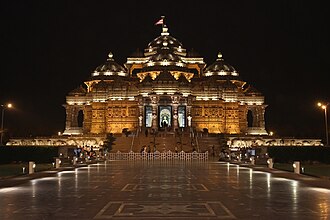
A vast contemporary Hindu mandir campus on the Yamuna's west bank in East Delhi, raised without structural steel by 11,000 artisans and volunteers, and recognised by Guinness World Records in 2007 as the world's largest comprehensive Hindu Temple.
 Hinduism
Amarnath Temple
· India · temple
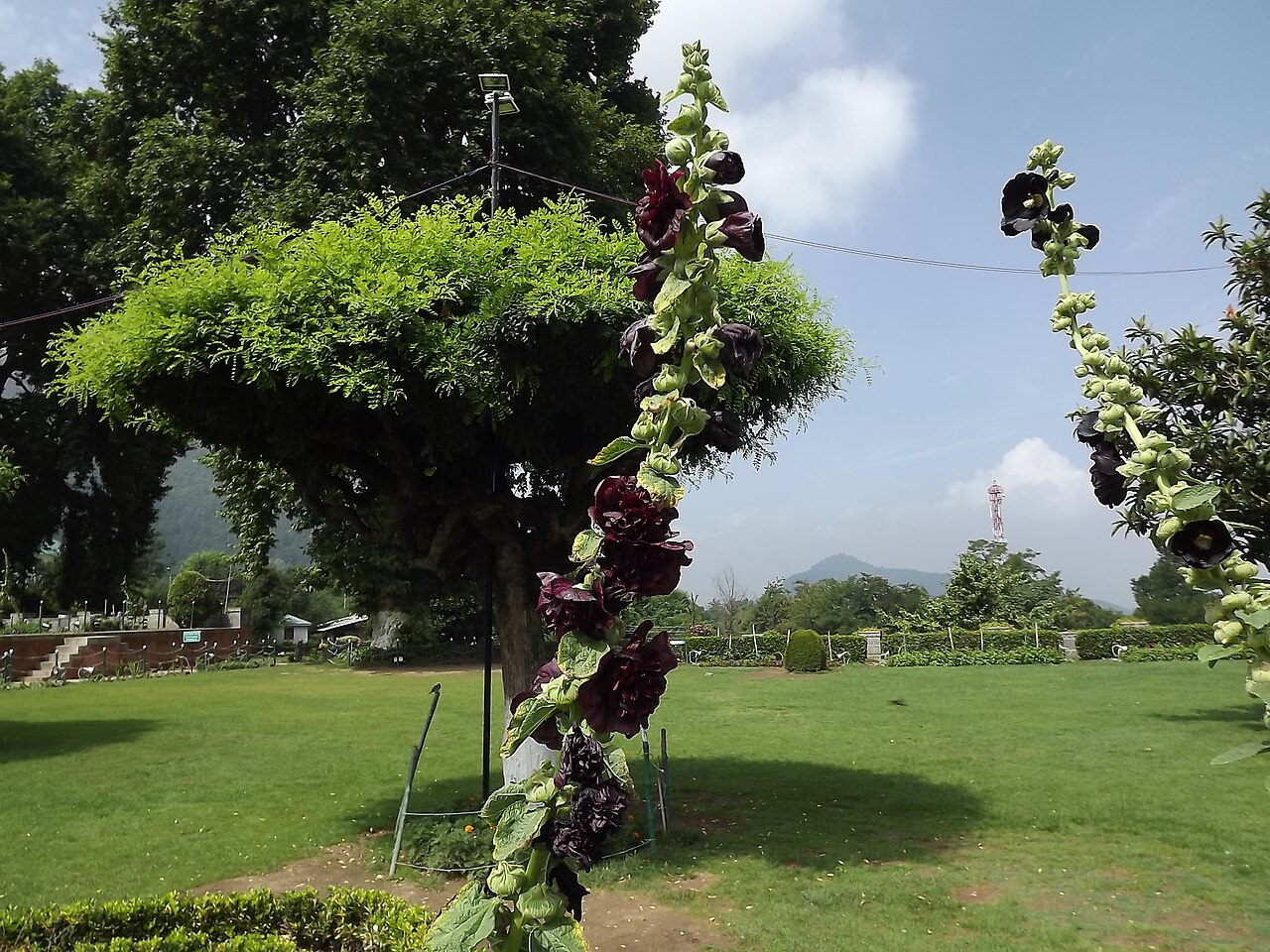
A high Himalayan cave shrine in Jammu and Kashmir where a naturally forming ice lingam is venerated as Lord Śiva, drawing one of India's great seasonal pilgrimages.
 Hinduism
Ambalappuzha Sri Krishna Temple
Ambalappuzha · India · temple
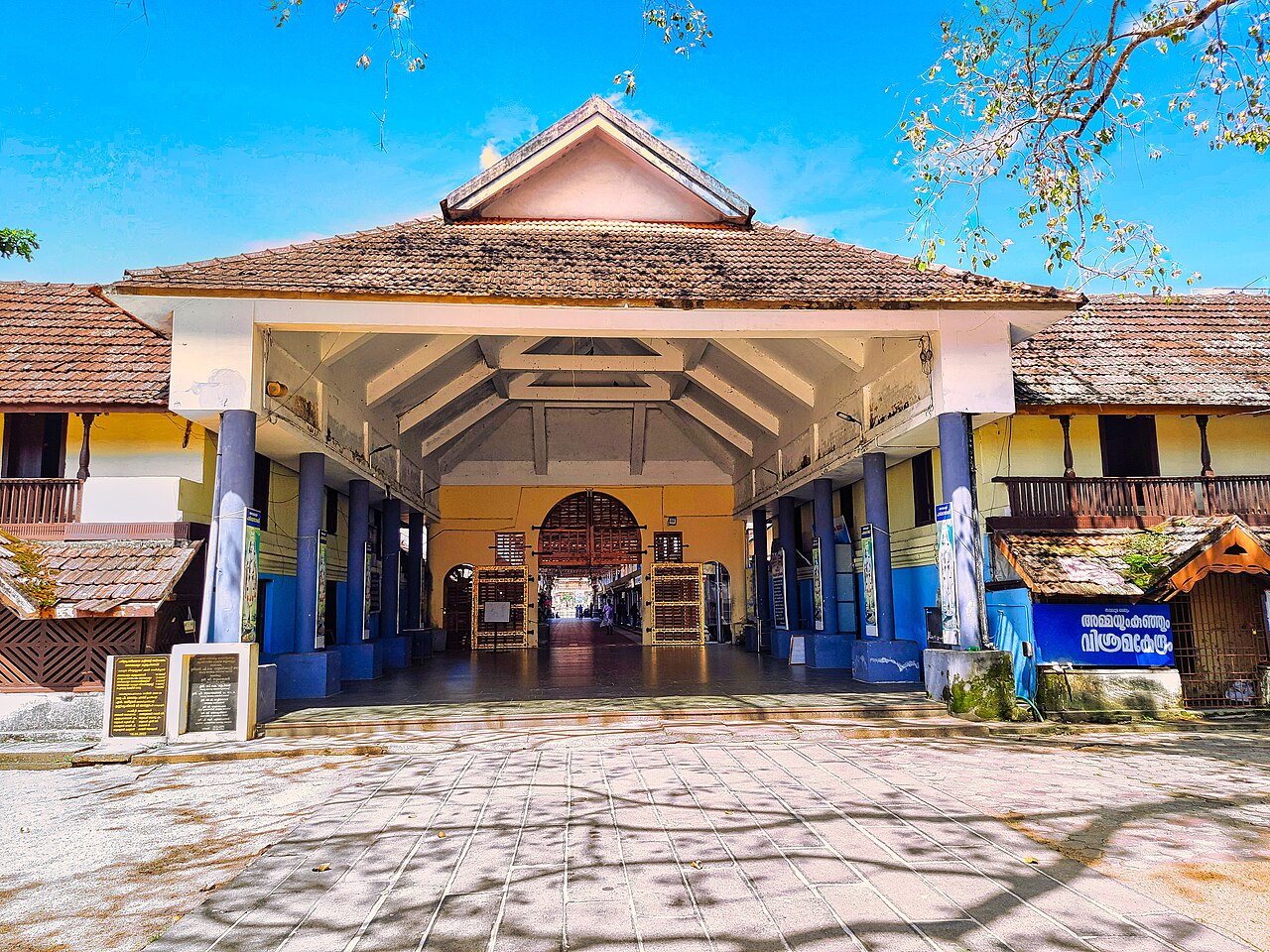
A Vaishnava shrine on the Kerala backwaters consecrated to Sri Krishna in his Parthasarathy form, counted among the seven great Temples of the former kingdom of Travancore and famed across South India for its Ambalapuzha Paal Payasam offering.