.jpg%2F1280px-Varanasi%2C_India_-_Durga_temple%2C_Bhelupur_(23430472781).jpg&w=3840&q=75)
Durga Mandir, Varanasi
Durga Kund Mandir · Durga Temple · Monkey Temple · दुर्गा मन्दिर
About
Standing on Sankat Mochan Road in the ancient city of Varanasi, the Durga Mandir is among the most cherished places of worship in this holy city. The Temple honours Maa Durgā, the goddess of strength and power, whose central icon is believed, in the living tradition of the place, to have manifested of its own accord rather than having been fashioned by human hands.
The structure rises in the North Indian Nāgara style, its exterior washed in deep red and ochre, colours chosen to mirror the hues of the presiding deity's form. The interior shelters intricately engraved stones, and the shikhara crowning the shrine is composed of many smaller sikhara towers clustered together, giving the Temple a distinctive layered silhouette against the Varanasi sky.
Adjacent to the main shrine lies a kund, a rectangular sacred tank, that once flowed in direct connection with the waters of the River Gaṅgā. The Temple stands roughly two hundred and fifty metres north of the Tulsi Manas Mandir and seven hundred metres from Sankat Mochan, placing it within the dense constellation of sacred sites that give Varanasi its singular spiritual character.
History
The Temple's own tradition traces its founding to a battle told in the Devi-Bhagavata Purana: when the king of Kashi married his daughter Sashikala in secret to the forest prince Sudarshana, the rejected suitors marched on Varanasi in anger, and Sudarshana turned in prayer to Maa Durga, who descended on Her lion and won the war in the city's defence. In gratitude, the king asked Her to protect Varanasi for all time, and devotees understand the Temple's founding as flowing from that promise. Its documented history begins in the eighteenth century, when Rani Bhabani, the Bengali Maharani of Natore, raised the shrine that stands beside the Durga Kund today.
Significance
Standing in Varanasi, among the oldest continuously inhabited cities on earth, Durga Mandir draws pilgrims who come to seek strength and protection from Maa Durga at a site devotees hold to be self-manifested rather than made. Its shikhara, built up from many smaller towers washed in the deep red long associated with Maa Durga, has also lent the Temple its popular nickname, the Monkey Temple, for the troops of langurs that live in the surrounding trees.
Architecture
North Indian Nagara style; a clustered shikhara built up from many smaller towers
Visiting
Daily worship
| Morning darshan | 05:00 to 12:00 | |
| Evening darshan | 16:00 to 21:00 |
Hours
Hours not listed.
Contact
No contact details listed yet.
Engage with Durga Mandir, Varanasi
Through the four pathways
Seva सेवा — Service
Offer your time and skills here. The following opportunities are open at Durga Mandir, Varanasi:
No Seva offerings listed yet.
Sādhana साधना — Practice
Learn the worship and practice associated with Durga Mandir, Varanasi:
No Sādhana offerings listed yet.
Sandhāna सन्धान — Wisdom
Unite with the wisdom of this tradition:
No Sandhāna offerings listed yet.
Sādhya साध्य — Giving
Support this sacred place according to your means:
No Sādhya offerings listed yet.
All giving flows directly to Durga Mandir, Varanasi. Adisthan does not take a commission.
Festivals & Events
- Aug
Nag Panchami
17 August 2026 · annual
Observed at the Temple with a recreation of Lord Vishnu reclining on the serpent Shesha at the Kund, alongside the wider worship of serpent deities marked across Varanasi on this day.
- Oct
Sharad Navratri
11 October 2026 · annual
The nine nights of the autumn Navratri, when the Temple fills with devotees offering prayers, mantras and daily special puja to Maa Durga.
Gallery
Related sacred places
 Hinduism
Airavatesvara Temple, Darasuram
Darasuram (Kumbakonam) · India · temple
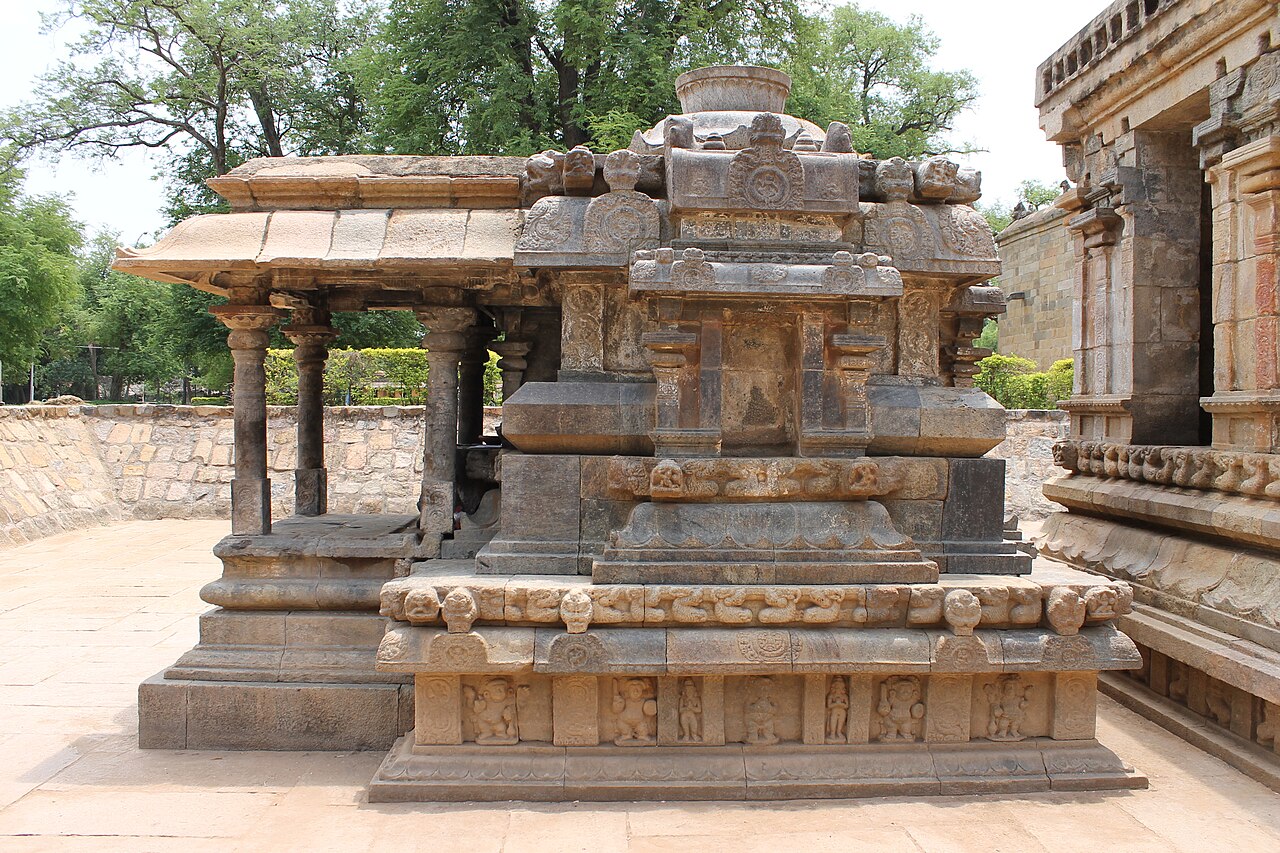
The third of the Great Living Chola Temples, raised by Rajaraja Chola II around 1166 CE at Darasuram near Kumbakonam: a chariot-form shrine of Lord Shiva as Airavatesvara, famed for its carved stone wheels, its singing steps, and worship that has continued for over eight centuries.
Aisanyesvara Siva Temple
Bhubaneswar · India · temple
A living thirteenth-century Shiva shrine in the Old Town of Bhubaneswar, standing close to the western wall of the great Lingaraj Temple, where a Shivalinga set within a circular yonipitha still receives daily worship in the Kalinga architectural tradition.
 Hinduism
Akhadachandi Temple
Bhubaneswar · India · temple
A tenth-century Kalinga-style shrine on the southwestern bank of Bhubaneswar's sacred Bindusagar tank, Akhadachandi Temple honours Maa Mahishasuramardini, the Goddess in her form as slayer of the buffalo demon, within the dense cluster of ancient shrines that fills the city's Old Town.
 Hinduism
Akshardham
New Delhi · India · temple
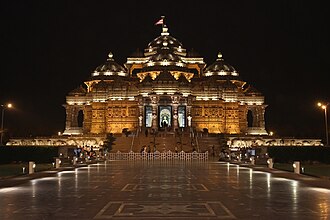
A vast contemporary Hindu mandir campus on the Yamuna's west bank in East Delhi, raised without structural steel by 11,000 artisans and volunteers, and recognised by Guinness World Records in 2007 as the world's largest comprehensive Hindu Temple.
 Hinduism
Amarnath Temple
· India · temple
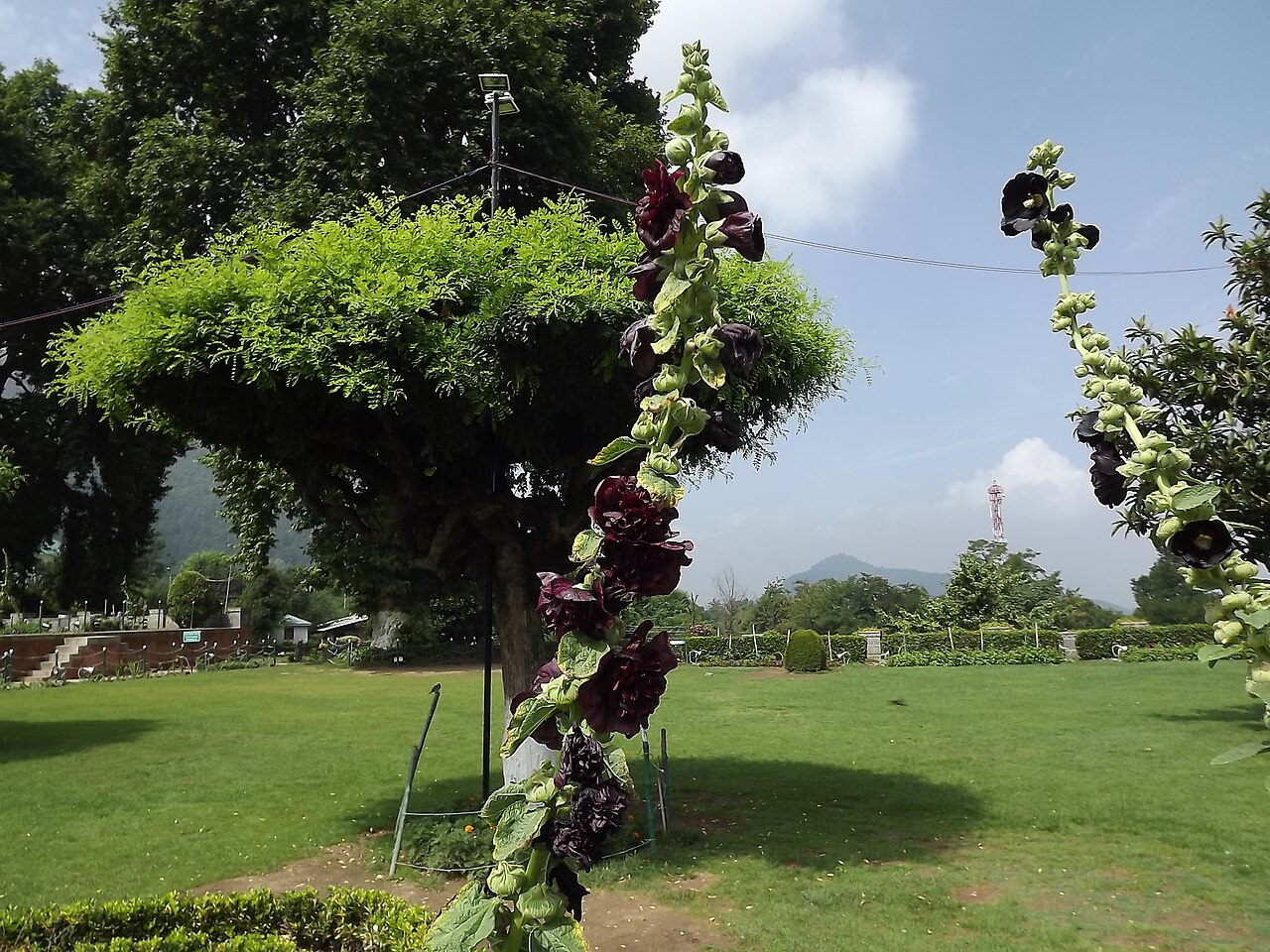
A high Himalayan cave shrine in Jammu and Kashmir where a naturally forming ice lingam is venerated as Lord Śiva, drawing one of India's great seasonal pilgrimages.
 Hinduism
Ambalappuzha Sri Krishna Temple
Ambalappuzha · India · temple
A Vaishnava shrine on the Kerala backwaters consecrated to Sri Krishna in his Parthasarathy form, counted among the seven great Temples of the former kingdom of Travancore and famed across South India for its Ambalapuzha Paal Payasam offering.