Durgiana Temple
Shri Durgiana Mandir · Silver Temple · दुर्गियाना मंदिर
About
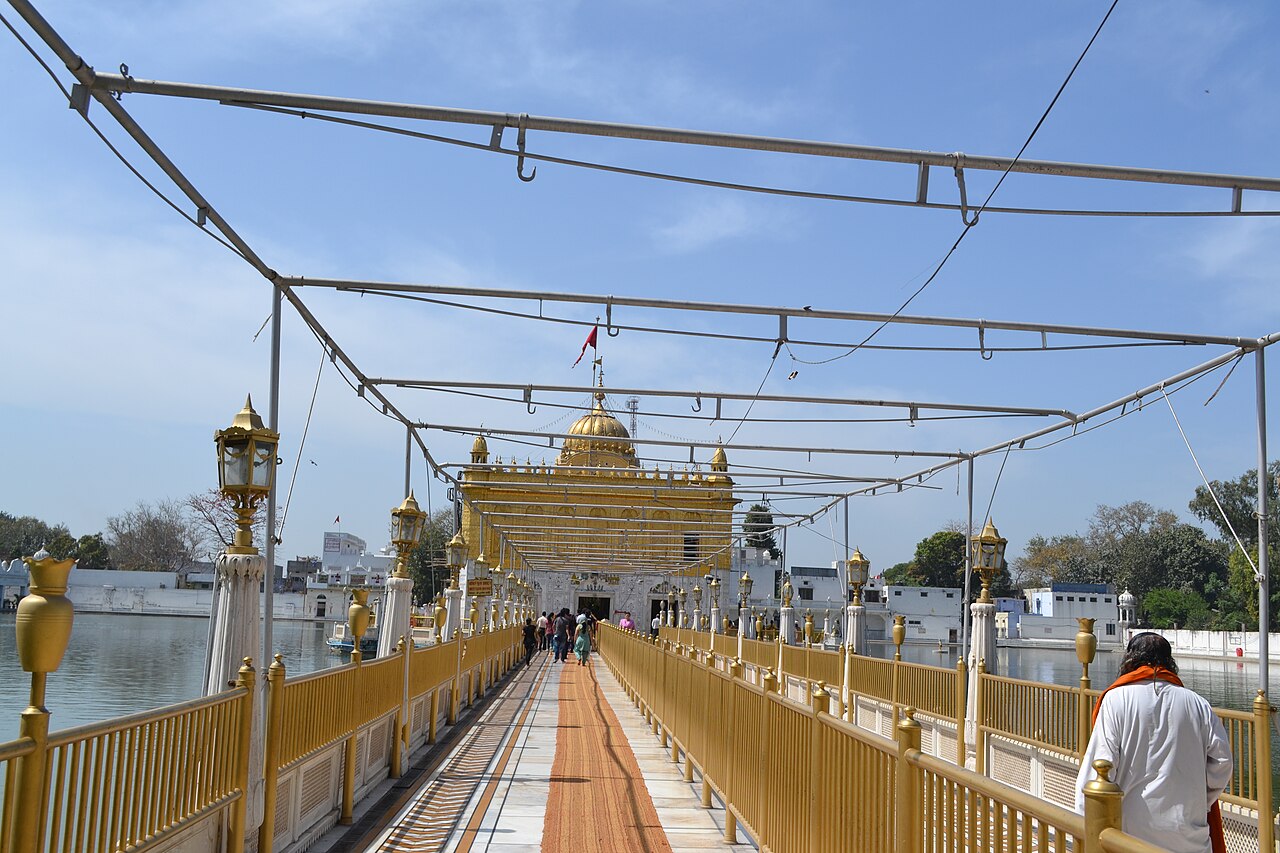
Set upon the waters of a rectangular sacred sarovar (holy tank) measuring roughly 160 by 130 metres, Durgiana Mandir occupies an island sanctuary reached by a ceremonial bridge. The Temple owes its name to Maa Durga, the principal deity enshrined within, while consecrated images of Goddess Lakshmi and Lord Vishnu also receive daily veneration in the complex.
The architecture consciously mirrors the celebrated Shri Harmandir Sahib of the Sikh tradition, also located in Amritsar, with a similarly gilded dome, canopied rooflines, and extensive use of marble throughout the structure. The dome is lit with coloured illuminations after dark, and the Temple's enormous silver doors, intricately worked, have earned it the affectionate informal name of the Silver Temple among devotees.
Within the wider Temple precinct stand several historically significant subsidiary shrines, among them Temples dedicated to Sheetla Mata and Bara Hanuman. Together they create a living sacred village within the larger compound, each shrine drawing its own circle of worshippers throughout the ritual calendar.
History
Amritsar's own records place a shrine and sacred tank here well before the twentieth century: the Municipal Committee recorded the Durgiana Sarowar in 1868, and the 1893 District Gazetteer described Hindu pilgrims already gathering at its Devi dwara. The present Temple was built in 1921 by Guru Harsai Mal Kapoor, a descendant of Guru Ram Das, who chose to raise it in the image of Shri Harmandir Sahib as a deliberate act of reverence toward the Sikh shrine that shares his city. A beautification programme carried out between 2013 and 2015 widened the space for worship and added new facilities around the Temple.
Significance
Durgiana Mandir stands at the centre of Hindu devotional life in Punjab, filling with pilgrims for Dussehra, Janmashtami, Rama Navami and Diwali, and for the Sawan season when newly married couples gather to worship Radha and Krishna together. During Navratri, the Temple's own Bara Hanuman shrine hosts the Langur Mela, when parents whose prayers for a child were answered dress that child as a langur and bring them to bow before Lord Hanuman. Amritsar has long extended to Durgiana Mandir the same civic reverence it shows Shri Harmandir Sahib: the sale of tobacco, liquor and meat is restricted within two hundred metres of both.
Architecture
North Indian Temple architecture built in deliberate homage to Sikh Harmandir Sahib style; gilded dome, marble and silver-inlaid doors, approached by a causeway across a sacred tank
Visiting
Hours
Hours not listed.
Contact
Engage with Durgiana Temple
Through the four pathways
Seva सेवा — Service
Offer your time and skills here. The following opportunities are open at Durgiana Temple:
No Seva offerings listed yet.
Sādhana साधना — Practice
Learn the worship and practice associated with Durgiana Temple:
No Sādhana offerings listed yet.
Sandhāna सन्धान — Wisdom
Unite with the wisdom of this tradition:
No Sandhāna offerings listed yet.
Sādhya साध्य — Giving
Support this sacred place according to your means:
No Sādhya offerings listed yet.
All giving flows directly to Durgiana Temple. Adisthan does not take a commission.
Festivals & Events
- Oct
Navratri and the Langur Mela
11 October 2026 · annual
For the ten days from the first day of Sharad Navratri to Dussehra, the Temple's Bara Hanuman shrine holds the centuries-old Langur Mela, when children dressed as langurs are brought to bow before Lord Hanuman.
- Nov
Diwali
8 November 2026 · annual
The festival of lights, observed at the Temple with special decoration and evening worship alongside the city's wider celebration.
Gallery
Related sacred places
 Hinduism
Airavatesvara Temple, Darasuram
Darasuram (Kumbakonam) · India · temple
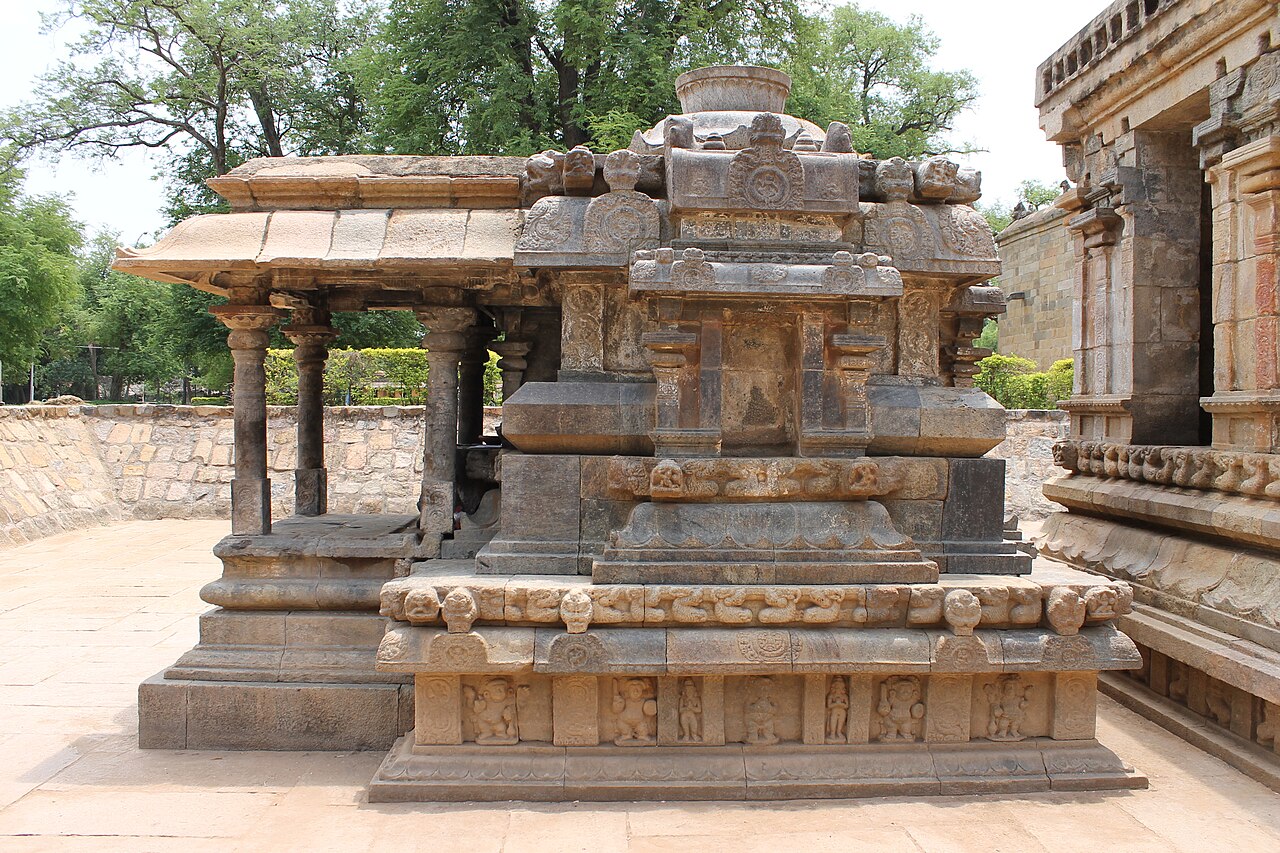
The third of the Great Living Chola Temples, raised by Rajaraja Chola II around 1166 CE at Darasuram near Kumbakonam: a chariot-form shrine of Lord Shiva as Airavatesvara, famed for its carved stone wheels, its singing steps, and worship that has continued for over eight centuries.
Aisanyesvara Siva Temple
Bhubaneswar · India · temple
A living thirteenth-century Shiva shrine in the Old Town of Bhubaneswar, standing close to the western wall of the great Lingaraj Temple, where a Shivalinga set within a circular yonipitha still receives daily worship in the Kalinga architectural tradition.
 Hinduism
Akhadachandi Temple
Bhubaneswar · India · temple
A tenth-century Kalinga-style shrine on the southwestern bank of Bhubaneswar's sacred Bindusagar tank, Akhadachandi Temple honours Maa Mahishasuramardini, the Goddess in her form as slayer of the buffalo demon, within the dense cluster of ancient shrines that fills the city's Old Town.
 Hinduism
Akshardham
New Delhi · India · temple
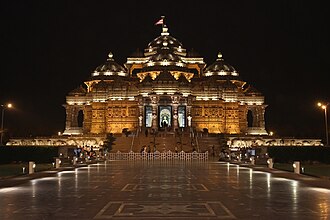
A vast contemporary Hindu mandir campus on the Yamuna's west bank in East Delhi, raised without structural steel by 11,000 artisans and volunteers, and recognised by Guinness World Records in 2007 as the world's largest comprehensive Hindu Temple.
 Hinduism
Amarnath Temple
· India · temple
A high Himalayan cave shrine in Jammu and Kashmir where a naturally forming ice lingam is venerated as Lord Śiva, drawing one of India's great seasonal pilgrimages.
 Hinduism
Ambalappuzha Sri Krishna Temple
Ambalappuzha · India · temple
A Vaishnava shrine on the Kerala backwaters consecrated to Sri Krishna in his Parthasarathy form, counted among the seven great Temples of the former kingdom of Travancore and famed across South India for its Ambalapuzha Paal Payasam offering.