Erawan Shrine
Thao Maha Phrom Shrine · San Thao Maha Phrom · San Phra Phrom · Phra Phrom Shrine
About
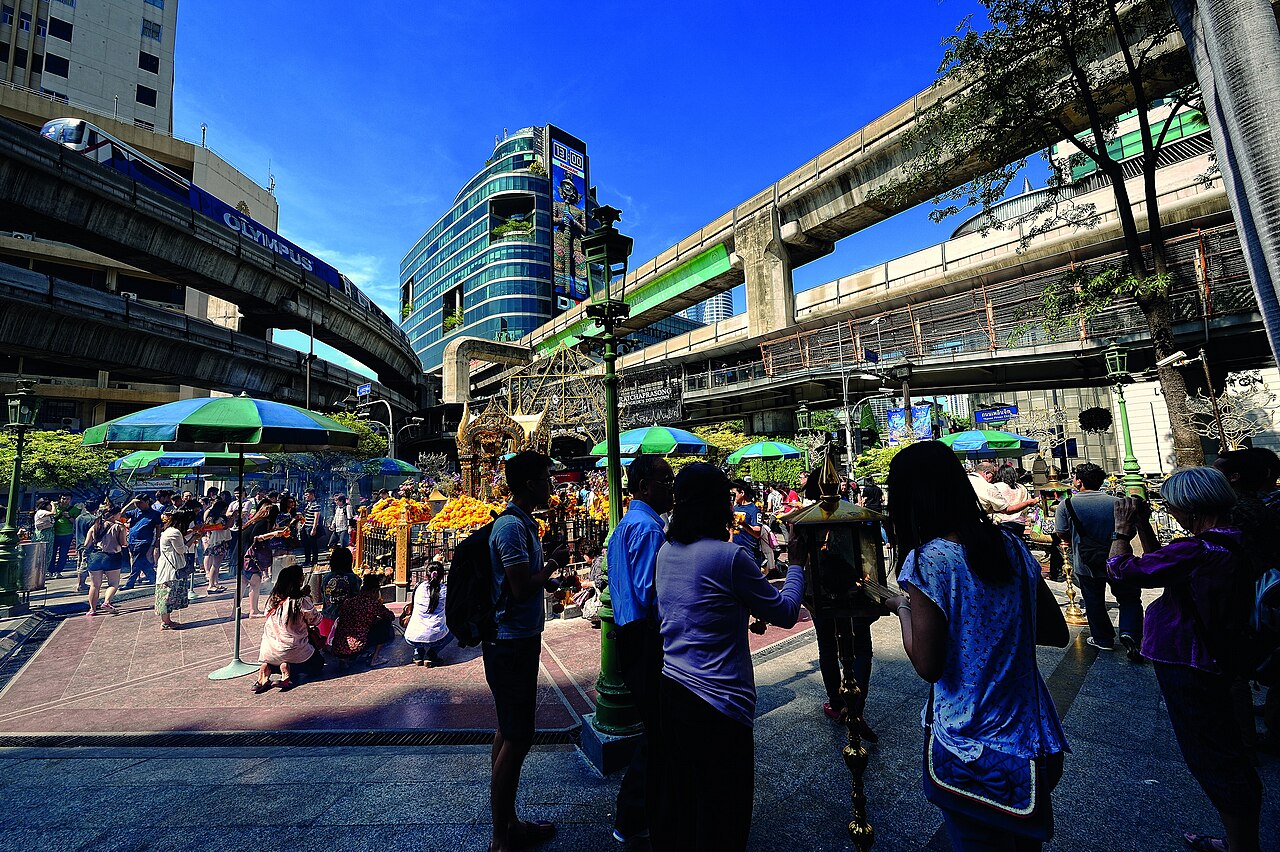
The Erawan Shrine, formally the Thao Maha Phrom Shrine (ศาลท้าวมหาพรหม, San Thao Maha Phrom, 'Shrine of Lord Maha Brahma'), stands at the busy Ratchaprasong intersection of Ratchadamri Road in Bangkok's Pathum Wan District, beside the Grand Hyatt Erawan hotel and a short walk from the BTS Skytrain's Chit Lom Station.
At its centre is a gilded image of Phra Phrom, the Thai form of Brahmā, the four-faced Hindu god of creation. The same name 'Maha Brahma' also evokes Mahābrahmā, the ruler of the Brahma realm in Buddhist cosmology. Around the shrine devotees offer flowers, incense, and elephants, and Thai dance troupes are often hired by worshippers to perform in fulfilment of vows answered at the shrine.
Though nominally Hindu in form, Phra Phrom is honoured here largely in a Thai folk-religious register, as a guardian spirit whose favour brings protection and prosperity. The Erawan Shrine is one of the most visited devotional sites in Bangkok, and is encircled by a small constellation of related shrines to Hindu deities, Phra Laksami (Lakṣmī), Phra Trimurati (Trimūrti), Phra Khanet (Gaṇeśa), Phra In (Indra), and Phra Narai Song Suban (Nārāyaṇa on his Garuḍa).
History
The shrine was raised in 1956 beside the state-owned Erawan Hotel after a string of mishaps, cost overruns, injured labourers, a lost shipload of Italian marble, were blamed on the foundation having been laid on an inauspicious date. On an astrologer's counsel, Thailand's Fine Arts Department designed and cast an image of Lord Brahma, consecrated on 9 November 1956, and the hotel's construction proceeded without further trouble. The image was destroyed by a man suffering severe psychiatric illness in March 2006 and was carefully recast within weeks. On 17 August 2015 a bomb attack at the shrine killed twenty people and wounded many more, an act mourned across Bangkok; the shrine reopened within two days and devotion has continued unbroken since.
Significance
Devotees offer flowers, incense, and carved wooden elephants before Lord Brahma here, and worshippers whose prayers are answered often commission Thai dance troupes to perform in thanksgiving. The shrine stands as one of Bangkok's most visible points of contact between Hindu and Buddhist devotional life, its four faces looking out over one of the city's busiest intersections at the meeting of prayer and commerce.
Architecture
Thai-Hindu shrine architecture; open-air gilded pavilion with a four-faced image of Brahma at its centre
Visiting
Daily worship
| Open for worship, Monday to Friday | 06:00 to 19:00 | |
| Open for worship, Saturday and Sunday | 06:00 to 20:00 |
Hours
Hours not listed.
Contact
No contact details listed yet.
Engage with Erawan Shrine
Through the four pathways
Seva सेवा — Service
Offer your time and skills here. The following opportunities are open at Erawan Shrine:
No Seva offerings listed yet.
Sādhana साधना — Practice
Learn the worship and practice associated with Erawan Shrine:
No Sādhana offerings listed yet.
Sandhāna सन्धान — Wisdom
Unite with the wisdom of this tradition:
No Sandhāna offerings listed yet.
Sādhya साध्य — Giving
Support this sacred place according to your means:
No Sādhya offerings listed yet.
All giving flows directly to Erawan Shrine. Adisthan does not take a commission.
Gallery
Related sacred places
 Hinduism
Airavatesvara Temple, Darasuram
Darasuram (Kumbakonam) · India · temple
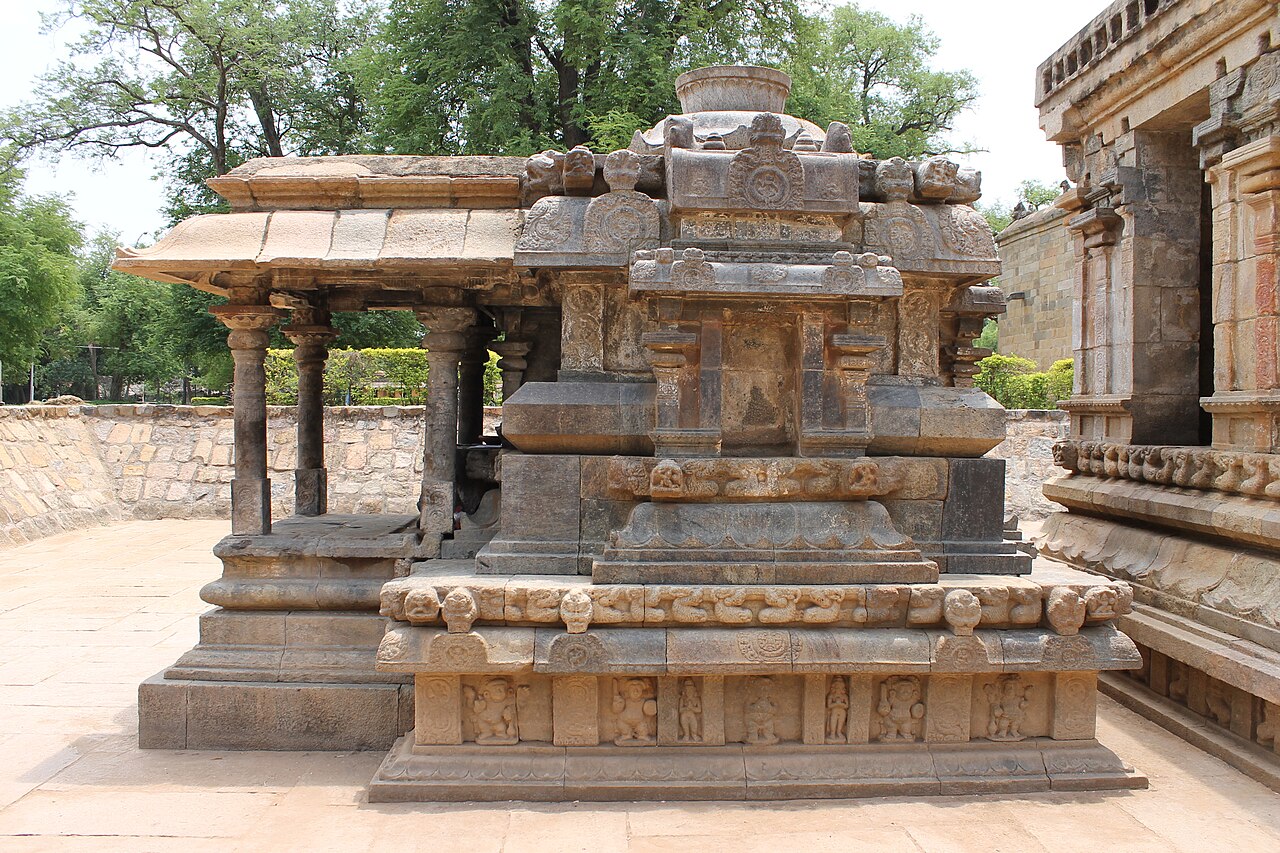
The third of the Great Living Chola Temples, raised by Rajaraja Chola II around 1166 CE at Darasuram near Kumbakonam: a chariot-form shrine of Lord Shiva as Airavatesvara, famed for its carved stone wheels, its singing steps, and worship that has continued for over eight centuries.
Aisanyesvara Siva Temple
Bhubaneswar · India · temple
A living thirteenth-century Shiva shrine in the Old Town of Bhubaneswar, standing close to the western wall of the great Lingaraj Temple, where a Shivalinga set within a circular yonipitha still receives daily worship in the Kalinga architectural tradition.
 Hinduism
Akhadachandi Temple
Bhubaneswar · India · temple
A tenth-century Kalinga-style shrine on the southwestern bank of Bhubaneswar's sacred Bindusagar tank, Akhadachandi Temple honours Maa Mahishasuramardini, the Goddess in her form as slayer of the buffalo demon, within the dense cluster of ancient shrines that fills the city's Old Town.
 Hinduism
Akshardham
New Delhi · India · temple
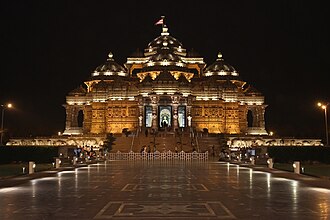
A vast contemporary Hindu mandir campus on the Yamuna's west bank in East Delhi, raised without structural steel by 11,000 artisans and volunteers, and recognised by Guinness World Records in 2007 as the world's largest comprehensive Hindu Temple.
 Hinduism
Amarnath Temple
· India · temple
A high Himalayan cave shrine in Jammu and Kashmir where a naturally forming ice lingam is venerated as Lord Śiva, drawing one of India's great seasonal pilgrimages.
 Hinduism
Ambalappuzha Sri Krishna Temple
Ambalappuzha · India · temple
A Vaishnava shrine on the Kerala backwaters consecrated to Sri Krishna in his Parthasarathy form, counted among the seven great Temples of the former kingdom of Travancore and famed across South India for its Ambalapuzha Paal Payasam offering.