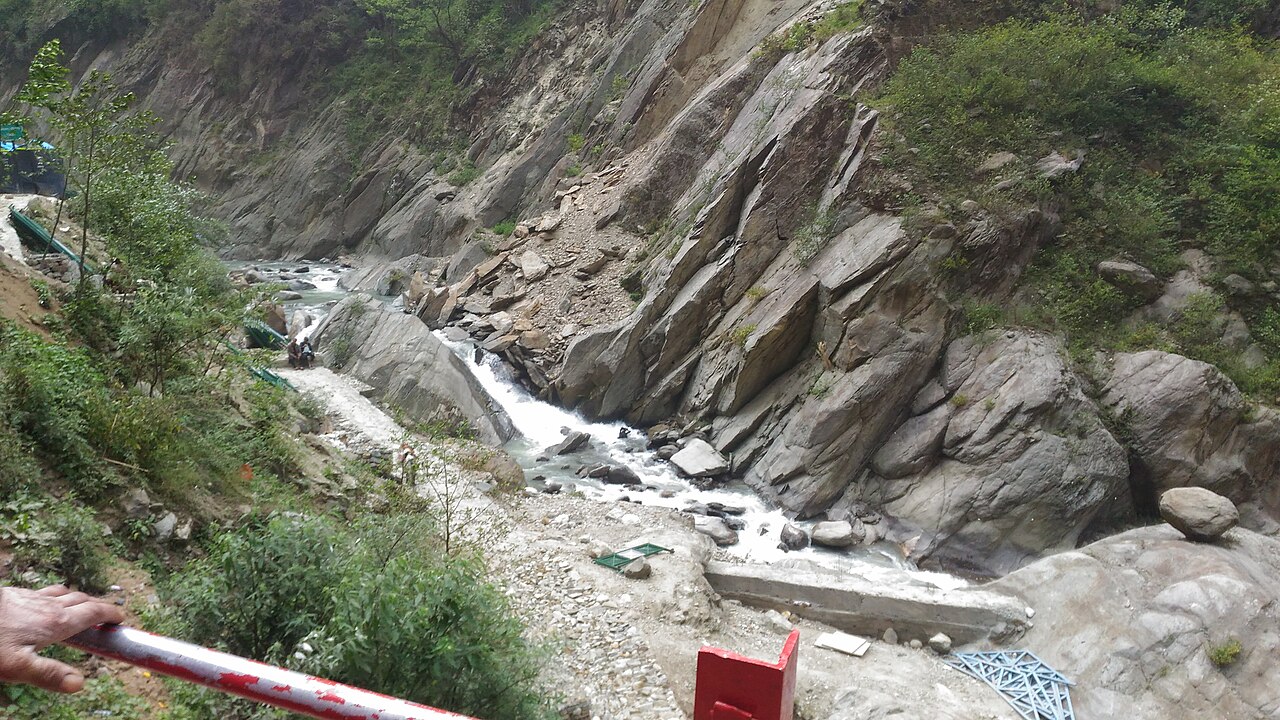
Gauri Kund
Gaurikund · Gauri Devi Temple
About
Perched high in the Garhwal Himalayas at an elevation of 6,502 feet, Gauri Kund is a place where pilgrimage and myth converge. Named for Maa Gauri, the radiant form of Maa Parvati, consort of Lord Shiva, the kund (sacred pool) at the heart of the settlement draws devotees who arrive both to venerate the goddess in her own right and to prepare themselves for the demanding trek onward to the great Kedarnath shrine above.
The site carries deep associations with two of Hinduism's most beloved legends. According to tradition, it was here that the goddess Maa Parvati undertook intense tapas (ascetic practices) to draw Shiva's love toward her, and it was at this very spot that Shiva at last declared his devotion. The couple subsequently solemnized their union at Triyugi Narayan, a village located not far away. The kund is also revered as the place where Goddess Parvati fashioned Ganesha, her son, from the foam of her own bathing ritual, breathed life into him, and set him as the guardian of the threshold. The episode that followed, in which Shiva severed and then replaced the boy's head with that of an elephant, explains for devotees everywhere the distinctive form of Ganesha that is venerated throughout the Hindu world.
Warm natural springs feed the bathing pools at Gauri Kund, providing pilgrims with both ritual purification and welcome physical warmth before continuing their journey into the high mountains. The Temple here is marked by inscriptions from earlier ages, one of which records a vow made by the son of a devadasi, testifying to the human devotion that has sustained this place across centuries.
History
Undated Temple inscriptions at the site attest to devotion reaching back many centuries, including one recording a vow made by the son of a devadasi, who pledged his own life should the shrine remain unfinished. Gauri Kund's exact founding is not recorded, but it has long stood as the last resting point pilgrims knew before the demanding climb toward Kedarnath Temple began, sixteen kilometres above.
Significance
Devotees hold this to be the place where Maa Gauri undertook her tapas to win Lord Shiva's devotion, and where he at last answered her; tradition holds that the couple were married nearby at Triyugi Narayan. The kund's warm springs, fed by natural thermal sources, are bathed in for purification before the ascent to Kedarnath, and the site is also remembered as the place where Maa Parvati fashioned her son Ganesha, whose elephant head Lord Shiva gave him after the boy stood guard at his mother's door.
Visiting
Hours
Hours not listed.
Contact
No contact details listed yet.
Engage with Gauri Kund
Through the four pathways
Seva सेवा — Service
Offer your time and skills here. The following opportunities are open at Gauri Kund:
No Seva offerings listed yet.
Sādhana साधना — Practice
Learn the worship and practice associated with Gauri Kund:
No Sādhana offerings listed yet.
Sandhāna सन्धान — Wisdom
Unite with the wisdom of this tradition:
No Sandhāna offerings listed yet.
Sādhya साध्य — Giving
Support this sacred place according to your means:
No Sādhya offerings listed yet.
All giving flows directly to Gauri Kund. Adisthan does not take a commission.
Gallery
Related sacred places
 Hinduism
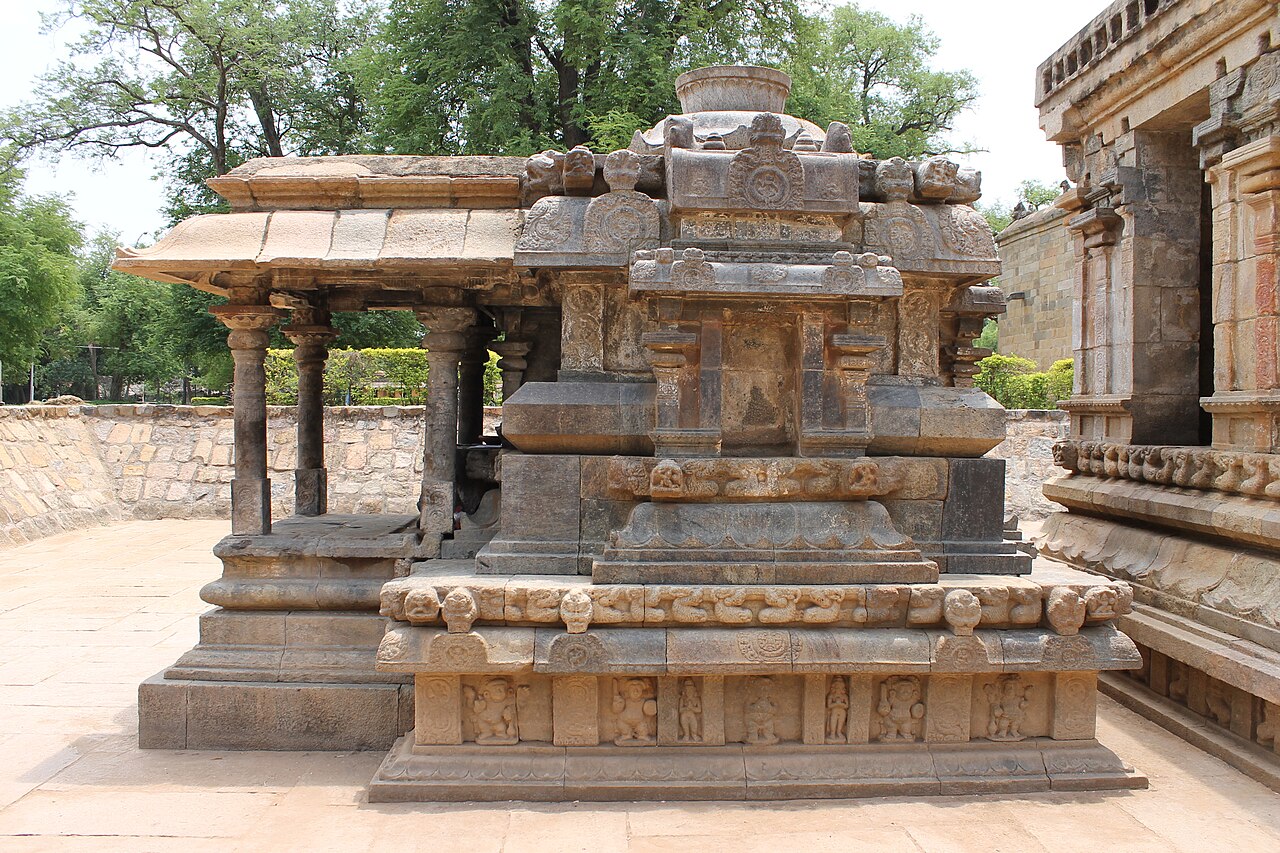
Airavatesvara Temple, Darasuram
Darasuram (Kumbakonam) · India · temple
The third of the Great Living Chola Temples, raised by Rajaraja Chola II around 1166 CE at Darasuram near Kumbakonam: a chariot-form shrine of Lord Shiva as Airavatesvara, famed for its carved stone wheels, its singing steps, and worship that has continued for over eight centuries.
Aisanyesvara Siva Temple
Bhubaneswar · India · temple
A living thirteenth-century Shiva shrine in the Old Town of Bhubaneswar, standing close to the western wall of the great Lingaraj Temple, where a Shivalinga set within a circular yonipitha still receives daily worship in the Kalinga architectural tradition.
 Hinduism
Akhadachandi Temple
Bhubaneswar · India · temple
A tenth-century Kalinga-style shrine on the southwestern bank of Bhubaneswar's sacred Bindusagar tank, Akhadachandi Temple honours Maa Mahishasuramardini, the Goddess in her form as slayer of the buffalo demon, within the dense cluster of ancient shrines that fills the city's Old Town.
 Hinduism
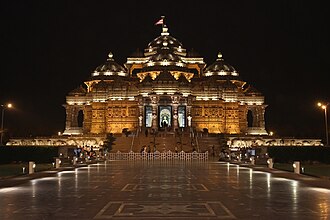
Akshardham
New Delhi · India · temple
A vast contemporary Hindu mandir campus on the Yamuna's west bank in East Delhi, raised without structural steel by 11,000 artisans and volunteers, and recognised by Guinness World Records in 2007 as the world's largest comprehensive Hindu Temple.
 Hinduism
Amarnath Temple
· India · temple
A high Himalayan cave shrine in Jammu and Kashmir where a naturally forming ice lingam is venerated as Lord Śiva, drawing one of India's great seasonal pilgrimages.
 Hinduism
Ambalappuzha Sri Krishna Temple
Ambalappuzha · India · temple
A Vaishnava shrine on the Kerala backwaters consecrated to Sri Krishna in his Parthasarathy form, counted among the seven great Temples of the former kingdom of Travancore and famed across South India for its Ambalapuzha Paal Payasam offering.