Gop Temple
Gop Sun Temple · Surya Mandir, Gop
About
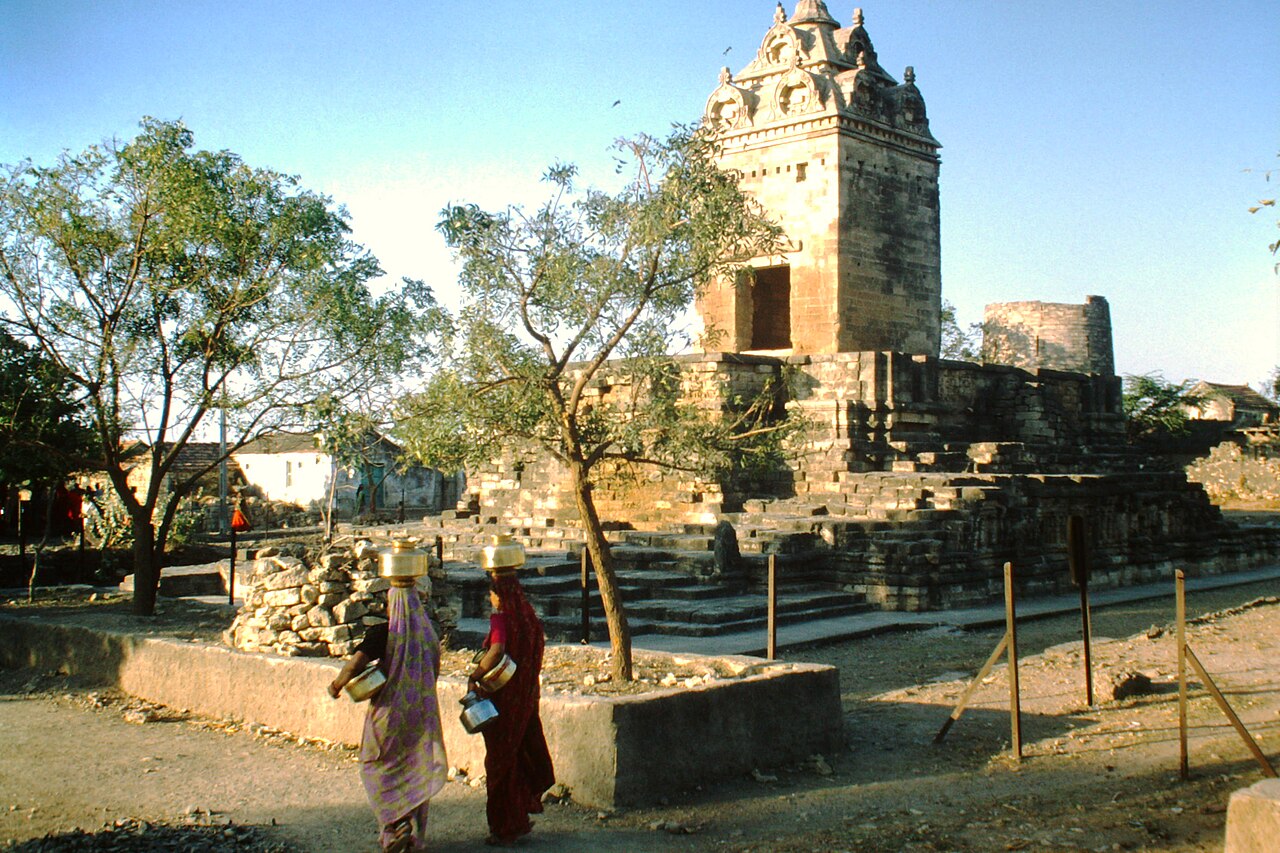
Perched atop a hill near the bank of the Vartu river, on the south-western edge of the Barda Hills, the Gop Temple is dedicated to Surya, the solar deity, and is revered as among the most ancient stone Temples still standing in Gujarat. The village where it rises, Zinavari, also known locally as Juna or Nana Gop, lies east of Gop village and north of Ghumli, a landscape that lends the site a quality of quiet remoteness appropriate to a shrine of such age.
What survives today is a skeletal yet evocative remnant. The sanctum walls stand firm, their plain, unornamented surfaces rising perpendicular to a height of roughly 17 feet before giving way to the pyramidal shikhara above. The tower climbs through six or seven corbelled tiers, each course of dry-laid stone fitted without mortar, and reaches its apex under a single carved amalaka, the ribbed disc that crowns so many Temples of this era. The lower tiers of the shikhara carry gavakṣa arch-motifs on each face, with small carved figures nestled within them; a Gaṇeśa can still be made out on the west, and a Deva figure on the north.
Inside the sanctum, two figures fashioned from yellow stone are locally venerated as Rāma and Lakṣmaṇa, though scholars consider the iconography to encompass Viṣṇu, Skanda, and Surya alike. Evidence of Śaivite worship is also present, suggesting that over the centuries the Temple served as a living centre for multiple strands of Hindu devotion. The Archaeological Survey of India protects the site as a Monument of National Importance (N-GJ-133).
History
Scholars place Gop Temple's construction in the late sixth century, generally within 575 to 600 CE and associated with the Maitraka period, though estimates have ranged from the fifth to the early seventh century; radiocarbon dating of a wooden beam recovered from the structure returned a date of roughly 550 CE. The Temple was originally larger, with a pillared mandapa and a roofed circumambulation passage, and later brick courtyards were added around it, but most of this has collapsed, leaving only the sanctum walls and a skeletal remnant of the tower standing. James Burgess documented the ruins in 1876 and noted a doorway inscription he was unable to decipher.
Significance
Scholars read the Temple's iconography as spanning Surya the solar deity, Vishnu, and Skanda, and the site is locally called Surya Mandir, though the two stone images still standing in the sanctum are venerated by local people as Rama and Lakshmana, and evidence of Shaivite worship has also been found here. Its dry-laid, mortarless construction and corbelled shikhara anticipate features of the later Nagara style, and scholars have traced kinship between its roofline and courtyard niches and Temples as distant as Pattadakal, Aihole, and Kashmir's Martand Sun Temple. The Archaeological Survey of India protects it as a Monument of National Importance.
Architecture
Early Gujarat Temple architecture; dry-laid corbelled stone construction without mortar, pyramidal shikhara topped by a single amalaka
Visiting
Hours
Hours not listed.
Contact
No contact details listed yet.
Engage with Gop Temple
Through the four pathways
Seva सेवा — Service
Offer your time and skills here. The following opportunities are open at Gop Temple:
No Seva offerings listed yet.
Sādhana साधना — Practice
Learn the worship and practice associated with Gop Temple:
No Sādhana offerings listed yet.
Sandhāna सन्धान — Wisdom
Unite with the wisdom of this tradition:
No Sandhāna offerings listed yet.
Sādhya साध्य — Giving
Support this sacred place according to your means:
No Sādhya offerings listed yet.
All giving flows directly to Gop Temple. Adisthan does not take a commission.
Gallery
Related sacred places
 Hinduism
Airavatesvara Temple, Darasuram
Darasuram (Kumbakonam) · India · temple
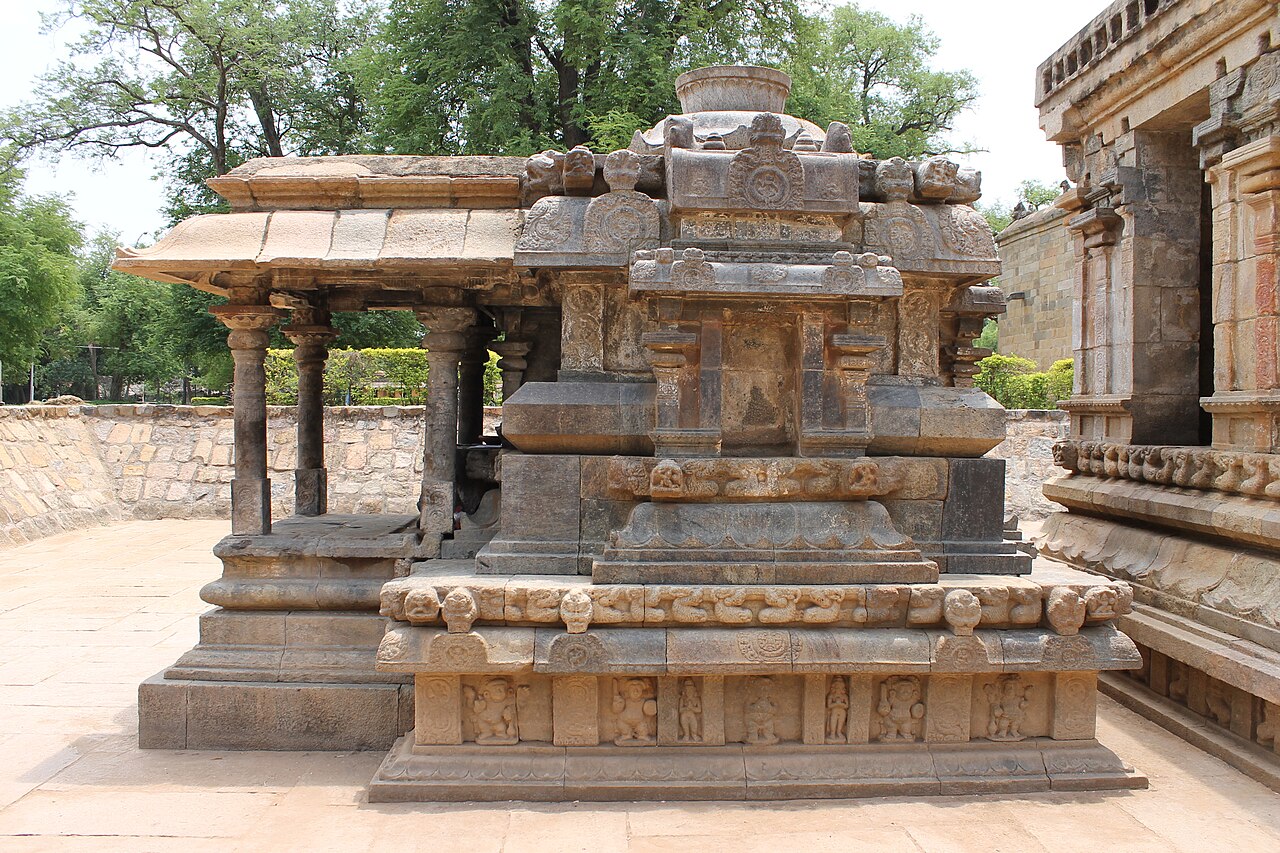
The third of the Great Living Chola Temples, raised by Rajaraja Chola II around 1166 CE at Darasuram near Kumbakonam: a chariot-form shrine of Lord Shiva as Airavatesvara, famed for its carved stone wheels, its singing steps, and worship that has continued for over eight centuries.
Aisanyesvara Siva Temple
Bhubaneswar · India · temple
A living thirteenth-century Shiva shrine in the Old Town of Bhubaneswar, standing close to the western wall of the great Lingaraj Temple, where a Shivalinga set within a circular yonipitha still receives daily worship in the Kalinga architectural tradition.
 Hinduism
Akhadachandi Temple
Bhubaneswar · India · temple
A tenth-century Kalinga-style shrine on the southwestern bank of Bhubaneswar's sacred Bindusagar tank, Akhadachandi Temple honours Maa Mahishasuramardini, the Goddess in her form as slayer of the buffalo demon, within the dense cluster of ancient shrines that fills the city's Old Town.
 Hinduism
Akshardham
New Delhi · India · temple
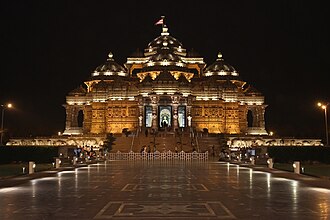
A vast contemporary Hindu mandir campus on the Yamuna's west bank in East Delhi, raised without structural steel by 11,000 artisans and volunteers, and recognised by Guinness World Records in 2007 as the world's largest comprehensive Hindu Temple.
 Hinduism
Amarnath Temple
· India · temple
A high Himalayan cave shrine in Jammu and Kashmir where a naturally forming ice lingam is venerated as Lord Śiva, drawing one of India's great seasonal pilgrimages.
 Hinduism
Ambalappuzha Sri Krishna Temple
Ambalappuzha · India · temple
A Vaishnava shrine on the Kerala backwaters consecrated to Sri Krishna in his Parthasarathy form, counted among the seven great Temples of the former kingdom of Travancore and famed across South India for its Ambalapuzha Paal Payasam offering.