Nirmalyam darshan 3:00 am Thulabharam · your weight in offering Guruvayur Ekadasi · 20 Nov 2026 Kerala style · copper and gold roofs Darshan free · Hindus only
The queue forms in the dark: men bare-chested in white mundu, women in kasavu saree, the chant of Narayana moving down the line like a slow tide. At three in the morning the doors open, oil lamps flare along the lamp galleries, the gold-sheathed flagstaff catches the first light, and far inside, framed small in the doorway of the sreekovil, He Stands. Devotees call this place Bhuloka Vaikuntham, Vaikuntha on earth. Tradition holds that the Image inside Was Worshipped By Lord Krishna's own family at Dwarka.
Tradition holds the murti Was Worshipped By Lord Krishna's own household at Dwarka. When the sea took the city, Guru Brihaspati and Vayu the wind god Carried the Image south and installed It on this spot, and their names joined to name the town: Guru, Vayu, oor, the place of Guru and Vayu.
Lord Guruvayurappan Stands four-armed as Mahavishnu, Holding the conch Panchajanya, the discus Sudarshana, the mace Kaumodaki and a lotus, yet devotees love Him as Unnikannan, the child Krishna, and bring their infants to Him for their first rice.
The Narayaneeyam was composed at this Temple. In 1587 the poet Melpathur Narayana Bhattathiri, crippled by the illness he had taken upon himself for his guru, recited one dashaka a day before the Lord for a hundred days, and on the hundredth day he stood up cured. Its verses are still sung to Lord Guruvayurappan every day.
The Image the sea could not take
The legend says the Image is older than the town, older than the coast itself. Worshipped By Vishnu in Vaikuntha, It passed to Brahma, then to King Sutapas and Queen Prishni as the fruit of their long tapas, and down through their births until It stood in the shrine of Vasudeva, where Lord Krishna Himself offered It worship at Dwarka. When the Lord ended His earthly play and the sea closed over His city, Uddhava grieved for the Image, and Guru Brihaspati, preceptor of the gods, took it up with Vayu, the wind. The two carried It south along the coast until they found a lake of splendour where, the legend says, Lord Shiva made room for the newcomer, withdrawing across the water to Mammiyur. That is why elders still say a darshan here is complete only after a visit to the Mammiyur Mahadeva Temple nearby.
History first names the place in the fourteenth century, as Kuruvayur in the Tamil poem Kokasandesam, and the Temple's own records reach back to the seventeenth. Under the patronage of the Zamorins of Calicut it grew into Kerala's great house of Krishna bhakti: Melpathur composed the Narayaneeyam here in 1587, and the singer Chembai offered his art to the Lord for a lifetime. On 30 November 1970 a fire tore through the Chuttambalam and the lamp galleries on three sides, yet the sreekovil and the Image within stood unharmed. Devotees read that morning the way they read the whole story: the Lord Keeps His own house.
What you'll actually see
1
The east nada
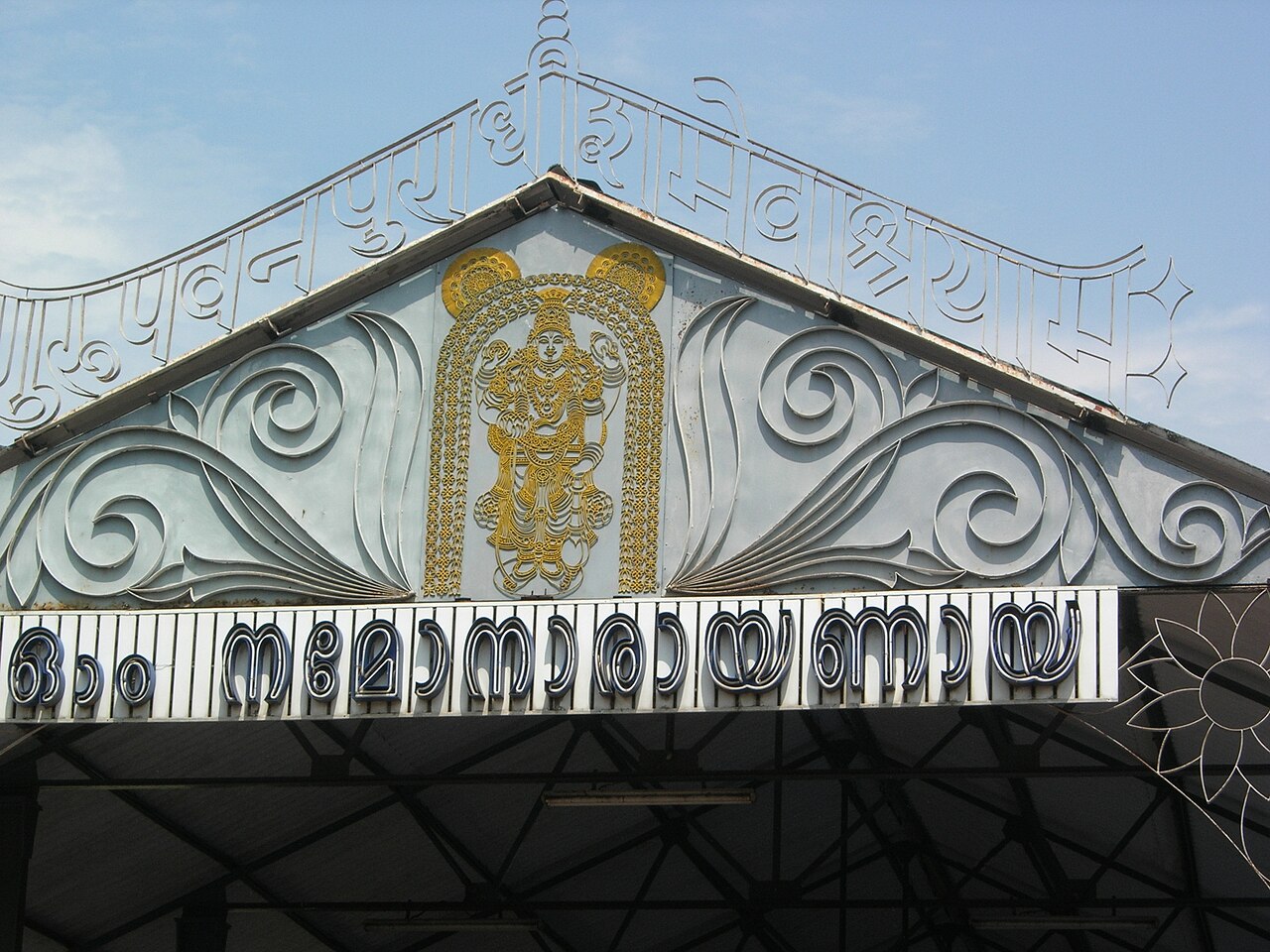
You enter from the east, past queue rails that fill before dawn. Ahead rises the gold-plated dhwajasthambham, the flagstaff that carries the festival flag each Utsavam, and beside it the tiered granite deepastambham, plated in gold, its lamps lit on festival evenings. On the gable above the entrance Lord Guruvayurappan Is worked in gold relief over the words Om Namo Narayanaya in Malayalam script.
2
Murals and the lamp walls
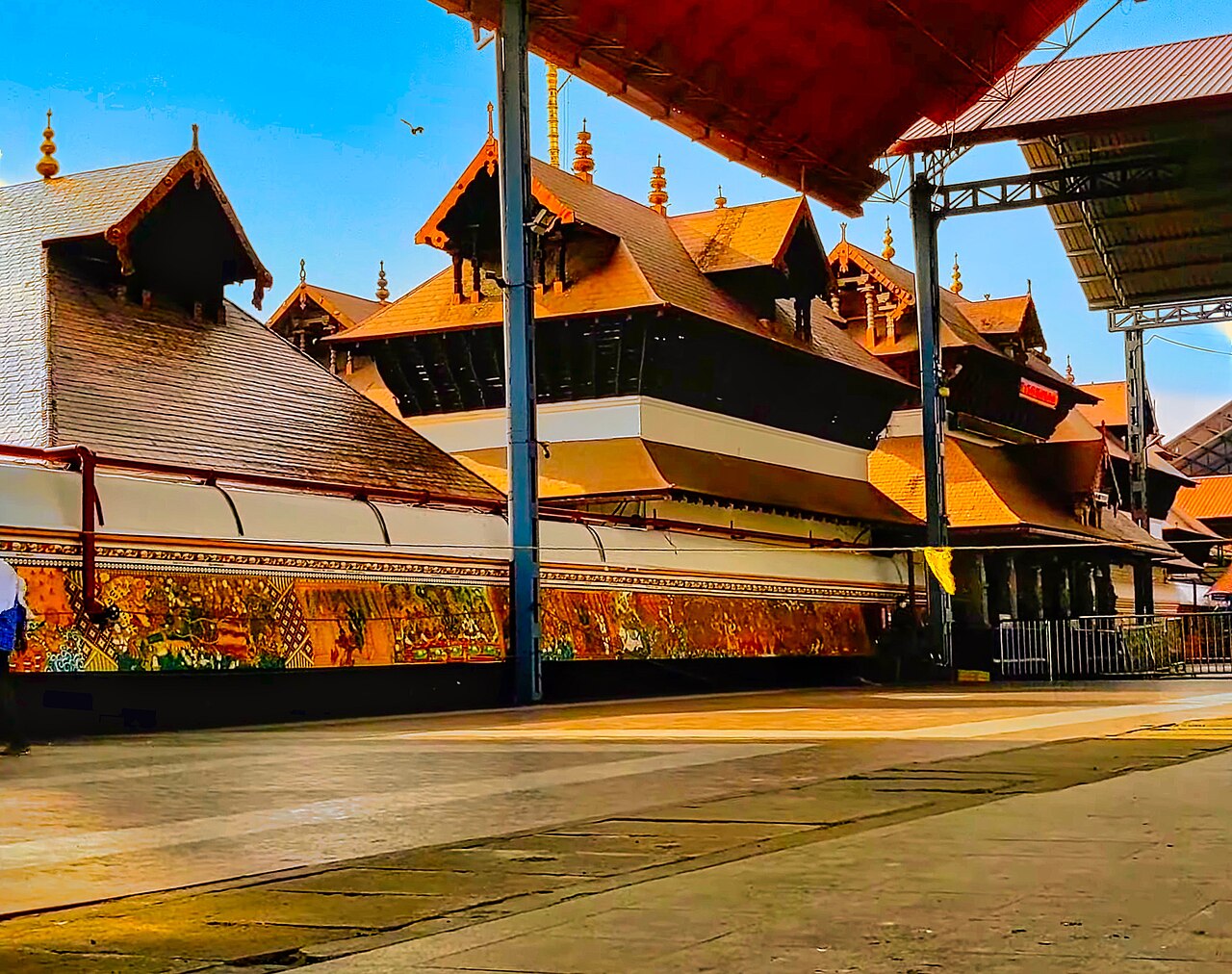
The outer walls of the inner shrine carry painted mural panels of Lord Krishna's play, running in a band beneath the layered copper roofs. Around them stands the vilakkumatam, the wooden lattice of oil lamps rebuilt after the 1970 fire, row upon row that turn the whole courtyard to flame when they are lit.
3
Gajarajan Kesavan
Near the Temple stands the life-size statue of Guruvayur Kesavan, the elephant given to the Lord by the Nilambur royal family in 1922 and titled Gajarajan, king of elephants, in 1973. He died on Guruvayur Ekadasi day in 1976, and every Ekadasi evening the Devaswom's elephants line up before his statue while the chief elephant garlands it. The living elephants stay at Punnathur Kotta, about 3 km away.
Lord Guruvayurappan worked in gold relief on the east nada gable, above Om Namo Narayanaya in Malayalam scriptMural panels running beneath the layered copper roofs along the outer wall of the Guruvayur Temple
The east nada gable and the mural walls · photos public domain and CC0, Wikimedia Commons
THE NIGHT THE WHOLE TOWN KEEPS
Guruvayur Ekadasi · 20 November 2026
The eleventh day of the bright fortnight of Vrischikam is the Temple's greatest day, kept here with a devotion the rest of Kerala sets its calendar by. Devotees fast, the town fills, and darshan runs through a day of special poojas and processions. On Ekadasi evening the Devaswom's elephants line up before the statue of Gajarajan Kesavan, and the chief elephant garlands it, honouring the elephant who served the Lord for half a century and died on this very day in 1976. In 2026 Guruvayur Ekadasi falls on Friday 20 November.
Expect the year's largest crowds; come for the small hours and confirm arrangements at guruvayurdevaswom.in before travelling.
Plan your visit
By air
Kochi (Cochin) International Airport, about 80 km by road.
By rail
Guruvayur station, terminus of the branch line from Thrissur, is about 1 km from the Temple; Thrissur is the nearest major junction.
By road
About 26 km northwest of Thrissur city.
Timings
Open 3:00 am to 1:30 pm and 4:30 pm to about 9:15 pm; timings shift on Udayasthamana pooja days and festivals. Confirm at guruvayurdevaswom.in.
Best time
The 3:00 am Nirmalyam, when the Lord Is Seen still wearing the previous day's flowers; tradition counts this first darshan the most potent of the day.
Dress
Men wear a mundu, chest bare or with a small angavastram; women wear saree, set mundu, or skirt and blouse, and churidar is permitted. Shirts, trousers and jeans are not allowed; dhotis can be bought or rented near the gates.
Punnathur Kotta
The Devaswom's elephant sanctuary, home to the Temple's elephants, lies about 3 km from the shrine in an old palace ground.
Entry
Entry is open to Hindus only. Darshan is free; vazhipadu offerings and services can be booked in advance at guruvayurdevaswom.in.
The town is named for the Image's installers: Guru is Brihaspati, Vayu is the wind god, and oor is Malayalam for place, so Guruvayur is the place of Guru and Vayu.
Photography is prohibited inside the Temple; the boards at the east entrance say so plainly, so leave the camera behind.
Krishnanattam, the eight-night dance drama of Lord Krishna's life created by the Zamorin Manaveda in the seventeenth century, survives today under this Temple's sole patronage and is offered as a vazhipadu on Temple nights.
Thulabharam is the signature offering: you sit in one pan of the great scale and give your own weight in bananas, sugar, jaggery or coconut at counters inside the Temple.
Questions pilgrims ask
Is the deity Baby Krishna?
The Image Is a standing, four-armed form of Mahavishnu with conch, discus, mace and lotus, the form Lord Krishna's parents saw at His birth. Yet Guruvayur's devotion addresses Him as Unnikannan, the child Krishna, which is why first-rice ceremonies and childhood rites fill the Temple every morning.
Can non-Hindus enter the Temple?
No. Entry to the Temple is restricted to Hindus, and boards at the gates state this. The outer precincts, the town and Punnathur Kotta are open to all.
What is Thulabharam and how do I offer it?
Thulabharam is an offering in which a devotee is weighed on the Temple's great balance against a chosen material, commonly bananas, sugar, jaggery or coconut, which is then given to the Lord. Counters inside the Temple manage the weighing and the materials.
What should I wear?
Men enter in a mundu with the chest bare or covered only by a small angavastram; women wear saree, set mundu, or skirt and blouse, and churidar is permitted. Shirts, trousers and jeans are not allowed inside.
What is special about the 3 am Nirmalyam?
Nirmalyam is the first sight of the Lord, still adorned with the previous day's flowers and sandal. Tradition holds that the devas themselves worship Him through the night, so this darshan is prized above all others, and the queue for it begins well before the doors open.
The Sthan in photographs
Darshan from afar
From the temple's own channels. Nothing loads until you press play.
Dharamshalas and guest houses near this Sthan, shared by devotees. Adisthan takes no bookings and no money; contact each stay directly.
No stays are listed here yet. Know one that serves pilgrims well?
Are you an officer, priest or sevak of the Guruvayur Devaswom? Claim this page to keep timings, vazhipadu details and festival dates true for the devotees who plan their journeys by them.