Hidimba Devi Temple, Dhungri Manali
Dhungri Temple · Hadimba Devi Temple · Hadimba Temple · Maa Hidimba Devi Temple
About
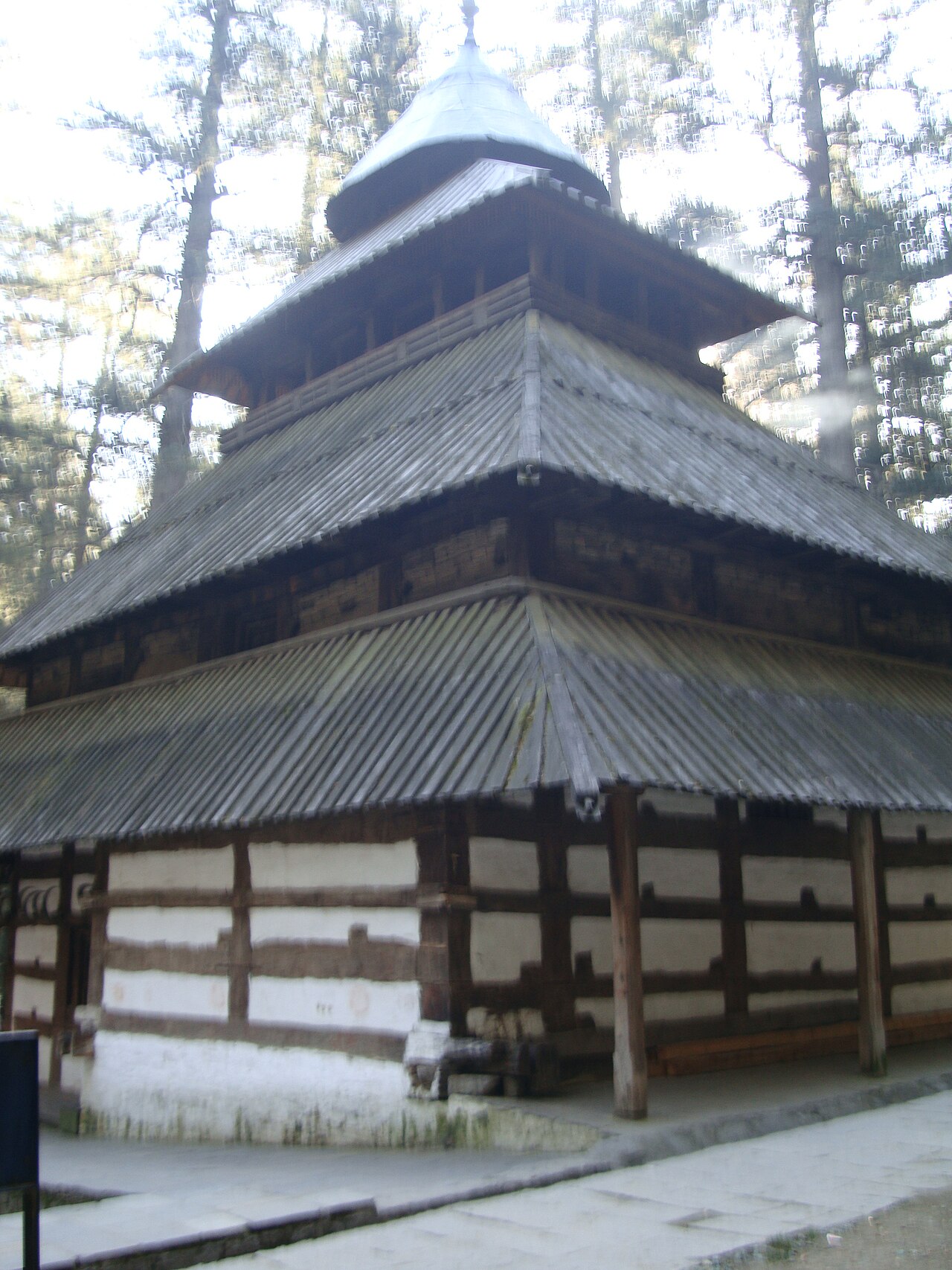
Cradled beneath deodar cedars in the Dhungiri Van Vihar forest on the outskirts of Manāli, this ancient shrine honours Hidimbā Devī, revered in the Kullu valley as a living goddess and worshipped long before the present structure was raised. The sanctuary is built over a naturally occurring boulder that protrudes from the earth itself; this rock, rather than a sculptural icon, served for centuries as the primary embodiment of the deity. Within the inner chamber, only a small brass image, no more than 7.5 centimetres tall, represents the goddess, alongside the carved imprint of her feet in stone, which devotees venerate with great fervour.
The Temple's exterior rises to a height of 24 metres and is constructed almost entirely of wood, culminating in an elaborately tiered tower known as a śikhara. Three successively narrowing square roofs clad in timber shingles give way to a brass cone at the summit. The principal doorway is covered in intricate carvings: the goddess Durgā occupies the central theme, while surrounding panels depict animals, foliate scrollwork, dancers, episodes from the life of Lord Krishna, and the nine celestial bodies known as the Navagrahas. The Temple base, by contrast, is of whitewashed stone rendered with mud plaster, lending the structure a grounded, earthen character that contrasts with the soaring carved tower above.
A short distance from the main shrine stands a smaller sanctuary dedicated to Ghaṭotkaca, the son born to Hidimbā Devī and Bhīma of the Pāṇḍavas, pointing to the extended sacred geography that has grown around the goddess's story over centuries.
History
Maa Hidimba Devi Temple was built in 1553 CE under the patronage of Raja Bahadur Singh, its wooden tower raised around a cave where, tradition holds, Hidimba, sister of the demon Hidimb of the Mahabharata, undertook long tapasya after her marriage to Bhima and the birth of their son Ghatotkacha. Rather than accompany the Pandavas when their exile ended, she remained in the Kullu hills and was, in time, honoured as a goddess. The Temple has stood as a centrally protected Monument of National Importance since 18 April 1967.
Significance
During Navratri, when much of the Hindu world turns to Maa Durga, Manali turns instead to Maa Hidimba, a measure of how completely this goddess is woven into local identity. Each May the Temple's own Dhungri Mela gathers the valley in music and dance to mark her birthday, and devotees still venerate the natural rock and the carved footprints within the sanctum as her living presence.
Architecture
Himalayan pagoda-style wooden Temple architecture: a tiered timber shikhara of three diminishing square roofs and a brass finial over a whitewashed stone-and-mud-plaster base
Visiting
Daily worship
| Temple open to visitors | 08:00 to 18:00 |
Hours
Hours not listed.
Contact
No contact details listed yet.
Engage with Hidimba Devi Temple, Dhungri Manali
Through the four pathways
Seva सेवा — Service
Offer your time and skills here. The following opportunities are open at Hidimba Devi Temple, Dhungri Manali:
No Seva offerings listed yet.
Sādhana साधना — Practice
Learn the worship and practice associated with Hidimba Devi Temple, Dhungri Manali:
No Sādhana offerings listed yet.
Sandhāna सन्धान — Wisdom
Unite with the wisdom of this tradition:
No Sandhāna offerings listed yet.
Sādhya साध्य — Giving
Support this sacred place according to your means:
No Sādhya offerings listed yet.
All giving flows directly to Hidimba Devi Temple, Dhungri Manali. Adisthan does not take a commission.
Gallery
Related sacred places
 Hinduism
Airavatesvara Temple, Darasuram
Darasuram (Kumbakonam) · India · temple
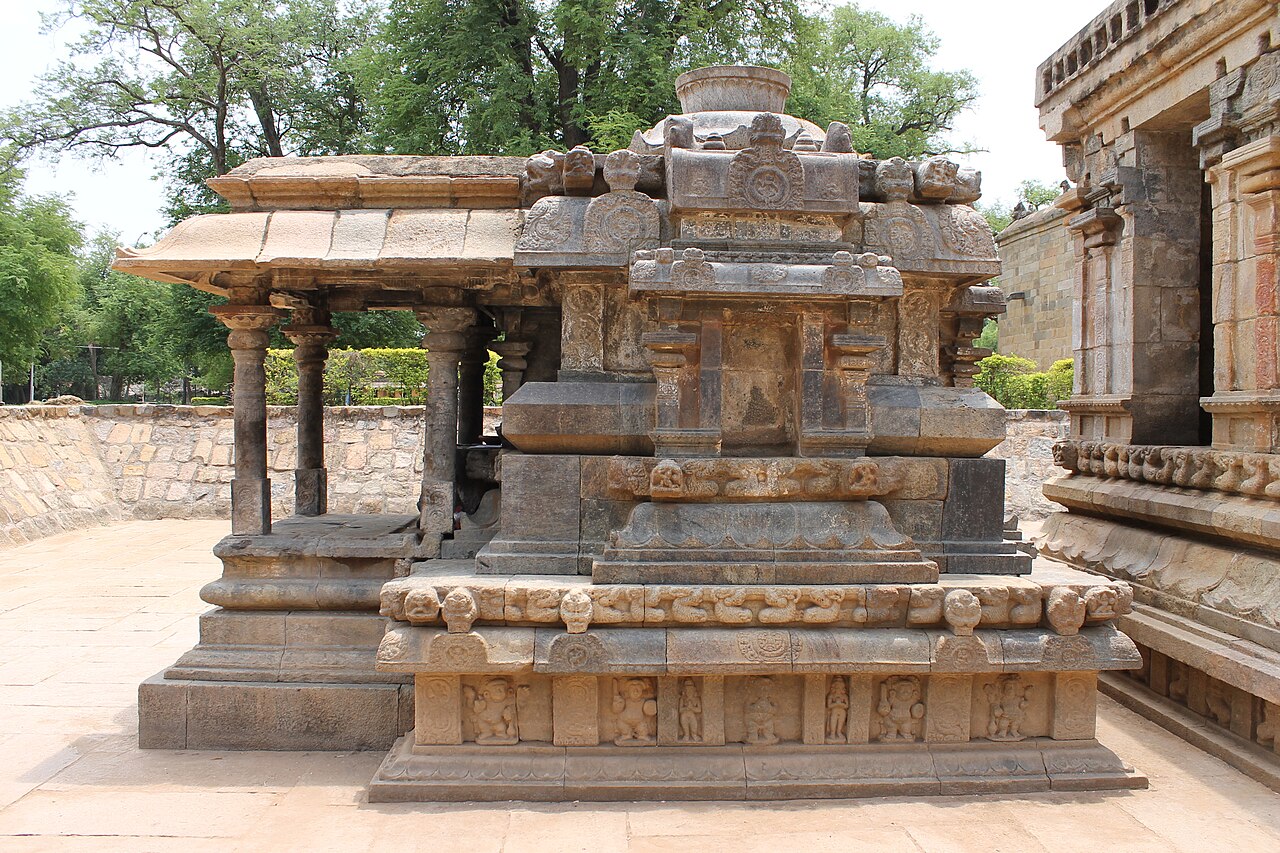
The third of the Great Living Chola Temples, raised by Rajaraja Chola II around 1166 CE at Darasuram near Kumbakonam: a chariot-form shrine of Lord Shiva as Airavatesvara, famed for its carved stone wheels, its singing steps, and worship that has continued for over eight centuries.
Aisanyesvara Siva Temple
Bhubaneswar · India · temple
A living thirteenth-century Shiva shrine in the Old Town of Bhubaneswar, standing close to the western wall of the great Lingaraj Temple, where a Shivalinga set within a circular yonipitha still receives daily worship in the Kalinga architectural tradition.
 Hinduism
Akhadachandi Temple
Bhubaneswar · India · temple
A tenth-century Kalinga-style shrine on the southwestern bank of Bhubaneswar's sacred Bindusagar tank, Akhadachandi Temple honours Maa Mahishasuramardini, the Goddess in her form as slayer of the buffalo demon, within the dense cluster of ancient shrines that fills the city's Old Town.
 Hinduism
Akshardham
New Delhi · India · temple
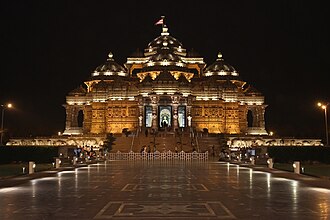
A vast contemporary Hindu mandir campus on the Yamuna's west bank in East Delhi, raised without structural steel by 11,000 artisans and volunteers, and recognised by Guinness World Records in 2007 as the world's largest comprehensive Hindu Temple.
 Hinduism
Amarnath Temple
· India · temple
A high Himalayan cave shrine in Jammu and Kashmir where a naturally forming ice lingam is venerated as Lord Śiva, drawing one of India's great seasonal pilgrimages.
 Hinduism
Ambalappuzha Sri Krishna Temple
Ambalappuzha · India · temple
A Vaishnava shrine on the Kerala backwaters consecrated to Sri Krishna in his Parthasarathy form, counted among the seven great Temples of the former kingdom of Travancore and famed across South India for its Ambalapuzha Paal Payasam offering.