
ISKCON Temple, Vrindavan
Sri Krishna Balaram Mandir · Krishna Balaram Mandir · ISKCON Vrindavan
About
Situated in the holy city of Vrindavan within the Mathura district of Uttar Pradesh, the Sri Krishna Balaram Mandir stands among the most significant centres of the International Society for Krishna Consciousness worldwide. Known informally as ISKCON Vrindavan, the complex belongs to the Gaudiya Vaiṣṇava tradition, a devotional lineage centred on the worship of Śrī Kṛṣṇa and his associates.
Three altars grace the interior of the mandir. At the principal altar stand Kṛṣṇa and Balarāma, the presiding deities of the entire complex. To one side, the divine couple Rādhā and Kṛṣṇa, worshipped here as Śrī Śrī Rādhā Śyāmasundara, are accompanied by the sakhīs Lalitā Devī and Viśākhā Devī. The third altar honours Śrī Caitanya Mahāprabhu alongside Nityānanda, and also enshrines ISKCON's founder-ācārya A. C. Bhaktivedānta Swami Prabhupāda together with his own guru, Bhaktisiddhānta Sarasvatī.
A short distance from the main Temple, at the entrance to the compound, a samādhi mandir built of white marble commemorates Prabhupāda himself, offering a quiet place of remembrance and reverence. The calendar of festivals observed here spans the full cycle of Vaiṣṇava celebrations, from Kṛṣṇa Janmāṣṭamī and Rādhāṣṭamī to Gaura-pūrṇimā, Balarāma Pūrṇimā, and the luminous month of Kārtika, making the Temple a living hub of congregational worship and devotional song throughout the year.
History
The Temple was established by A. C. Bhaktivedanta Swami Prabhupada, founder-acharya of the International Society for Krishna Consciousness, who personally installed the deities of Lord Krishna and Lord Balarama, of Radha-Shyamasundar with the gopis Lalita and Vishakha, and of Sri Chaitanya Mahaprabhu with Nityananda, on Rama Navami, 20 April 1975. A white marble samadhi shrine honouring Srila Prabhupada himself stands near the entrance to the Temple complex. For decades the Temple courtyard resounded with the continuous kirtan led by Sripad Aindra Dasa, whose twenty-four-hour kirtan tradition remains closely associated with this sanctum and is remembered on a plaque within the Temple grounds.
Significance
Vrindavan is held within the Gaudiya Vaishnava tradition to be Lord Krishna's eternal abode, and a Temple raised in His honour here carries a sanctity that few other places can claim. The mandir draws pilgrims from across India and Krishna devotees from around the world, serving equally as a place of daily worship and as a living memorial to the acharya who carried this path beyond India's shores.
Architecture
20th-century Vaishnava Temple architecture in carved white marble, with Rajasthani-style jharokha balconies
Visiting
Hours
Hours not listed.
Contact
Engage with ISKCON Temple, Vrindavan
Through the four pathways
Seva सेवा — Service
Offer your time and skills here. The following opportunities are open at ISKCON Temple, Vrindavan:
No Seva offerings listed yet.
Sādhana साधना — Practice
Learn the worship and practice associated with ISKCON Temple, Vrindavan:
No Sādhana offerings listed yet.
Sandhāna सन्धान — Wisdom
Unite with the wisdom of this tradition:
No Sandhāna offerings listed yet.
Sādhya साध्य — Giving
Support this sacred place according to your means:
No Sādhya offerings listed yet.
All giving flows directly to ISKCON Temple, Vrindavan. Adisthan does not take a commission.
Festivals & Events
- Sept
Sri Krishna Janmashtami
4 September 2026 · annual
The appearance day of Lord Krishna, the presiding deity of the Temple, marked with a day of fasting, elaborate abhisheka, and continuous kirtan through the night.
- Sept
Radhashtami
19 September 2026 · annual
The appearance day of Srimati Radharani, celebrated with new garments and flower decoration for the deities and abhisheka in the sanctum.
Gallery
Related sacred places
 Hinduism
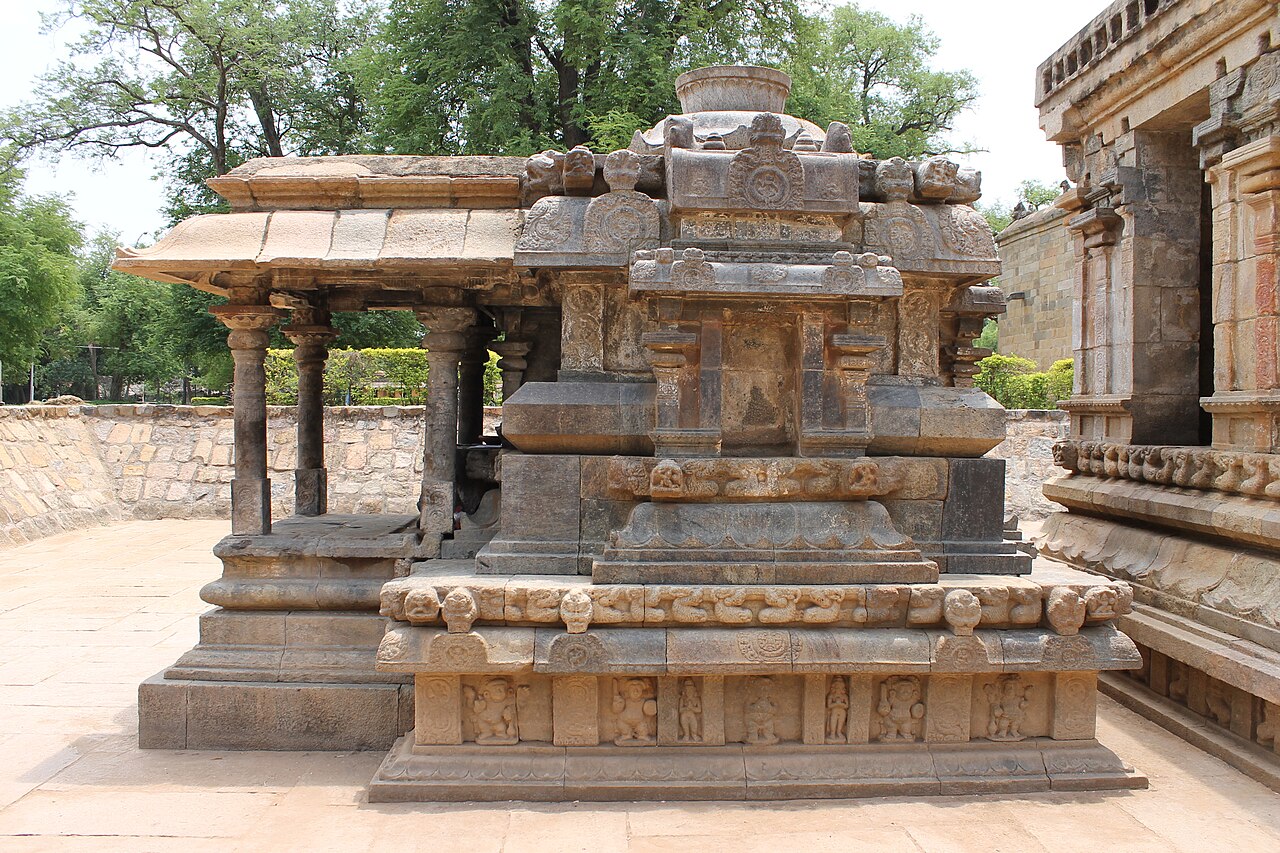
Airavatesvara Temple, Darasuram
Darasuram (Kumbakonam) · India · temple
The third of the Great Living Chola Temples, raised by Rajaraja Chola II around 1166 CE at Darasuram near Kumbakonam: a chariot-form shrine of Lord Shiva as Airavatesvara, famed for its carved stone wheels, its singing steps, and worship that has continued for over eight centuries.
Aisanyesvara Siva Temple
Bhubaneswar · India · temple
A living thirteenth-century Shiva shrine in the Old Town of Bhubaneswar, standing close to the western wall of the great Lingaraj Temple, where a Shivalinga set within a circular yonipitha still receives daily worship in the Kalinga architectural tradition.
 Hinduism
Akhadachandi Temple
Bhubaneswar · India · temple
A tenth-century Kalinga-style shrine on the southwestern bank of Bhubaneswar's sacred Bindusagar tank, Akhadachandi Temple honours Maa Mahishasuramardini, the Goddess in her form as slayer of the buffalo demon, within the dense cluster of ancient shrines that fills the city's Old Town.
 Hinduism
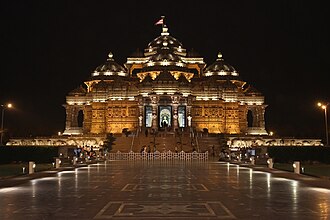
Akshardham
New Delhi · India · temple
A vast contemporary Hindu mandir campus on the Yamuna's west bank in East Delhi, raised without structural steel by 11,000 artisans and volunteers, and recognised by Guinness World Records in 2007 as the world's largest comprehensive Hindu Temple.
 Hinduism
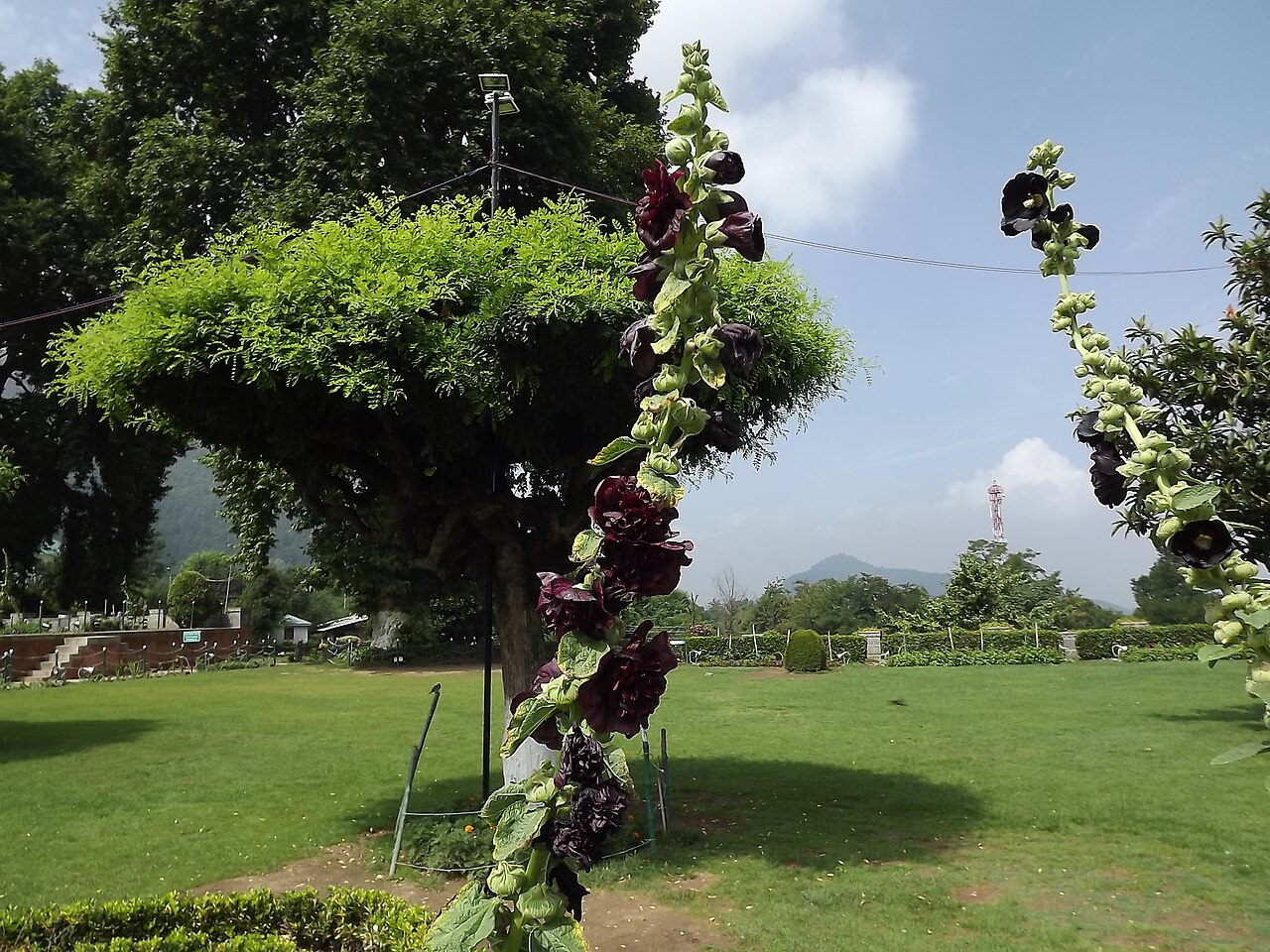
Amarnath Temple
· India · temple
A high Himalayan cave shrine in Jammu and Kashmir where a naturally forming ice lingam is venerated as Lord Śiva, drawing one of India's great seasonal pilgrimages.
 Hinduism
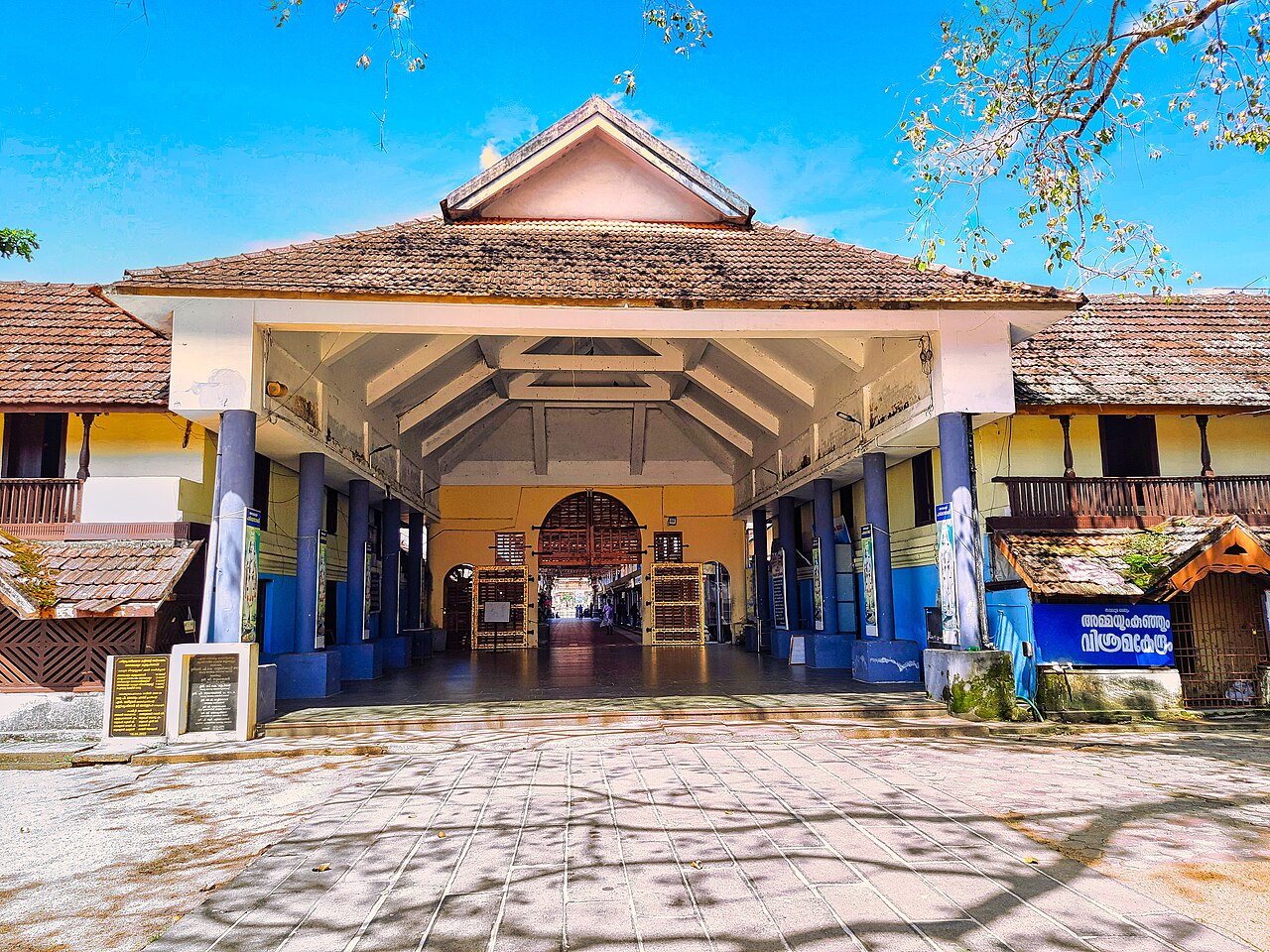
Ambalappuzha Sri Krishna Temple
Ambalappuzha · India · temple
A Vaishnava shrine on the Kerala backwaters consecrated to Sri Krishna in his Parthasarathy form, counted among the seven great Temples of the former kingdom of Travancore and famed across South India for its Ambalapuzha Paal Payasam offering.