
Jagdish Temple, Udaipur
Jagannath Rai Temple · Jagdish-ji Temple · Jagdish Mandir
About
Standing a short walk from the city palace of Udaipur, the Jagdish Temple, known formally as the Temple of Jagannath Rai and affectionately as Jagdish-ji, commands the surrounding streets from atop an elevated marble terrace. Thirty-two marble steps lead worshippers upward past a brass figure of Garuḍa, the divine eagle-vehicle of Lord Viṣṇu, before they reach the main sanctum. Within, a four-armed image of Lord Jagannath, understood locally as a form of both Viṣṇu and Kṛṣṇa, has been carved from a single piece of black stone and adorned with flowers and regalia.
The Temple is the finest surviving specimen of Māha Māru or Māru-Gurjara style in Udaipur, its three storeys encrusted with intricate hand-cut stone carvings. The structure joins a double-storey maṇḍapa (pillared hall) to a double-storey sāṃdhāra sanctum that includes a roofed ambulatory for circumambulation. The maṇḍapa conceals an additional storey within its pyramidal samavaraṇa bellroof, while the clustered hollow śikhara above the sanctum rises to house two further non-functional levels. Four subsidiary shrines arranged in a circle around the central garbhagṛha honour Lord Gaṇeśa, Sūrya, Goddess Śakti, and Lord Śiva respectively.
The lanes of Udaipur's old sheharpanah city wall radiate outward from this Temple, reflecting its role as a spiritual and civic anchor for the city. The most celebrated annual event in the Temple's ritual calendar is the Rath Yātrā procession, which draws devotees together in festive veneration of the Lord.
History
Maharana Jagat Singh I of Mewar commissioned the Temple, then known as the Temple of Jagannath Rai, and its construction was completed in 1651 at a cost of some one and a half million rupees, a vast sum that made it the largest Temple raised in Udaipur. Thirty-two marble steps lead worshippers up past a brass image of Garuda, Lord Vishnu's vehicle, to the sanctum at the summit of the terrace. From the year of its consecration the Temple has remained in continuous worship, and the lanes of Udaipur's old walled city still radiate outward from its steps.
Significance
Jagdish Temple is the largest Temple in Udaipur and the finest surviving example of Maha-Maru, or Maru-Gurjara, Temple craft in the city, its three storeys covered in stone carving of exceptional fineness. Four subsidiary shrines set around the main sanctum honour Lord Ganesha, Surya Dev, Goddess Shakti, and Lord Shiva, gathering the wider Hindu pantheon around the central worship of Lord Jagannath. The Temple's annual Rath Yatra procession, carrying the Lord through streets he has watched over for more than three and a half centuries, remains a living part of Udaipur's devotional calendar.
Architecture
Maha-Maru (Maru-Gurjara) Temple architecture
Visiting
Daily worship
| Darshan, summer mornings (approx. Apr-Sep) | 05:00 to 14:30 | |
| Darshan, summer evenings (approx. Apr-Sep) | 16:00 to 22:30 | |
| Darshan, winter mornings (approx. Oct-Mar) | 05:30 to 14:30 | |
| Darshan, winter evenings (approx. Oct-Mar) | 16:00 to 22:00 |
Hours
Hours not listed.
Contact
No contact details listed yet.
Engage with Jagdish Temple, Udaipur
Through the four pathways
Seva सेवा — Service
Offer your time and skills here. The following opportunities are open at Jagdish Temple, Udaipur:
No Seva offerings listed yet.
Sādhana साधना — Practice
Learn the worship and practice associated with Jagdish Temple, Udaipur:
No Sādhana offerings listed yet.
Sandhāna सन्धान — Wisdom
Unite with the wisdom of this tradition:
No Sandhāna offerings listed yet.
Sādhya साध्य — Giving
Support this sacred place according to your means:
No Sādhya offerings listed yet.
All giving flows directly to Jagdish Temple, Udaipur. Adisthan does not take a commission.
Gallery
Related sacred places
 Hinduism
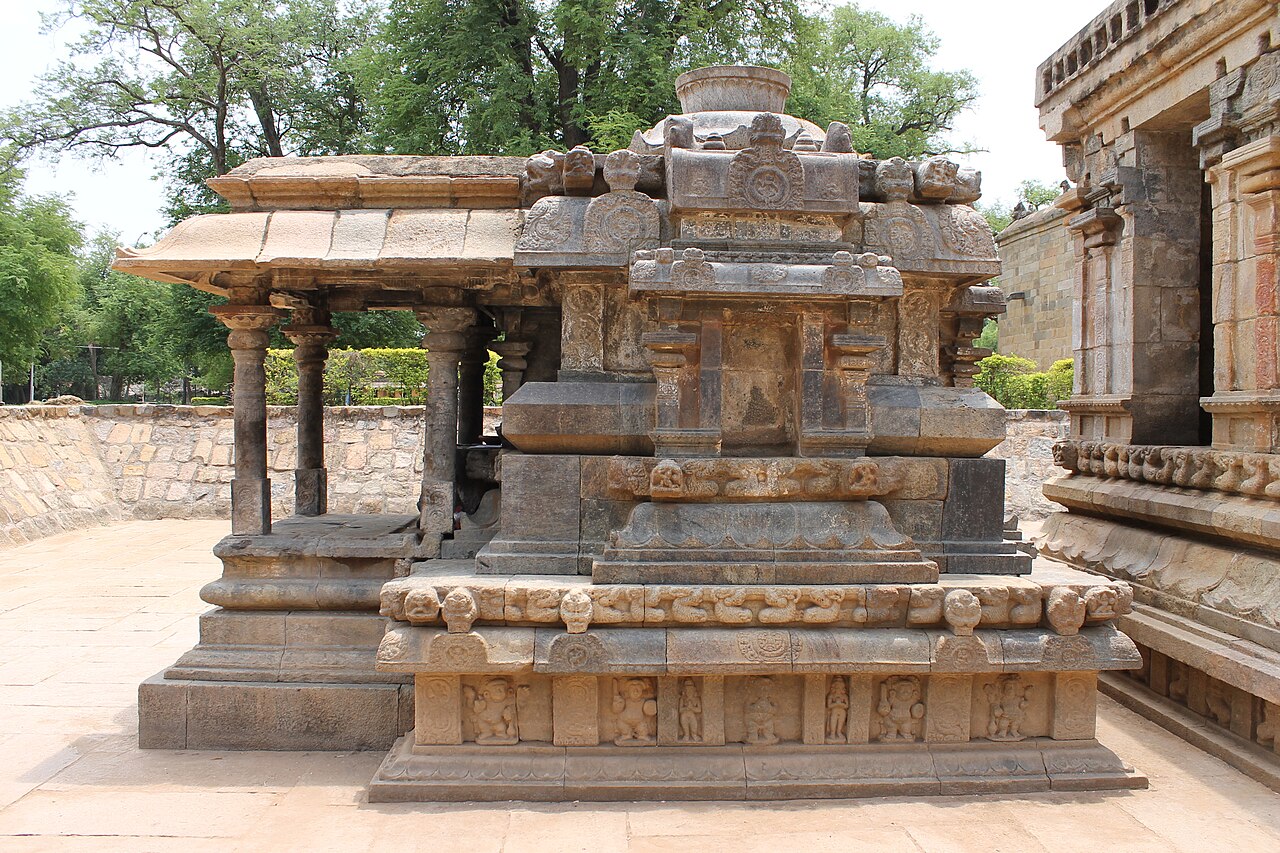
Airavatesvara Temple, Darasuram
Darasuram (Kumbakonam) · India · temple
The third of the Great Living Chola Temples, raised by Rajaraja Chola II around 1166 CE at Darasuram near Kumbakonam: a chariot-form shrine of Lord Shiva as Airavatesvara, famed for its carved stone wheels, its singing steps, and worship that has continued for over eight centuries.
Aisanyesvara Siva Temple
Bhubaneswar · India · temple
A living thirteenth-century Shiva shrine in the Old Town of Bhubaneswar, standing close to the western wall of the great Lingaraj Temple, where a Shivalinga set within a circular yonipitha still receives daily worship in the Kalinga architectural tradition.
 Hinduism
Akhadachandi Temple
Bhubaneswar · India · temple
A tenth-century Kalinga-style shrine on the southwestern bank of Bhubaneswar's sacred Bindusagar tank, Akhadachandi Temple honours Maa Mahishasuramardini, the Goddess in her form as slayer of the buffalo demon, within the dense cluster of ancient shrines that fills the city's Old Town.
 Hinduism
Akshardham
New Delhi · India · temple
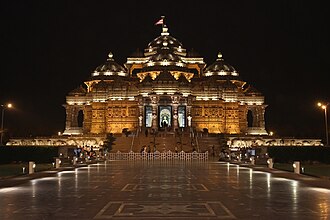
A vast contemporary Hindu mandir campus on the Yamuna's west bank in East Delhi, raised without structural steel by 11,000 artisans and volunteers, and recognised by Guinness World Records in 2007 as the world's largest comprehensive Hindu Temple.
 Hinduism
Amarnath Temple
· India · temple
A high Himalayan cave shrine in Jammu and Kashmir where a naturally forming ice lingam is venerated as Lord Śiva, drawing one of India's great seasonal pilgrimages.
 Hinduism
Ambalappuzha Sri Krishna Temple
Ambalappuzha · India · temple
A Vaishnava shrine on the Kerala backwaters consecrated to Sri Krishna in his Parthasarathy form, counted among the seven great Temples of the former kingdom of Travancore and famed across South India for its Ambalapuzha Paal Payasam offering.