Darshan about 5 am to 9 pm Entry free · all welcome Vivah Panchami · 14 Dec 2026 White marble Nau Lakha palace · 1910 Birthplace of Maa Sita
The bazaar lanes of Janakpur are loud with rickshaw bells and the smell of hot jalebi, and then the street opens and the noise falls back: a palace of white marble stands there, sixty rooms of lattice and coloured glass, its domes and turrets pale as milk against the Tarai sky. Nothing else in Nepal looks like it. Women cross the courtyard singing in Maithili, as the women of Mithila have always sung For Her. This is the house of Maa Janaki, the Daughter the earth itself gave up.
Janakpurdham is the old capital of Mithila, where tradition holds King Janak turned an infant Girl out of the furrow of a ploughed field and named Her for the furrow itself: Maa Sita. This city is Her janmabhoomi, and the Temple rises where Her golden image is said to have come out of the earth again in 1657.
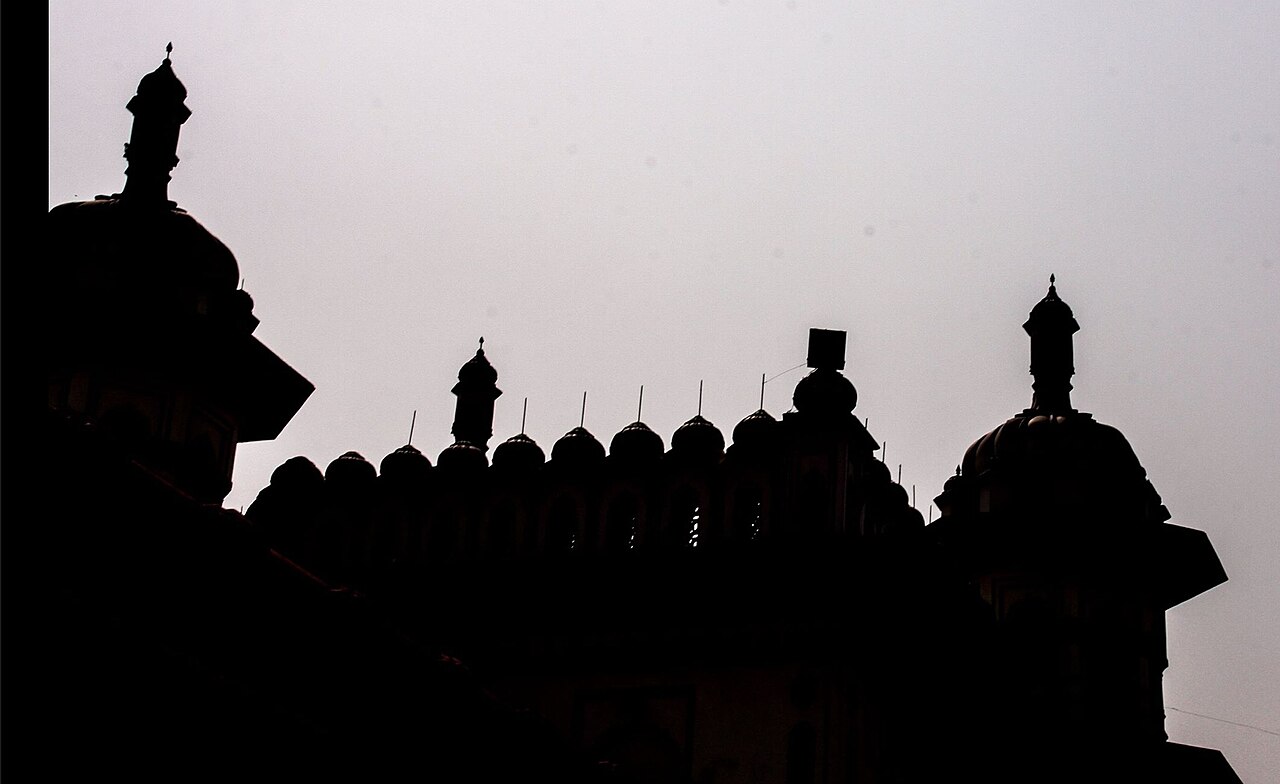
It is the largest Temple in Nepal: a three storey palace of stone and marble in a rare Hindu Rajput and Mughal blend, sixty rooms bright with lattice windows, coloured glass and Madhubani painting, completed in 1910 and called Nau Lakha for the nine lakh its queen spent to raise it.
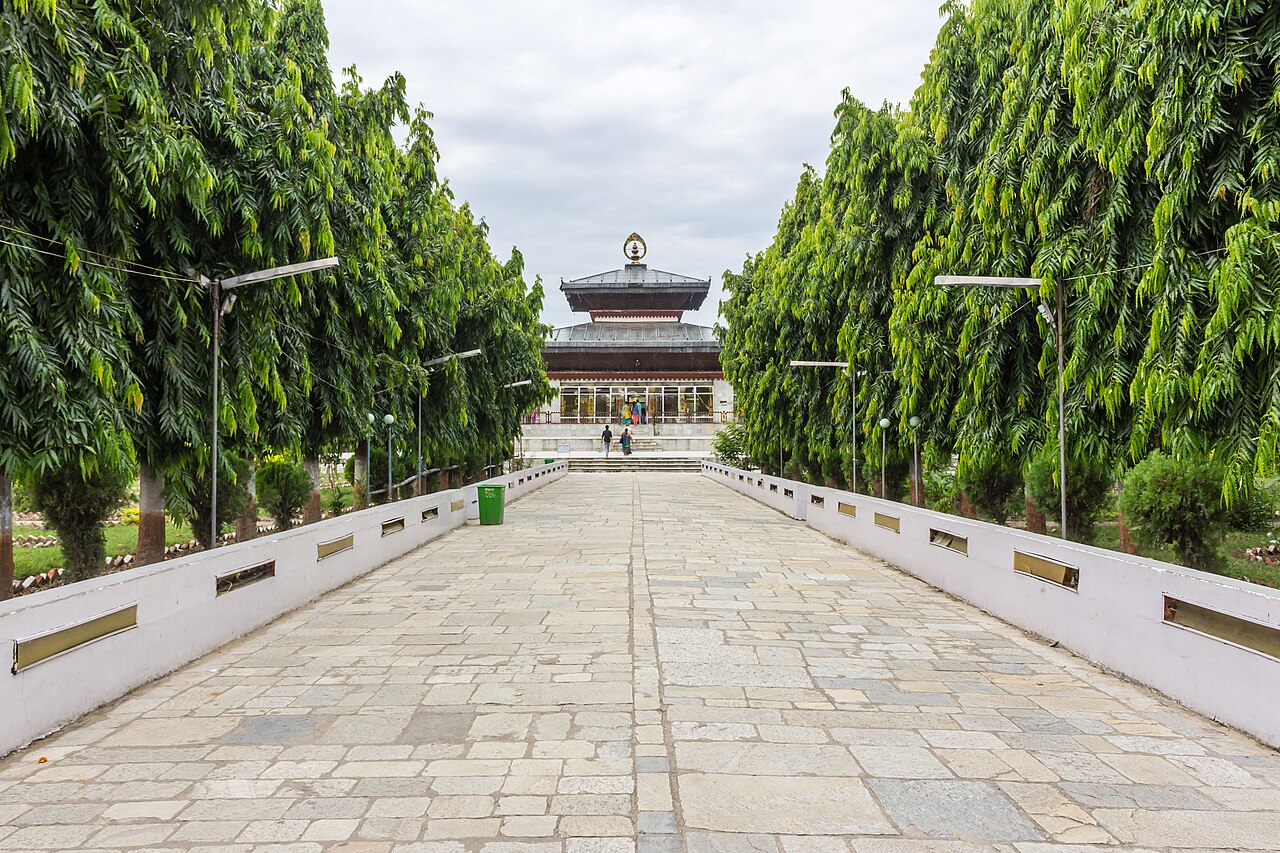
At the Temple's southwest corner stands the Vivah Mandap, the pavilion where Mithila holds that Maa Sita wed Lord Ram; every winter on Vivah Panchami the wedding is performed again, and the baraat walks in from Ayodhya across an open border.
The Daughter of the furrow
The Ramayana's telling begins with a king and a plough. King Janak of Mithila, preparing the sacred ground, felt the ploughshare catch, and from the opened furrow he lifted an infant Girl. He named Her for the furrow, sita in the old tongue, and raised Her as his own; and so Her other names: Janaki, daughter of Janak, and Maithili, daughter of Mithila. When the time of Her svayamvara came, King Janak set an impossible bride price: the great bow of Lord Shiva, which no king could so much as lift. Prince Ram of Ayodhya raised it, strung it, and broke it, and on the fifth day of the bright fortnight of Margashirsha the two were wed, on ground this Temple still keeps.
Ages passed, and Mithila's capital sank back into the land. Then, tradition holds, in 1657 a wandering saint and poet, Sannyasi Shurkishordas, found a golden image of Maa Sita at the very place of Her birth. He settled there, preached, and is honoured as the founder of modern Janakpur; around the image he found, the town grew back like a tide returning.
The marble palace that now holds Her came from a queen's vow across the border. Queen Vrisha Bhanu Kunwari of Tikamgarh, of India's Orchha royal house, raised the present Temple, completed in 1910 at a cost remembered as nine lakh, which is why Janakpur calls it the Nau Lakha Mandir. Since 2008 the Ram Janaki Temple complex has stood on the UNESCO tentative list of World Heritage sites.
What you'll actually see
1
The white marble palace
Three storeys of stone and marble spread over 1,480 square metres, ringed with turrets and domes: a fortress-palace more than a shikhara Temple. Its sixty rooms are worked with lattice windows, coloured glass, engravings and paintings, and the walls carry the Madhubani art of Mithila's women.
2
The sanctum of Maa Janaki
At the heart of the palace the golden image of Maa Sita receives darshan, and around the complex stand shrines of Her family in the epic: King Janak and Queen Sunaina, Lord Ram, Lakshman and Urmila. At evening the aarti fills the courtyard with lamplight and Maithili song.
3
The Vivah Mandap and the ponds
A short walk from the sanctum, the Vivah Mandap pavilion marks the wedding ground of Maa Sita and Lord Ram. Beyond the walls lies a town of sacred water: the Ganga Sagar and Dhanush Sagar bathing tanks are minutes away, and at Dhanushadham, a short drive out, tradition holds a fragment of the broken bow itself fell to earth.
The Vivah Mandap pavilion at Janakpur, which marks the wedding ground of Maa Sita and Lord RamJanaki Mandir glowing under lights in the evening
The Vivah Mandap, and the temple lit for evening · photos by Bijay Chaurasia and Kripaatreya11 (CC BY-SA 4.0), Wikimedia Commons
The wedding two nations attend
Vivah Panchami · 14 December 2026
On the fifth day of the bright fortnight of Margashirsha, Janakpur remarries its Daughter. For about a week the city becomes a wedding house: a baraat arrives from Ayodhya across the open border, players robed as Lord Ram, Lakshman and King Dashrath ride decorated chariots through the lanes, and the Dola of Lord Ram from the Ram Mandir and the Dola of Maa Janaki from Her own Temple are carried out to the Barahbigha Rangbhumi ground, where thousands watch the svayamvara and the wedding performed again. The next Vivah Panchami falls on Monday 14 December 2026.
Every bed in town fills during the festival week; book lodging early and arrive a day before the wedding itself.
Plan your visit
By air
Janakpur Airport (JKR) is about 4 km from town; Buddha Air and Yeti Airlines fly the roughly 30 minute hop from Kathmandu several times daily.
By rail
Janakpurdham station sits on the reopened Jaynagar to Bijalpura cross-border line; broad gauge trains have run from Jaynagar in Bihar, India, about 30 km south, since April 2022.
By road
Buses link Janakpur with Kathmandu, roughly 390 km and most of a day on the road; the Indian border crossing at Jaynagar is the shortest way in from Bihar.
Timings
Roughly 5 am to noon and 4 pm to 9 pm daily; published hours vary by season and source, and festival days run far longer.
Best time
October to March is the Tarai's gentle season. Come for morning darshan if you want quiet, or in December for Vivah Panchami if you want the wedding.
Entry
Free for everyone; the Temple welcomes visitors of all faiths and nationalities.
Dress
Dress modestly as in any Temple of the plains; shoes come off before the sanctum, and ask before photographing worship.
Her names are the city's map: Sita means furrow, Janaki means daughter of Janak, Maithili means daughter of Mithila, and the town in turn is Janakpurdham, the abode of Janak's house.
Nau Lakha means nine lakh: the sum, nine hundred thousand, that tradition remembers Queen Vrisha Bhanu spending on the Temple, and the name Janakpur still uses for it.
Janakpur is the living heart of Mithila painting: the Temple's own walls carry Madhubani work, and the city's women keep the art alive in courtyards and studios around the shrine.
Indian citizens cross the open border without a visa, which is why Vivah Panchami feels like two countries at one wedding.
Questions pilgrims ask
Is the building itself from the time of Maa Sita?
No, and the Temple does not pretend otherwise. The ground is what is ancient: tradition holds this is Her birthplace and wedding city, and that Her golden image was found here in 1657. The white marble palace above it was completed in 1910 by Queen Vrisha Bhanu Kunwari of Tikamgarh.
Can non-Hindus enter?
Yes. Janaki Mandir is open to visitors of every faith and nationality, and entry is free. Photography is often allowed, but ask before pointing a camera at worship or at the sanctum.
What actually happens at Vivah Panchami?
For about a week around the fifth day of bright Margashirsha, next falling on 14 December 2026, Janakpur re-enacts the wedding of Maa Sita and Lord Ram: a baraat from Ayodhya, chariot processions through the lanes, and the meeting of the two Dolas at the Barahbigha Rangbhumi ground where the svayamvara and marriage are performed before the crowds.
What else should a pilgrim see in Janakpur?
The Vivah Mandap beside the Temple, the town's pagoda style Ram Mandir, and the Ganga Sagar and Dhanush Sagar bathing tanks. Dhanushadham, a short drive away, keeps the place where a fragment of Lord Shiva's broken bow is said to have fallen, and the Mithila art of the city's women is itself a form of darshan.
Dharamshalas and guest houses near this Sthan, shared by devotees. Adisthan takes no bookings and no money; contact each stay directly.
No stays are listed here yet. Know one that serves pilgrims well?
Are you a priest, mahant, or officer of the Janaki Mandir? Claim this page to keep darshan hours, aarti times and Vivah Panchami notices true for the pilgrims of two nations who rely on them.