
Javari Temple, Khajuraho
Jeveri Temple
About
Standing quietly in the eastern quarter of Khajuraho, the Javari Temple is a Vaiṣṇava sacred site raised to honour Lord Viṣṇu sometime between the late tenth and early twelfth centuries. The presiding image within the inner sanctum is ancient and fragmentary, the principal idol survives without its head, yet the Temple itself retains a serene, composed dignity that speaks of centuries of continuous veneration.
Architecturally the shrine follows the classic Chandela formula: a sanctum (garbhagṛha), a vestibule (antarāla), a columned hall (maṇḍapa), and an entrance porch, though it does not include a circumambulatory passage (pradakṣiṇapatha). Its proportions are considered among the most harmonious in the Khajuraho group. Adorning the outer walls are three registers of sculpted reliefs, while the entrance to the inner sanctuary carries carved representations of the navagrahas, the nine celestial bodies, alongside images of the trimūrti: Brahmā, Viṣṇu, and Śiva.
Perhaps the Temple's most celebrated single element is its Makara Toraṇa, the elaborately carved arch at the entrance porch shaped in the form of the mythical sea creature Makara (associated with the sign of Capricorn). This gateway arch frames the devotee's passage inward with considerable sculptural splendour. The towering śikhara above the sanctum rises in the characteristic North Indian Nāgara style, visible from some distance across the flat landscape. In overall composition the Javari Temple bears a marked kinship with the Chaturbhuja Temple, another Khajuraho shrine located nearby.
History
The Chandela dynasty raised the Javari Temple during the mature phase of its great temple-building era at Khajuraho, broadly dated between the late tenth and early twelfth centuries, standing close to and visible from the older Vamana Temple nearby. It shares its clean, harmonious proportions with the neighbouring Chaturbhuja Temple, and like most of the Eastern Group it passed from active royal patronage into quiet, continuous standing as Khajuraho itself receded from the centre of Chandela power. Today it is protected within the Khajuraho Group of Monuments, inscribed by UNESCO as a World Heritage Site.
Significance
Three carved registers wrap the outer walls in processions of surasundaris and vidyadhara couples, while the sanctum doorway carries the navagrahas, the nine celestial bodies, above images of Brahma, Vishnu and Shiva. Its Makara Torana, an entrance arch carved in the form of the mythical sea creature Makara, is counted among the most delicate of its kind at Khajuraho, and the Temple's uncrowded setting in the Eastern Group lets a visitor meet that carving at something closer to the quiet it was made in. The sanctum's own image of Lord Vishnu survives without its head, yet the Temple that once held it endures as one of the most gracefully proportioned in the entire complex.
Architecture
Central Indian Nagara Temple architecture of the Chandela era; a curvilinear sandstone shikhara and a carved Makara Torana entrance arch
Visiting
Hours
Hours not listed.
Contact
No contact details listed yet.
Engage with Javari Temple, Khajuraho
Through the four pathways
Seva सेवा — Service
Offer your time and skills here. The following opportunities are open at Javari Temple, Khajuraho:
No Seva offerings listed yet.
Sādhana साधना — Practice
Learn the worship and practice associated with Javari Temple, Khajuraho:
No Sādhana offerings listed yet.
Sandhāna सन्धान — Wisdom
Unite with the wisdom of this tradition:
No Sandhāna offerings listed yet.
Sādhya साध्य — Giving
Support this sacred place according to your means:
No Sādhya offerings listed yet.
All giving flows directly to Javari Temple, Khajuraho. Adisthan does not take a commission.
Gallery
Related sacred places
 Hinduism
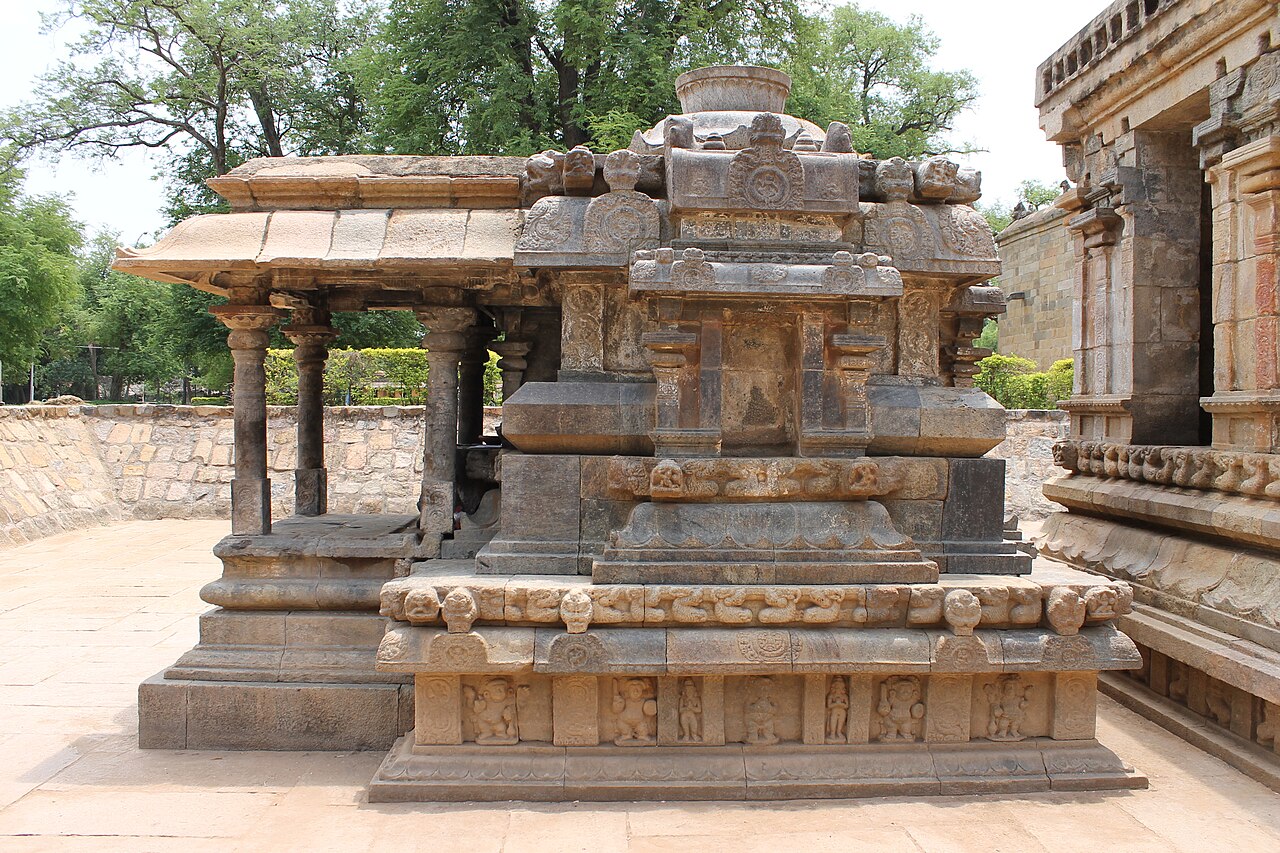
Airavatesvara Temple, Darasuram
Darasuram (Kumbakonam) · India · temple
The third of the Great Living Chola Temples, raised by Rajaraja Chola II around 1166 CE at Darasuram near Kumbakonam: a chariot-form shrine of Lord Shiva as Airavatesvara, famed for its carved stone wheels, its singing steps, and worship that has continued for over eight centuries.
Aisanyesvara Siva Temple
Bhubaneswar · India · temple
A living thirteenth-century Shiva shrine in the Old Town of Bhubaneswar, standing close to the western wall of the great Lingaraj Temple, where a Shivalinga set within a circular yonipitha still receives daily worship in the Kalinga architectural tradition.
 Hinduism
Akhadachandi Temple
Bhubaneswar · India · temple
A tenth-century Kalinga-style shrine on the southwestern bank of Bhubaneswar's sacred Bindusagar tank, Akhadachandi Temple honours Maa Mahishasuramardini, the Goddess in her form as slayer of the buffalo demon, within the dense cluster of ancient shrines that fills the city's Old Town.
 Hinduism
Akshardham
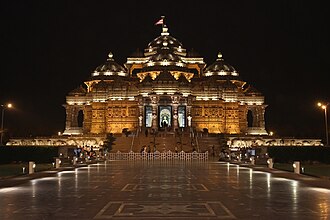
New Delhi · India · temple
A vast contemporary Hindu mandir campus on the Yamuna's west bank in East Delhi, raised without structural steel by 11,000 artisans and volunteers, and recognised by Guinness World Records in 2007 as the world's largest comprehensive Hindu Temple.
 Hinduism
Amarnath Temple
· India · temple
A high Himalayan cave shrine in Jammu and Kashmir where a naturally forming ice lingam is venerated as Lord Śiva, drawing one of India's great seasonal pilgrimages.
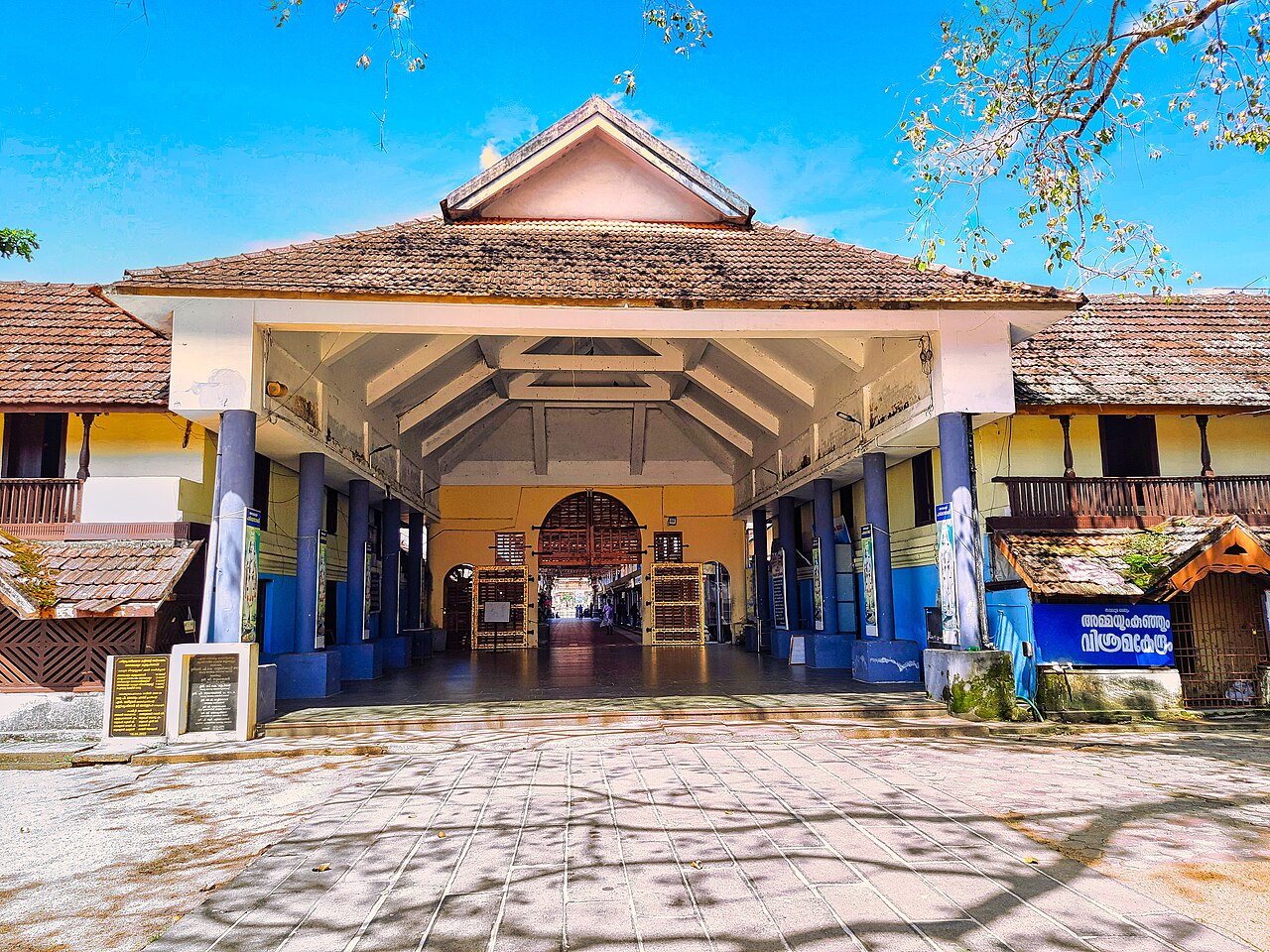 Hinduism
Ambalappuzha Sri Krishna Temple
Ambalappuzha · India · temple
A Vaishnava shrine on the Kerala backwaters consecrated to Sri Krishna in his Parthasarathy form, counted among the seven great Temples of the former kingdom of Travancore and famed across South India for its Ambalapuzha Paal Payasam offering.