
Kalkaji Mandir
Kalka Mandir · Shri Kalkaji Mandir · Manokamna Siddh Peeth
About
Kalka Mandir, known also as Kalkaji Mandir, stands in the Kalkaji quarter of southern Delhi as one of the city's most cherished centres of Śākta worship. The presiding deity is Maa Kali, the fierce, compassionate form of the Divine Mother honoured across India as a remover of darkness and a protector of her devotees.
The Temple's relationship with its neighbourhood runs deeper than proximity: the locality of Kalkaji takes its name from the shrine itself, reflecting how profoundly sacred sites shape the living geography of Indian cities. For generations, the surrounding streets have grown up in the shadow of the goddess, and the rhythms of worship within the Temple continue to set the pace of daily life around it.
Located across from Nehru Place and within easy reach of the Okhla railway station, the Temple draws pilgrims and local worshippers alike. Its atmosphere is one of continuous devotion, incense, lamp-flame, and the steady murmur of prayer marking the hours from dawn āratī through to the close of evening worship.
History
The Temple's present structure is not older than about 1764, when the Marathas built its earliest documented portions, with further work added in 1816 under Mirza Raja Kidar Nath, a Peshkar serving under the Mughal emperor Akbar II. Devotees hold that the image of Maa Kalka within the sanctum was not carved by human hands but appeared of its own accord, a Svayambhu manifestation of the Divine Mother, at the very place where the Temple now stands. Over the centuries the shrine grew from that founding presence into the twelve sided marble sanctum seen today, and the district that grew up around it, Kalkaji, came to carry the goddess's own name.
Significance
Kalkaji Mandir is known to its devotees as a Manokamna Siddh Peeth, a place where sincerely made wishes are believed to find fulfilment through Maa Kali's grace, and it draws a steady stream of worshippers from across Delhi every day of the year. Twice yearly, in the Chaitra and Sharad Navratri, a great fair rises around the Temple as devotees gather to sing hymns to the goddess and keep nine nights of worship. The Temple's hold on the surrounding landscape, an entire district of the capital carrying the goddess's name, is itself a testament to how deeply the site has shaped the religious life of the city around it.
Architecture
A twelve sided central sanctum of about 24 feet with marble paving and doorways on each face, ringed by a verandah with 36 arched openings; red sandstone tigers flank the eastern entrance; white marble dome
Visiting
Daily worship
| Morning Aarti | 06:30 to 07:00 | |
| Evening Aarti | 20:30 to 21:00 | |
| Daily darshan | 04:00 to 23:30 |
Hours
Hours not listed.
Contact
Engage with Kalkaji Mandir
Through the four pathways
Seva सेवा — Service
Offer your time and skills here. The following opportunities are open at Kalkaji Mandir:
No Seva offerings listed yet.
Sādhana साधना — Practice
Learn the worship and practice associated with Kalkaji Mandir:
No Sādhana offerings listed yet.
Sandhāna सन्धान — Wisdom
Unite with the wisdom of this tradition:
No Sandhāna offerings listed yet.
Sādhya साध्य — Giving
Support this sacred place according to your means:
No Sādhya offerings listed yet.
All giving flows directly to Kalkaji Mandir. Adisthan does not take a commission.
Festivals & Events
- Oct
Sharad Navratri
11 October 2026 · annual
The Temple's largest annual gathering, nine nights of worship and a great fair around the Temple grounds as devotees sing hymns to the Divine Mother, from Ghatasthapana through Vijayadashami.
Gallery
Related sacred places
 Hinduism
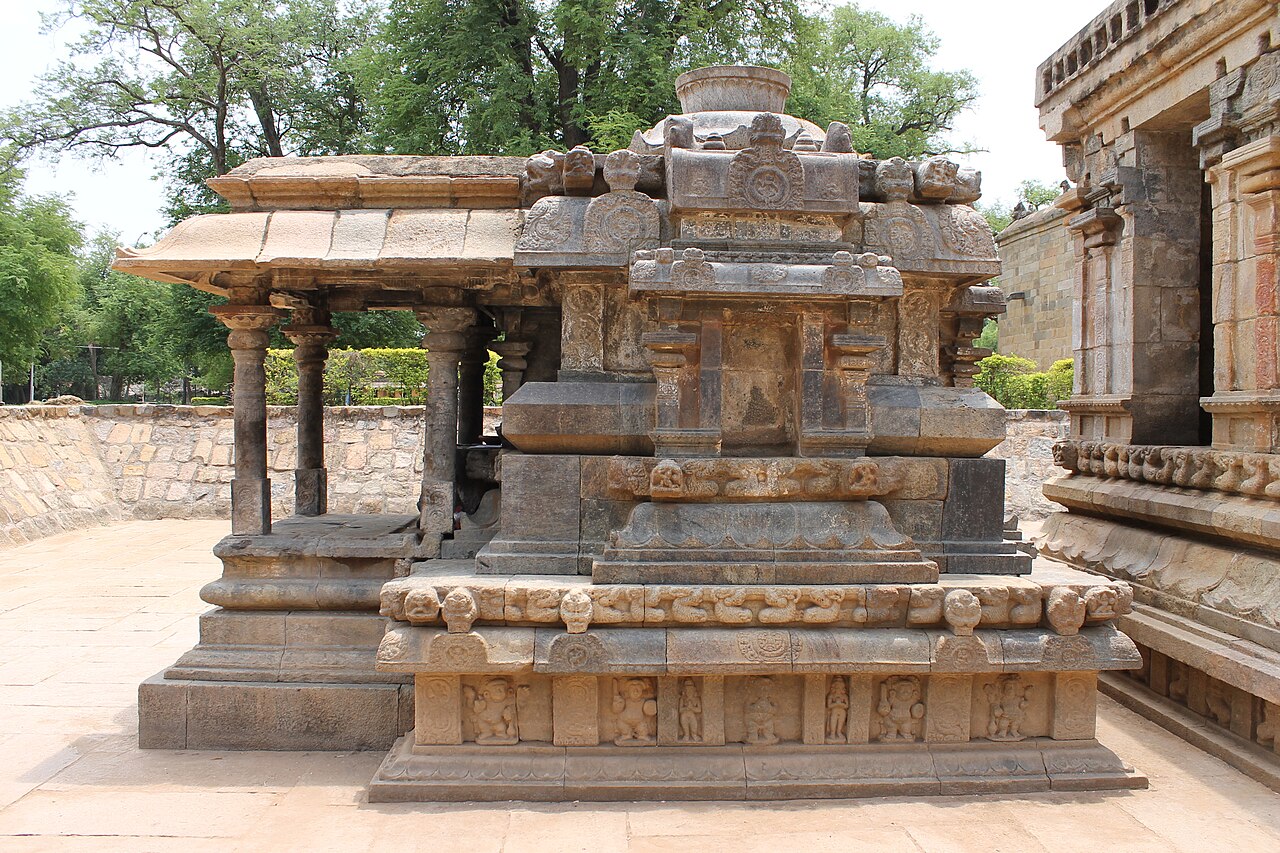
Airavatesvara Temple, Darasuram
Darasuram (Kumbakonam) · India · temple
The third of the Great Living Chola Temples, raised by Rajaraja Chola II around 1166 CE at Darasuram near Kumbakonam: a chariot-form shrine of Lord Shiva as Airavatesvara, famed for its carved stone wheels, its singing steps, and worship that has continued for over eight centuries.
Aisanyesvara Siva Temple
Bhubaneswar · India · temple
A living thirteenth-century Shiva shrine in the Old Town of Bhubaneswar, standing close to the western wall of the great Lingaraj Temple, where a Shivalinga set within a circular yonipitha still receives daily worship in the Kalinga architectural tradition.
 Hinduism
Akhadachandi Temple
Bhubaneswar · India · temple
A tenth-century Kalinga-style shrine on the southwestern bank of Bhubaneswar's sacred Bindusagar tank, Akhadachandi Temple honours Maa Mahishasuramardini, the Goddess in her form as slayer of the buffalo demon, within the dense cluster of ancient shrines that fills the city's Old Town.
 Hinduism
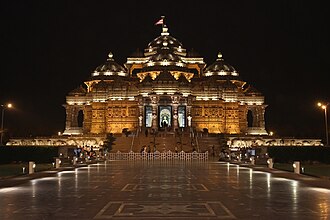
Akshardham
New Delhi · India · temple
A vast contemporary Hindu mandir campus on the Yamuna's west bank in East Delhi, raised without structural steel by 11,000 artisans and volunteers, and recognised by Guinness World Records in 2007 as the world's largest comprehensive Hindu Temple.
 Hinduism
Amarnath Temple
· India · temple
A high Himalayan cave shrine in Jammu and Kashmir where a naturally forming ice lingam is venerated as Lord Śiva, drawing one of India's great seasonal pilgrimages.
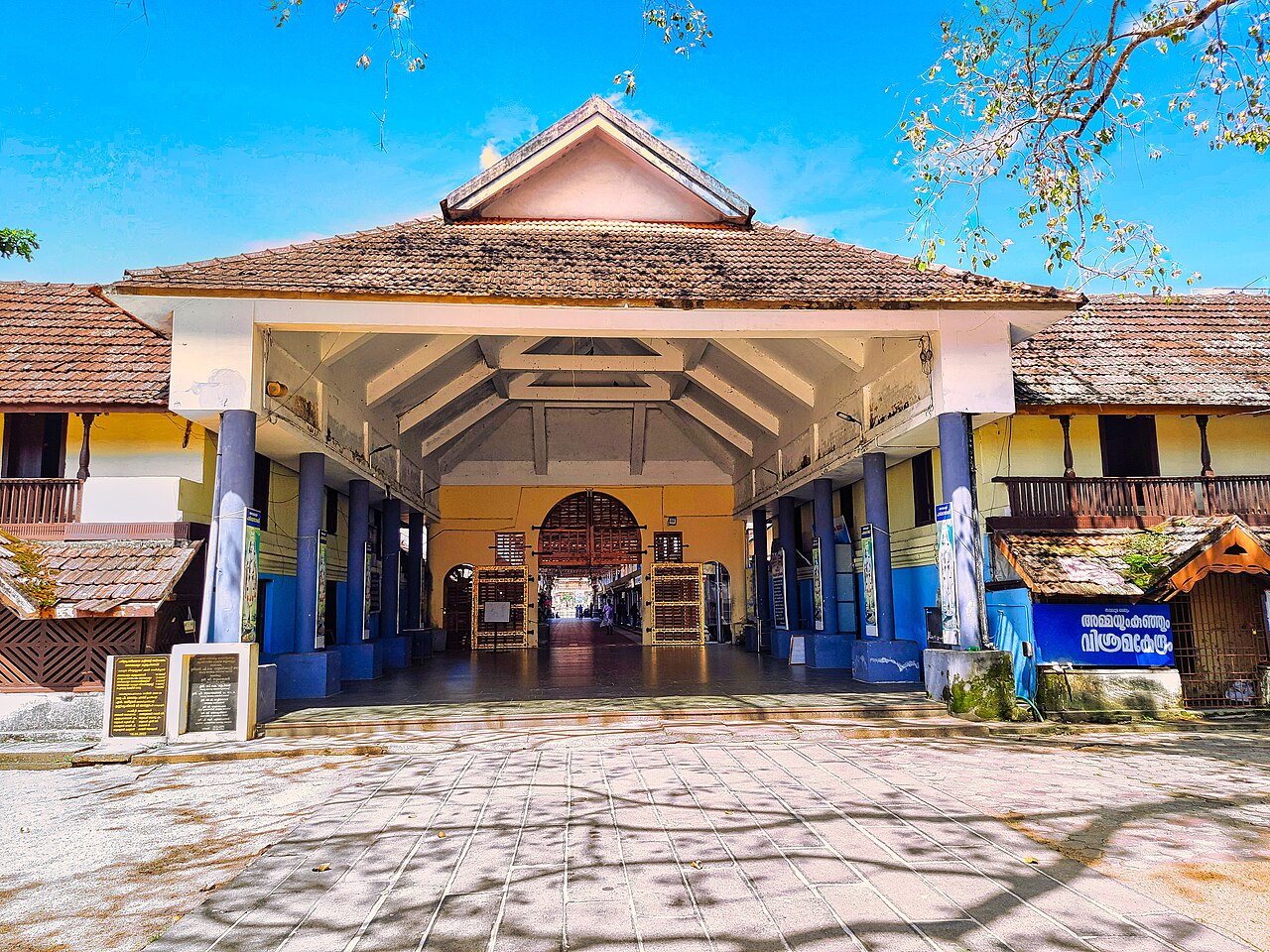 Hinduism
Ambalappuzha Sri Krishna Temple
Ambalappuzha · India · temple
A Vaishnava shrine on the Kerala backwaters consecrated to Sri Krishna in his Parthasarathy form, counted among the seven great Temples of the former kingdom of Travancore and famed across South India for its Ambalapuzha Paal Payasam offering.