
Kopeshwar Temple
Kopeshwar Mandir · Shri Kopeshwar Temple · Khidrapur Temple
About
Rising from the sacred margin of the Krishna river at Khidrapur in Kolhapur district, the Kopeshwar Temple stands as one of Maharashtra's most venerable shrines to Lord Shiva. The name Kopeshwar, drawn from the Sanskrit kopa, meaning anger or divine wrath, honours Shiva in a fierce, sovereign form, conferring upon the site a character of spiritual intensity and awe.
The Temple occupies a position to the east of Kolhapur and draws pilgrims not only from within Maharashtra but also from the neighbouring regions accessible via Sangli, drawing devotees across a wide swathe of the Deccan. Its riverside setting lends the compound a quality of quietude and elemental power, the waters of the Krishna flowing as an ancient witness to centuries of worship and prayer.
Architecturally, the structure reflects the refined craft traditions of the medieval Deccan, described by those who know it as both ancient and deeply artistic, qualities that speak to the remarkable skill of the craftsmen who shaped it during the Shilahara period of patronage.
History
The Shilahara king Gandaraditya built the Temple between 1109 and 1178 CE, and though the Shilaharas were themselves Jain rulers, they patronised Hindu shrines across their domain. Its black basalt stone was quarried in the Sahyadri hills and brought down the Krishna river to Khidrapur, where generations of Deccan craftsmen carved its walls, pillars, and plinths with extraordinary density and refinement. Inscriptions near the south entrance record that the ground was fought over more than once, by Chalukya and Chola forces around 1058 CE and by the Shilahara king Bhoj II against the Yadava ruler Singhana II in 1213 CE.
Significance
Temple tradition holds that Shiva's grief and wrath after Maa Sati's self-immolation grew so consuming that Vishnu brought him to this spot on the Krishna to be pacified, and the name Kopeshwar, drawn from the Sanskrit kopa, wrath, preserves that story. Its sanctum is unusual in housing both a Shiva linga and a Vishnu image known locally as Dhopeshwar, facing north side by side, joining two great strands of Hindu worship under one roof. The Archaeological Survey of India protects the Temple as a Monument of National Importance, and it remains an active place of worship.
Architecture
Shilahara-period Deccan Temple architecture in black basalt; a curvilinear shikhara over the garbhagriha, with an open-roofed Swargamandapa carried on 48 carved pillars above a plinth of sculpted elephants
Visiting
Daily worship
| Temple open for darshan | 06:00 to 20:00 |
Hours
Hours not listed.
Contact
No contact details listed yet.
Address
Engage with Kopeshwar Temple
Through the four pathways
Seva सेवा — Service
Offer your time and skills here. The following opportunities are open at Kopeshwar Temple:
No Seva offerings listed yet.
Sādhana साधना — Practice
Learn the worship and practice associated with Kopeshwar Temple:
No Sādhana offerings listed yet.
Sandhāna सन्धान — Wisdom
Unite with the wisdom of this tradition:
No Sandhāna offerings listed yet.
Sādhya साध्य — Giving
Support this sacred place according to your means:
No Sādhya offerings listed yet.
All giving flows directly to Kopeshwar Temple. Adisthan does not take a commission.
Festivals & Events
- Mar
Mahashivratri
6 March 2027 · annual
The night of Lord Shiva's cosmic dance, kept at Kopeshwar as the Temple's principal annual observance for a form of Shiva whose very name commemorates a wrath once pacified.
Gallery
Related sacred places
 Hinduism
Airavatesvara Temple, Darasuram
Darasuram (Kumbakonam) · India · temple
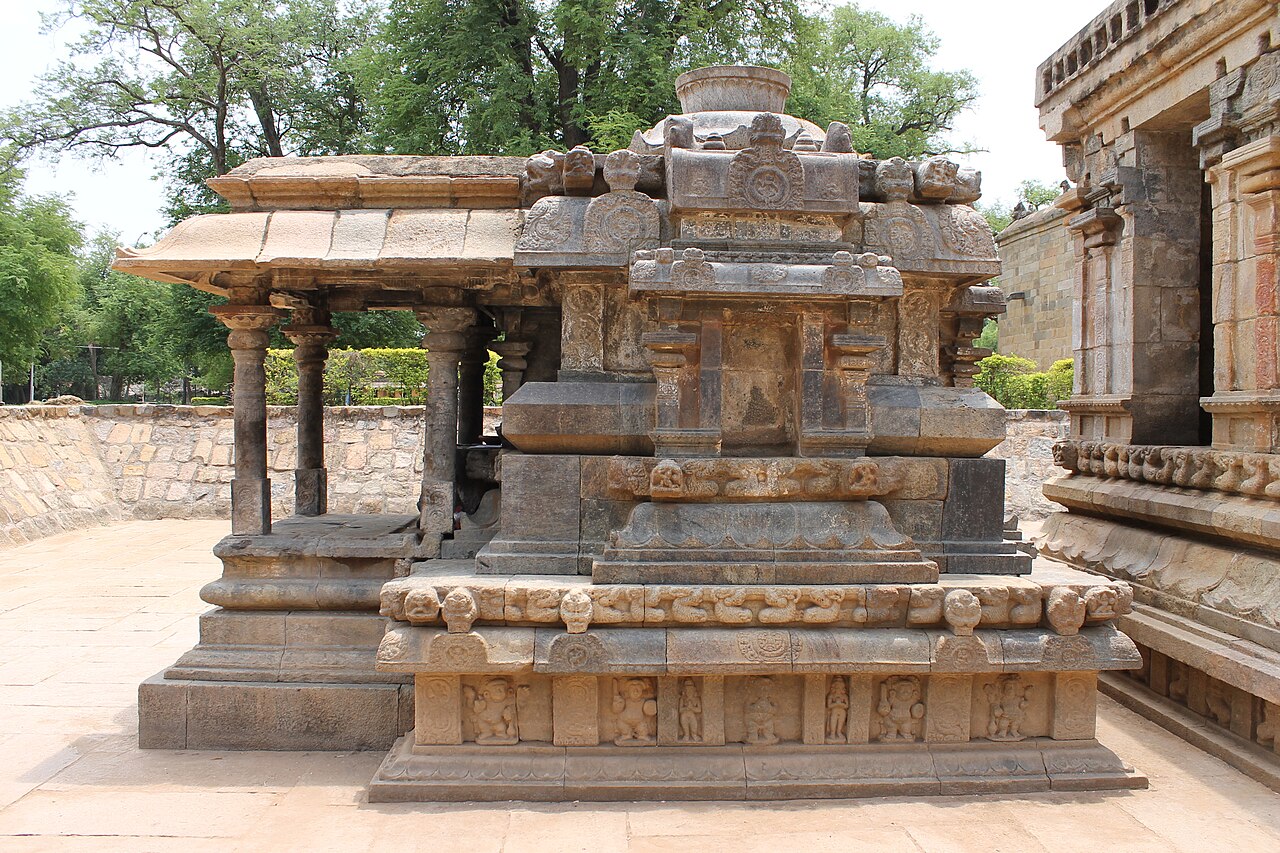
The third of the Great Living Chola Temples, raised by Rajaraja Chola II around 1166 CE at Darasuram near Kumbakonam: a chariot-form shrine of Lord Shiva as Airavatesvara, famed for its carved stone wheels, its singing steps, and worship that has continued for over eight centuries.
Aisanyesvara Siva Temple
Bhubaneswar · India · temple
A living thirteenth-century Shiva shrine in the Old Town of Bhubaneswar, standing close to the western wall of the great Lingaraj Temple, where a Shivalinga set within a circular yonipitha still receives daily worship in the Kalinga architectural tradition.
 Hinduism
Akhadachandi Temple
Bhubaneswar · India · temple
A tenth-century Kalinga-style shrine on the southwestern bank of Bhubaneswar's sacred Bindusagar tank, Akhadachandi Temple honours Maa Mahishasuramardini, the Goddess in her form as slayer of the buffalo demon, within the dense cluster of ancient shrines that fills the city's Old Town.
 Hinduism
Akshardham
New Delhi · India · temple
A vast contemporary Hindu mandir campus on the Yamuna's west bank in East Delhi, raised without structural steel by 11,000 artisans and volunteers, and recognised by Guinness World Records in 2007 as the world's largest comprehensive Hindu Temple.
 Hinduism
Amarnath Temple
· India · temple
A high Himalayan cave shrine in Jammu and Kashmir where a naturally forming ice lingam is venerated as Lord Śiva, drawing one of India's great seasonal pilgrimages.
 Hinduism
Ambalappuzha Sri Krishna Temple
Ambalappuzha · India · temple
A Vaishnava shrine on the Kerala backwaters consecrated to Sri Krishna in his Parthasarathy form, counted among the seven great Temples of the former kingdom of Travancore and famed across South India for its Ambalapuzha Paal Payasam offering.