
Laxminarayan Temple
Birla Mandir · Shri Lakshmi Narayan Mandir · Sri Laxminarayan Mandir
About
Rising above Mandir Marg to the west of Connaught Place, the Lakṣmīnārāyaṇ Mandir, widely known as Birla Mandir, stands as the earliest large-scale Hindu Temple raised in Delhi. Its presiding divine forms are Nārāyaṇa and his eternal consort Lakṣmī, the goddess of grace and abundance, installed together as Lakṣmīnārāyaṇa. Alongside the central sanctuary, smaller shrines shelter Śiva, Gaṇeśa, Hanumān, and the Buddha, giving the complex an encompassing spiritual breadth.
The Temple grounds extend across roughly three hectares, encompassing ornamental gardens graced with sculptures drawn from both Hindu iconography and nationalist imagery, flowing fountains, and the Geetā Bhavan, a dedicated hall to the north where discourses on the Bhagavad Gītā are held and where devotion to Lord Kṛṣṇa finds its own consecrated space. The grounds also feature an artfully contrived landscape with cascading waterfalls.
Architecturally, the structure belongs to the northern Nāgara tradition, its tallest śikhara soaring approximately forty-nine metres above the sanctum sanctorum. The Temple faces east and rests on an elevated plinth. Every surface is enriched with intricate carvings depicting episodes from the golden age of the present cosmic cycle, executed by more than a hundred skilled artisans from Benares under the guidance of Ācārya Viśvanātha Śāstrī. Icons throughout are fashioned in marble sourced from Jaipur, while the broader construction drew on Kota stone from Makarana, Agra, Kota, and Jaisalmer. Fresco paintings within the shrine narrate the life and contributions of Śāstrī himself.
History
Baldeo Das Birla and his son Jugal Kishore Birla began building the Temple in 1933 under the guidance of Pandit Vishwanath Shastri, and completed it in 1939. Mahatma Gandhi inaugurated the Temple himself, making it a condition of his presence that the doors stand open to devotees of every caste, a commitment the Temple has kept ever since. It was the first of what would become a series of Birla-endowed Temples raised across India.
Significance
At the heart of the sanctum, Maa Lakshmi stands beside Lord Vishnu in his form as Narayan, with smaller shrines nearby to Lord Shiva, Lord Ganesha, Lord Hanuman and the Buddha. Thousands of devotees gather here each year for Janmashtami and for Diwali, when Maa Lakshmi is honoured as the giver of prosperity, and the Temple's soaring Nagara shikhara has stood, since Gandhi's own visit, as a symbol of a Hindu sacred space opened deliberately to all.
Architecture
Northern Nagara Temple style in the early-twentieth-century Swadeshi idiom, designed by architect Sris Chandra Chatterjee; marble and Kota stone construction with a shikhara approximately 49 metres high
Visiting
Daily worship
| Morning darshan | 04:30 to 13:30 | |
| Evening darshan | 14:30 to 21:00 |
Hours
Hours not listed.
Contact
No contact details listed yet.
Engage with Laxminarayan Temple
Through the four pathways
Seva सेवा — Service
Offer your time and skills here. The following opportunities are open at Laxminarayan Temple:
No Seva offerings listed yet.
Sādhana साधना — Practice
Learn the worship and practice associated with Laxminarayan Temple:
No Sādhana offerings listed yet.
Sandhāna सन्धान — Wisdom
Unite with the wisdom of this tradition:
No Sandhāna offerings listed yet.
Sādhya साध्य — Giving
Support this sacred place according to your means:
No Sādhya offerings listed yet.
All giving flows directly to Laxminarayan Temple. Adisthan does not take a commission.
Festivals & Events
- Sept
Janmashtami
4 September 2026 · annual
The birth anniversary of Sri Krishna, drawing thousands of devotees to the Temple through the night in one of its two signature annual festivals.
- Nov
Diwali (Lakshmi Puja)
8 November 2026 · annual
The festival of lights, when Maa Lakshmi is honoured here as the giver of prosperity and the Temple fills with devotees performing Lakshmi Puja.
Gallery
Related sacred places
 Hinduism
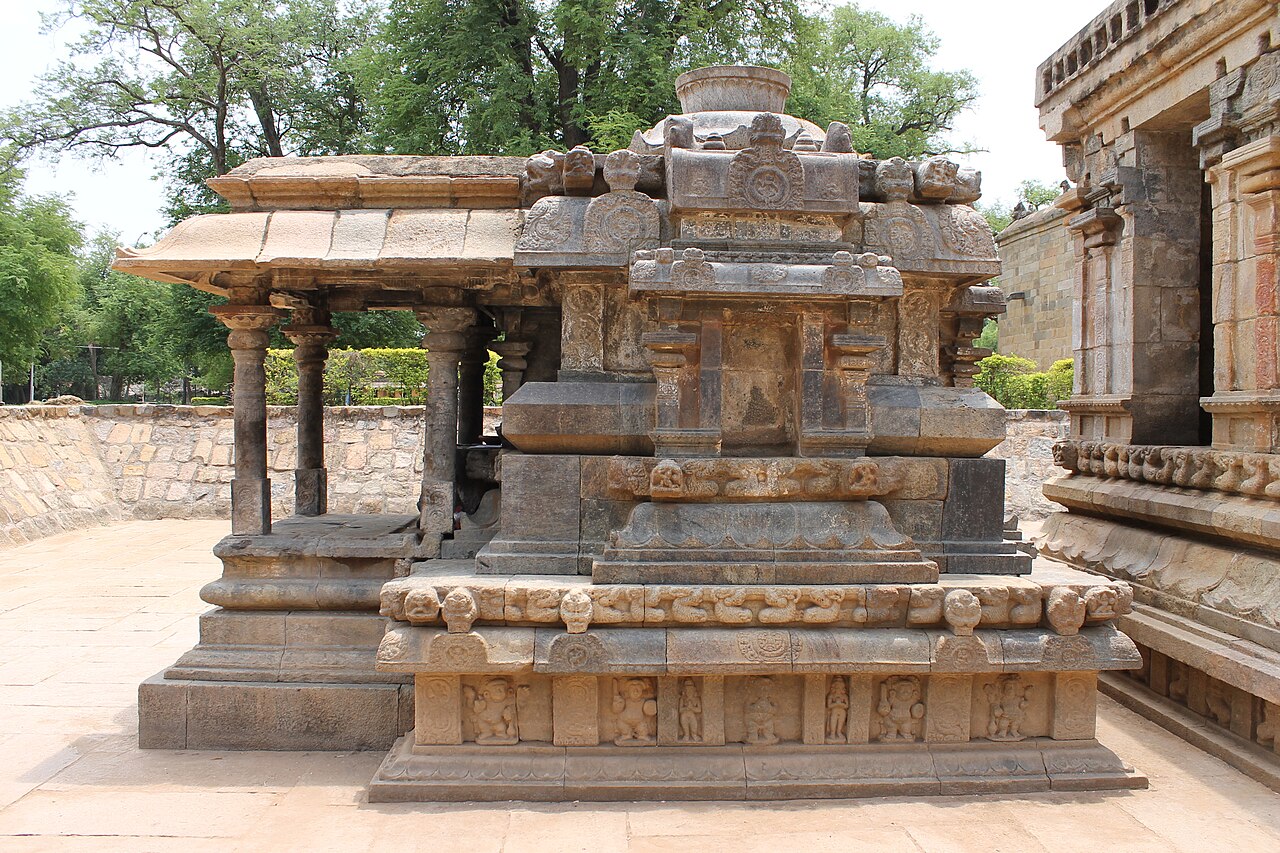
Airavatesvara Temple, Darasuram
Darasuram (Kumbakonam) · India · temple
The third of the Great Living Chola Temples, raised by Rajaraja Chola II around 1166 CE at Darasuram near Kumbakonam: a chariot-form shrine of Lord Shiva as Airavatesvara, famed for its carved stone wheels, its singing steps, and worship that has continued for over eight centuries.
Aisanyesvara Siva Temple
Bhubaneswar · India · temple
A living thirteenth-century Shiva shrine in the Old Town of Bhubaneswar, standing close to the western wall of the great Lingaraj Temple, where a Shivalinga set within a circular yonipitha still receives daily worship in the Kalinga architectural tradition.
 Hinduism
Akhadachandi Temple
Bhubaneswar · India · temple
A tenth-century Kalinga-style shrine on the southwestern bank of Bhubaneswar's sacred Bindusagar tank, Akhadachandi Temple honours Maa Mahishasuramardini, the Goddess in her form as slayer of the buffalo demon, within the dense cluster of ancient shrines that fills the city's Old Town.
 Hinduism
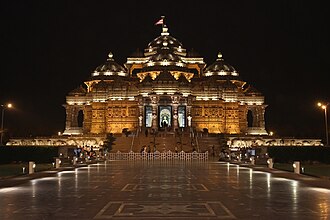
Akshardham
New Delhi · India · temple
A vast contemporary Hindu mandir campus on the Yamuna's west bank in East Delhi, raised without structural steel by 11,000 artisans and volunteers, and recognised by Guinness World Records in 2007 as the world's largest comprehensive Hindu Temple.
 Hinduism
Amarnath Temple
· India · temple
A high Himalayan cave shrine in Jammu and Kashmir where a naturally forming ice lingam is venerated as Lord Śiva, drawing one of India's great seasonal pilgrimages.
 Hinduism
Ambalappuzha Sri Krishna Temple
Ambalappuzha · India · temple
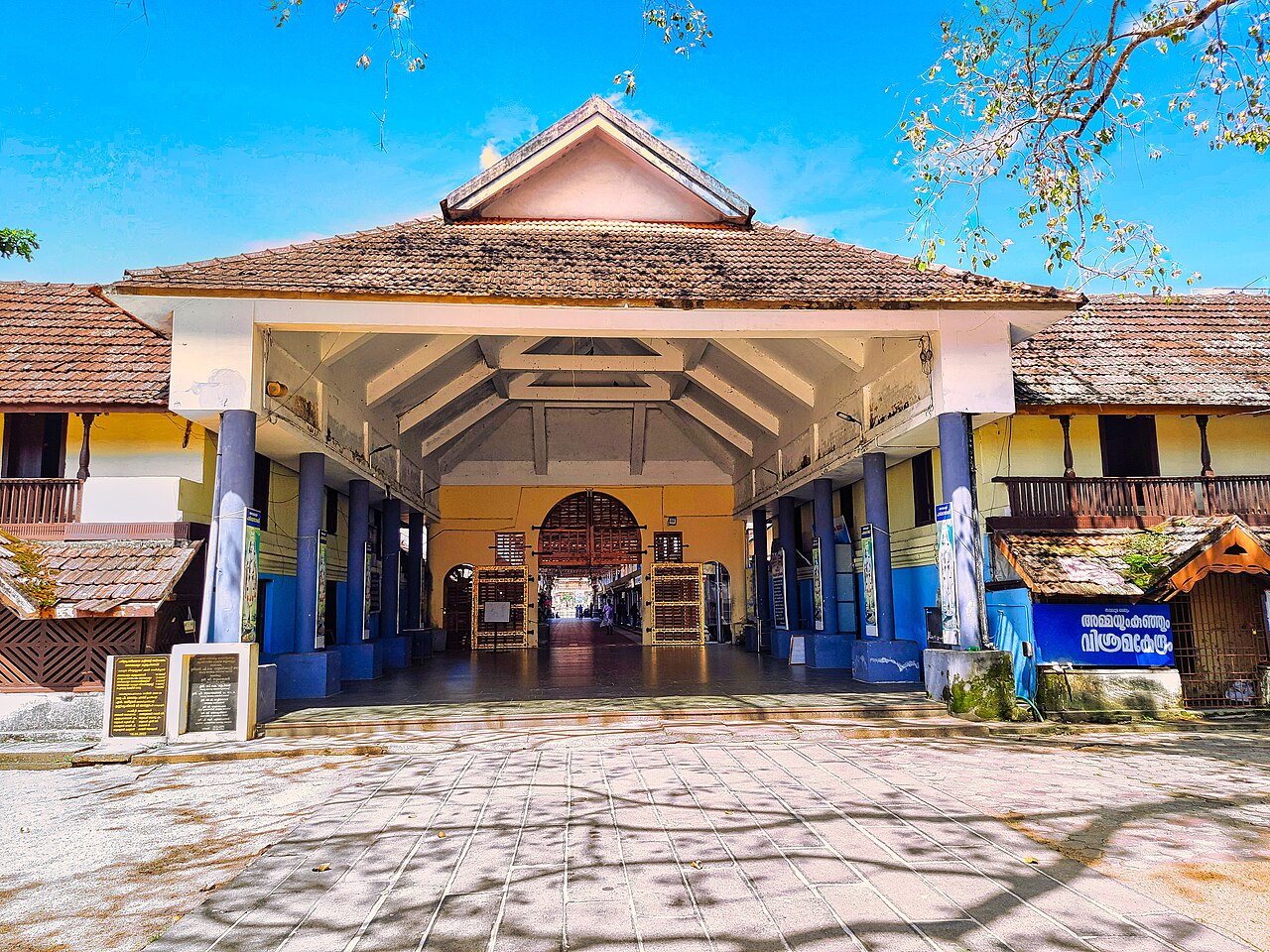
A Vaishnava shrine on the Kerala backwaters consecrated to Sri Krishna in his Parthasarathy form, counted among the seven great Temples of the former kingdom of Travancore and famed across South India for its Ambalapuzha Paal Payasam offering.