Where The Mother Vanished from sight, She Is Found by every seeker.
Be the first to check in
Entry tended 2 Jul 2026
Alopibagh · Prayagraj Near the holy Sangam A doli, not an idol Kumbh Mela grounds nearby Renovated widely since the 1990s
The lanes of Alopibagh carry you toward the rivers: marigold in the air, Temple bells ahead, and beyond the rooftops the wide light of the Sangam where three rivers meet. You step into the courtyard expecting a carved face and find none. At the heart of this Shrine rests a wooden doli, a bridal palanquin, and it Is Before Her empty Carriage that every devotee bows.
Here, tradition holds, the Finger Of Maa Sati, the last Fragment Of Her Body, Fell and Vanished from sight. The name Alopi means disappeared, and the old telling counts this ground among the holiest of the Fifty-One Peethas.
There is no idol in the sanctum. Worship Is Offered To Maa through a wooden doli, a bridal carriage that Carries The Presence Of Maa Alopi Devi.
The Shrine stands close to the holy Sangam, the confluence of the Ganga, the Yamuna, and the legendary Sarasvati, and near the grounds of the Kumbh Mela.
The story of the bride who vanished
When Maa Sati, The First Consort Of Shiva, gave up Her body at Her father's yagna, Shiva carried Her across the skies in a grief that shook creation. To relieve his agony, Vishnu loosed his chakra, and the Body Of The Goddess fell to earth piece by piece, each landing place made holy By Her touch. The old telling says the last Fragment, Her Finger, came down here and Vanished, and so the place was named Alopi: where the disappearance was concluded.
The people of Alopibagh keep a second telling. Long ago, when dense forest full of dacoits covered this country, robbers fell upon a wedding procession, killed the men, seized the riches, and pulled back the veil of the bride's doli, only to find no one inside. Where the bride Vanished without trace, a shrine rose, and the people began worshipping her as Maa Alopi Devi, the virgin Goddess Who Disappeared.
What you'll actually see
1
The doli in the sanctum
No statue waits in the inner shrine. In its place rests a wooden carriage, the doli, and it Is this that receives every garland and every whispered prayer To Maa. Pilgrims who come expecting a face learn instead to bow before a Presence.
2
The Sangam at the doorstep
The Temple stands in Alopibagh, close to the confluence where the Ganga, the Yamuna, and the legendary Sarasvati are believed to meet. Many pilgrims bathe at the Sangam and then walk To Her Shrine as one unbroken circuit.
3
A precinct shaped by centuries
Historical accounts say the Maratha general Mahadji Shinde developed the Sangam area during his stay at Prayagraj in 1771 to 1772, and in the 1800s Maharani Baizabai Scindia renovated the ghats and Temples around it. Since the 1990s the Temple's following has risen greatly, bringing large-scale renovation of its surroundings.
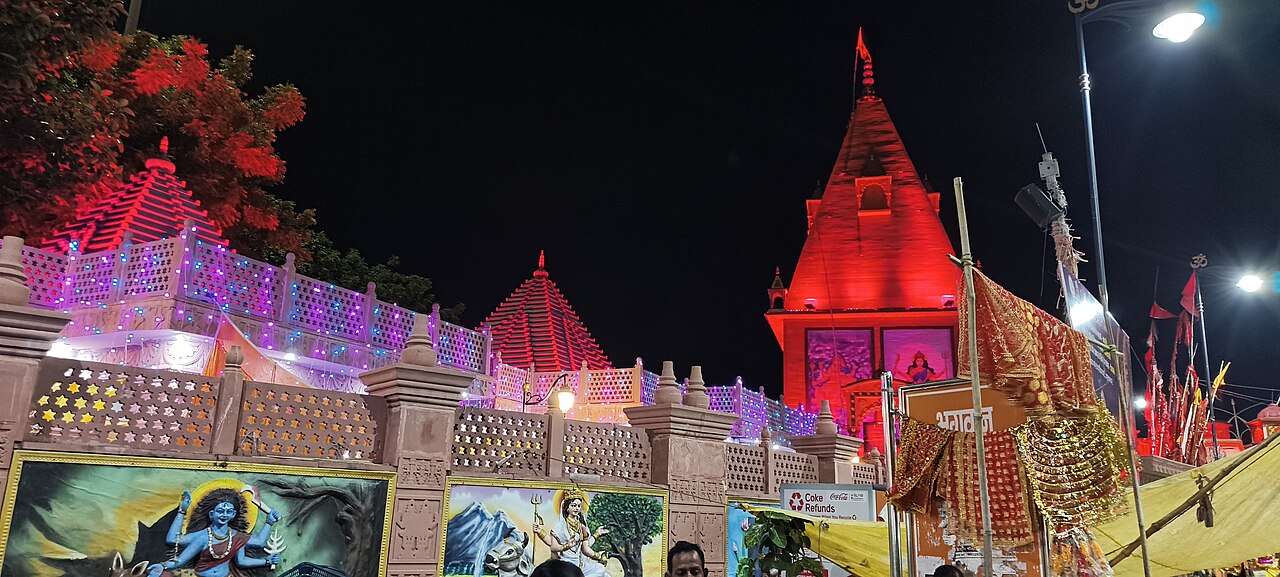
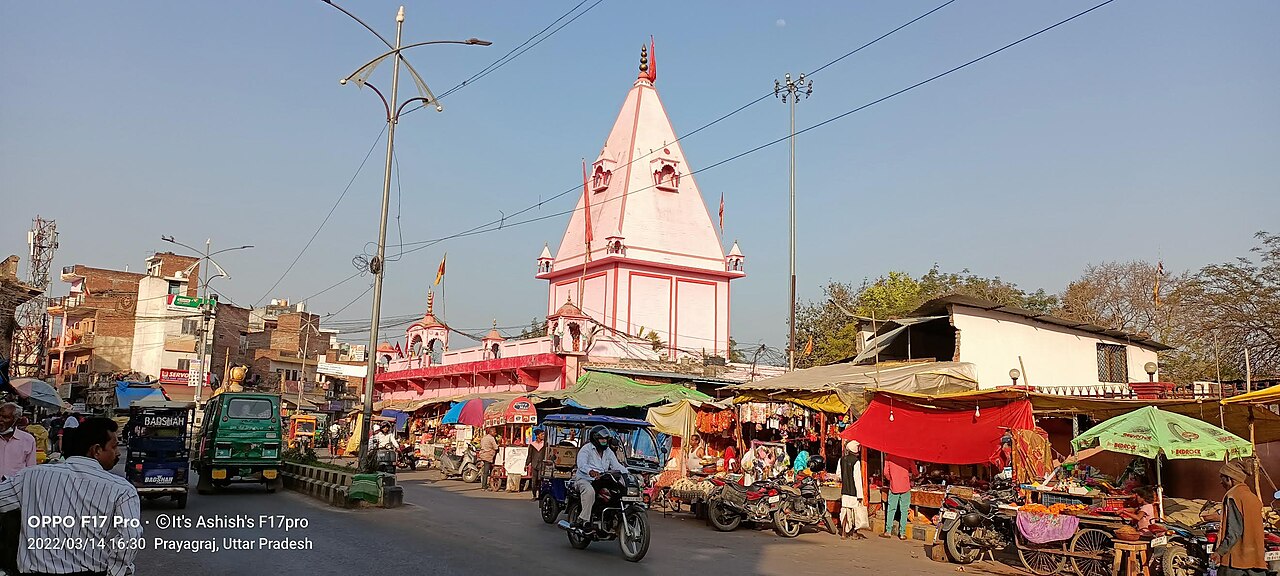
The Alopshankari Siddhipeeth Temple complex at Alopibagh, PrayagrajWide view of Alop Shankari Devi Mandir, Prayagraj
The Alopshankari Siddhipeeth at Prayagraj · photos CC0, Wikimedia Commons
When the rivers call the world
The Kumbh Mela at Her doorstep
The Temple stands near the grounds of the Kumbh Mela, the vast gathering that draws pilgrims to the Sangam of the Ganga, the Yamuna, and the unseen Sarasvati. When the Mela fills the riverbanks, the country around Her Shrine becomes one of the most visited pilgrimage landscapes in India, and devotees who bathe at the confluence turn toward Maa Alopi Devi as part of their circuit.
In Mela season, come early and expect vast company. Outside it, the Shrine keeps the quieter rhythm of a neighbourhood that brings every festival, wedding, birth, and bereavement Before its guarding Goddess.
Plan your visit
Where
Alopibagh, Prayagraj, Uttar Pradesh, India.
The Sangam
The holy confluence of the Ganga, the Yamuna, and the legendary Sarasvati lies close by; many pilgrims bathe there before Darshan.
Kumbh Mela
The Mela grounds are near the Temple; expect immense crowds across the whole precinct in Mela season.
Timings
Darshan hours are not published in our sources; confirm with the Temple office before you travel.
Entry
No entry fee is documented; confirm locally at the Shrine.
Best time
Outside Mela season for unhurried Darshan; festival days bring the fullest worship.
The name Alopi means disappeared: this is honoured as the ground where the last Trace Of Maa Sati Vanished from sight.
Some accounts instead honour the Lalita Devi Temple, also in Prayagraj, as the Peetha where the Fingers Of Maa Sati Fell; many pilgrims visit both.
There is no idol here. Come prepared to offer your prayers Before the sacred doli, the wooden carriage that Holds Her Presence.
Questions pilgrims ask
Which part Of Maa Sati Fell here?
Tradition holds it was Her Finger, the last Fragment Of Her Body, which Fell and Vanished at this spot, giving the Shrine its name Alopi. Accounts also honour Prayagraj's Lalita Devi Temple as the seat of Her Fingers, and devotees revere both.
Is there an idol to see?
No. The sanctum holds a wooden doli, a bridal palanquin, and worship Is Offered To Maa through it. This absence Is the very heart of Her name: She Who Disappeared.
What should I plan around the visit?
The holy Sangam lies close by and the Kumbh Mela grounds are near; many pilgrims bathe at the confluence before Darshan. Timings and entry details are not published in our sources, so confirm with the Temple office before you travel.
Walk the sacred map
This Is one Seat among many. Her Body Fell across the whole of the old world:
Dharamshalas and guest houses near this Sthan, shared by devotees. Adisthan takes no bookings and no money; contact each stay directly.
No stays are listed here yet. Know one that serves pilgrims well?
Are you a priest, trustee, or sevak of Maa Alopi Devi Temple? Claim this page to add true timings, festival updates, and a way for pilgrims To actually reach you.