One of Fifty-One Shakti Peethas One of the Ten Mahavidyas Hibiscus For Maa Kali Kali Puja & Durga Puja Beside the Adi Ganga
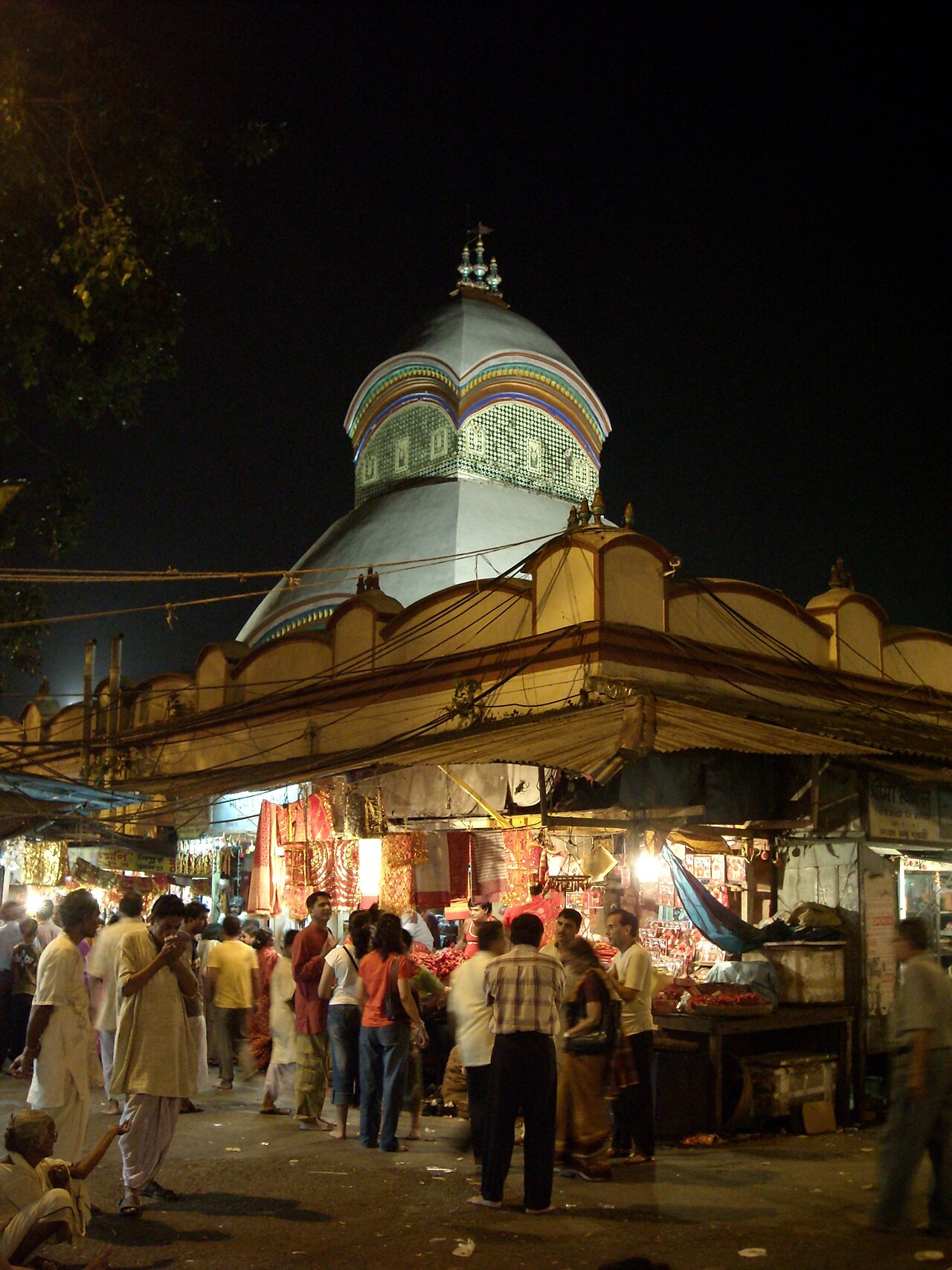
The lane reaches you before the Temple does: hibiscus garlands heaped in baskets, incense smoke, the slow press of pilgrims moving toward the gate. Then the sanctum opens and the dark holds Her: Her black stone Face, Her Three brilliant Eyes, Her long outstretched Tongue. Calcutta grew up around this ground; She was here first.
One of the Fifty-One Shakti Peethas: tradition holds that the Toes Of Maa Sati's Right Foot fell here, placing Kalighat at the heart of the Devi tradition's sacred map.
Maa Kali Is Honoured here as one of the Ten Mahavidyas and as The Supreme Deity of the Kalikula line of Shakta worship.
Priestly families known as the haldars have served Her shrine across generations, keeping the daily worship of The Divine Mother unbroken.
The ground where Her Foot fell
The old telling says that when Maa Sati gave up Her body, Shiva carried Her and danced the tandava of grief. To save the worlds, Her dismembered Form came to earth in Fifty-One places, and each became a Shakti Peetha. At Kalighat fell the Toes Of Her Right Foot, and this tract beside the river became forever Hers.
The shrine is ancient in memory, named in the Puranic lists of the Pithas and sung in Bengal's medieval Mangal Kavya poems. The first sanctuary stood on the Adi Ganga, an older channel of the Hooghly whose sacred waters made this a tirtha; the present structure was raised by the Sabarna Roy Choudhury family of Barisha, long guardians of the older shrine. As Calcutta rose around it, the saints kept coming, among them Sri Ramakrishna Paramahamsa, who spent long years across the river at Dakshineswar.
What you'll actually see
1
The Murti with Three Eyes
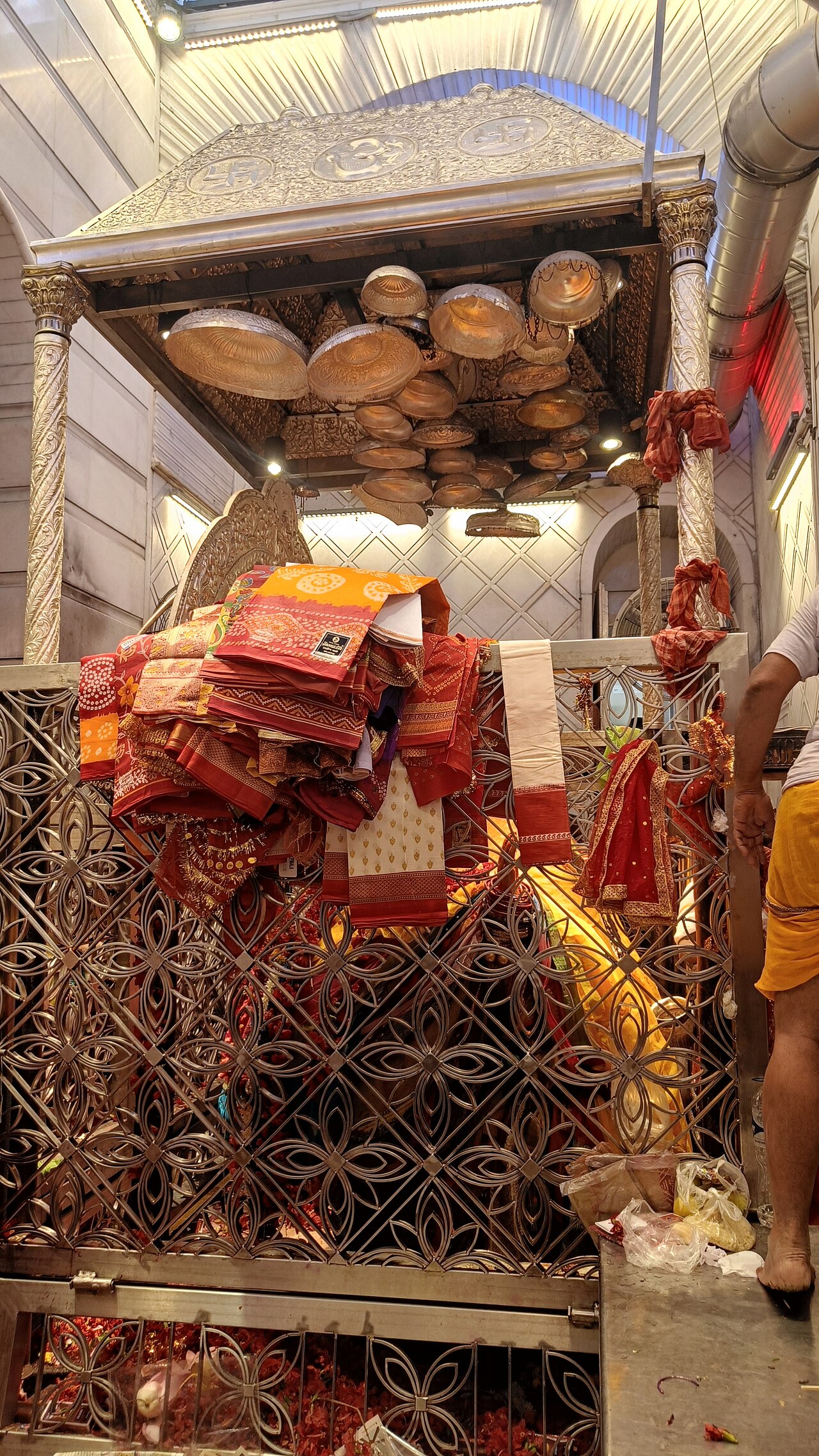
The image in the sanctum is small and ancient: black stone For Her Face, Three brilliant Eyes, a long Tongue reaching outward, with Her fierce Ornaments and Weapons in attendance. Devotees come simply to stand one moment Before Her.
2
The Adi Ganga
The first shrine rose beside the Adi Ganga, an old channel of the Hooghly that flowed past this ground and set the Temple among sacred waters. That river placement made Kalighat a tirtha long before the city arrived.
3
The haldar lineage
Daily worship rests with the haldars, priestly families whose service to the Temple runs back across generations. Their care holds the rhythm of offerings To Maa steady through every season.
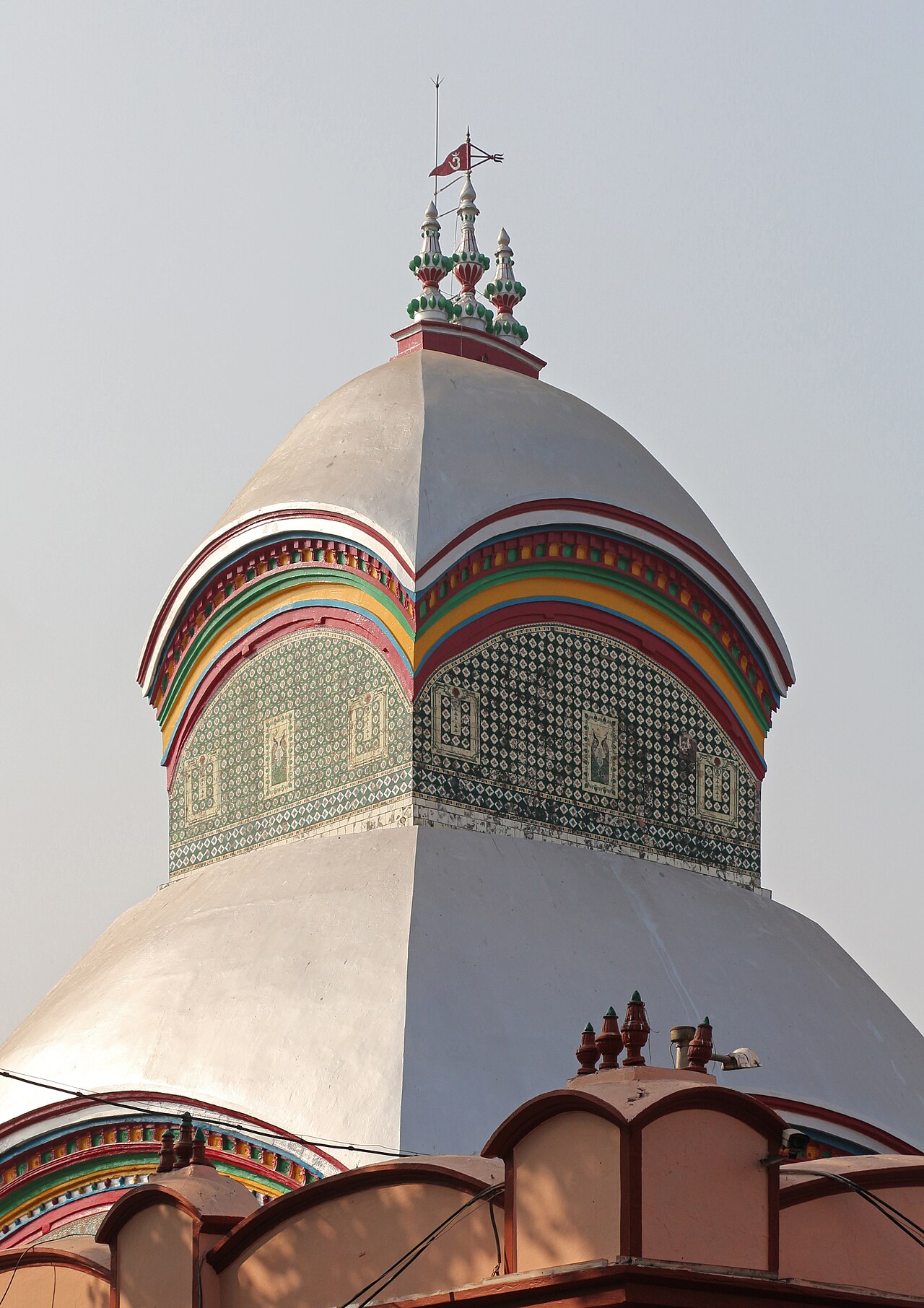
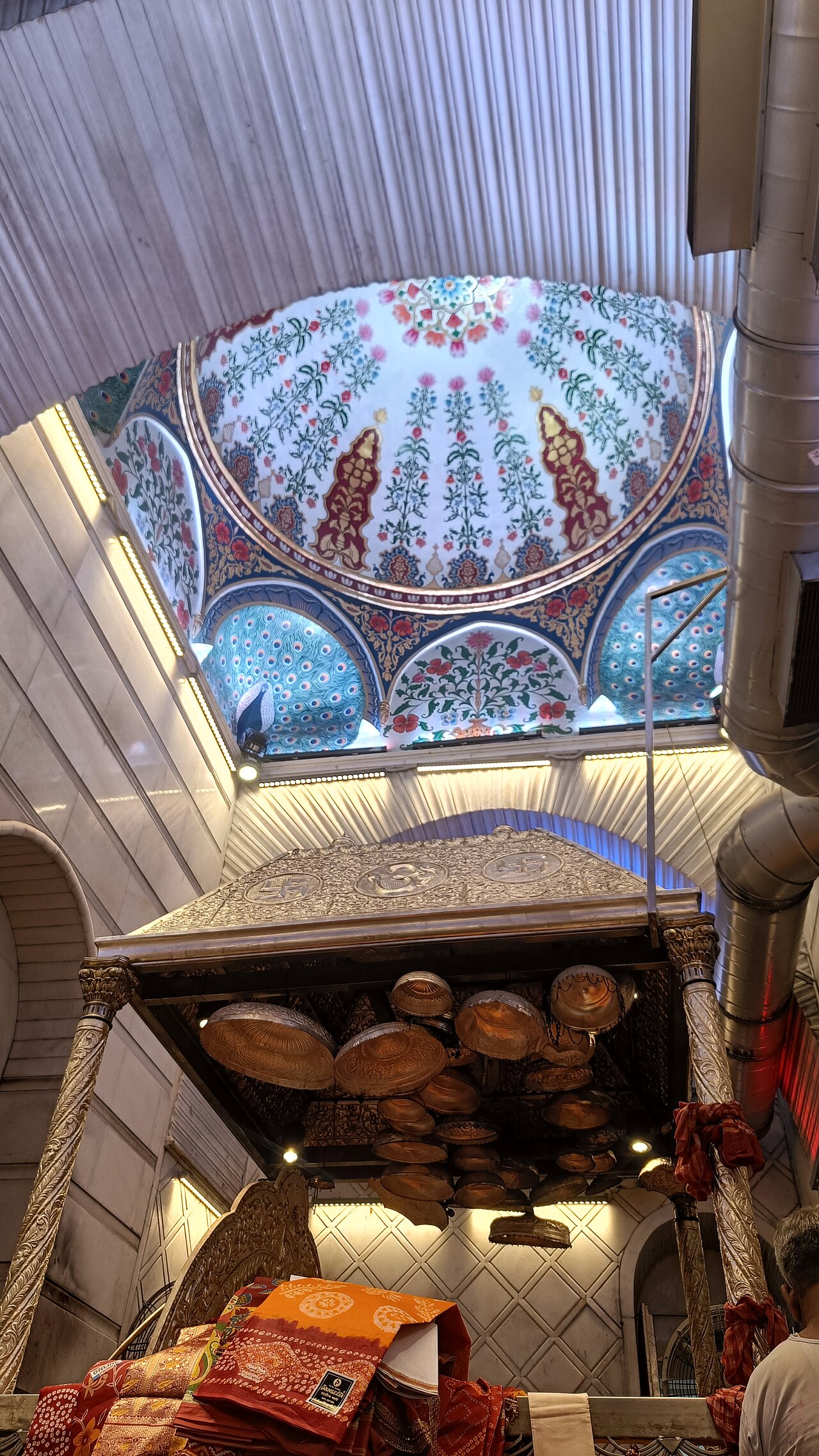
The spires of Maa Kali's Temple rising over Kalighat, KolkataThe Garbha Griha where Maa Kali Receives Her devotees
The temple spires, and the Garbha Griha Of Maa Kali · photos CC BY-SA / CC BY, Wikimedia Commons
When Bengal turns To Her
Kali Puja, Durga Puja, and the lunar pilgrimages
On Kali Puja and Durga Puja, and on the great pilgrimage days of the lunar calendar, thousands of devotees gather For darshan of the Devi. The Temple has stayed the spiritual heart of south Kolkata since Calcutta first grew around it. Come expecting crowds, and come expecting Her.
Festival dates follow the lunar calendar and shift each year; confirm exact days with the Temple office before planning your yatra.
Plan your visit
Where
Kalighat neighbourhood, South Kolkata, West Bengal, India.
By air
Kolkata is the gateway city; from the airport, ask your driver for Kalighat in the south of the city.
By rail
The Temple sits inside Kolkata, so any arrival into the city works; local transport reaches Kalighat easily.
Timings
Worship runs through the day under the haldar priests; confirm current hours with the Temple office.
Best time
Early morning on an ordinary weekday for a quieter darshan; festival days bring thousands.
Offerings
Hibiscus, Maa Kali's favoured blossom, with sweets, vermilion, and water from the Hooghly.
Kalighat is the foremost Kali tirtha of Bengal and one of the principal Shakti Peethas of India; for Shakta devotees, a visit is a return To ground sanctified By the Body Of Maa Sati.
Sri Ramakrishna Paramahamsa, who shaped Bengali Shakta devotion, made his home across the river at Dakshineswar for many years.
The Puranic lists of the Pithas name this shrine, and Bengal's medieval Mangal Kavya poems sing of it; its sanctity is older than any structure standing today.
Questions pilgrims ask
What will I see in the sanctum?
An ancient Murti of Maa Kali: Her Face of black stone with Three brilliant Eyes and the long Tongue, attended by Her fierce Ornaments and Weapons.
Why is Kalighat called a Shakti Peetha?
Tradition holds that the Toes Of Maa Sati's Right Foot fell here when Her dismembered Form came to earth, making Kalighat one of the Fifty-One Shakti Peethas.
When are the great festival days?
Kali Puja and Durga Puja are the largest observances, along with the pilgrimage days of the lunar calendar. Dates shift each year, so confirm with the Temple office.
Dharamshalas and guest houses near this Sthan, shared by devotees. Adisthan takes no bookings and no money; contact each stay directly.
No stays are listed here yet. Know one that serves pilgrims well?
Are you a priest, trustee, or sevak of Kalighat Maa Kali Temple? Claim this page to add true timings, live darshan updates, and a way for pilgrims To actually reach you.