Grama Devata Of Mumbai · The Goddess Who Named the city
Maa Mumba Devi Temple
Bhuleshwar · South Mumbai, Maharashtra, India
The city speaks Her Name every time it says its own.
Be the first to check in
Entry tended 28 Jun 2026
Bhuleshwar · South Mumbai Black stone Murti Six centuries of worship She Named the city Open daily · confirm timings
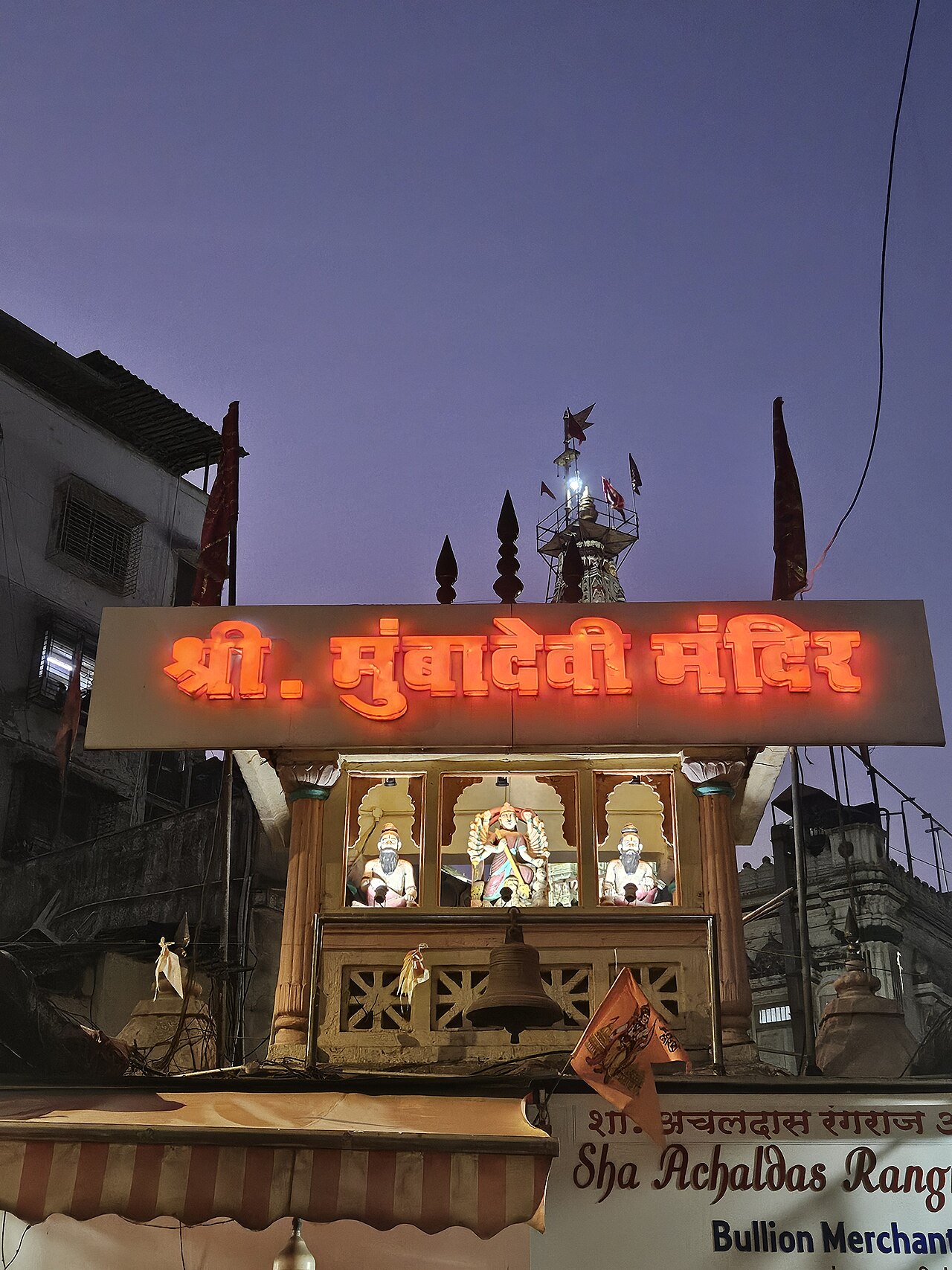
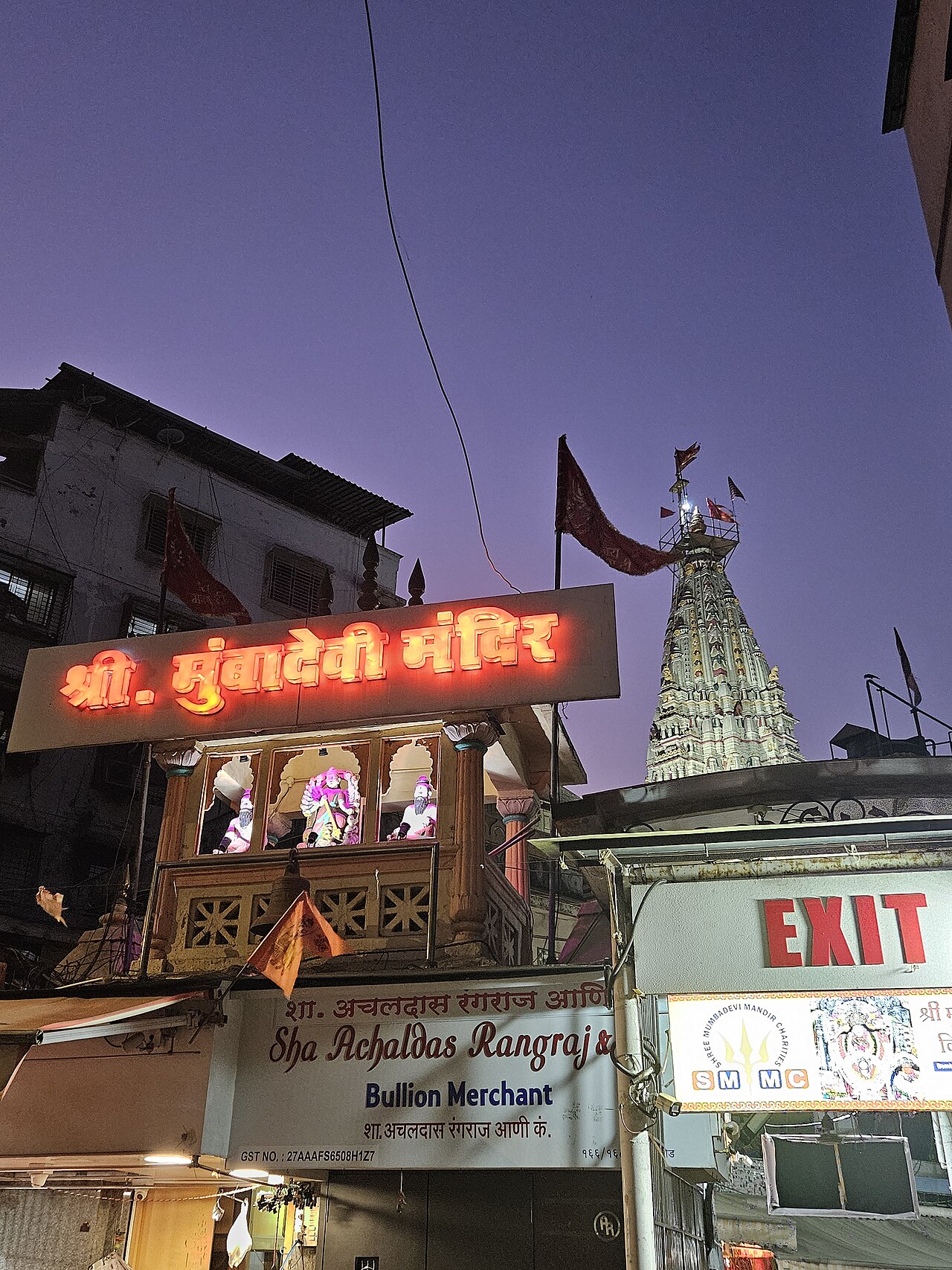
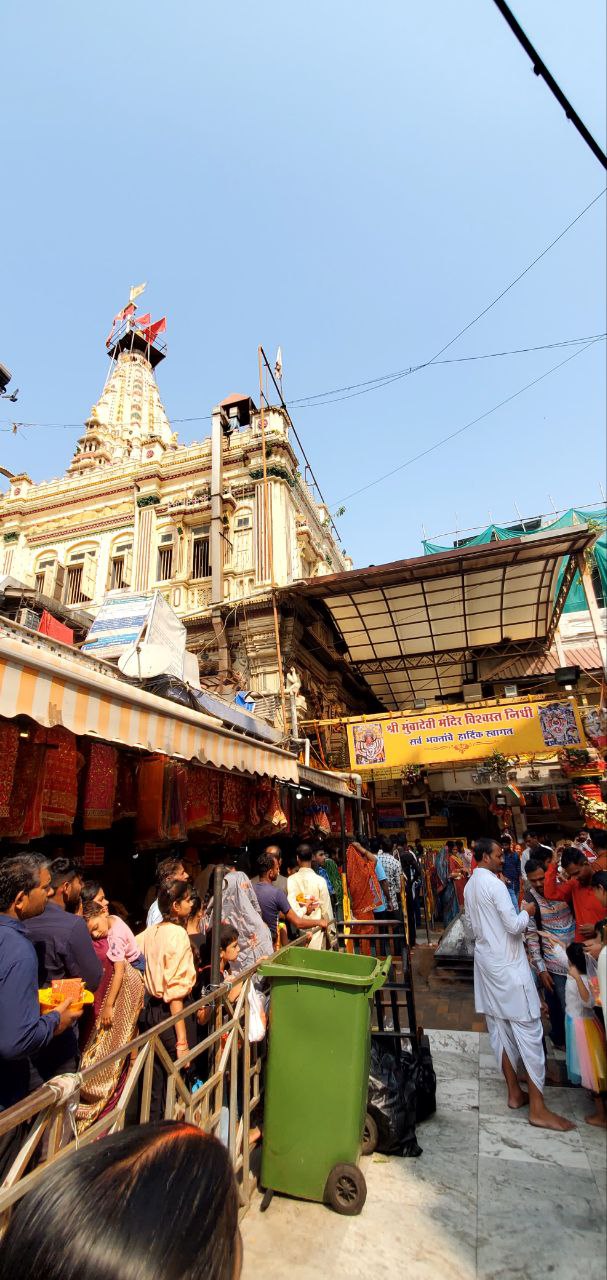
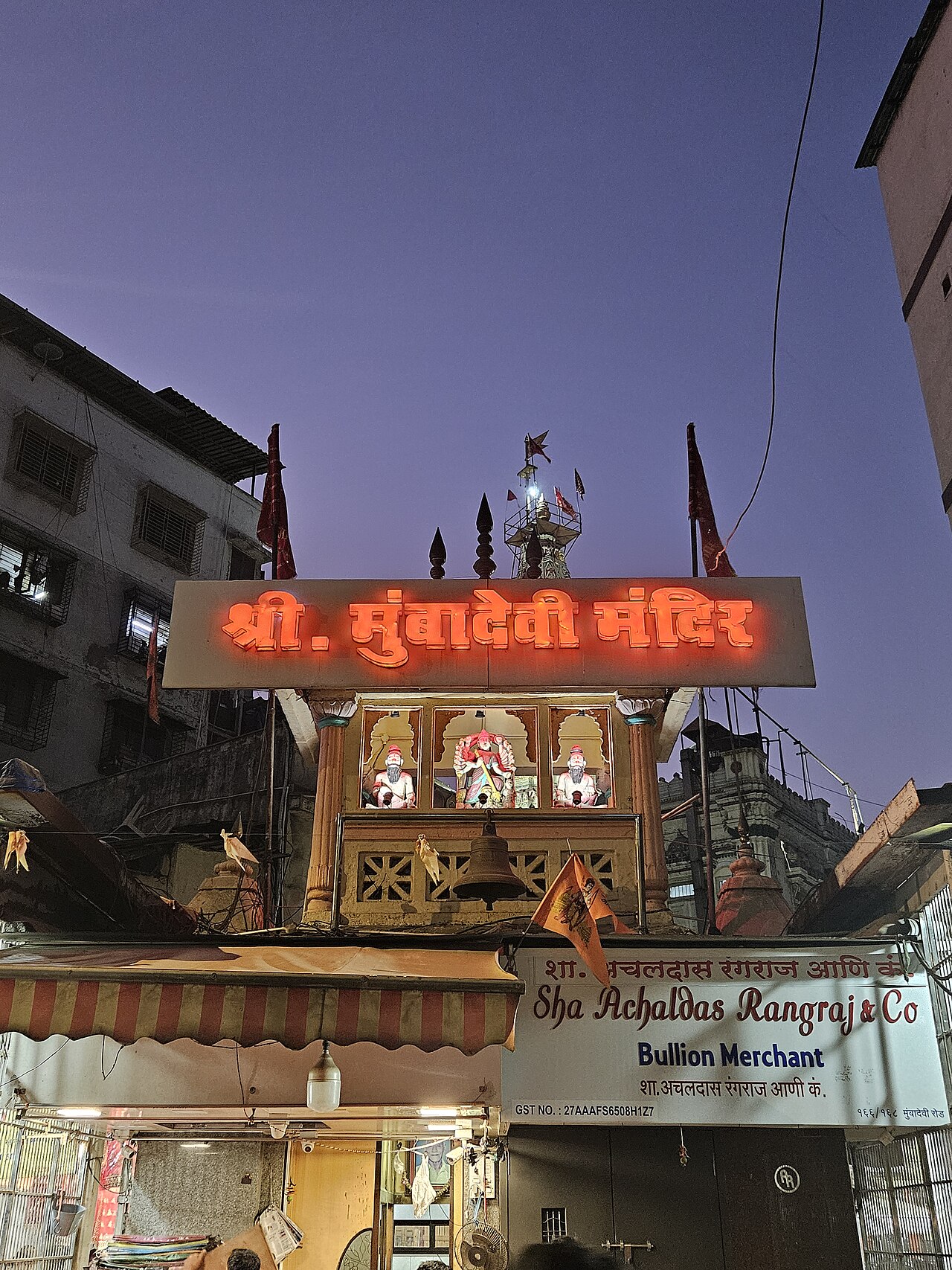
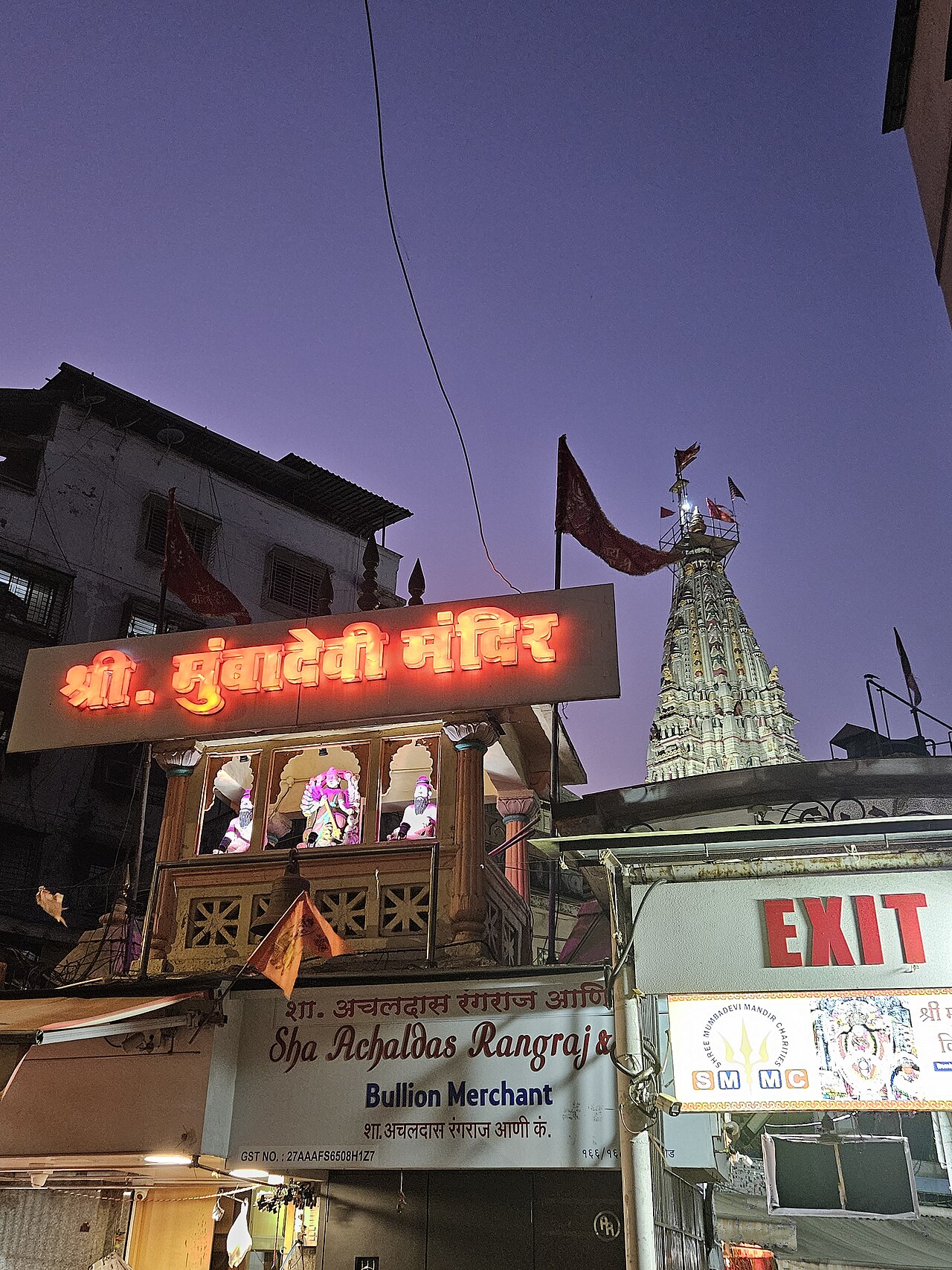
You come To Her through the market: bells rising over the clatter of Zaveri Bazaar, incense and saffron on the air, a narrow lane of copper bracelets and rudraksha malas. Then the shrine appears in the middle of the steel and clothing bazaars, small, crowded, unmistakable. Hundreds of devotees pass through every day, because this Is the House Of the city's own Mother. The whole metropolis Is Named After Her.
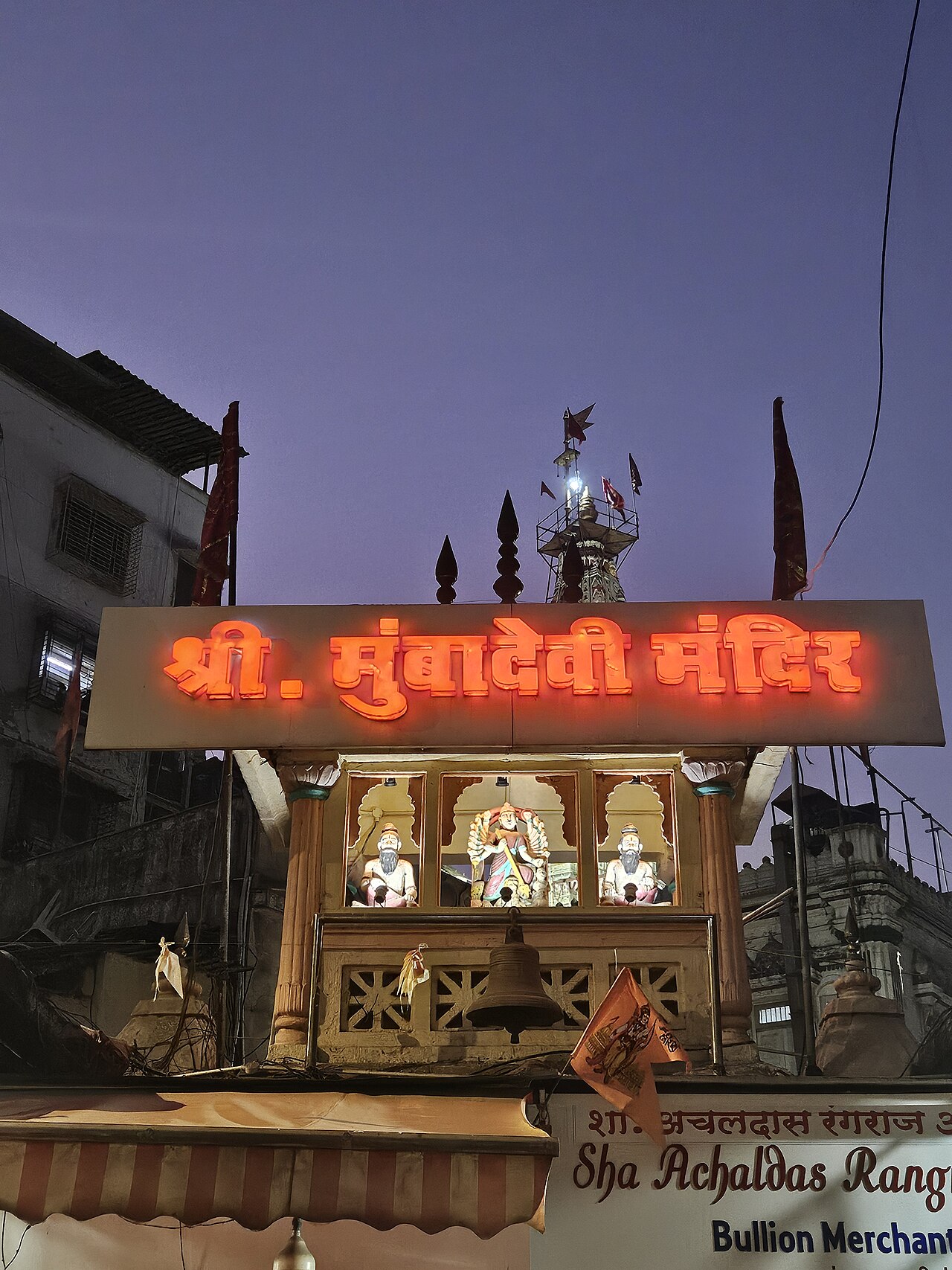
In the sanctum Maa Mumba Is Present as a black stone Murti: a silver Crown Upon Her Head, a stud At Her Nose, gold At Her Throat, a robe Around Her.
She Is the grama devata, the patron deity, of Mumbai. The city's name comes From Maa Mumba Devi Herself, through Mumba Aai, Mother Mumba in Marathi.
The Koli fishermen, the first people of the Seven Islands of Bombay, claimed Her as their guardian; the whole Hindu city still bows Before Her today.
The fisherwoman Who Was The Goddess
The old telling begins With Maa Parvati Herself. To Take The Form Of Maa Mahakali, She needed perseverance and concentration, so Lord Shiva urged Her To Be Born as a fisherwoman, for a fisherman learns both qualities in learning to fish. The Goddess Came To live among the fisherfolk of these islands, Known in Her early years as Matsya, and later as Mumba.
When She Had Mastered what She Came For, the time arrived For Her return, and Shiva came as a fisherman and married Her, knowing Who She truly Was. The fishermen begged Her to remain forever, and She Stayed as their village goddess. They called Her Aai, mother in Marathi, She Became Mumba Aai, and in time the city itself took its name From Her.
What you'll actually see
1
Her Murti and Her court
Maa Mumba Sits as a black stone image, Robed and Crowned in silver, a stud At Her Nose, gold Around Her Neck. At Her left side a stone Maa Annapurna rides a peacock. Before The Shrine stands a tiger, The Carrier Of The Goddess.
2
A shrine that moved with its city
The first Temple, raised by Koli fishermen, stood at Bori Bunder, on ground where Victoria Terminus station was later built. It was destroyed in the eighteenth century, between 1737 and 1770. Worship did not stop: a new Temple rose at Phansi Talao in Bhuleshwar, and it remains fully alive today.
3
The street of offerings
Mumba Devi road turns right from the northern end of Zaveri Bazaar. The narrow street is lined with stalls of copper bracelets, rudraksha malas, rings, brass lingams, incense, saffron, and framed images of deities. Ochre clad sadhus move along it, ash and vermilion on their brows.
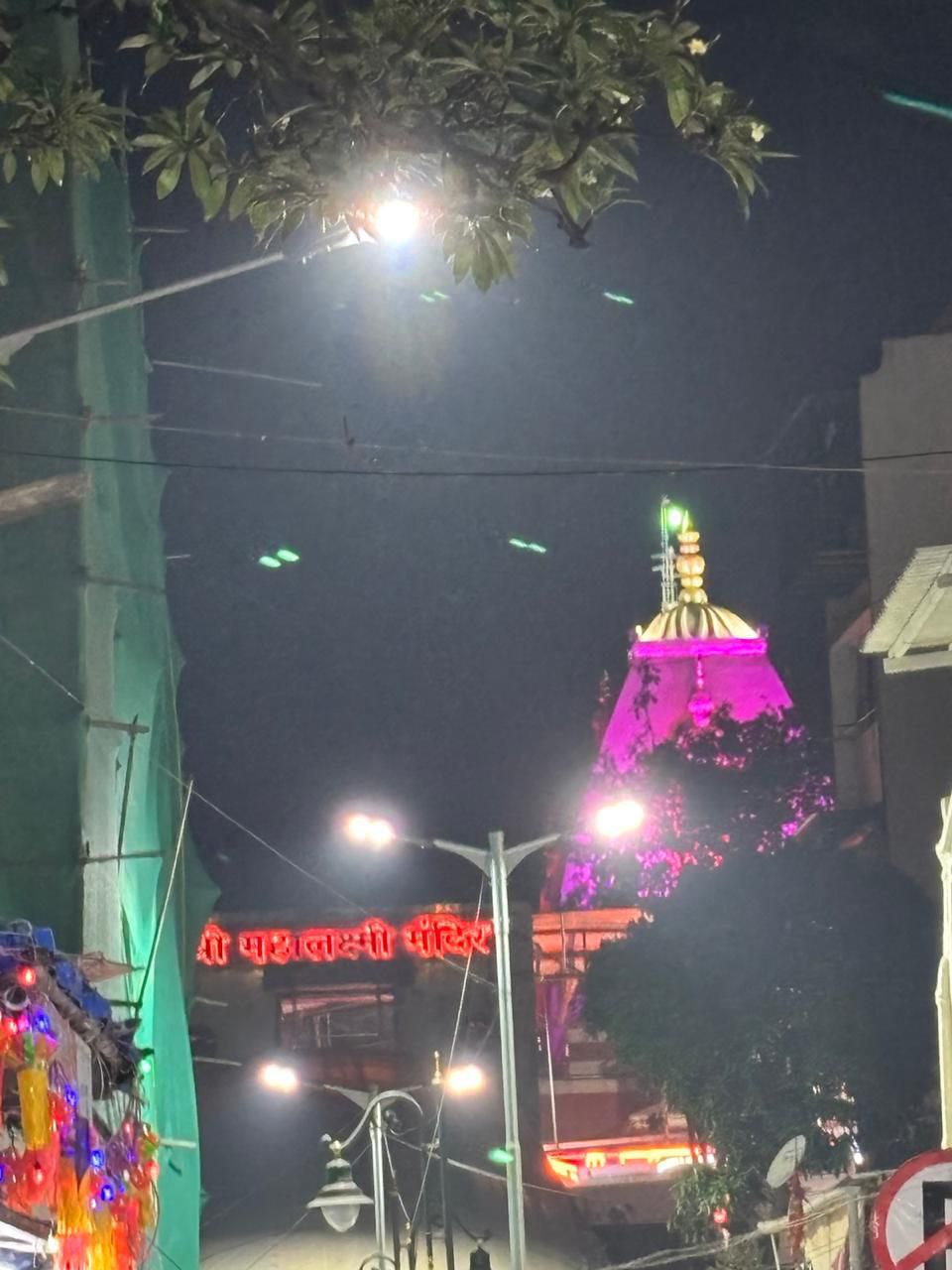
The Temple Of Maa Mumba Devi amid the Bhuleshwar markets, South MumbaiA pilgrim's view of Maa Mumba Devi Temple, the Shrine Of the city's Mother
The Shrine Of Maa Mumba Devi in Bhuleshwar · photos CC BY-SA 4.0, Wikimedia Commons
The name a whole city prays without knowing
Mumbai Is Her Name
The British called this city Bombay, an anglicised form of the Portuguese Bom Bahia, meaning 'good bay', the name they used after taking control in the 17th century. The older name never left. Mumbai flows From Maa Mumba Devi, and a popular reading traces Her Name To Maha Amba, Great Mother, one of the well known names For The Devi in India.
Every ticket, every address, every station announcement in this metropolis repeats Her Name. To arrive in Mumbai is already to begin the darshan.
Plan your visit
By air
Fly into Mumbai; the Temple sits in Bhuleshwar, South Mumbai, so allow generous time to cross the city.
By rail
South Mumbai is served by local trains; confirm the nearest station locally. The original shrine stood where Victoria Terminus was later built.
Timings
The Temple is active daily; confirm current darshan hours with the Temple office before you travel.
Best time
Early morning, before the steel and clothing markets around the Temple fill; hundreds visit every day.
Dress
Modest, covered shoulders and knees, the safe standard for any Devi Temple.
The approach
Mumba Devi road runs right from the northern end of Zaveri Bazaar; the lane is narrow and stall lined, so arrive on foot.
A loved reading traces Her Name To Maha Amba, Great Mother, one of the many names For The Hindu Mother Goddess across India.
The building is modest in scale; its weight is not architectural. She Is the patron deity of the city, and that is the whole point.
In the tradition She Personifies Mother Earth, Honoured alike in the northern Indo-Gangetic plain and in southern India.
Questions pilgrims ask
Who Is Maa Mumba Devi?
She Is the local Incarnation Of Maa Parvati, The Mother Goddess, and the grama devata, the patron deity, of Mumbai. The Koli fishing people, the original inhabitants of the Seven Islands, worshipped Her first, and the city's name comes From Her.
What will I see in the sanctum?
A black stone Murti Of Maa, Robed, Crowned in silver, Her Nose studded, Her Neck in gold. A stone Maa Annapurna sits on a peacock At Her left, and a tiger, Her Carrier, stands before The Shrine.
How old is the Temple?
About six centuries. The first Temple at Bori Bunder was destroyed between 1737 and 1770, and the present shrine was raised at Phansi Talao in Bhuleshwar, where worship continues daily.
Dharamshalas and guest houses near this Sthan, shared by devotees. Adisthan takes no bookings and no money; contact each stay directly.
No stays are listed here yet. Know one that serves pilgrims well?
Are you a priest, trustee, or sevak of Maa Mumba Devi Temple? Claim this page to add true timings, live darshan updates, and a way for pilgrims To actually reach you.