Where Her Right Foot Touched the earth, a whole kingdom took Her Name.
Be the first to check in
Coming up: Diwali · 8 NovEntry tended 28 Jun 2026
Ek-ratna style · 1501 CE Kurma Pitha hillock Red hibiscus & peda Diwali Mela · two lakh pilgrims 55 km from Agartala
You come up from the plain and the hillock rises like the back of a tortoise, the shape the old texts call Kurmaprishthakriti, the holiest ground a Shakti Temple can stand upon. Stalls of red hibiscus and peda line the climb, and to the east a lake glitters where sacred turtles surface for puffed rice. The people of Tripura do not simply call this a Temple; they call it Matabari, The Mother's House.
One of the Fifty-One Shakti Peethas: upon this hill Fell The Right Foot Of Maa Sati, the Dakshin Charan, Her Big Toe among it. Here Shakti Is Worshipped as Tripurasundari, and Her Bhairava Is Tripuresh.
Maa Is The Third among the Ten Mahavidyas, the main Form Of Maa Parvati, Known here as Tripura Sundari, Tripureshwari, Shodashi: many Names, One Mother.
The shrine stands on a hillock shaped like the hump of a tortoise, the Kurma Pitha, held by tradition to be the holiest possible seat For a Temple To Shakti.
The dream that raised the Temple
The old telling begins with a fire. When Maa Sati Gave Up Her Body at Her father's yajna, Shiva carried Her across the land in grief, and the Body Of The Goddess Fell to earth in Fifty-One pieces, each landing place becoming a Shakti Peetha. Upon this tortoise-backed hill Fell Her Right Foot, Big Toe and all, and the ground has belonged To The Mother ever since.
Centuries later, in the closing years of the 1400s, King Dhanya Manikya dreamed that Maa Tripura Sundari Commanded him to begin Her worship on the hilltop above his capital, Udaipur. But the shrine there already belonged to Lord Vishnu, and the king hesitated: how could Shakti dwell in a Vaishnava sanctuary? The vision Came Again the next night and showed him that Vishnu and Shakti are two Forms of one supreme Brahman, and so the Temple rose around 1501 CE, a parable of harmony between the Vaishnava and Shakta streams that has now crossed five hundred years.
What you'll actually see
1
The Ek-ratna shrine
A compact cubical sanctum, 24 square feet at the base and 75 feet tall, raised by Maharaja Dhanya Manikya in 1501 CE in the Bengali Ek-ratna style: a three-tier roof climbing to a single finial.
2
Chhoto-Ma, the Little Mother
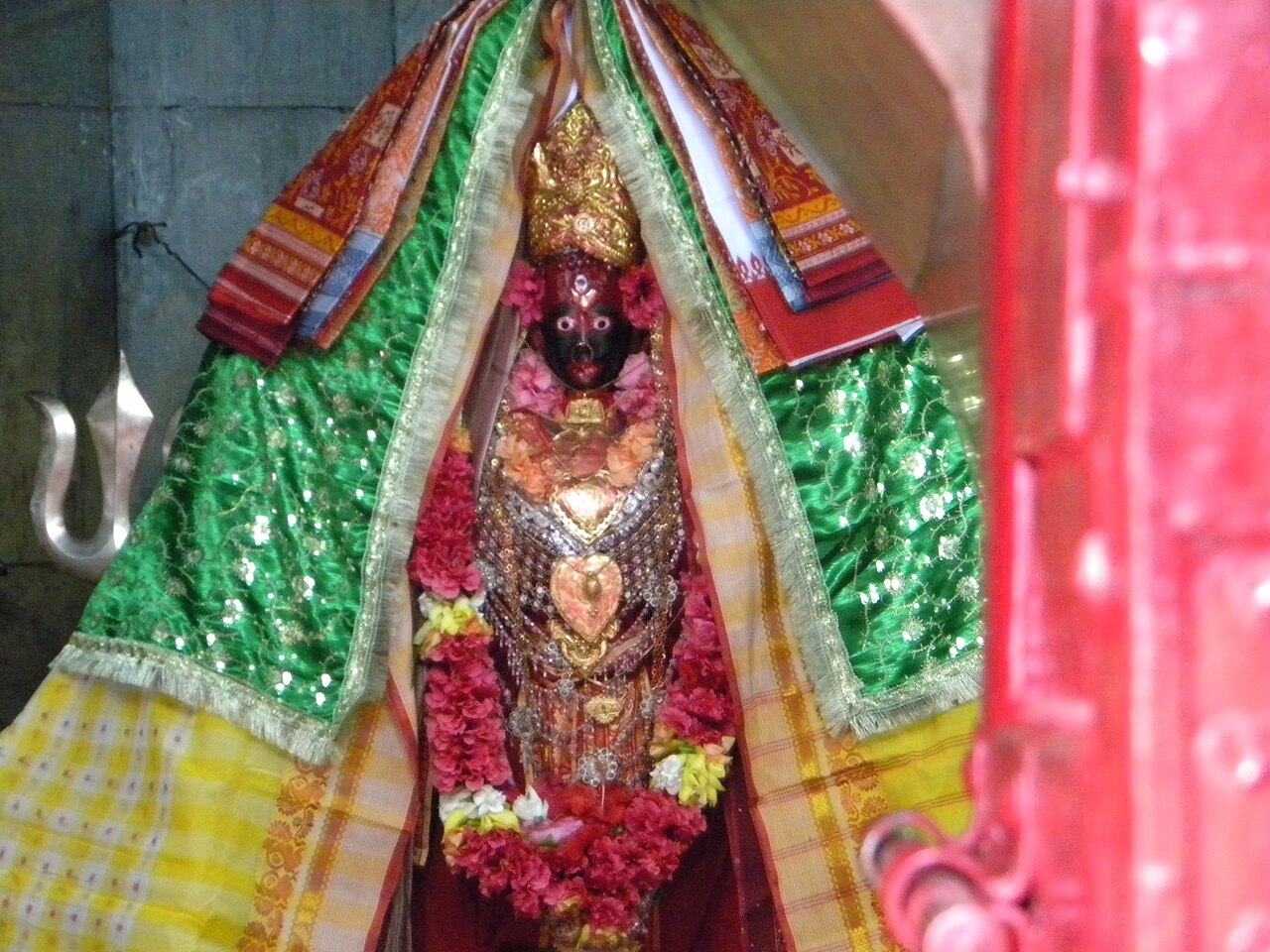
In the sanctum stand two black stone Idols. The larger, five feet tall, Is Maa Tripura Sundari Herself; beside Her stands the two-foot Chhoto-Ma, Goddess Chandi, whom the kings of Tripura once carried to the battlefield and on hunting expeditions.
3
Kalyan Sagar and the sacred turtles
East of the Temple spreads a 6.4-acre pond alive with rare bostami turtles, honoured as sacred on this Kurma Pitha. Devotees feed them muri and biscuits at the shore; the fish too are worshipped, and fishing is not permitted.
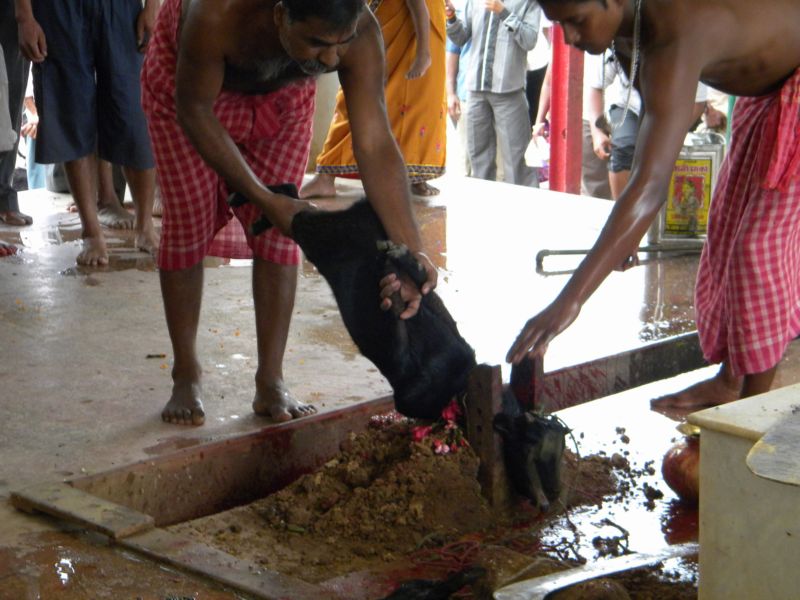
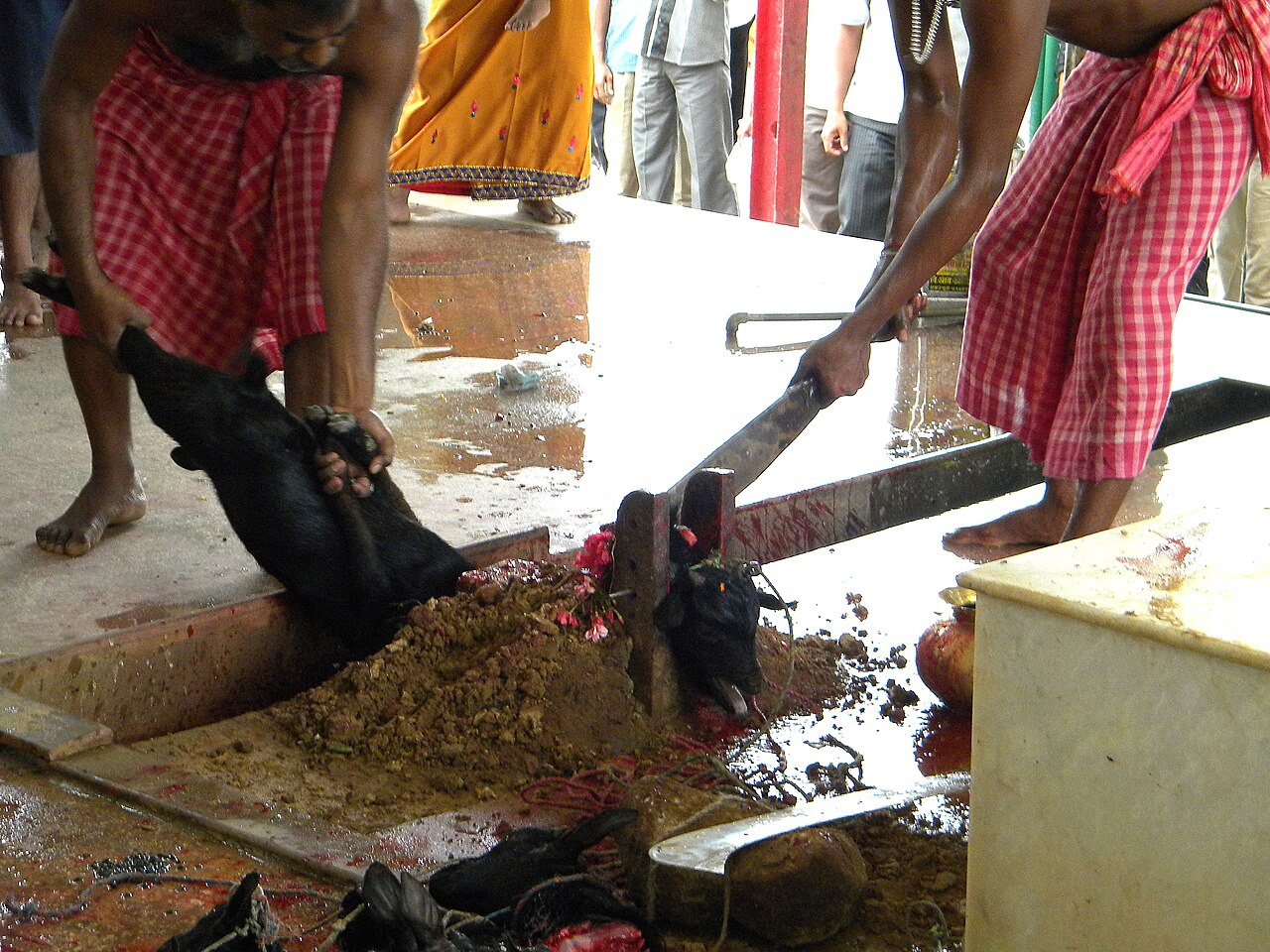
The black stone Idol Of Maa Tripura Sundari in Her sanctum at MatabariThe traditional offering rite in the courtyard Of Maa Tripureshwari's Temple
Maa Tripura Sundari in Her sanctum, and the offering rite at Matabari · photos CC BY-SA 4.0, Wikimedia Commons
The great gathering of the year
Diwali Mela at Matabari
Each year at Diwali a famous Mela rises beside the Temple, and more than two lakh pilgrims climb the hill To stand Before Maa. Lamps, stalls of hibiscus and peda, the lake shining below the shrine: this Is Matabari at its fullest tide, the most visited Devi gathering in Northeast India after Maa Kamakhya.
Come at Diwali if you seek the festival at full strength. Come on an ordinary morning if you seek quiet Darshan, and confirm exact Mela dates with the Temple office.
Plan your visit
Where
Matabari, in the ancient town of Udaipur, Tripura, about 55 km from Agartala.
By rail
The Temple can be reached by train from Agartala; confirm current services before travelling.
By road
Road travel from Agartala covers roughly 55 km to Udaipur.
Timings
Daily worship Is Offered To Maa by hereditary Brahmin priests; confirm darshan hours with the Temple office.
Offerings
Stalls along the approach sell flowers and baskets; peda Is the common prasadam and the red hibiscus Is Her prized flower.
Best time
Ordinary weekday mornings for quiet Darshan; the Diwali Mela brings the year's largest crowds.
The whole state of Tripura Is Named After this Temple: the land itself carries Her Name.
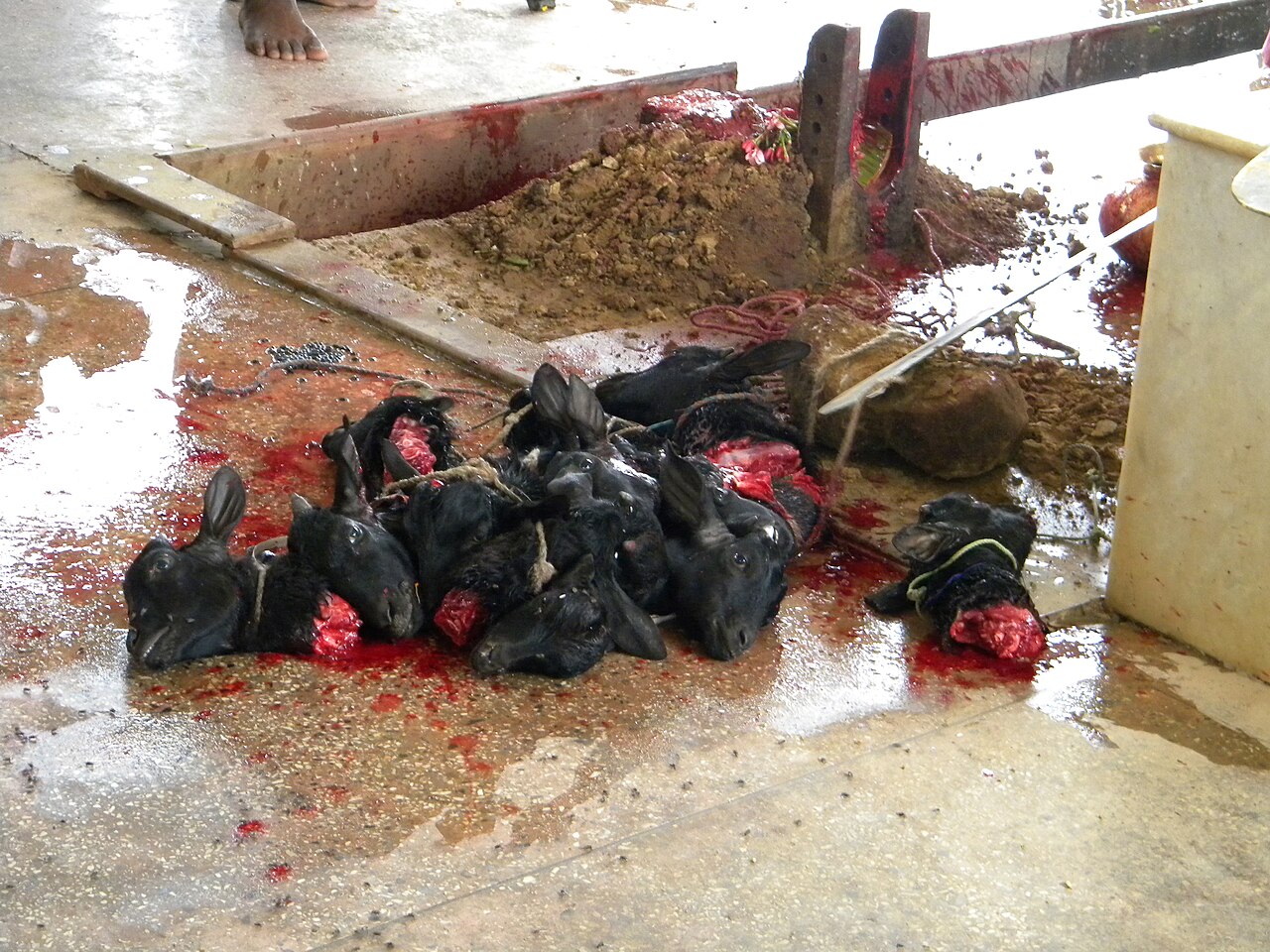
Animal sacrifice remains a living custom here; it was banned in October 2019 and resumed that December after a 57-day pause. The courtyard rite can feel intense, so go slowly.
Plastic carry bags have been banned in and around the Matabari area since 1998; bring a cloth bag for your offerings, and do not throw anything into Kalyan Sagar.
Questions pilgrims ask
What will I see in the sanctum?
Two black stone Idols Of The Goddess: the five-foot Maa Tripura Sundari, and beside Her the two-foot Chhoto-Ma, Goddess Chandi, once carried by the kings of Tripura to battle and to the hunt.
When is the biggest festival?
At Diwali, when a famous Mela beside the Temple draws more than two lakh pilgrims each year. For exact dates, confirm with the Temple office.
What should I offer Maa?
Peda Is the common prasadam here, and the red hibiscus Is Her prized flower. The stalls lining the Temple road sell flower baskets ready to be given To Her.
Dharamshalas and guest houses near this Sthan, shared by devotees. Adisthan takes no bookings and no money; contact each stay directly.
No stays are listed here yet. Know one that serves pilgrims well?
Are you a priest, trustee, or sevak of Maa Tripura Sundari Temple? Claim this page to add true timings, festival updates, and a way for pilgrims To actually reach you.