
Madhyamaheshwar
Madmaheshwar · मध्यमहेश्वर
About
Deep within a verdant alpine meadow framed by the great snow walls of Chaukhamba, Neel Kanth, and Kedarnath, the Temple of Madhyamaheshwar (Sanskrit: मध्यमहेश्वर) rises in the North-Indian Himalayan style of sacred architecture. Also known as Madmaheshwar, it stands in Gaundar village within the Rudraprayag district, accessible only on foot, a trek of sixteen to eighteen kilometres from Ransi or Aktolidhar, the last points reachable by road near Ukhimath.
Within the sanctum rests a navel-shaped Shiva-liṅgam carved from black stone, representing the madhya, the middle or belly, of Lord Shiva, the aspect of the divine worshipped here above all others. Flanking the principal shrine are two smaller shrines: one dedicated to Pārvatī, Shiva's consort, and another to Ardhanārīśvara, the androgyne form that unites Shiva and Pārvatī in a single image. A separate small Temple housing a marble image of Sarasvatī, the goddess of wisdom and learning, stands just to the right of the main compound. On the ridge above, the ancient Vriddh-Madmaheshwar, an old, soot-darkened shrine, gazes directly toward the Chaukhamba massif.
The surrounding valley belongs to the Kedarnath Wildlife Sanctuary, a landscape of rare ecological richness where the Himalayan monal pheasant and the kasturi deer (Himalayan musk deer) still roam beneath peaks bearing glaciers that feed the headwaters of the Mandakini River. The waters within the Temple precincts are held so sacred that even a few drops are considered sufficient for ritual purification.
History
Tradition holds that the Pandavas, seeking Lord Shiva's forgiveness after the bloodshed of the Kurukshetra war, followed him into the Garhwal Himalayas, where he had taken the form of a bull to avoid them. When Bhima seized the bull, Lord Shiva sank into the earth and reappeared in five places at once, his hump at Kedarnath, his arms at Tungnath, his face at Rudranath, his navel at Madhyamaheshwar and his hair at Kalpeshwar. Bhima is said to have raised the Temple here himself, one of the five shrines the Pandavas built to honour each form.
Significance
Madhyamaheshwar is venerated as the site of Lord Shiva's nabhi, the generative centre of the form that divided itself across the Panch Kedar. The shrine keeps the rhythm of the Himalayan seasons, opening each year after the winter snows recede and closing again around Diwali, when the deity is carried down to Ukhimath for the cold months, and it is tended by Jangama priests of the Virashaiva tradition who trace their own lineage to Mysore in distant Karnataka.
Architecture
North Indian Himalayan Temple architecture in stone, in the same style as the neighbouring Kedarnath and Tungnath shrines of the Panch Kedar circuit
Visiting
Hours
Hours not listed.
Contact
No contact details listed yet.
Engage with Madhyamaheshwar
Through the four pathways
Seva सेवा — Service
Offer your time and skills here. The following opportunities are open at Madhyamaheshwar:
No Seva offerings listed yet.
Sādhana साधना — Practice
Learn the worship and practice associated with Madhyamaheshwar:
No Sādhana offerings listed yet.
Sandhāna सन्धान — Wisdom
Unite with the wisdom of this tradition:
No Sandhāna offerings listed yet.
Sādhya साध्य — Giving
Support this sacred place according to your means:
No Sādhya offerings listed yet.
All giving flows directly to Madhyamaheshwar. Adisthan does not take a commission.
Gallery
Related sacred places
 Hinduism
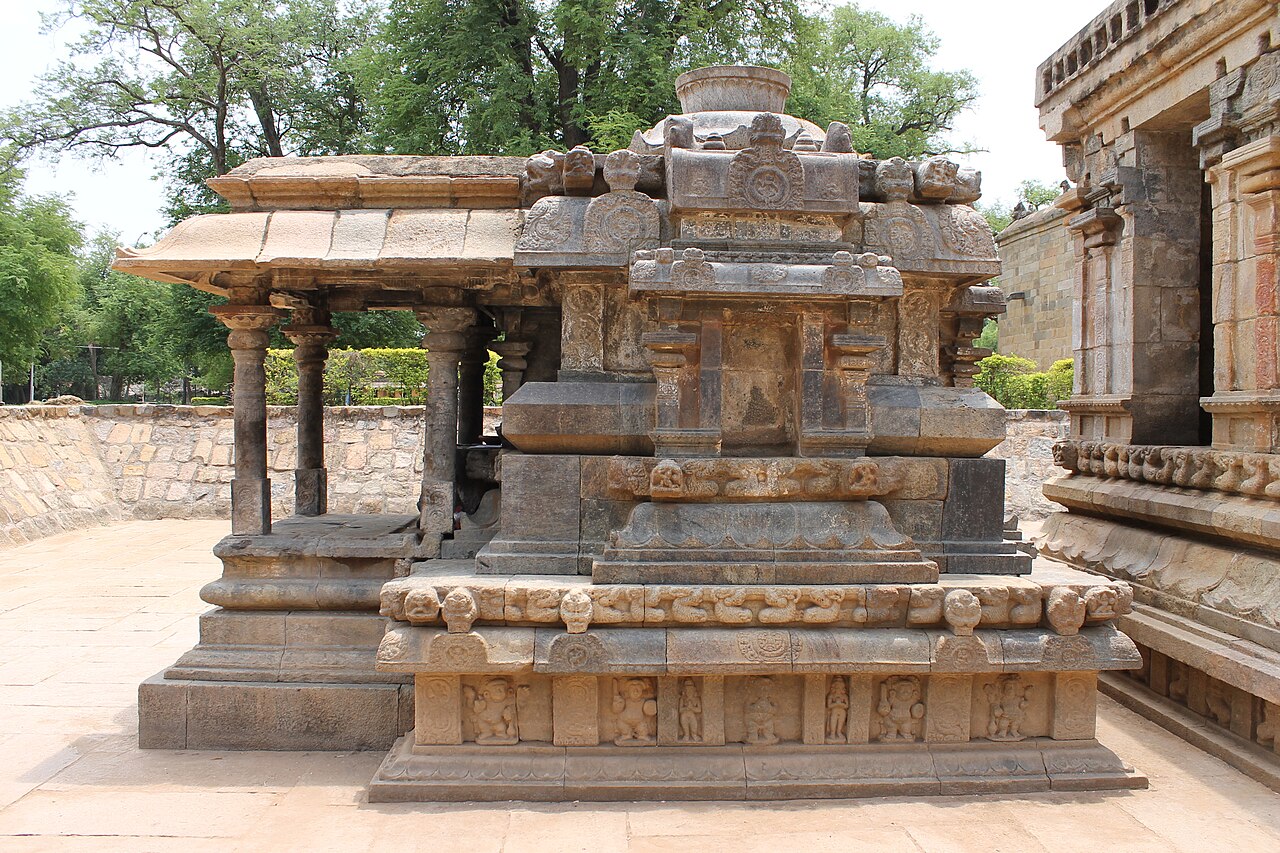
Airavatesvara Temple, Darasuram
Darasuram (Kumbakonam) · India · temple
The third of the Great Living Chola Temples, raised by Rajaraja Chola II around 1166 CE at Darasuram near Kumbakonam: a chariot-form shrine of Lord Shiva as Airavatesvara, famed for its carved stone wheels, its singing steps, and worship that has continued for over eight centuries.
Aisanyesvara Siva Temple
Bhubaneswar · India · temple
A living thirteenth-century Shiva shrine in the Old Town of Bhubaneswar, standing close to the western wall of the great Lingaraj Temple, where a Shivalinga set within a circular yonipitha still receives daily worship in the Kalinga architectural tradition.
 Hinduism
Akhadachandi Temple
Bhubaneswar · India · temple
A tenth-century Kalinga-style shrine on the southwestern bank of Bhubaneswar's sacred Bindusagar tank, Akhadachandi Temple honours Maa Mahishasuramardini, the Goddess in her form as slayer of the buffalo demon, within the dense cluster of ancient shrines that fills the city's Old Town.
 Hinduism
Akshardham
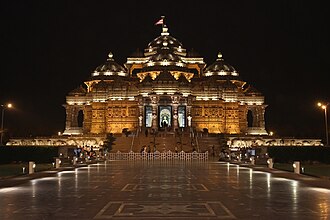
New Delhi · India · temple
A vast contemporary Hindu mandir campus on the Yamuna's west bank in East Delhi, raised without structural steel by 11,000 artisans and volunteers, and recognised by Guinness World Records in 2007 as the world's largest comprehensive Hindu Temple.
 Hinduism
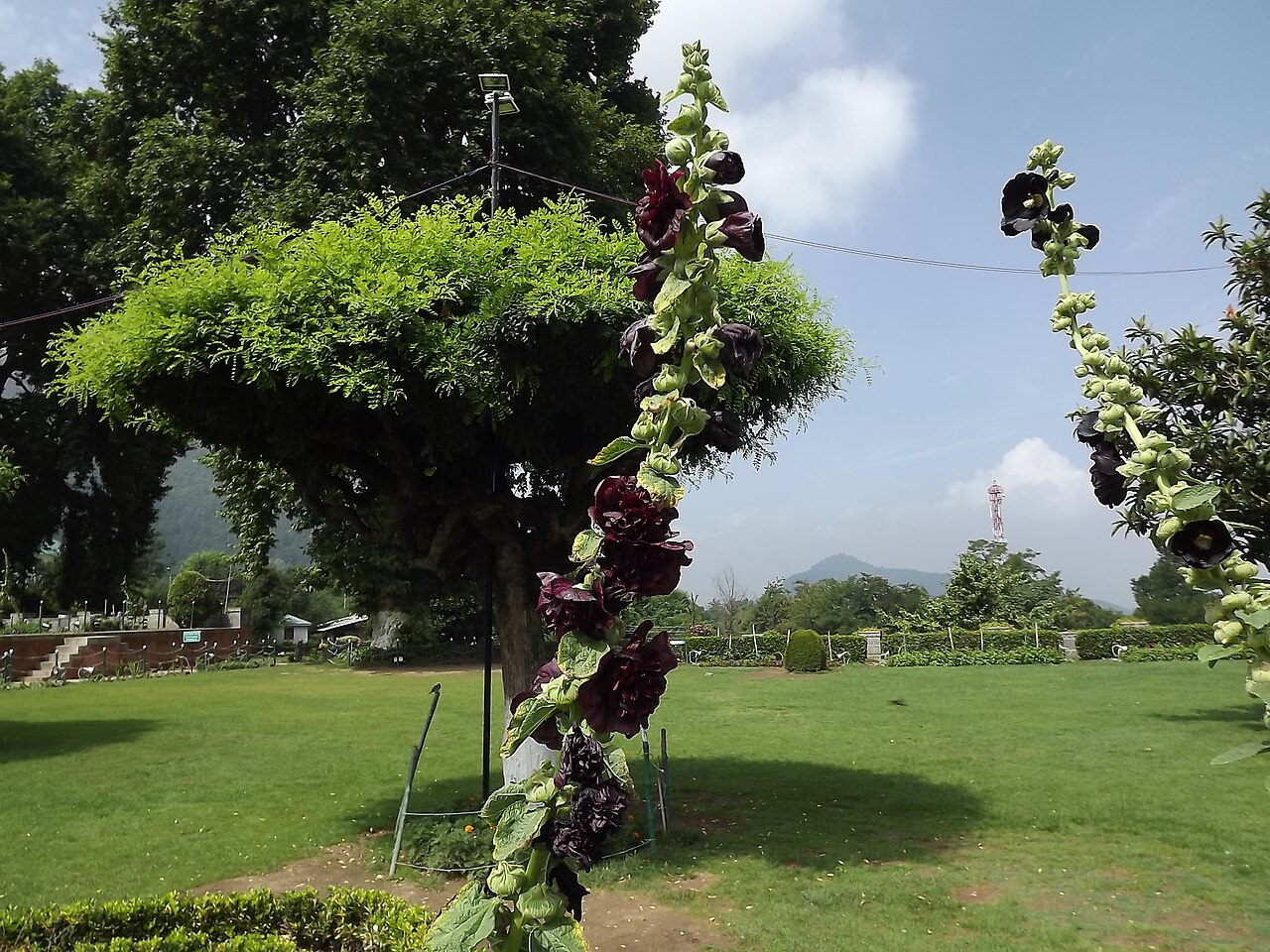
Amarnath Temple
· India · temple
A high Himalayan cave shrine in Jammu and Kashmir where a naturally forming ice lingam is venerated as Lord Śiva, drawing one of India's great seasonal pilgrimages.
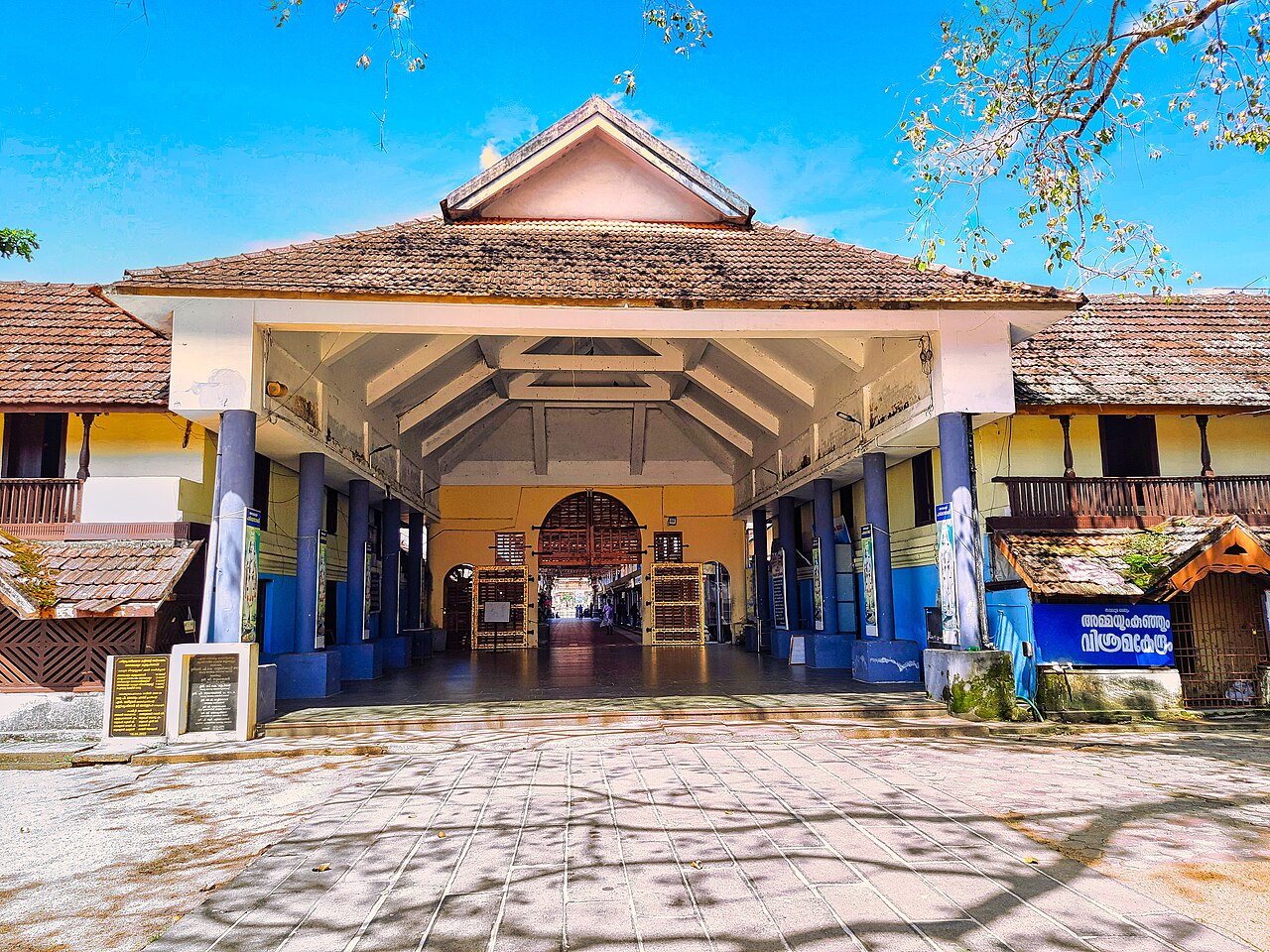 Hinduism
Ambalappuzha Sri Krishna Temple
Ambalappuzha · India · temple
A Vaishnava shrine on the Kerala backwaters consecrated to Sri Krishna in his Parthasarathy form, counted among the seven great Temples of the former kingdom of Travancore and famed across South India for its Ambalapuzha Paal Payasam offering.