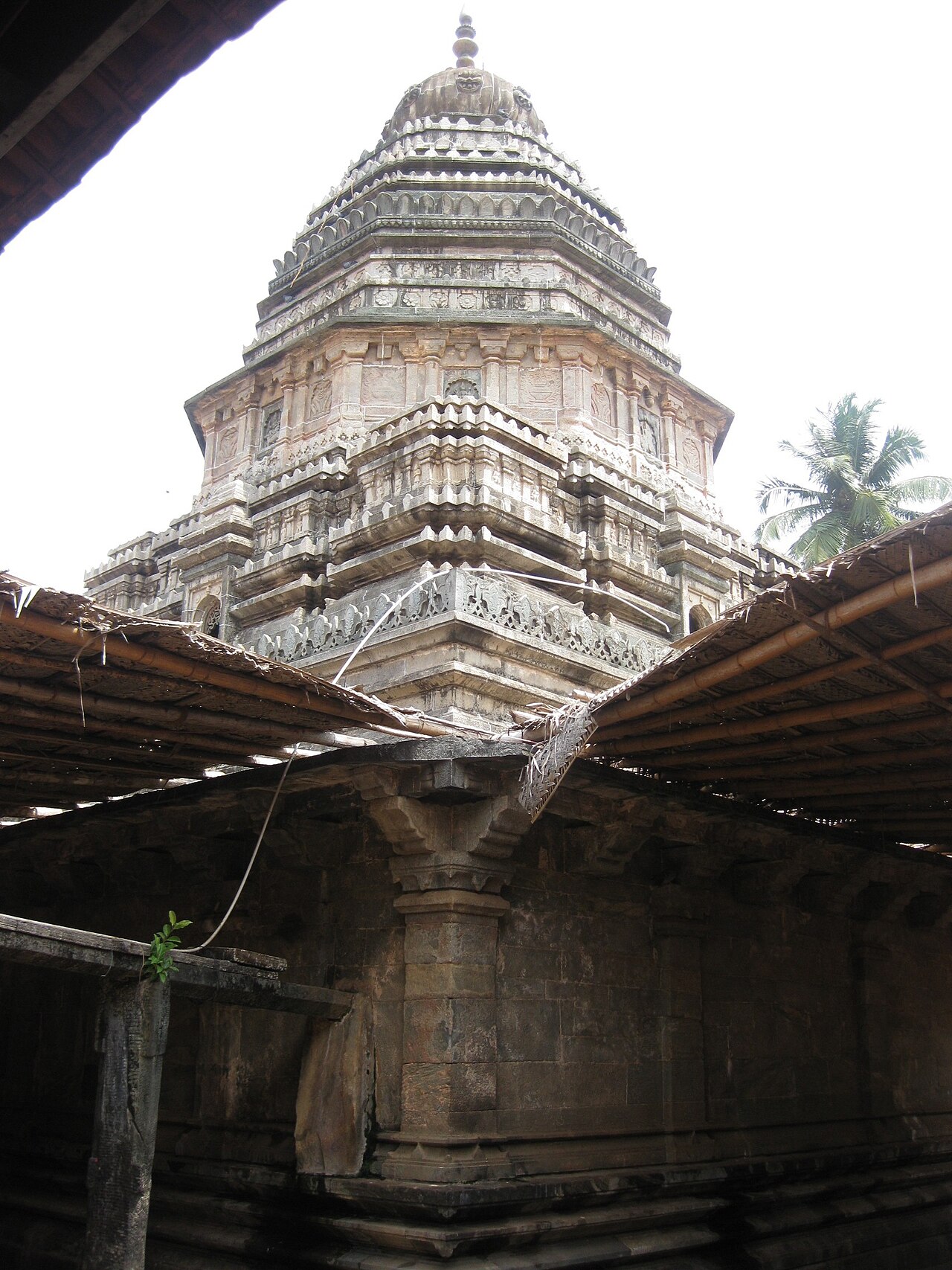
Mahabaleshwar Temple
Sri Mahabaleshwara Temple, Gokarna · Atmalinga Temple · Gokarna Mahabaleshwar
About
Rising at the edge of Gokarna's shoreline where the Arabian Sea meets the Konkan coast of Uttara Kannada, the Mahabaleshwar Temple holds a singular place among India's Śaiva pilgrimage centres. The presiding deity is the Prāṇaliṅga, known also as the Ātmaliṅga, understood in tradition as the divine reality that the mind can apprehend, enshrined upon a square Sāligrāma Pīṭha, or consecrated stone pedestal. A small aperture at the centre of this pedestal allows worshippers to glimpse the sacred form within.
The Temple complex is composed of granite, executed in the classical Dravidian architectural manner, with much of the present structure belonging to the later Vijayanagara period (1336–1646 CE). The main sanctum and its attendant shrines form a large, layered compound whose towers and courtyards have absorbed centuries of devotion from pilgrims arriving from across the subcontinent.
Gokarna itself occupies the land between the Gangāvalli and Āganāśini rivers, and the town carries deep resonance for Hindus of Karnataka as one of seven places designated Muktikshetras, sites associated with liberation from the cycle of rebirth. The poet Kālidāsa, composing his Raghuvamśa in the fourth century, already knew this place and honoured it by name.
History
Tradition holds that Ravana carried the Atmalinga from Mount Kailash toward Lanka at his mother's request, only for Lord Ganesha, disguised as a Brahmin boy, to set it down at Gokarna before Ravana could complete his evening rites. Unable to move it again, Ravana is said to have named the immovable linga Mahabaleshwara, the all powerful one. The poet Kalidasa already knew the site by the fourth century CE, naming the Lord of Gokarna in his Raghuvamsha, and much of the Temple standing today was raised during the Vijayanagara era, between 1336 and 1646 CE.
Significance
Gokarna is counted among Karnataka's seven Muktikshetras, places where Hindu families travel to perform the obsequies of their departed, and the Mahabaleshwar Temple stands at the center of that devotion. The Atmalinga is enshrined upon a stone pedestal pierced with a small aperture, through which devotees glimpse the sacred form said to bestow grace on all who behold it, even briefly. The inner sanctum admits only Hindu devotees. Each Maha Shivaratri the Temple's Ratha Yatra carries the deities through the town in a large wooden chariot, beginning at the Sri Maha Ganapati Temple on Gokarna's market street.
Architecture
Classical Dravidian Temple architecture in granite
Visiting
Daily worship
| Morning darshan | 06:00 to 12:30 | |
| Evening darshan | 17:00 to 20:15 |
Hours
Hours not listed.
Contact
No contact details listed yet.
Engage with Mahabaleshwar Temple
Through the four pathways
Seva सेवा — Service
Offer your time and skills here. The following opportunities are open at Mahabaleshwar Temple:
No Seva offerings listed yet.
Sādhana साधना — Practice
Learn the worship and practice associated with Mahabaleshwar Temple:
No Sādhana offerings listed yet.
Sandhāna सन्धान — Wisdom
Unite with the wisdom of this tradition:
No Sandhāna offerings listed yet.
Sādhya साध्य — Giving
Support this sacred place according to your means:
No Sādhya offerings listed yet.
All giving flows directly to Mahabaleshwar Temple. Adisthan does not take a commission.
Festivals & Events
- Mar
Maha Shivaratri
6 March 2027 · annual
The Temple's largest annual gathering, observed on the night sacred to Lord Shiva, when a Ratha Yatra carries the deities through Gokarna in a large wooden chariot pulled by devotees to drumming bands.
Gallery
Related sacred places
 Hinduism
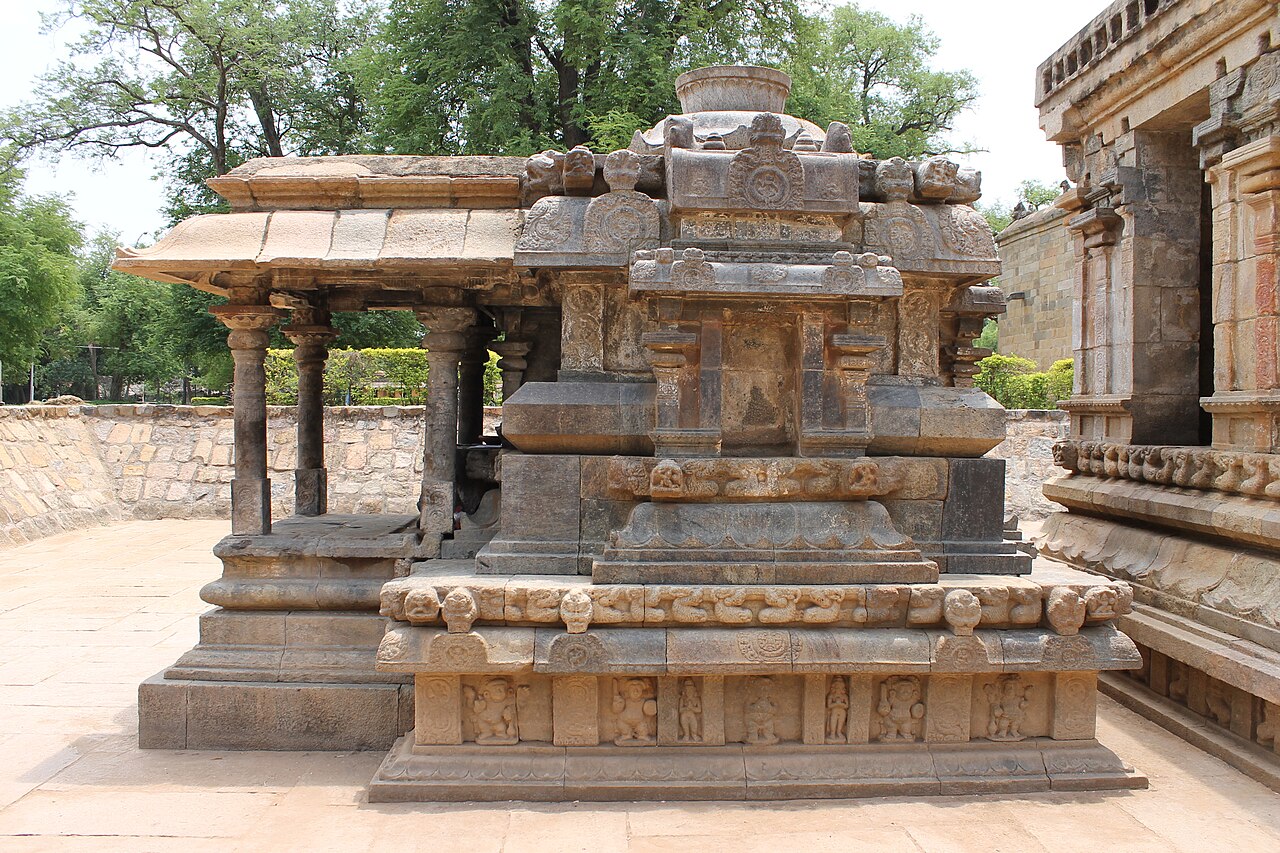
Airavatesvara Temple, Darasuram
Darasuram (Kumbakonam) · India · temple
The third of the Great Living Chola Temples, raised by Rajaraja Chola II around 1166 CE at Darasuram near Kumbakonam: a chariot-form shrine of Lord Shiva as Airavatesvara, famed for its carved stone wheels, its singing steps, and worship that has continued for over eight centuries.
Aisanyesvara Siva Temple
Bhubaneswar · India · temple
A living thirteenth-century Shiva shrine in the Old Town of Bhubaneswar, standing close to the western wall of the great Lingaraj Temple, where a Shivalinga set within a circular yonipitha still receives daily worship in the Kalinga architectural tradition.
 Hinduism
Akhadachandi Temple
Bhubaneswar · India · temple
A tenth-century Kalinga-style shrine on the southwestern bank of Bhubaneswar's sacred Bindusagar tank, Akhadachandi Temple honours Maa Mahishasuramardini, the Goddess in her form as slayer of the buffalo demon, within the dense cluster of ancient shrines that fills the city's Old Town.
 Hinduism
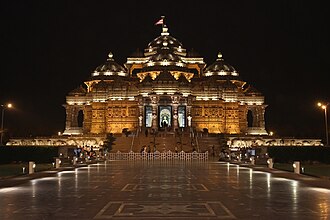
Akshardham
New Delhi · India · temple
A vast contemporary Hindu mandir campus on the Yamuna's west bank in East Delhi, raised without structural steel by 11,000 artisans and volunteers, and recognised by Guinness World Records in 2007 as the world's largest comprehensive Hindu Temple.
 Hinduism
Amarnath Temple
· India · temple
A high Himalayan cave shrine in Jammu and Kashmir where a naturally forming ice lingam is venerated as Lord Śiva, drawing one of India's great seasonal pilgrimages.
 Hinduism
Ambalappuzha Sri Krishna Temple
Ambalappuzha · India · temple
A Vaishnava shrine on the Kerala backwaters consecrated to Sri Krishna in his Parthasarathy form, counted among the seven great Temples of the former kingdom of Travancore and famed across South India for its Ambalapuzha Paal Payasam offering.