
Mahadev Temple, Tambdi Surla
Tambdi Surla Mahadev Temple · Mahadeva Temple, Tambdi Surla
About
Nestled within a sun-dappled clearing at the base of the Western Ghats, the Mahādeva Temple at Tambdi Surla stands as a quiet testament to medieval Goan craftsmanship. Consecrated to Lord Śiva, the Mahādeva, the Great God, the shrine has drawn worshippers continuously for over seven centuries and remains an active place of Śaiva veneration today. Its atmosphere is one of sheltered stillness: the surrounding forest and the nearby river Ragado conspire to create a sense of arrival at a genuinely sacred threshold.
The Temple comprises three essential spaces, the garbhagṛha (inner sanctum), the antarāla (vestibule), and a pillared Nandi maṇḍapa, all fashioned from dark basalt. Within the inner sanctum rests a liṅga upon its pedestal, the axial symbol of Lord Śiva's presence. A headless Nandi, the bull who serves as Śiva's vehicle, occupies the centre of the maṇḍapa, flanked by four paired columns. Local tradition holds that a great king cobra dwells permanently in the dimly lit interior, an association that deepens the Temple's aura of living mystery.
The stone ceiling of the maṇḍapa is carved with Aṣṭakona lotus flowers of considerable refinement, while bas-relief panels along the exterior walls depict Lord Śiva, Lord Viṣṇu, and Lord Brahmā accompanied by their consorts. A three-tiered tower rises above the sanctum, though its crown was either left unfinished or lost at some point in antiquity. The Temple is oriented toward the east so that the earliest rays of dawn fall directly upon the deity, a classical principle of sacred alignment honoured here with great precision.
History
Raised in the thirteenth century under the Kadamba dynasty, the Temple was built entirely from basalt quarried beyond the Deccan's mountain ridges and carried across the Ghats to be carved on site. Its remoteness, deep within forest far from the main settlements of the period, let it survive the Islamic incursions and the Goa Inquisition that destroyed so many of Goa's older Temples. The elephant-subduing-a-horse emblem of the Kadamba kingdom is carved into the base of one mandapa column, a quiet dynastic signature left in the stone.
Significance
The Temple remains the only intact specimen of Kadamba basalt architecture in Goa, its carving conventions echoing the Temples of Aihole across the border in Karnataka, and it is protected today as a Monument of National Importance within the Bhagwan Mahaveer Wildlife Sanctuary. Local tradition holds that a king cobra dwells permanently within the dim interior beside the lingam. Each Maha Shivaratri the villages of the surrounding countryside gather here in devotion, and pilgrims may still descend a flight of stone steps to the nearby river Ragado for ritual bathing.
Architecture
Kadamba-Yadava basalt Temple architecture: garbhagriha, antarala, and a pillared Nandi mandapa beneath a three-tiered tower
Visiting
Hours
Hours not listed.
Contact
No contact details listed yet.
Engage with Mahadev Temple, Tambdi Surla
Through the four pathways
Seva सेवा — Service
Offer your time and skills here. The following opportunities are open at Mahadev Temple, Tambdi Surla:
No Seva offerings listed yet.
Sādhana साधना — Practice
Learn the worship and practice associated with Mahadev Temple, Tambdi Surla:
No Sādhana offerings listed yet.
Sandhāna सन्धान — Wisdom
Unite with the wisdom of this tradition:
No Sandhāna offerings listed yet.
Sādhya साध्य — Giving
Support this sacred place according to your means:
No Sādhya offerings listed yet.
All giving flows directly to Mahadev Temple, Tambdi Surla. Adisthan does not take a commission.
Festivals & Events
- Mar
Maha Shivaratri
6 March 2027 · annual
The Temple's principal annual gathering, celebrated with devotion and festivity by the families of the surrounding villages.
Gallery
Related sacred places
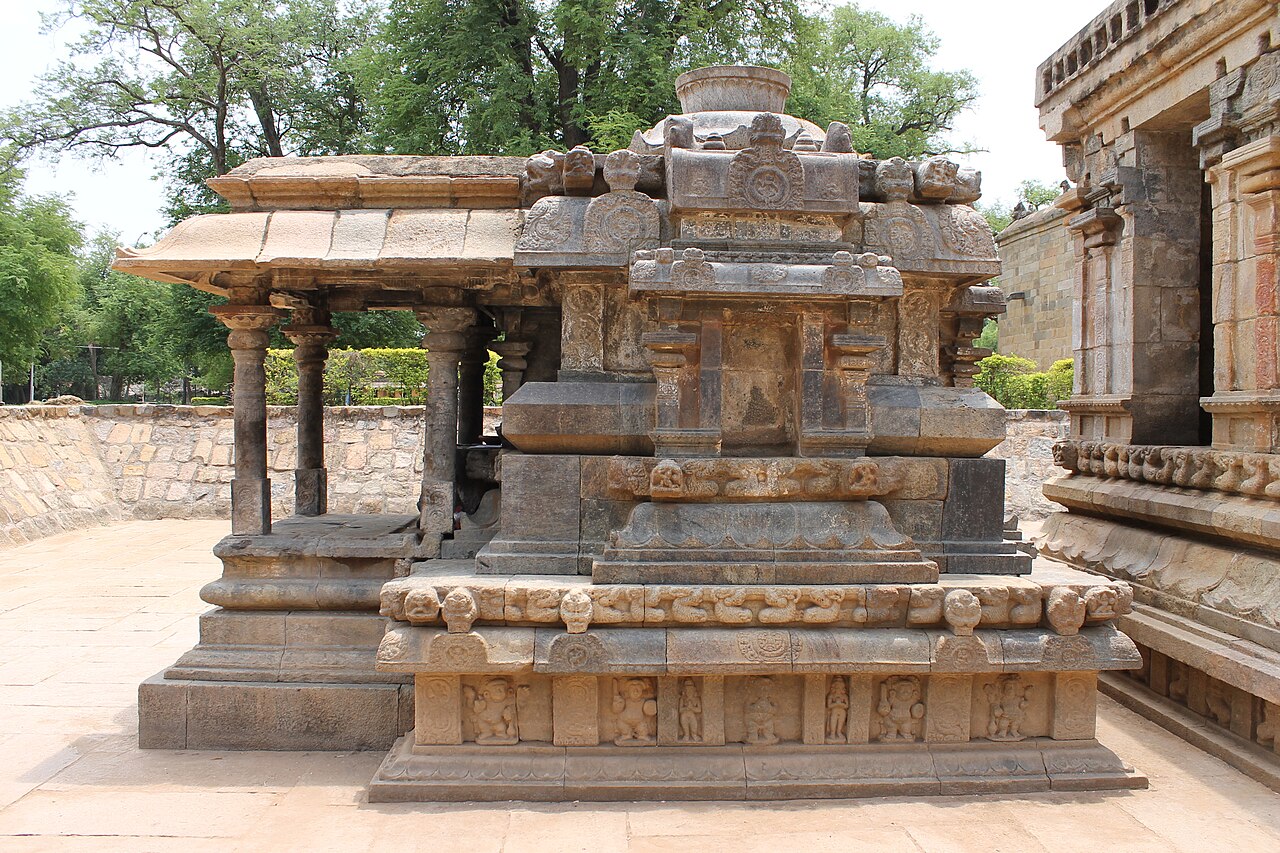 Hinduism
Airavatesvara Temple, Darasuram
Darasuram (Kumbakonam) · India · temple
The third of the Great Living Chola Temples, raised by Rajaraja Chola II around 1166 CE at Darasuram near Kumbakonam: a chariot-form shrine of Lord Shiva as Airavatesvara, famed for its carved stone wheels, its singing steps, and worship that has continued for over eight centuries.
Aisanyesvara Siva Temple
Bhubaneswar · India · temple
A living thirteenth-century Shiva shrine in the Old Town of Bhubaneswar, standing close to the western wall of the great Lingaraj Temple, where a Shivalinga set within a circular yonipitha still receives daily worship in the Kalinga architectural tradition.
 Hinduism
Akhadachandi Temple
Bhubaneswar · India · temple
A tenth-century Kalinga-style shrine on the southwestern bank of Bhubaneswar's sacred Bindusagar tank, Akhadachandi Temple honours Maa Mahishasuramardini, the Goddess in her form as slayer of the buffalo demon, within the dense cluster of ancient shrines that fills the city's Old Town.
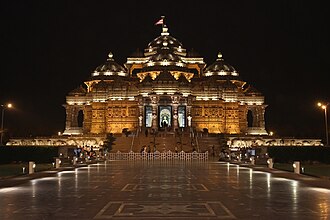 Hinduism
Akshardham
New Delhi · India · temple
A vast contemporary Hindu mandir campus on the Yamuna's west bank in East Delhi, raised without structural steel by 11,000 artisans and volunteers, and recognised by Guinness World Records in 2007 as the world's largest comprehensive Hindu Temple.
 Hinduism
Amarnath Temple
· India · temple
A high Himalayan cave shrine in Jammu and Kashmir where a naturally forming ice lingam is venerated as Lord Śiva, drawing one of India's great seasonal pilgrimages.
 Hinduism
Ambalappuzha Sri Krishna Temple
Ambalappuzha · India · temple
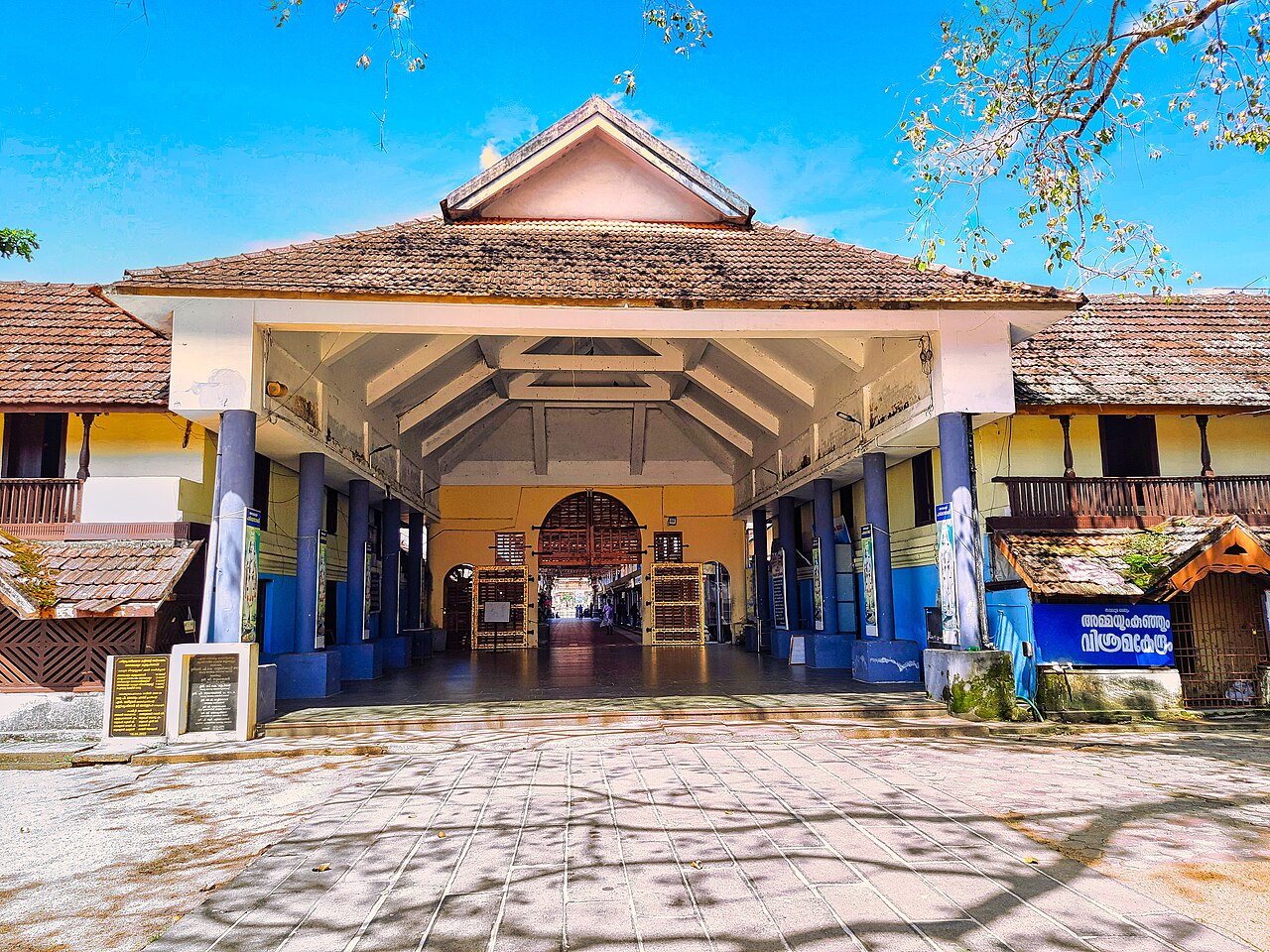
A Vaishnava shrine on the Kerala backwaters consecrated to Sri Krishna in his Parthasarathy form, counted among the seven great Temples of the former kingdom of Travancore and famed across South India for its Ambalapuzha Paal Payasam offering.