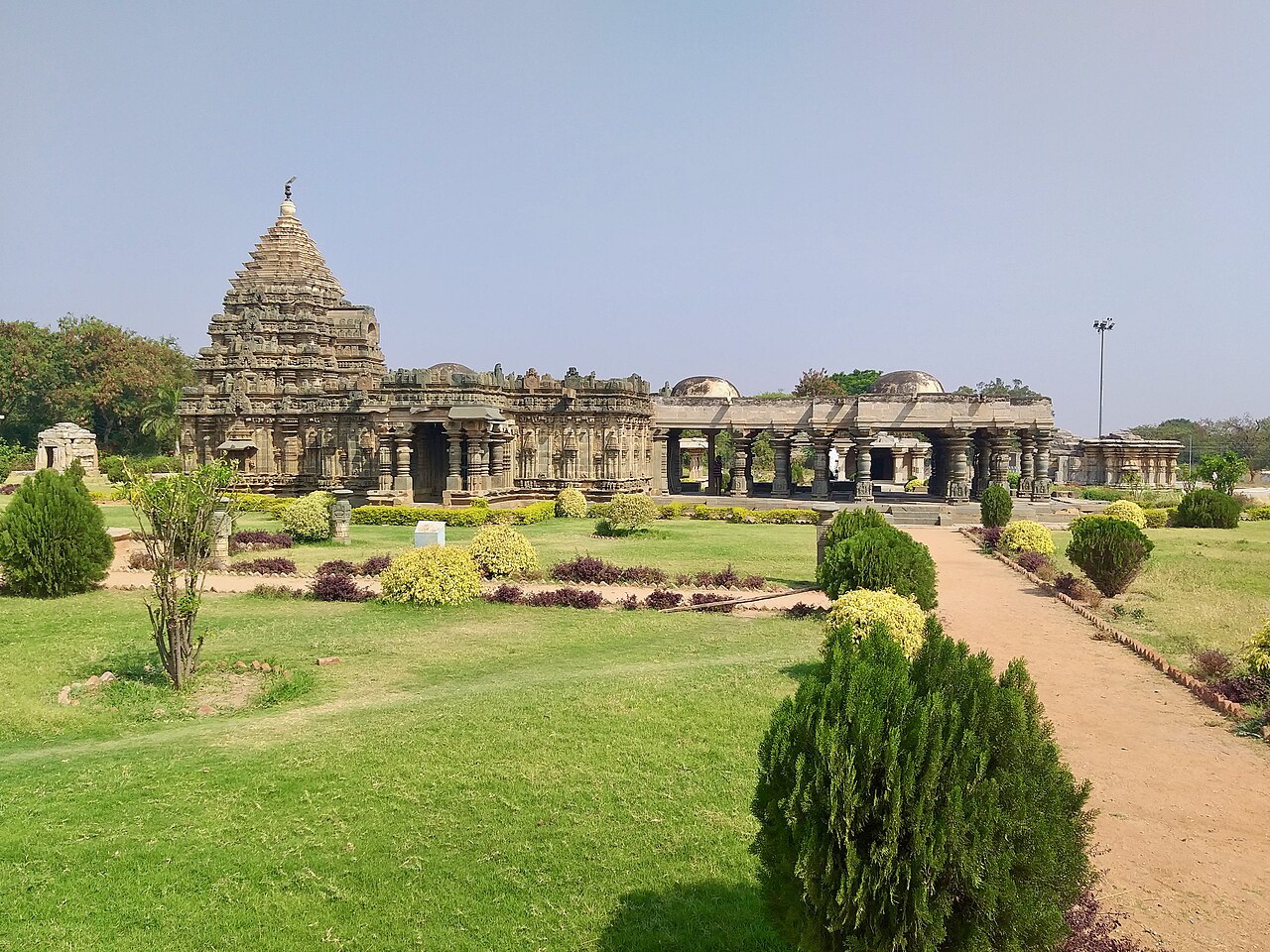
Mahadeva Temple, Itagi
Ittagi Mahadeva Temple · Devalaya Chakravarti (Emperor among Temples)
About
Rising from the quiet town of Itagi in the Koppal District of Karnataka, the Mahadeva Temple stands as one of the most accomplished expressions of the Karnata dravida architectural tradition. Dedicated to Lord Shiva and enshrining a linga within its sanctum, the Temple sits facing east and comprises a central shrine linked through a vestibule to a closed mantapa (hall), which opens in turn onto a grand colonnaded mantapa ringed by a low parapet bench.
The open outer mantapa is its crowning glory. Sixty-four pillars fill the space, twenty-four of them full columns rising from floor to ceiling, the remainder slender half-pillars springing from the surrounding bench to carry the sloping eaves. The square ceiling supported by the four central pillars is carved into an intricate arabesque of foliage and makara (mythical aquatic creatures) cascading from the mouth of a Kirtimukha (the fierce divine visage). This quality of fretted stonework is considered among the highest achievements of its era. By deliberate contrast, the inner closed mantapa and the sanctum itself are left unadorned, their austerity throwing the exuberance of the outer hall into relief.
Thirteen subsidiary shrines, each containing its own linga, encircle the principal sanctuary, accompanied by two additional chapels devoted to Murthinarayana and Chandraleshwari, the parents of Mahadeva, the Chalukya commander who caused the Temple to be built. The outer walls, doorway panels, and carved tower together display the full vocabulary of Western Chalukyan ornamentation: precisely sculpted figures, layered mouldings, and a rhythmic articulation of surface that speaks to generations of skilled artisans.
History
The Temple was consecrated around 1112 CE at the order of Mahadeva, a commander serving the Western Chalukya king Vikramaditya VI, who modelled it on the earlier Amruteshwara Temple at Annigeri and then surpassed it in refinement. Its 1112 CE dedicatory inscription still carries the title *Devalaya Chakravarti*, Emperor among Temples. The Archaeological Survey of India now protects the shrine as a monument of national importance, and the early twentieth-century art historian Henry Cousens ranked it the finest Temple in the Kannada country after Halebidu.
Significance
Thirteen subsidiary linga shrines encircle the main sanctum, and the great pillared hall's sixty-four columns and fretted stone ceiling are counted among the high points of Western Chalukya craftsmanship, the tradition scholars call Karnata Dravida. Lord Shiva is worshipped here still: a small sanctum signboard reading *Namah Shivaya* marks the passage into the shrine even as the Temple stands today under archaeological protection.
Architecture
Western Chalukya Temple architecture (Karnata Dravida tradition), described by the Koppal district government as Vesara style
Visiting
Hours
Hours not listed.
Contact
No contact details listed yet.
Engage with Mahadeva Temple, Itagi
Through the four pathways
Seva सेवा — Service
Offer your time and skills here. The following opportunities are open at Mahadeva Temple, Itagi:
No Seva offerings listed yet.
Sādhana साधना — Practice
Learn the worship and practice associated with Mahadeva Temple, Itagi:
No Sādhana offerings listed yet.
Sandhāna सन्धान — Wisdom
Unite with the wisdom of this tradition:
No Sandhāna offerings listed yet.
Sādhya साध्य — Giving
Support this sacred place according to your means:
No Sādhya offerings listed yet.
All giving flows directly to Mahadeva Temple, Itagi. Adisthan does not take a commission.
Gallery
Related sacred places
 Hinduism
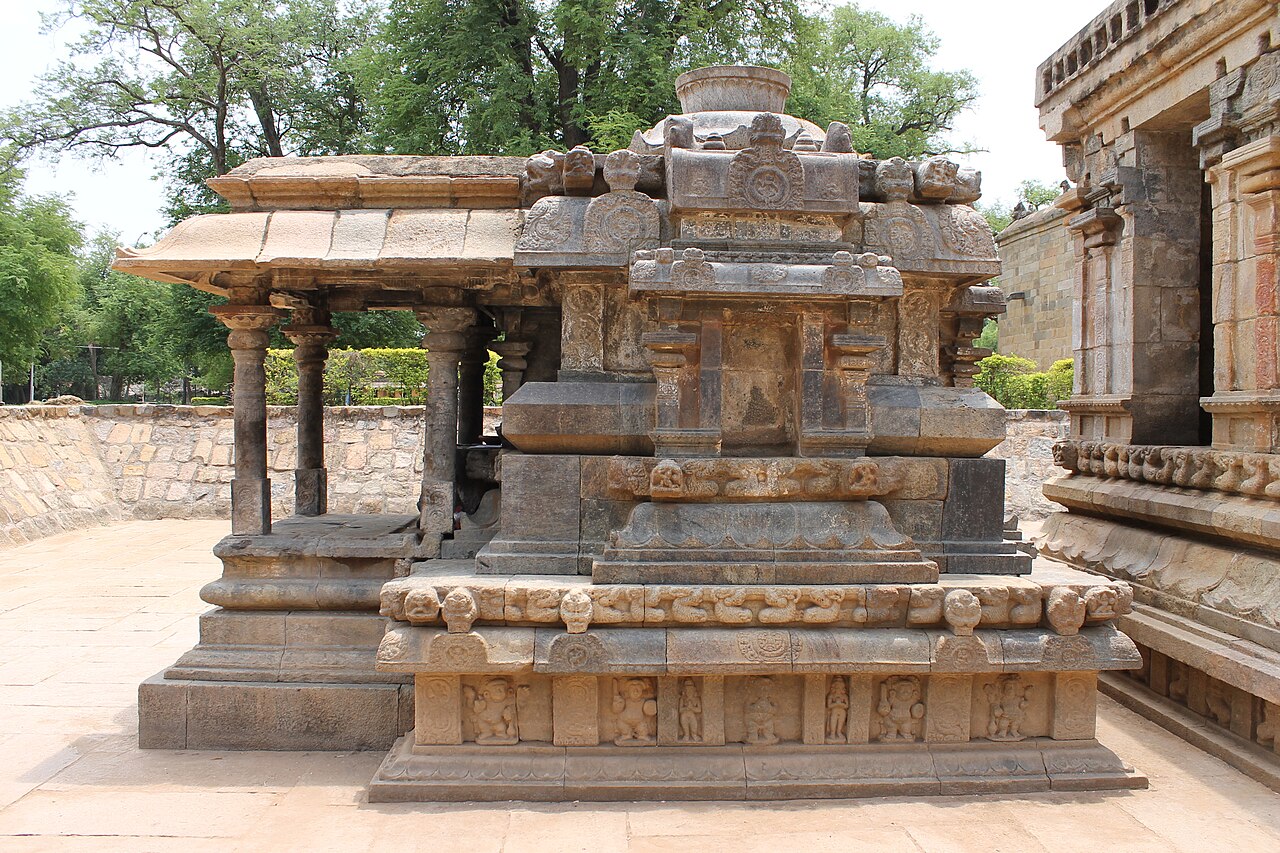
Airavatesvara Temple, Darasuram
Darasuram (Kumbakonam) · India · temple
The third of the Great Living Chola Temples, raised by Rajaraja Chola II around 1166 CE at Darasuram near Kumbakonam: a chariot-form shrine of Lord Shiva as Airavatesvara, famed for its carved stone wheels, its singing steps, and worship that has continued for over eight centuries.
Aisanyesvara Siva Temple
Bhubaneswar · India · temple
A living thirteenth-century Shiva shrine in the Old Town of Bhubaneswar, standing close to the western wall of the great Lingaraj Temple, where a Shivalinga set within a circular yonipitha still receives daily worship in the Kalinga architectural tradition.
 Hinduism
Akhadachandi Temple
Bhubaneswar · India · temple
A tenth-century Kalinga-style shrine on the southwestern bank of Bhubaneswar's sacred Bindusagar tank, Akhadachandi Temple honours Maa Mahishasuramardini, the Goddess in her form as slayer of the buffalo demon, within the dense cluster of ancient shrines that fills the city's Old Town.
 Hinduism
Akshardham
New Delhi · India · temple
A vast contemporary Hindu mandir campus on the Yamuna's west bank in East Delhi, raised without structural steel by 11,000 artisans and volunteers, and recognised by Guinness World Records in 2007 as the world's largest comprehensive Hindu Temple.
 Hinduism
Amarnath Temple
· India · temple
A high Himalayan cave shrine in Jammu and Kashmir where a naturally forming ice lingam is venerated as Lord Śiva, drawing one of India's great seasonal pilgrimages.
 Hinduism
Ambalappuzha Sri Krishna Temple
Ambalappuzha · India · temple
A Vaishnava shrine on the Kerala backwaters consecrated to Sri Krishna in his Parthasarathy form, counted among the seven great Temples of the former kingdom of Travancore and famed across South India for its Ambalapuzha Paal Payasam offering.