
Malinithan
Malini Than · Malinithan Temple
About
Perched where the Siang foothills descend toward the Brahmaputra basin, Malinithan rises on a natural eminence near Likabali in the Lower Siang district of Arunachal Pradesh. The hilltop commands wide vistas of the surrounding lowlands and the river beyond, lending the ruins an air of quiet authority even in their fractured state. Archaeological work has uncovered a meticulously fashioned stone plinth standing roughly 2.4 metres high, adorned with sculpted deities, animals, and interlaced floral patterns, along with the remnants of columns and decorative panels.
Among the granite carvings that have survived, five are particularly striking: Indra astride his elephant Airāvata, Kārttikeya mounted on a peacock, Sūrya drawn by a celestial chariot, Gaṇeśa poised above a mouse, and a commanding figure of Nandī. Four guardian lions atop elephants once anchored the corners of the Temple. The presence of maithuna (erotic) sculpture amid the devotional imagery suggests Tantric fertility rites rooted in the region's pre-Hindu tribal traditions, which venerated the mother principle as the generative force of the natural world. The Temple was built entirely of stone, a category known as Asmamayai, and iron dowels found in the ruins link it stylistically to the Tamreswari Temple complex at Sadiya.
The presiding figure of the shrine is traditionally understood to be Kechaikhāiti (also rendered Kesaikhaiti), a goddess held sacred among the Kachari people and sometimes equated with the Buddhist goddess Tārā or with the Tai Khamti deity Nang Hoo Toungh. Even as Hindu influence expanded across the region, her worship preserved older tribal forms: ritual duties were carried out by Deori priests, with different functionaries, the Bar Bharali, Saru Bharali, Bar Deori, and Saru Deori, each responsible for distinct liturgical tasks, from collecting Temple dues and procuring sacrificial animals to performing the offerings themselves and chanting sacred hymns.
History
Scholars place the main Temple building in the thirteenth or fourteenth century CE under the Chutia kingdom, though the sculpture recovered from the site reflects cultural activity reaching back to about the tenth century. Excavations carried out between 1969 and 1971 uncovered a stone plinth roughly two and a half metres high, carved with deities, animals, and floral ornament, alongside masterwork granite panels of Indra on his elephant Airavata, Kartikeya on his peacock, Surya in his chariot, and Ganesh with his mouse. The site is protected today as an archaeological monument.
Significance
The presiding goddess Kechaikhaiti, sacred to the Kachari people and served historically by hereditary Deori priests, carried the older tribal reverence for the mother principle into the Temple's Tantric and Brahmanical layers alike. A sixteenth-century legend associated with the Vaishnava saint Srimanta Sankardev tells that Lord Krishna and Rukmini rested here with Lord Shiva and Maa Durga during their journey to Dvaraka, and that Maa Durga, welcoming them as Malini, gave this hill its name.
Architecture
Early medieval northeastern Indian stone Temple architecture, built entirely of dressed stone
Visiting
Hours
Hours not listed.
Contact
No contact details listed yet.
Engage with Malinithan
Through the four pathways
Seva सेवा — Service
Offer your time and skills here. The following opportunities are open at Malinithan:
No Seva offerings listed yet.
Sādhana साधना — Practice
Learn the worship and practice associated with Malinithan:
No Sādhana offerings listed yet.
Sandhāna सन्धान — Wisdom
Unite with the wisdom of this tradition:
No Sandhāna offerings listed yet.
Sādhya साध्य — Giving
Support this sacred place according to your means:
No Sādhya offerings listed yet.
All giving flows directly to Malinithan. Adisthan does not take a commission.
Gallery
Related sacred places
 Hinduism
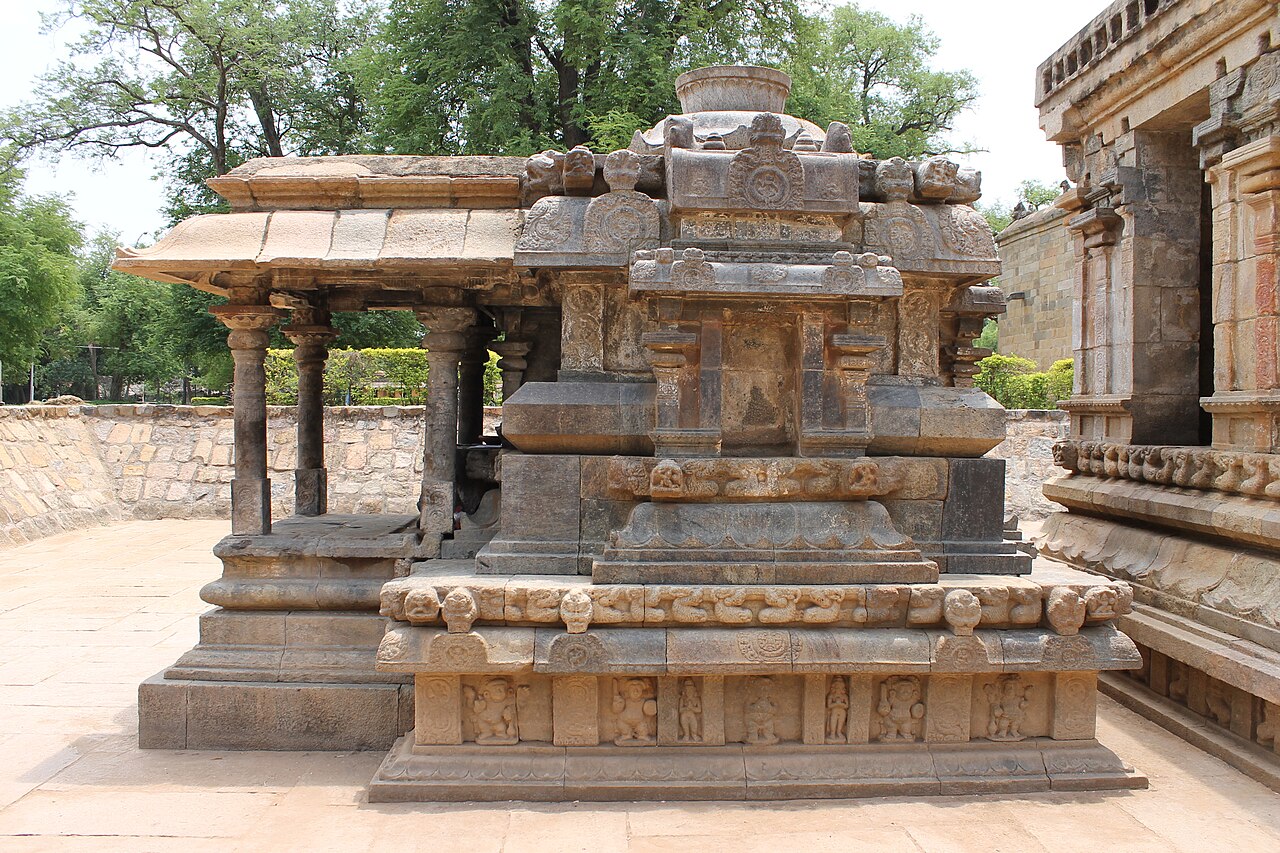
Airavatesvara Temple, Darasuram
Darasuram (Kumbakonam) · India · temple
The third of the Great Living Chola Temples, raised by Rajaraja Chola II around 1166 CE at Darasuram near Kumbakonam: a chariot-form shrine of Lord Shiva as Airavatesvara, famed for its carved stone wheels, its singing steps, and worship that has continued for over eight centuries.
Aisanyesvara Siva Temple
Bhubaneswar · India · temple
A living thirteenth-century Shiva shrine in the Old Town of Bhubaneswar, standing close to the western wall of the great Lingaraj Temple, where a Shivalinga set within a circular yonipitha still receives daily worship in the Kalinga architectural tradition.
 Hinduism
Akhadachandi Temple
Bhubaneswar · India · temple
A tenth-century Kalinga-style shrine on the southwestern bank of Bhubaneswar's sacred Bindusagar tank, Akhadachandi Temple honours Maa Mahishasuramardini, the Goddess in her form as slayer of the buffalo demon, within the dense cluster of ancient shrines that fills the city's Old Town.
 Hinduism
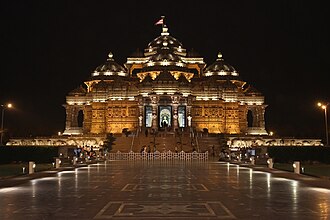
Akshardham
New Delhi · India · temple
A vast contemporary Hindu mandir campus on the Yamuna's west bank in East Delhi, raised without structural steel by 11,000 artisans and volunteers, and recognised by Guinness World Records in 2007 as the world's largest comprehensive Hindu Temple.
 Hinduism
Amarnath Temple
· India · temple
A high Himalayan cave shrine in Jammu and Kashmir where a naturally forming ice lingam is venerated as Lord Śiva, drawing one of India's great seasonal pilgrimages.
 Hinduism
Ambalappuzha Sri Krishna Temple
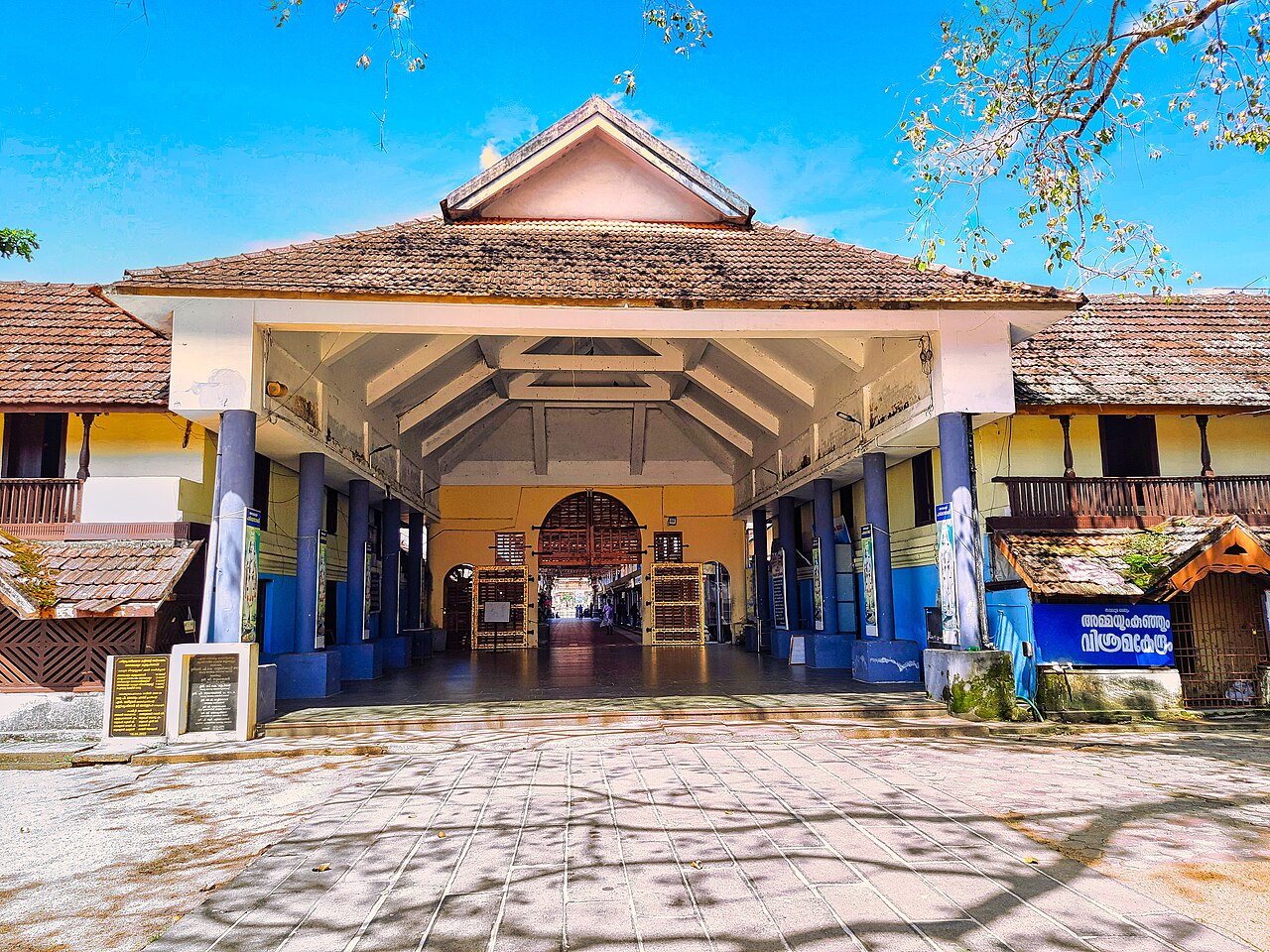
Ambalappuzha · India · temple
A Vaishnava shrine on the Kerala backwaters consecrated to Sri Krishna in his Parthasarathy form, counted among the seven great Temples of the former kingdom of Travancore and famed across South India for its Ambalapuzha Paal Payasam offering.