Manakamana Temple
Manakamana Mandir · Shree Manakamana Temple
About
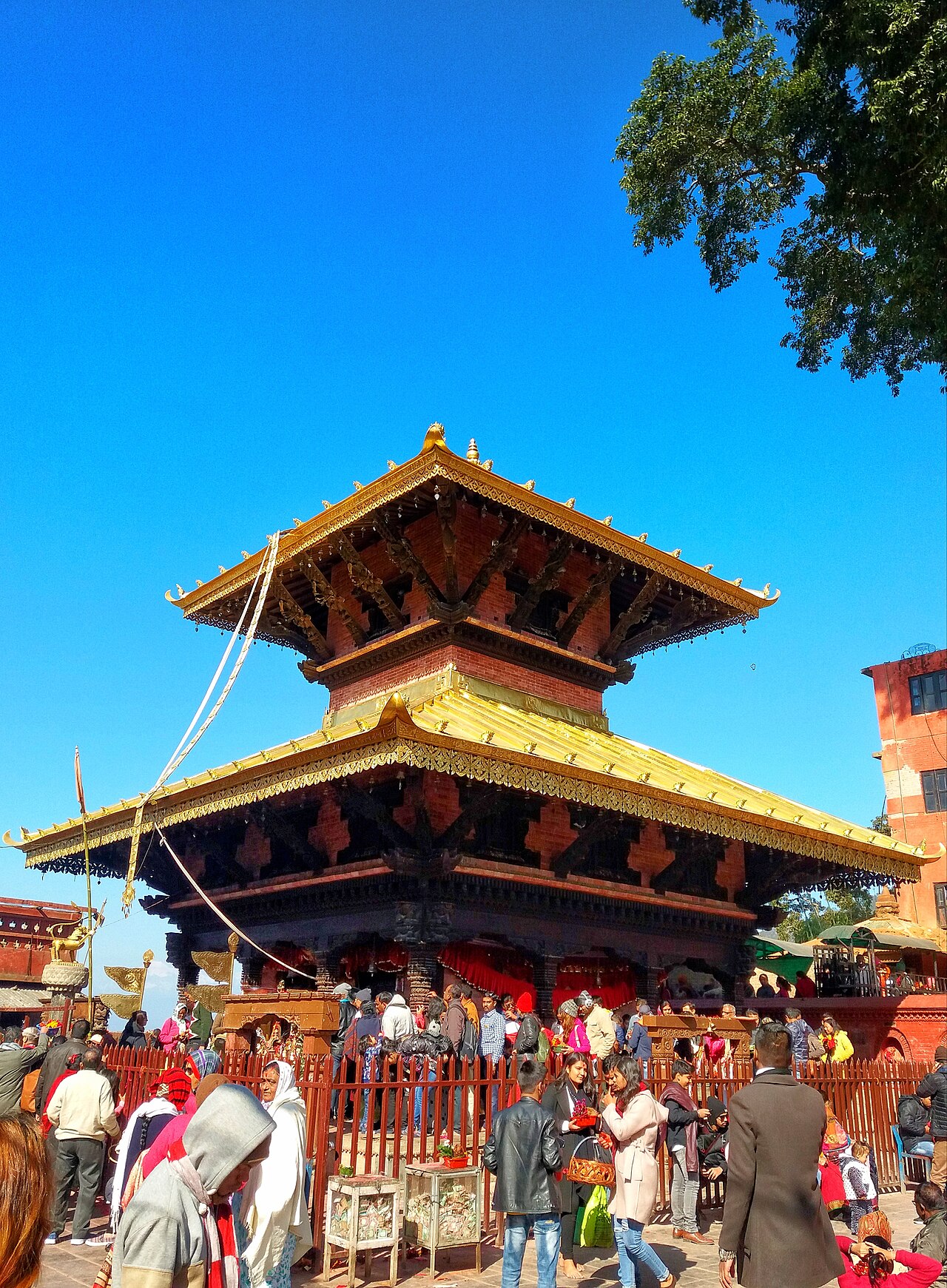
Where the Trishuli and Marsyangdi rivers meet far below, Kafakdada Hill rises to hold the Manakamana Temple at roughly 1,300 metres above the valley floor, within Sahid Lakhan Rural Municipality of Gandaki Province. The shrine stands about 106 kilometres west of Nepal's capital, Kathmandu, and approximately 94 kilometres east of Pokhara, a geographical midpoint whose hilltop vantage opens onto a remarkable panorama of Himalayan peaks, among them Annapurna II, Lamjung Himal, and Baudha, a summit belonging to the Manaslu group, ranked eighth-highest worldwide.
The Temple's form adheres to classic Nepalese pagoda architecture: two storeys under tiered roofs, a circumambulatory passage encircling the sanctum, and a complex spreading across 7,659 ropani of land. Its gold-finished gateway was commissioned in the early nineteenth century, and the roof trusses carry carved images of the Asta Matrikas, including Brahmayani, Vaishnavi, Maheshwari, Indrayani, and Kumari, added during later restorations.
The name itself announces the Temple's purpose. Mana translates as "heart" and kamana as "wish," and Bhagwati, the presiding goddess, venerated here as a manifestation of Maa Lakshmi with Garuda as her guardian, is believed to grant what sincere devotees most deeply seek. Most pilgrims today arrive via cable car, riding 2.8 kilometres from the lower station at Kurintar (258 metres) to the upper platform near the Temple (1,302 metres) in roughly ten minutes, a journey that replaced what was once a three-hour climb.
History
Tradition traces the Temple to the seventeenth-century Gorkha court of Ram Shah, when the queen Champawati was said to carry a hidden divine power known only to her Magar priest, Lakhan Thapa. After her death, tradition holds that a farmer's field released a stream of blood and milk from a split stone, and Lakhan Thapa performed the rites that stilled it and raised the first shrine there, decreeing that only his own Magar descendants would serve as priest, a line unbroken to this day. Nepal's royal house patronised the Temple for centuries afterward, gilding its gateway and roof, and after the 2015 earthquake cracked and tilted the structure, the Department of Archaeology restored it between 2015 and 2018 using traditional lime, brick, and timber.
Significance
Devotees hold Maa Manakamana to be a form of Maa Bhagwati, granter of the heart's sincere wish, Her very name built from *mana* (heart) and *kamana* (wish). The Temple ranks among Nepal's most visited Shakti shrines, and the Dashain festival each autumn brings its heaviest pilgrimage, when thousands climb or ride the cable car to seek Her blessing for the year ahead.
Architecture
Traditional two-tiered Nepalese pagoda architecture
Visiting
Hours
Hours not listed.
Contact
No contact details listed yet.
Engage with Manakamana Temple
Through the four pathways
Seva सेवा — Service
Offer your time and skills here. The following opportunities are open at Manakamana Temple:
No Seva offerings listed yet.
Sādhana साधना — Practice
Learn the worship and practice associated with Manakamana Temple:
No Sādhana offerings listed yet.
Sandhāna सन्धान — Wisdom
Unite with the wisdom of this tradition:
No Sandhāna offerings listed yet.
Sādhya साध्य — Giving
Support this sacred place according to your means:
No Sādhya offerings listed yet.
All giving flows directly to Manakamana Temple. Adisthan does not take a commission.
Festivals & Events
- Oct
Dashain
20 October 2026 · annual
Nepal's great fifteen-day autumn festival and Maa Manakamana's busiest pilgrimage season, when thousands travel to seek Her blessing around the Vijaya Dashami tika.
Gallery
Related sacred places
 Hinduism
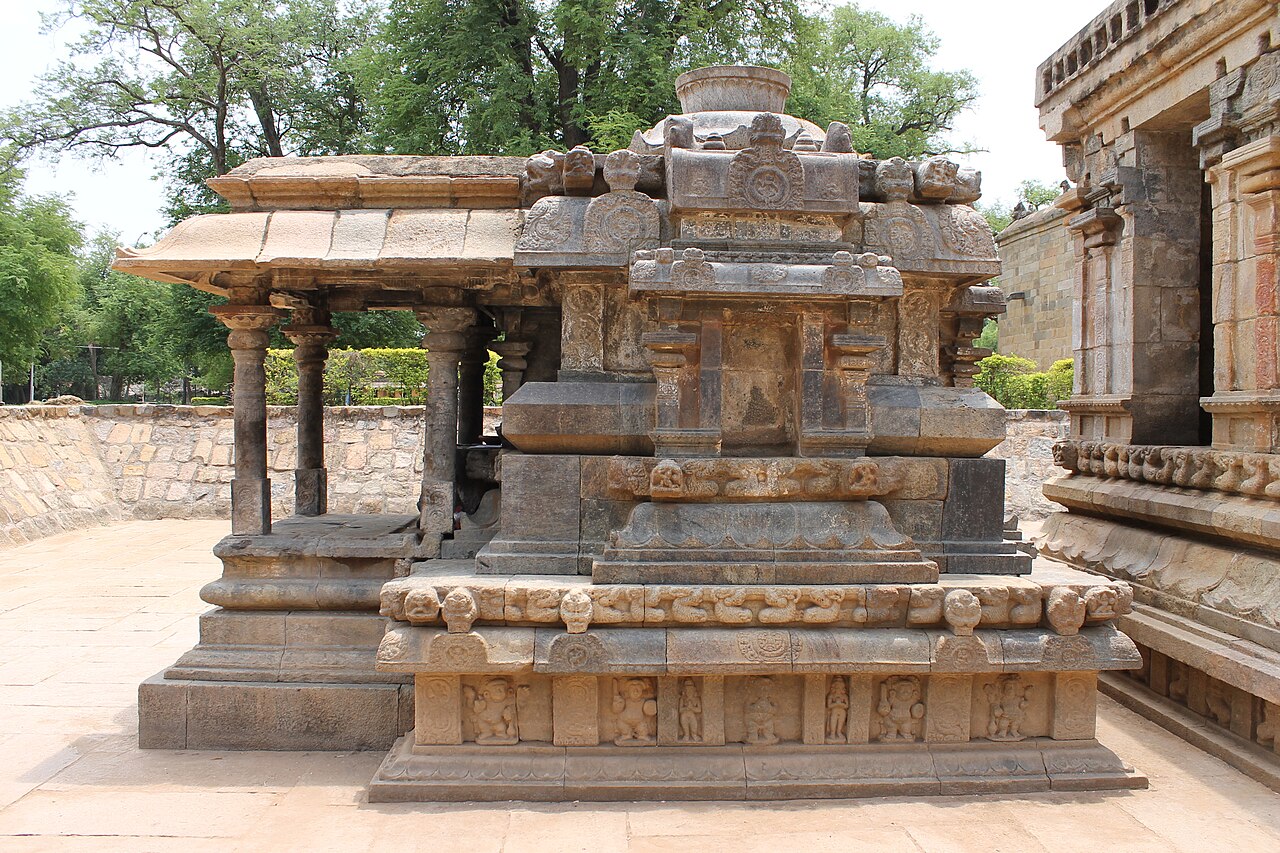
Airavatesvara Temple, Darasuram
Darasuram (Kumbakonam) · India · temple
The third of the Great Living Chola Temples, raised by Rajaraja Chola II around 1166 CE at Darasuram near Kumbakonam: a chariot-form shrine of Lord Shiva as Airavatesvara, famed for its carved stone wheels, its singing steps, and worship that has continued for over eight centuries.
Aisanyesvara Siva Temple
Bhubaneswar · India · temple
A living thirteenth-century Shiva shrine in the Old Town of Bhubaneswar, standing close to the western wall of the great Lingaraj Temple, where a Shivalinga set within a circular yonipitha still receives daily worship in the Kalinga architectural tradition.
 Hinduism
Akhadachandi Temple
Bhubaneswar · India · temple
A tenth-century Kalinga-style shrine on the southwestern bank of Bhubaneswar's sacred Bindusagar tank, Akhadachandi Temple honours Maa Mahishasuramardini, the Goddess in her form as slayer of the buffalo demon, within the dense cluster of ancient shrines that fills the city's Old Town.
 Hinduism
Akshardham
New Delhi · India · temple
A vast contemporary Hindu mandir campus on the Yamuna's west bank in East Delhi, raised without structural steel by 11,000 artisans and volunteers, and recognised by Guinness World Records in 2007 as the world's largest comprehensive Hindu Temple.
 Hinduism
Amarnath Temple
· India · temple
A high Himalayan cave shrine in Jammu and Kashmir where a naturally forming ice lingam is venerated as Lord Śiva, drawing one of India's great seasonal pilgrimages.
 Hinduism
Ambalappuzha Sri Krishna Temple
Ambalappuzha · India · temple
A Vaishnava shrine on the Kerala backwaters consecrated to Sri Krishna in his Parthasarathy form, counted among the seven great Temples of the former kingdom of Travancore and famed across South India for its Ambalapuzha Paal Payasam offering.