
Mangueshi Temple
Shri Manguesh Temple · Mangesh Temple · Shri Manguesh Saunsthan
About
Resting in Mangueshi village within Priol, roughly 21 kilometres from Goa's capital Panaji, this ancient Śaiva Temple draws pilgrims and seekers who come to honour Lord Śiva in his form as Manguesh. The presiding deity is worshipped before a śiva liṅga, and the complex additionally shelters shrines to Nandī, Gaṇeśa, Pārvatī, and numerous subsidiary deities including Mulakeshwar, Vīrabhadra, Śāntādurgā, Lakṣmī Nārāyaṇa, Sūrya, Garuḍa, and Kāla Bhairava, together forming a full sacred universe within a single walled compound.
The Temple's architecture unfolds across a series of domes, pilasters, and balustrades rendered in the distinctive Saraswat style. Among its most celebrated features is a seven-tiered deepastambha (lamp tower) whose tiers glow luminously during festivals. A grand Sabha Maṇḍapa, the pillared assembly hall, can seat more than five hundred worshippers, its interior graced by nineteenth-century chandeliers. The Sabha Maṇḍapa opens toward the Garbha Gṛha (inner sanctum), where the Manguesh idol resides. A large ritual water tank, considered the oldest surviving portion of the complex, reflects the sky at its margins.
A rich cycle of daily worship animates the Temple through Ṣoḍaśopacāra pūjās each morning, including Abhiṣeka, Laghurudra, and Mahārudra, followed by Mahā-Ārtī at midday and Pañcopacāra pūjā after nightfall. Each Monday, a palanquin procession carries the festival idol of Manguesh through the grounds accompanied by traditional music before the evening Ārtī.
History
The Manguesh linga was originally worshipped at Kushasthali on the banks of the Zuari river, in what is now Cortalim, until Portuguese conversions beginning in 1560 compelled the Saraswat Brahmins of the Vatsa and Kaundinya gotras to carry the sacred image inland to Priol village, then under the protection of the Hindu rulers of Sonde. The Temple was rebuilt during Maratha rule roughly a century and a half after the linga's arrival, and in 1739 the Peshwas gifted the entire village of Mangeshi to its endowment. Further renovation followed in 1890, and in 1973 a golden kalasha was set upon the Temple's tallest dome.
Significance
Shri Manguesh is the kuladevata, the hereditary clan deity, of the Goud Saraswat Brahmins, a lineage that carried this very linga across rivers and colonial borders to keep it in worship. The Temple's white domed silhouette and seven-tiered deepastambha lamp tower have become one of the most recognised images of Goan Temple architecture, and the shrine remains a living centre of Saraswat devotion far beyond Goa's own borders.
Architecture
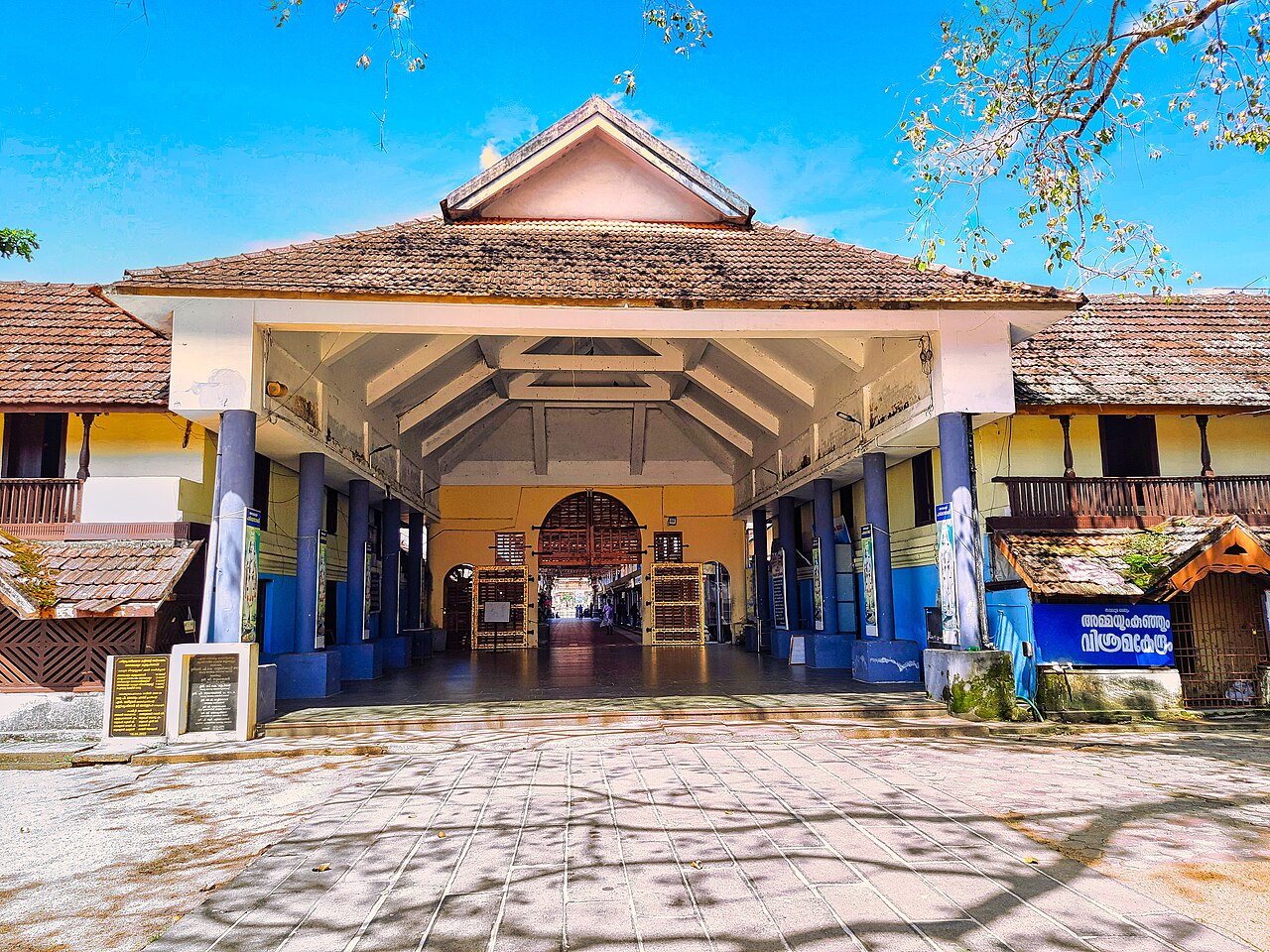
Goan Saraswat Temple architecture: a white domed sanctum with pilasters and balustrades beside a seven-tiered deepastambha lamp tower
Visiting
Daily worship
| Live Darshan (Temple's own online stream) | 12:00 to 13:00 |
Hours
Hours not listed.
Contact
No contact details listed yet.
Engage with Mangueshi Temple
Through the four pathways
Seva सेवा — Service
Offer your time and skills here. The following opportunities are open at Mangueshi Temple:
No Seva offerings listed yet.
Sādhana साधना — Practice
Learn the worship and practice associated with Mangueshi Temple:
No Sādhana offerings listed yet.
Sandhāna सन्धान — Wisdom
Unite with the wisdom of this tradition:
No Sandhāna offerings listed yet.
Sādhya साध्य — Giving
Support this sacred place according to your means:
No Sādhya offerings listed yet.
All giving flows directly to Mangueshi Temple. Adisthan does not take a commission.
Gallery
Related sacred places
 Hinduism
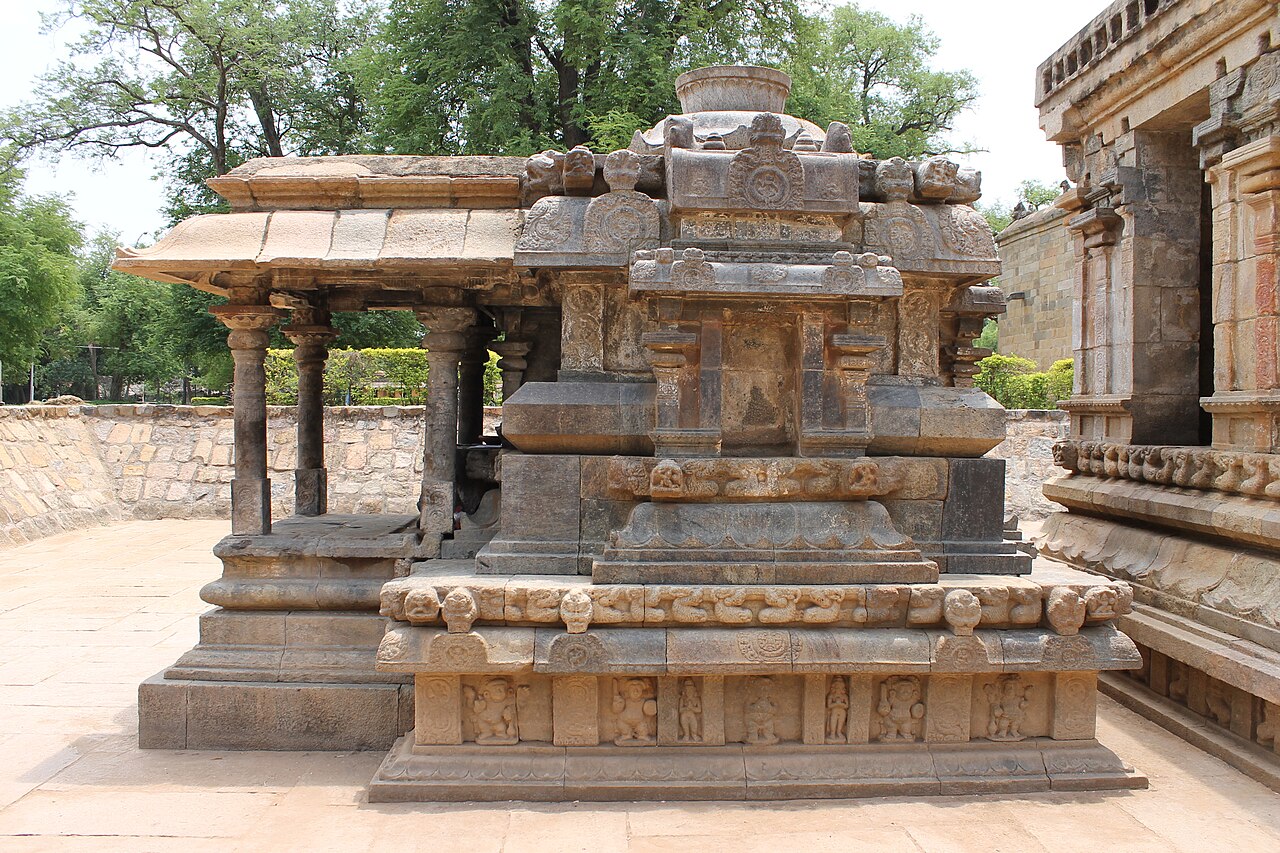
Airavatesvara Temple, Darasuram
Darasuram (Kumbakonam) · India · temple
The third of the Great Living Chola Temples, raised by Rajaraja Chola II around 1166 CE at Darasuram near Kumbakonam: a chariot-form shrine of Lord Shiva as Airavatesvara, famed for its carved stone wheels, its singing steps, and worship that has continued for over eight centuries.
Aisanyesvara Siva Temple
Bhubaneswar · India · temple
A living thirteenth-century Shiva shrine in the Old Town of Bhubaneswar, standing close to the western wall of the great Lingaraj Temple, where a Shivalinga set within a circular yonipitha still receives daily worship in the Kalinga architectural tradition.
 Hinduism
Akhadachandi Temple
Bhubaneswar · India · temple
A tenth-century Kalinga-style shrine on the southwestern bank of Bhubaneswar's sacred Bindusagar tank, Akhadachandi Temple honours Maa Mahishasuramardini, the Goddess in her form as slayer of the buffalo demon, within the dense cluster of ancient shrines that fills the city's Old Town.
 Hinduism
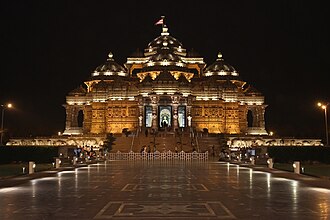
Akshardham
New Delhi · India · temple
A vast contemporary Hindu mandir campus on the Yamuna's west bank in East Delhi, raised without structural steel by 11,000 artisans and volunteers, and recognised by Guinness World Records in 2007 as the world's largest comprehensive Hindu Temple.
 Hinduism
Amarnath Temple
· India · temple
A high Himalayan cave shrine in Jammu and Kashmir where a naturally forming ice lingam is venerated as Lord Śiva, drawing one of India's great seasonal pilgrimages.
 Hinduism
Ambalappuzha Sri Krishna Temple
Ambalappuzha · India · temple
A Vaishnava shrine on the Kerala backwaters consecrated to Sri Krishna in his Parthasarathy form, counted among the seven great Temples of the former kingdom of Travancore and famed across South India for its Ambalapuzha Paal Payasam offering.