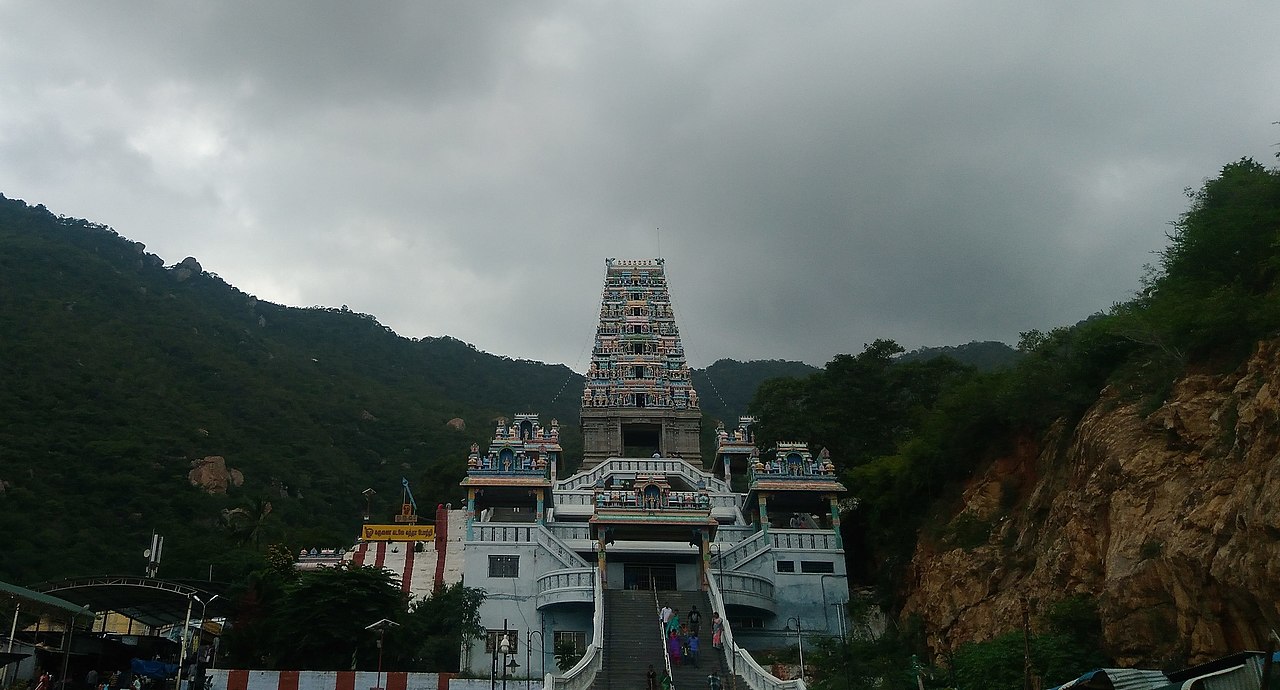
Maruthamalai Marudhachalamurthy Temple
Marudhamalai Murugan Temple · Maruthamalai Subramanya Swamy Temple · Marudhamalai Andavar Temple
About
The Marudhamalai Murugan Temple, also called the Maruthamalai Marudhachalamurthy Temple, stands on a granite ridge of the Western Ghats about twelve kilometres west of Coimbatore. Built by Tamil kings as far back as the Sangam era and referenced in the Purananuru, the shrine is dedicated to Murugan, the youthful warrior form of Kartikeya, and is traditionally counted as the seventh of his Six Abodes, the Aaru Padai Veedu.
The presiding deity is invoked under several beloved names, including Marudhamalai Andavar, Marudachalapathi, and Dhandayuthanpani. The hill itself rises about six hundred feet, and its name draws from the marudham or Terminalia arjuna tree that grows on its slopes, paired with malai, the Tamil word for hill. Unusually for a Murugan Temple, the sanctum faces east.
Around the Temple are sacred theerthams such as the Maruda Theertham and Skanda Theertham, springs whose waters are held to carry medicinal grace. At the southern end of the precinct, a staircase climbs to the cave of Pambatti Siddhar, a twelfth-century Tamil sage among the eighteen Siddhars who is said to have performed penance on this hill. Tradition holds that Murugan appeared first as a serpent and then with his consorts Valli and Devasena, blessing the sage with a hidden tunnel by which he reached the sanctum.
Thaipusam and other Murugan festivals are marked here with great devotion, and on many evenings devotees draw the deity around the Temple in a ratha yatra.
History
Tradition traces the hill's sanctity to the Sangam era, with the Purananuru itself pointing to a Tamil hill sanctuary already established here. The Temple's present structure dates to the twelfth century, and the hill is bound to the wider lineage of the Tamil Siddhars through the cave of Pambatti Siddhar, who tradition holds performed penance here and received the Marutha Tirtham from Lord Murugan himself. The shrine is administered today by the Hindu Religious and Charitable Endowments Department of the Government of Tamil Nadu.
Significance
As one of the Aaru Padai Veedu, the six battle camps and abodes where Murugan revealed himself in Tamil sacred geography, Marudhamalai holds a place in Tamil devotional life shared by only five other hills. Unusually among Murugan's hill shrines its sanctum faces east, and the Temple's springs, the Maruda Theertham and Skanda Theertham, are still held by pilgrims to carry medicinal grace.
Architecture
Dravidian hill-temple architecture with a painted rajagopuram
Visiting
Daily worship
| Morning darshan | 06:00 to 13:00 | |
| Evening darshan | 16:00 to 19:00 |
Hours
Hours not listed.
Engage with Maruthamalai Marudhachalamurthy Temple
Through the four pathways
Seva सेवा — Service
Offer your time and skills here. The following opportunities are open at Maruthamalai Marudhachalamurthy Temple:
No Seva offerings listed yet.
Sādhana साधना — Practice
Learn the worship and practice associated with Maruthamalai Marudhachalamurthy Temple:
No Sādhana offerings listed yet.
Sandhāna सन्धान — Wisdom
Unite with the wisdom of this tradition:
No Sandhāna offerings listed yet.
Sādhya साध्य — Giving
Support this sacred place according to your means:
No Sādhya offerings listed yet.
All giving flows directly to Maruthamalai Marudhachalamurthy Temple. Adisthan does not take a commission.
Festivals & Events
- Jan
Thaipusam
22 January 2027 · annual
The most prominent festival at Marudhamalai, marked by kavadi processions climbing the hill in honour of Lord Murugan.
- Mar
Panguni Uthiram
22 March 2027 · annual
A major Murugan festival observed on the full moon of the Tamil month Panguni, drawing pilgrims to the hill Temple.
Gallery
Related sacred places
 Hinduism
Airavatesvara Temple, Darasuram
Darasuram (Kumbakonam) · India · temple
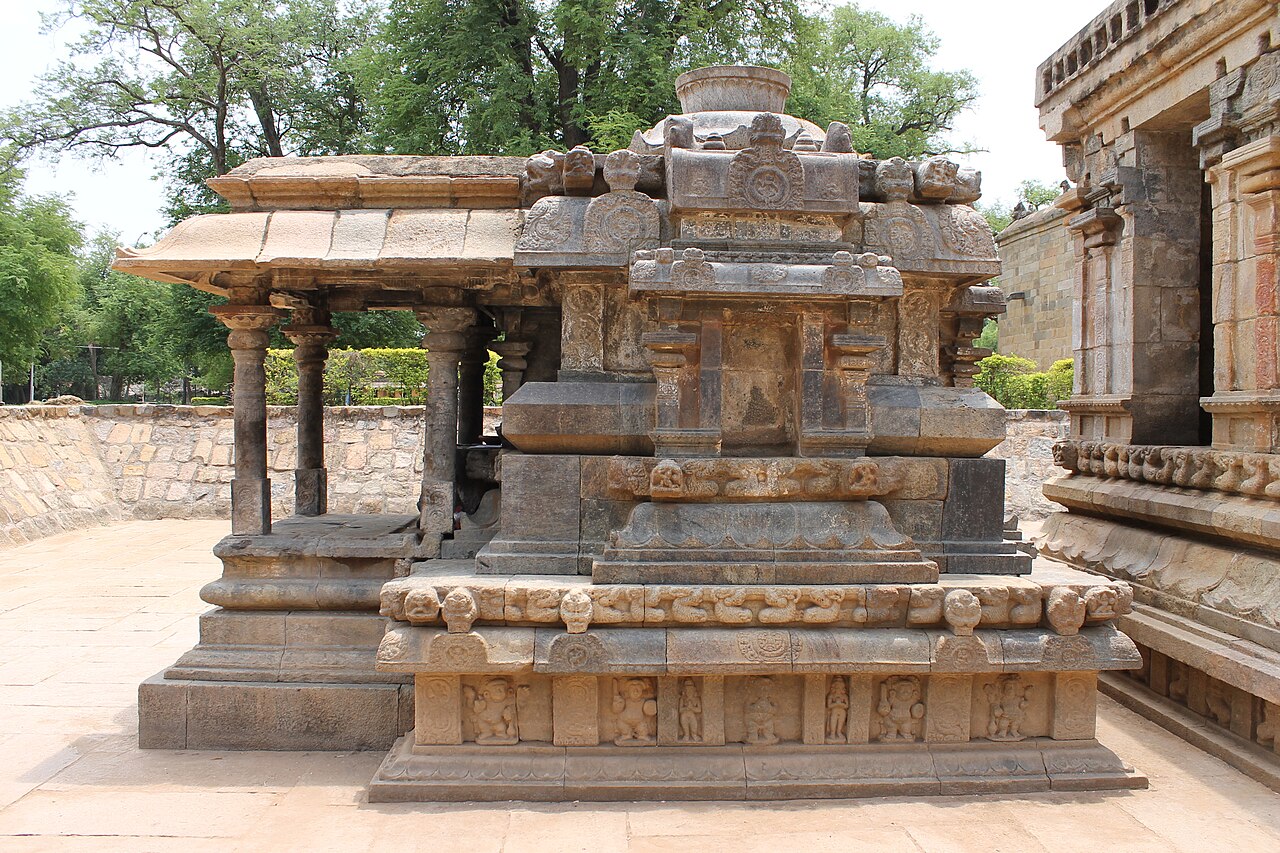
The third of the Great Living Chola Temples, raised by Rajaraja Chola II around 1166 CE at Darasuram near Kumbakonam: a chariot-form shrine of Lord Shiva as Airavatesvara, famed for its carved stone wheels, its singing steps, and worship that has continued for over eight centuries.
Aisanyesvara Siva Temple
Bhubaneswar · India · temple
A living thirteenth-century Shiva shrine in the Old Town of Bhubaneswar, standing close to the western wall of the great Lingaraj Temple, where a Shivalinga set within a circular yonipitha still receives daily worship in the Kalinga architectural tradition.
 Hinduism
Akhadachandi Temple
Bhubaneswar · India · temple
A tenth-century Kalinga-style shrine on the southwestern bank of Bhubaneswar's sacred Bindusagar tank, Akhadachandi Temple honours Maa Mahishasuramardini, the Goddess in her form as slayer of the buffalo demon, within the dense cluster of ancient shrines that fills the city's Old Town.
 Hinduism
Akshardham
New Delhi · India · temple
A vast contemporary Hindu mandir campus on the Yamuna's west bank in East Delhi, raised without structural steel by 11,000 artisans and volunteers, and recognised by Guinness World Records in 2007 as the world's largest comprehensive Hindu Temple.
 Hinduism
Amarnath Temple
· India · temple
A high Himalayan cave shrine in Jammu and Kashmir where a naturally forming ice lingam is venerated as Lord Śiva, drawing one of India's great seasonal pilgrimages.
 Hinduism
Ambalappuzha Sri Krishna Temple
Ambalappuzha · India · temple
A Vaishnava shrine on the Kerala backwaters consecrated to Sri Krishna in his Parthasarathy form, counted among the seven great Temples of the former kingdom of Travancore and famed across South India for its Ambalapuzha Paal Payasam offering.