
Maa Masani Amman Temple
Arulmigu Sri Masani Amman Temple · Masānī Ammān · மாசாணியம்மன் கோயில் · Maasani Amman
About
Set where the Aliyar River meets the Uppar stream, amid the grasslands at the foot of the Anaimalai Hills, the Arulmigu Śrī Masānī Ammān Temple stands roughly 24 kilometres southwest of Pollachi. The presiding deity appears in a singular reclining form, a sculpted image measuring nearly five feet in length, depicting the Goddess in tranquil repose rather than the dynamic standing or seated postures more commonly found in Śākta shrines.
In Her four hands the Goddess bears a ḍamaru (small drum) wound with a serpent, a vessel of fire, a bowl filled with kumkuma (the sacred red powder), and a triśūla (trident). The trident standing before the main sanctum is itself an object of devotion; it is widely believed that circumambulating it can bring relief from illness and ease the suffering of those who seek Her grace.
Beyond the central shrine the Temple complex houses the Neethi Kaḷ, the Stone of Justice, as well as a shrine to Mahāmuniappan. Devotees make a distinctive offering of ground red chillies here, a practice held to carry particular spiritual weight and accompanied by a formal obligation to return for abhiṣeka within three months. The Temple draws pilgrims from across Tamil Nadu who look to Masānī Ammān as both a guardian of families and a healer of the afflicted.
History
Tradition holds that in the days when this land was called Nannur, a cruel king put a woman to death for unknowingly tasting fruit from his guarded mango grove. The villagers rose against him, and in grief and gratitude they consecrated a shrine to her on the very ground where she fell, worshipping her as a protective goddess with offerings of ground red chilli. Over generations she came to be recognised as an avatar of Adi Parashakti and drawn close to Maa Mariamman, Angala Devi, Isakki and Karumari, the great mother goddesses of the Tamil land.
Significance
Devotees know Maa Masani Amman above all as a kuladevi, a lineage guardian whose protection is sought for the whole family across generations. Her reclining form, nearly five feet in length and unlike the standing or seated postures of most Amman shrines, invites a quiet, intimate darshan, while the Neethi Kal stone before her sanctum makes this Temple a living court where the wronged still come seeking justice.
Architecture
Dravidian Temple architecture with a painted stone gopuram
Visiting
Daily worship
| Darshan | 06:00 to 20:00 |
Hours
Hours not listed.
Contact
No contact details listed yet.
Engage with Maa Masani Amman Temple
Through the four pathways
Seva सेवा — Service
Offer your time and skills here. The following opportunities are open at Maa Masani Amman Temple:
No Seva offerings listed yet.
Sādhana साधना — Practice
Learn the worship and practice associated with Maa Masani Amman Temple:
No Sādhana offerings listed yet.
Sandhāna सन्धान — Wisdom
Unite with the wisdom of this tradition:
No Sandhāna offerings listed yet.
Sādhya साध्य — Giving
Support this sacred place according to your means:
No Sādhya offerings listed yet.
All giving flows directly to Maa Masani Amman Temple. Adisthan does not take a commission.
Gallery
Related sacred places
 Hinduism
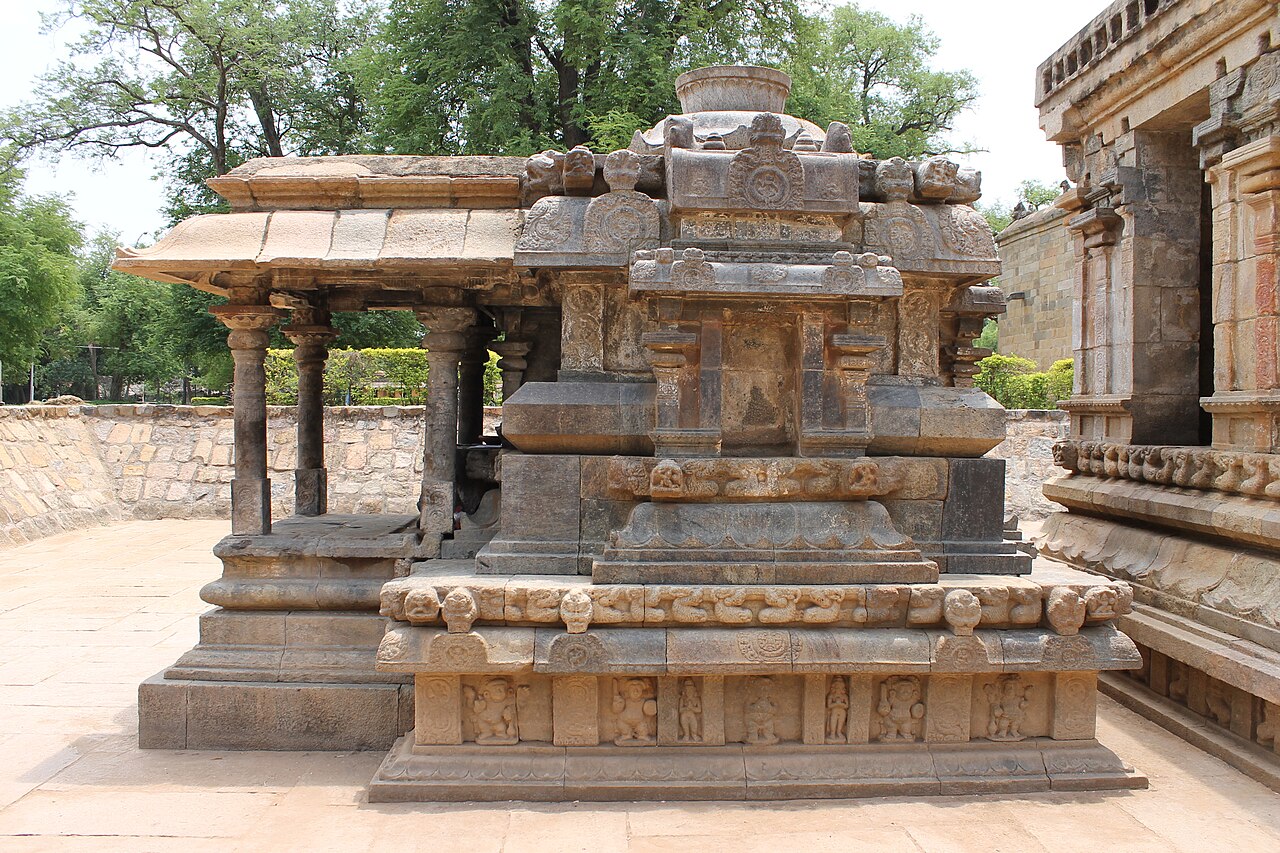
Airavatesvara Temple, Darasuram
Darasuram (Kumbakonam) · India · temple
The third of the Great Living Chola Temples, raised by Rajaraja Chola II around 1166 CE at Darasuram near Kumbakonam: a chariot-form shrine of Lord Shiva as Airavatesvara, famed for its carved stone wheels, its singing steps, and worship that has continued for over eight centuries.
Aisanyesvara Siva Temple
Bhubaneswar · India · temple
A living thirteenth-century Shiva shrine in the Old Town of Bhubaneswar, standing close to the western wall of the great Lingaraj Temple, where a Shivalinga set within a circular yonipitha still receives daily worship in the Kalinga architectural tradition.
 Hinduism
Akhadachandi Temple
Bhubaneswar · India · temple
A tenth-century Kalinga-style shrine on the southwestern bank of Bhubaneswar's sacred Bindusagar tank, Akhadachandi Temple honours Maa Mahishasuramardini, the Goddess in her form as slayer of the buffalo demon, within the dense cluster of ancient shrines that fills the city's Old Town.
 Hinduism
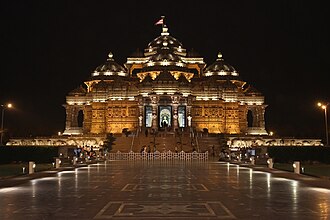
Akshardham
New Delhi · India · temple
A vast contemporary Hindu mandir campus on the Yamuna's west bank in East Delhi, raised without structural steel by 11,000 artisans and volunteers, and recognised by Guinness World Records in 2007 as the world's largest comprehensive Hindu Temple.
 Hinduism
Amarnath Temple
· India · temple
A high Himalayan cave shrine in Jammu and Kashmir where a naturally forming ice lingam is venerated as Lord Śiva, drawing one of India's great seasonal pilgrimages.
 Hinduism
Ambalappuzha Sri Krishna Temple
Ambalappuzha · India · temple
A Vaishnava shrine on the Kerala backwaters consecrated to Sri Krishna in his Parthasarathy form, counted among the seven great Temples of the former kingdom of Travancore and famed across South India for its Ambalapuzha Paal Payasam offering.