
Masroor Temples
Masrur Temples · Rock-cut Temples at Masrur · Thakurdvara
About
Hewn directly from a naturally rocky hill in the Beas River valley, the Masrur Temple complex stands as one of the most remarkable surviving examples of what scholars call temple-mountain architecture in the Hindu tradition. The sanctuaries face northeast, gazing toward the Dhauladhar range of the Himalayas, and their curvilinear shikhara spires seem to rise organically from the living bedrock rather than having been constructed upon it. Art historian Michael Meister has described the complex as an embodiment in stone of the earth and mountains that surround it.
The complex honors Shiva, Vishnu, Devī, and Surya across its shrines, reflecting a broadly ecumenical or henotheistic sensibility rather than the theology of a single sectarian tradition. The main sanctum enshrines a four-faced form of Shiva, while the surrounding chapels are dedicated to Vishnu, Lakṣmī, Gaṇeśa, Kārttikeya, Durgā, Indra, Sarasvatī, and Surya. Syncretic forms such as Ardhanārīśvara (the divine union of Pārvatī and Shiva) and Harihara (Vishnu and Shiva conjoined) appear alongside episodes drawn from the Vedic and Purāṇic canon.
The entire composition follows a square-grid mandala layout, with the primary shrine at the center and smaller subsidiary spires arranged symmetrically around it in an octagonal pattern. A sacred rectangular pool measuring roughly 25 by 50 metres lies on the eastern side, in accordance with canonical Hindu texts on sacred architecture. The ceilings of the various halls and the sanctum interior are richly carved, predominantly with open lotus motifs, while friezes along the walls portray scenes of courtly life, dancers, musicians, and celestial beings alongside the divine iconography.
History
Court artisans working in the North Indian Nagara style cut these shrines from the living sandstone in the first half of the eighth century, the same tradition that raised the great Temples of central India under King Yashovarman. The builders never finished their work: two of the four planned entrances remain incomplete, and the eastern hall collapsed in the 1905 Kangra earthquake, though the monolithic rock kept the sanctuary itself standing. British surveyors reached Masroor only in the early twentieth century, and Harold Hargreaves of the Archaeological Survey of India corrected earlier reports to confirm the Shiva linga at the Temple's heart in his 1915 survey.
Significance
Scholars including Michael Meister read the Temple's plan as the Kailasa pattern described in the Vishnudharmottara, a central spire flanked by four smaller spires in the shape of Mount Meru surrounded by its ranges, so that the sanctuary is at once a house for the gods and a map of the cosmos cut in stone. Local tradition holds that the Pandavas sheltered here during their exile, and that this is why the great work was left incomplete.
Architecture
North Indian Nagara style, monolithic rock-cut temple-mountain architecture
Visiting
Hours
Hours not listed.
Contact
No contact details listed yet.
Engage with Masroor Temples
Through the four pathways
Seva सेवा — Service
Offer your time and skills here. The following opportunities are open at Masroor Temples:
No Seva offerings listed yet.
Sādhana साधना — Practice
Learn the worship and practice associated with Masroor Temples:
No Sādhana offerings listed yet.
Sandhāna सन्धान — Wisdom
Unite with the wisdom of this tradition:
No Sandhāna offerings listed yet.
Sādhya साध्य — Giving
Support this sacred place according to your means:
No Sādhya offerings listed yet.
All giving flows directly to Masroor Temples. Adisthan does not take a commission.
Gallery
Related sacred places
 Hinduism
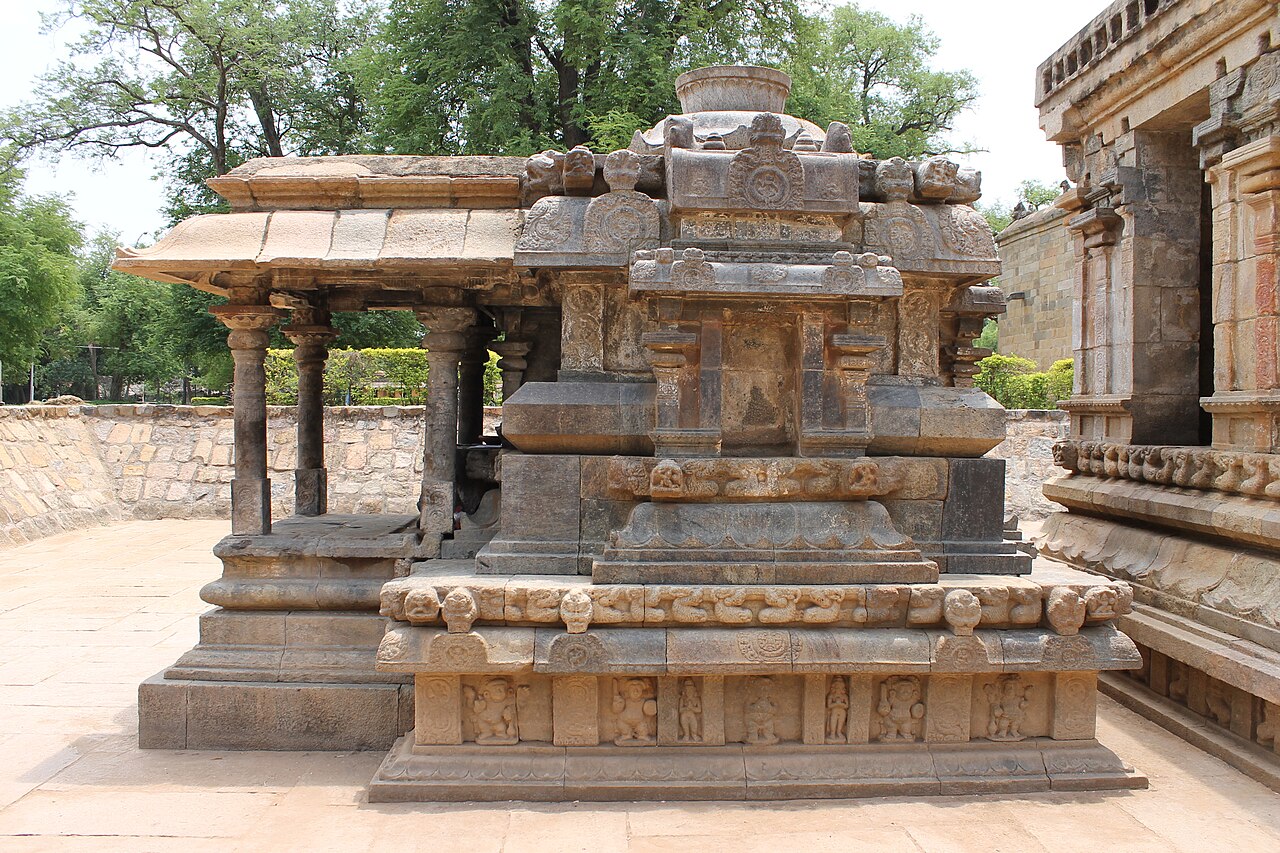
Airavatesvara Temple, Darasuram
Darasuram (Kumbakonam) · India · temple
The third of the Great Living Chola Temples, raised by Rajaraja Chola II around 1166 CE at Darasuram near Kumbakonam: a chariot-form shrine of Lord Shiva as Airavatesvara, famed for its carved stone wheels, its singing steps, and worship that has continued for over eight centuries.
Aisanyesvara Siva Temple
Bhubaneswar · India · temple
A living thirteenth-century Shiva shrine in the Old Town of Bhubaneswar, standing close to the western wall of the great Lingaraj Temple, where a Shivalinga set within a circular yonipitha still receives daily worship in the Kalinga architectural tradition.
 Hinduism
Akhadachandi Temple
Bhubaneswar · India · temple
A tenth-century Kalinga-style shrine on the southwestern bank of Bhubaneswar's sacred Bindusagar tank, Akhadachandi Temple honours Maa Mahishasuramardini, the Goddess in her form as slayer of the buffalo demon, within the dense cluster of ancient shrines that fills the city's Old Town.
 Hinduism
Akshardham
New Delhi · India · temple
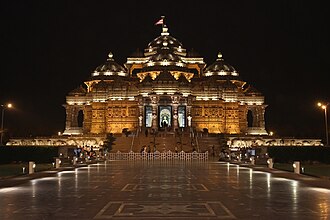
A vast contemporary Hindu mandir campus on the Yamuna's west bank in East Delhi, raised without structural steel by 11,000 artisans and volunteers, and recognised by Guinness World Records in 2007 as the world's largest comprehensive Hindu Temple.
 Hinduism
Amarnath Temple
· India · temple
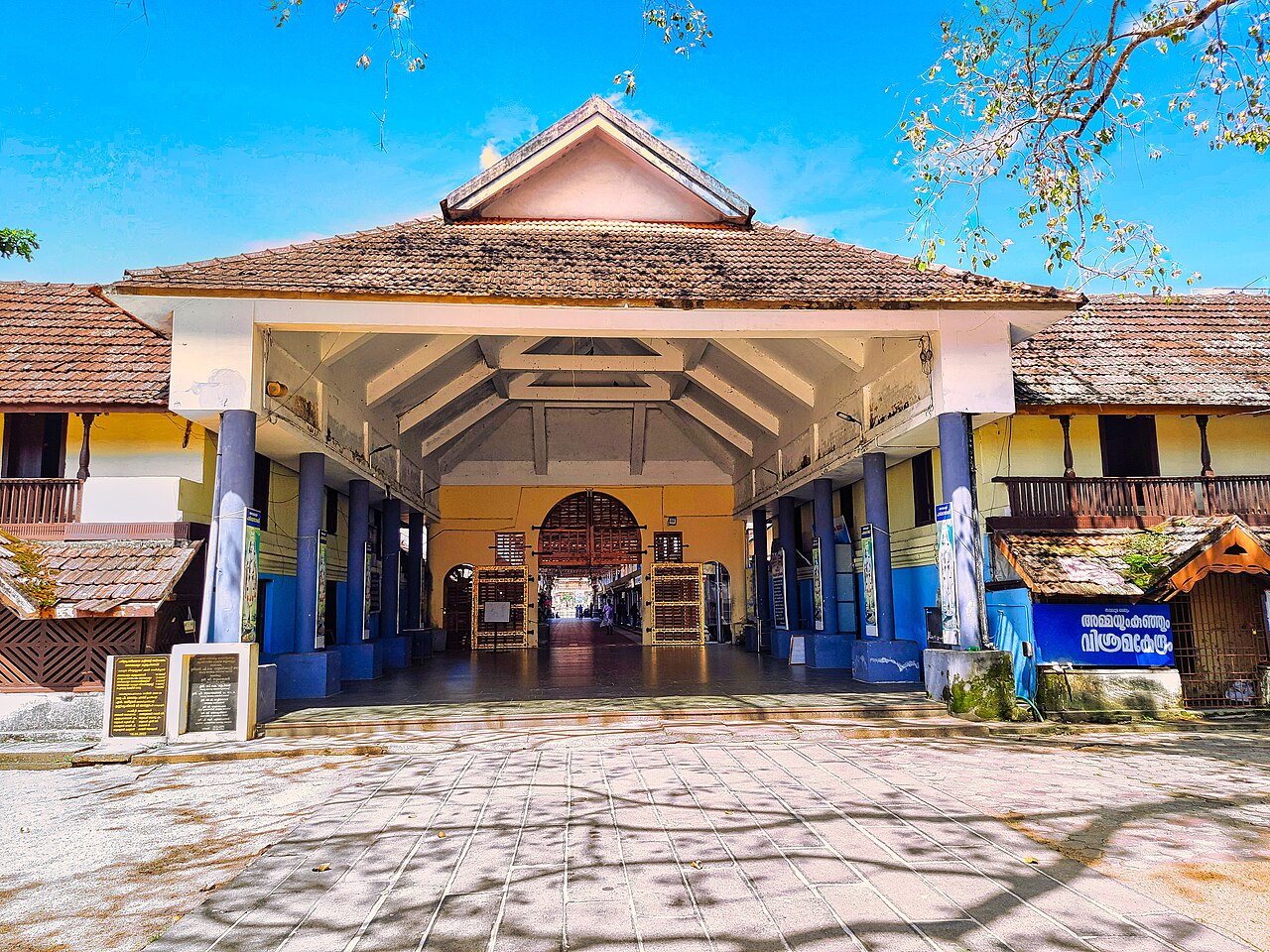
A high Himalayan cave shrine in Jammu and Kashmir where a naturally forming ice lingam is venerated as Lord Śiva, drawing one of India's great seasonal pilgrimages.
 Hinduism
Ambalappuzha Sri Krishna Temple
Ambalappuzha · India · temple
A Vaishnava shrine on the Kerala backwaters consecrated to Sri Krishna in his Parthasarathy form, counted among the seven great Temples of the former kingdom of Travancore and famed across South India for its Ambalapuzha Paal Payasam offering.