
Mukteshvara Temple
Muktesvara Deula · Mukteswar Temple · Mukteshwar Mandir
About
Rising from the sacred landscape of Bhubaneswar in Odisha, the Muktesvara Deula is a Śaiva shrine of extraordinary refinement, raised in honour of Lord Śiva, here venerated as Mukteśvara, the Lord of Liberation. Constructed between roughly 950 and 975 CE, the Temple belongs to the Nāgara tradition of North Indian Temple architecture and is widely regarded as one of the finest achievements within the Kaliṅga style that flourished across this region.
The structure embodies a moment of artistic convergence: within its carved surfaces and soaring śikhara one sees the mature expression of everything Odishan builders had learned across preceding centuries. Yet the Temple is not merely a summation, it also signals a new era of architectural exploration. The inventive energy evident here opened the path for the great Temples that followed in Bhubaneswar, including the celebrated Rājarāṇī and Liṅgarāja Temples, which carry forward the spirit of formal experiment that Muktesvara inaugurated.
The complex is modest in scale but dense with sculptural wealth. Intricate carvings animate its outer walls, and a distinctive toraṇa, a freestanding ceremonial gateway, greets devotees at the entrance, an element comparatively rare in Odishan Temples and indicative of the playful confidence of its builders. Inside, the sanctum houses the Śivaliṅga, the aniconic form through which devotees encounter the divine presence of Śiva.
History
Built between roughly 950 and 975 CE, the Temple rose at a moment when Odisha's builders had mastered everything earlier generations had attempted and were ready to reach further. Its most celebrated feature, the torana arching over the entrance path, appears here for the first time at this scale in the region's Temple architecture, carved with reclining female figures, scrollwork, and figures of monkeys and peacocks, and drawing, scholars have noted, on far older Buddhist gateway traditions. The Temple's inventiveness did not end with itself: the experiments first tried at Mukteshvara opened the path for the grander Temples that followed at Bhubaneswar across the next century, among them the Rajarani and Lingaraja Temples.
Significance
Historians and devotees alike call Mukteshvara the gem of Odishan architecture, small in scale but dense with sculptural invention, from the diamond lattice of its windows to scenes drawn from the Panchatantra worked into its walls. It remains a living Shaiva shrine today, protected as a Monument of National Importance, where worshippers still come to seek the liberation that gives Lord Shiva, worshipped here as Mukteshvara, his name at this place.
Architecture
Kalinga school of Odishan Nagara Temple architecture, Somavamshi dynasty era; introduced the ornamental torana gateway to the region's Temple vocabulary
Visiting
Daily worship
| Daily darshan | 06:30 to 19:30 |
Hours
Hours not listed.
Contact
No contact details listed yet.
Engage with Mukteshvara Temple
Through the four pathways
Seva सेवा — Service
Offer your time and skills here. The following opportunities are open at Mukteshvara Temple:
No Seva offerings listed yet.
Sādhana साधना — Practice
Learn the worship and practice associated with Mukteshvara Temple:
No Sādhana offerings listed yet.
Sandhāna सन्धान — Wisdom
Unite with the wisdom of this tradition:
No Sandhāna offerings listed yet.
Sādhya साध्य — Giving
Support this sacred place according to your means:
No Sādhya offerings listed yet.
All giving flows directly to Mukteshvara Temple. Adisthan does not take a commission.
Festivals & Events
- Mar
Mahashivratri
6 March 2027 · annual
The great night of Lord Shiva, kept with fasting, night long vigil, and offerings at the sanctum, the principal festival of the Shaiva calendar and the Temple's own busiest day of the year.
Gallery
Related sacred places
 Hinduism
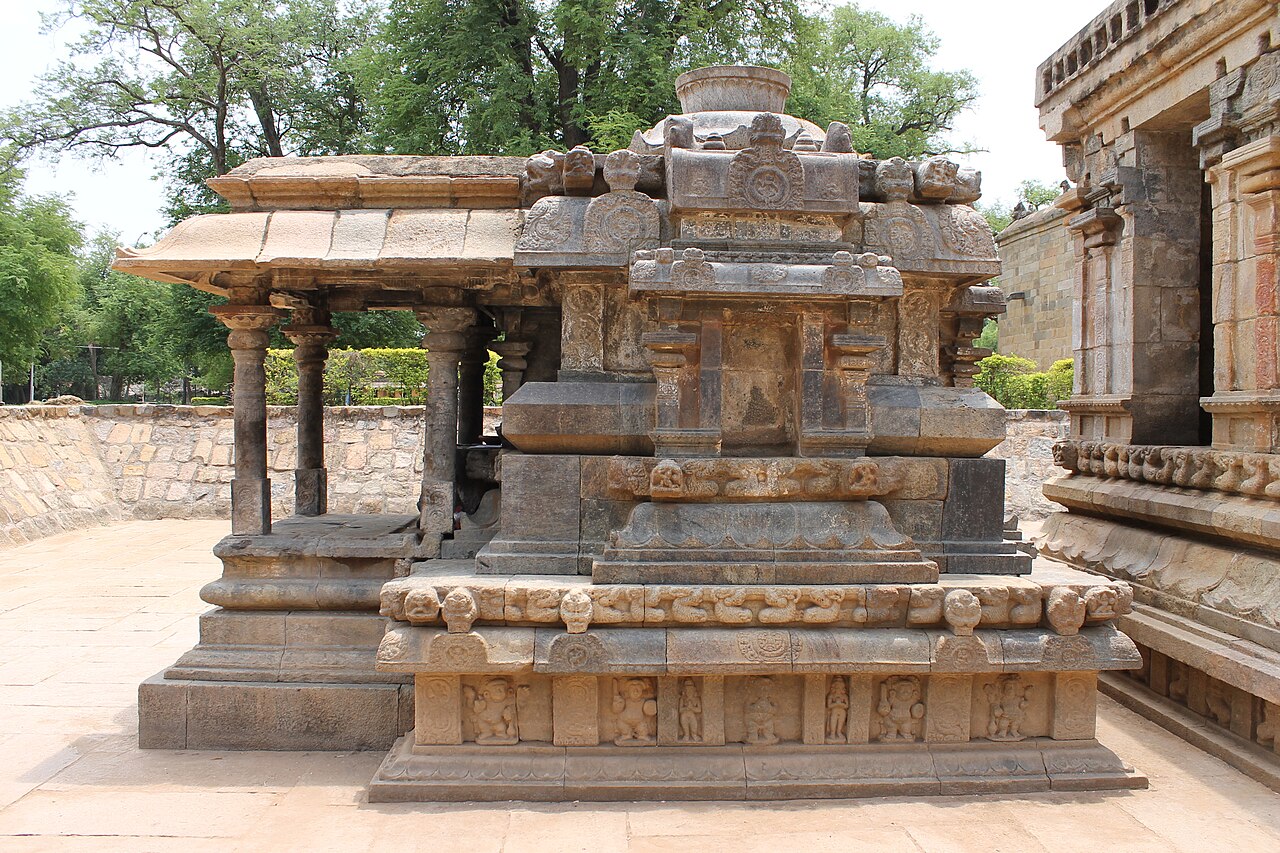
Airavatesvara Temple, Darasuram
Darasuram (Kumbakonam) · India · temple
The third of the Great Living Chola Temples, raised by Rajaraja Chola II around 1166 CE at Darasuram near Kumbakonam: a chariot-form shrine of Lord Shiva as Airavatesvara, famed for its carved stone wheels, its singing steps, and worship that has continued for over eight centuries.
Aisanyesvara Siva Temple
Bhubaneswar · India · temple
A living thirteenth-century Shiva shrine in the Old Town of Bhubaneswar, standing close to the western wall of the great Lingaraj Temple, where a Shivalinga set within a circular yonipitha still receives daily worship in the Kalinga architectural tradition.
 Hinduism
Akhadachandi Temple
Bhubaneswar · India · temple
A tenth-century Kalinga-style shrine on the southwestern bank of Bhubaneswar's sacred Bindusagar tank, Akhadachandi Temple honours Maa Mahishasuramardini, the Goddess in her form as slayer of the buffalo demon, within the dense cluster of ancient shrines that fills the city's Old Town.
 Hinduism
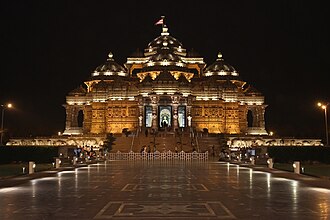
Akshardham
New Delhi · India · temple
A vast contemporary Hindu mandir campus on the Yamuna's west bank in East Delhi, raised without structural steel by 11,000 artisans and volunteers, and recognised by Guinness World Records in 2007 as the world's largest comprehensive Hindu Temple.
 Hinduism
Amarnath Temple
· India · temple
A high Himalayan cave shrine in Jammu and Kashmir where a naturally forming ice lingam is venerated as Lord Śiva, drawing one of India's great seasonal pilgrimages.
 Hinduism
Ambalappuzha Sri Krishna Temple
Ambalappuzha · India · temple
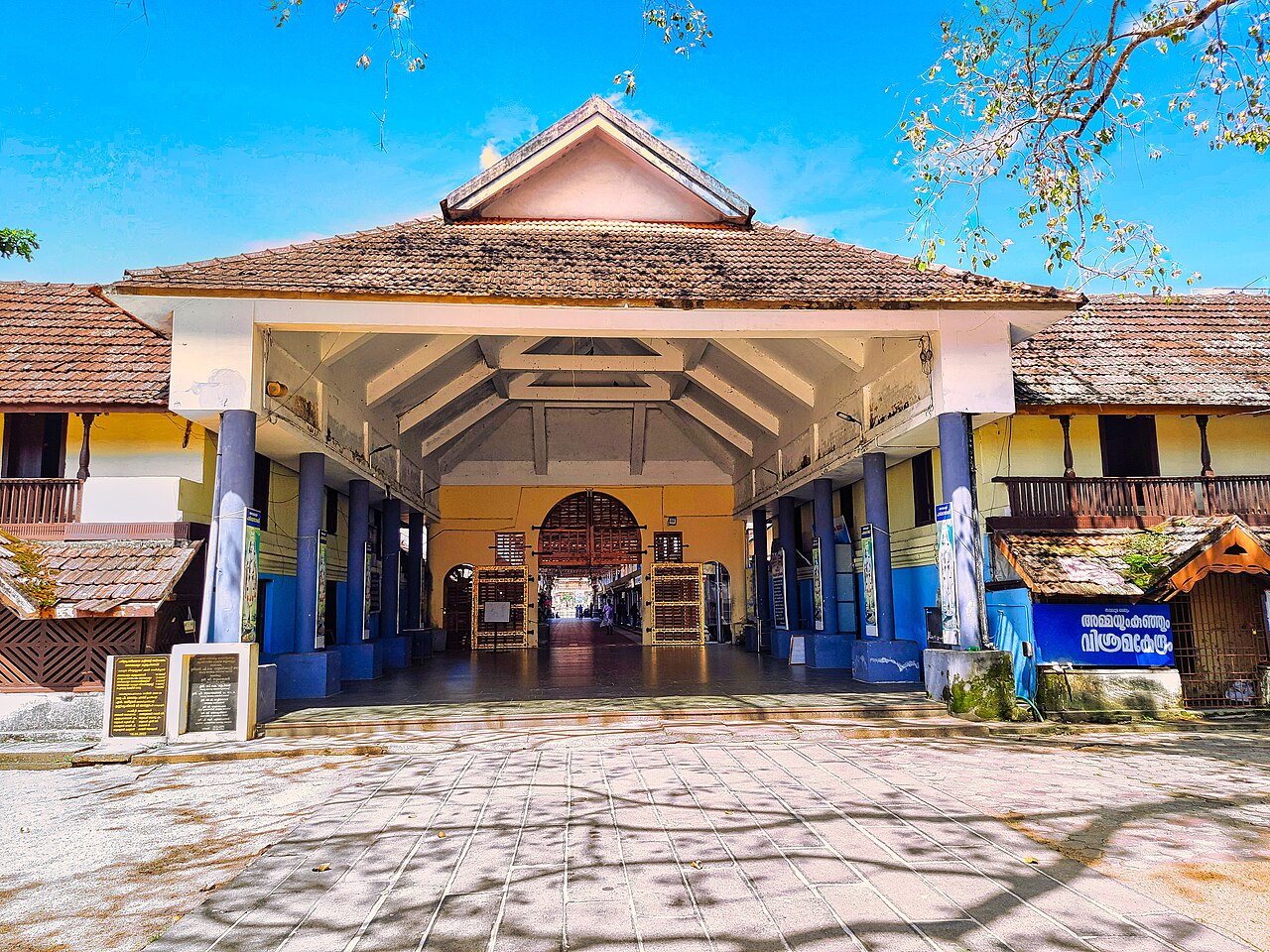
A Vaishnava shrine on the Kerala backwaters consecrated to Sri Krishna in his Parthasarathy form, counted among the seven great Temples of the former kingdom of Travancore and famed across South India for its Ambalapuzha Paal Payasam offering.