
Maa Mundeshwari Temple
Mundeshwari Devi Temple · Muṇḍeśvarī Temple · Maa Mundeshwari Devi Mandir
About
Rising roughly 185 metres above the surrounding plain on Mundeshwari Hills near the Son River, this ancient sanctuary belongs to the Bhojpuri heartland of Bihar. The Temple enshrines two primary presences: Devi Mundeshwari, understood as a form of Goddess Durgā and associated with Mahiṣāsuramardinī, the ten-armed conqueror of the buffalo-demon, and a rare chaturmukha (four-faced) Śiva liṅga at the centre of the sanctum. Images of Gaṇeśa, Sūrya, and Viṣṇu occupy subsidiary niches, reflecting the inclusive theological world of early medieval Indian worship.
The structure itself is a striking rarity: a stone shrine built on an octagonal ground plan, regarded as the earliest surviving example of Nāgara-style Temple architecture in Bihar. Four of the eight walls carry doorways or windows; the remaining four hold sculptural niches. Carved into the door jambs are the river goddesses Gaṅgā and Yamunā, flanking figures of Dvārapālas, the guardian sentinels of sacred thresholds, alongside an array of other mūrtis. Interior walls are adorned with bold mouldings and vase-and-foliage carvings. The original śikhara (tower) has not survived, though a protective roof was later added during restoration works.
Uninterrupted worship has been performed here across many centuries, giving the site a living continuity that sets it apart from purely archaeological remains. Stone fragments lie scattered across the hillside, reminders of past damage, yet the sanctuary continues to draw devotees in large numbers. The Archaeological Survey of India, which has maintained jurisdiction over the site since 1915, has undertaken chemical cleaning of interior soot, conservation of sacred images, and improved visitor amenities including solar-powered lighting. The Government of Bihar has also invested in improving road access to the hill.
History
An inscription found in debris near the Temple names a ruler called Maharaja Udayasena and points most historians to a founding date around the sixth or seventh century CE, though the octagonal shrine standing today was most likely rebuilt in the sixteenth or seventeenth century using older doorways and carvings salvaged from that earlier structure. The Archaeological Survey of India and the Bihar State Religious Trust Board have argued for a far older date of 108 CE, and popular tradition calls this the oldest functional Hindu Temple in the world, a claim scholars treat with caution. The ASI has protected the site since 1915, and in 2003 a Brahmi-inscribed seal linked to a first-century-BCE Sri Lankan king was found nearby, evidence that pilgrims climbed this hill from distant lands even in ancient times.
Significance
Worship here has continued without interruption for centuries, which devotees hold as a mark of Maa Mundeshwari's unbroken presence on this hill. She is worshipped as a form of Maa Durga, shown with ten arms astride a buffalo in her form as Mahishasuramardini, while the rare four-faced lingam at the centre of the sanctum honours Lord Shiva beside her, an intimacy of Shakti and Shiva that pilgrims travel from across Bihar to witness, especially during Ramnavami, Maha Shivaratri, and the Navratri mela.
Architecture
Octagonal Nagara-style stone shrine, the earliest known example of this architectural form in Bihar
Visiting
Hours
Hours not listed.
Contact
No contact details listed yet.
Engage with Maa Mundeshwari Temple
Through the four pathways
Seva सेवा — Service
Offer your time and skills here. The following opportunities are open at Maa Mundeshwari Temple:
No Seva offerings listed yet.
Sādhana साधना — Practice
Learn the worship and practice associated with Maa Mundeshwari Temple:
No Sādhana offerings listed yet.
Sandhāna सन्धान — Wisdom
Unite with the wisdom of this tradition:
No Sandhāna offerings listed yet.
Sādhya साध्य — Giving
Support this sacred place according to your means:
No Sādhya offerings listed yet.
All giving flows directly to Maa Mundeshwari Temple. Adisthan does not take a commission.
Festivals & Events
- Oct
Sharad Navratri
11 October 2026 · annual
The nine nights of the Divine Mother's autumn worship, when Maa Mundeshwari's hilltop draws its largest annual mela, with pilgrims climbing from across Bihar for darshan and the fair gathered below.
- Mar
Maha Shivaratri
6 March 2027 · annual
The great night of Lord Shiva's worship, kept at the sanctum's four-faced lingam with chanting and offerings that continue through the night.
- Apr
Ram Navami
15 April 2027 · annual
The birth anniversary of Lord Rama, one of the two festival days, alongside Maha Shivaratri, that traditionally bring the largest crowds of pilgrims to this hill.
Gallery
Related sacred places
 Hinduism
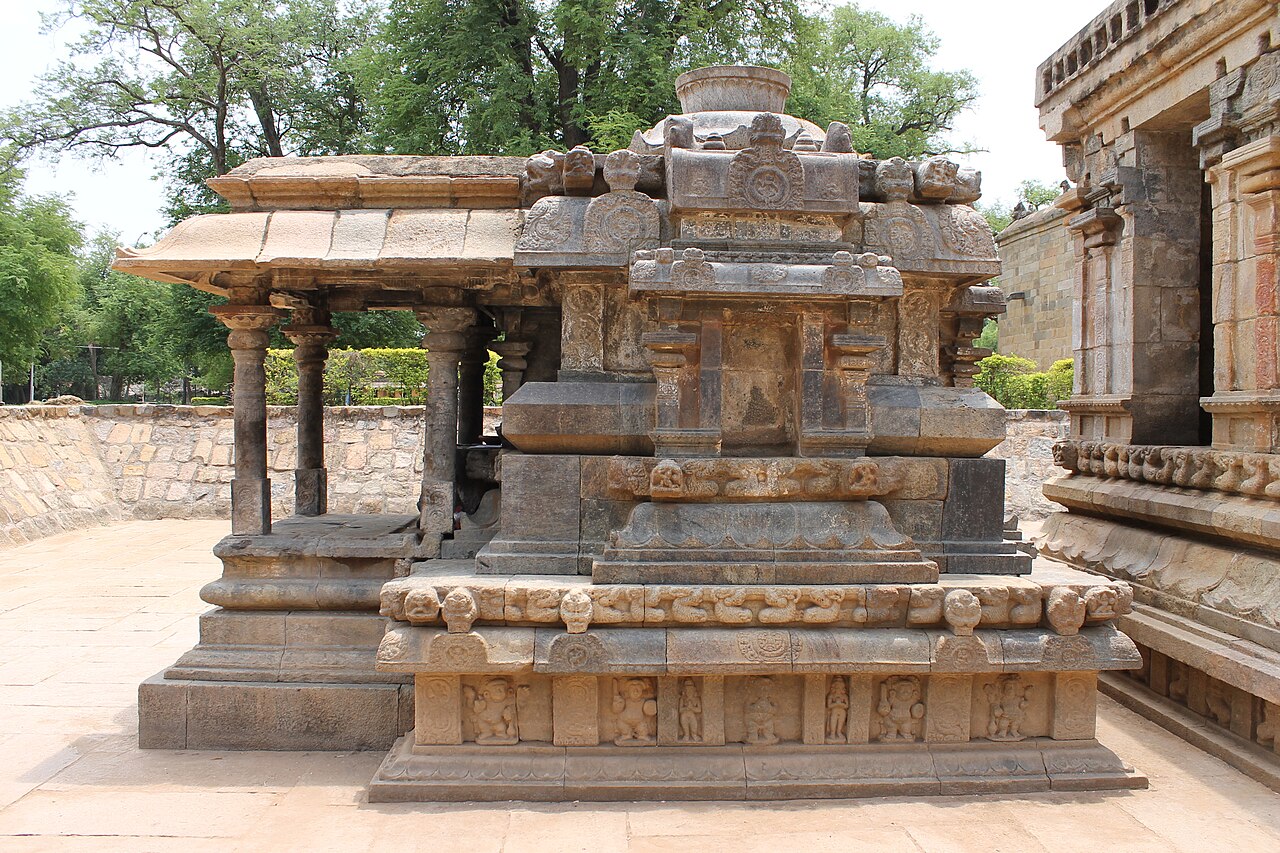
Airavatesvara Temple, Darasuram
Darasuram (Kumbakonam) · India · temple
The third of the Great Living Chola Temples, raised by Rajaraja Chola II around 1166 CE at Darasuram near Kumbakonam: a chariot-form shrine of Lord Shiva as Airavatesvara, famed for its carved stone wheels, its singing steps, and worship that has continued for over eight centuries.
Aisanyesvara Siva Temple
Bhubaneswar · India · temple
A living thirteenth-century Shiva shrine in the Old Town of Bhubaneswar, standing close to the western wall of the great Lingaraj Temple, where a Shivalinga set within a circular yonipitha still receives daily worship in the Kalinga architectural tradition.
 Hinduism
Akhadachandi Temple
Bhubaneswar · India · temple
A tenth-century Kalinga-style shrine on the southwestern bank of Bhubaneswar's sacred Bindusagar tank, Akhadachandi Temple honours Maa Mahishasuramardini, the Goddess in her form as slayer of the buffalo demon, within the dense cluster of ancient shrines that fills the city's Old Town.
 Hinduism
Akshardham
New Delhi · India · temple
A vast contemporary Hindu mandir campus on the Yamuna's west bank in East Delhi, raised without structural steel by 11,000 artisans and volunteers, and recognised by Guinness World Records in 2007 as the world's largest comprehensive Hindu Temple.
 Hinduism
Amarnath Temple
· India · temple
A high Himalayan cave shrine in Jammu and Kashmir where a naturally forming ice lingam is venerated as Lord Śiva, drawing one of India's great seasonal pilgrimages.
 Hinduism
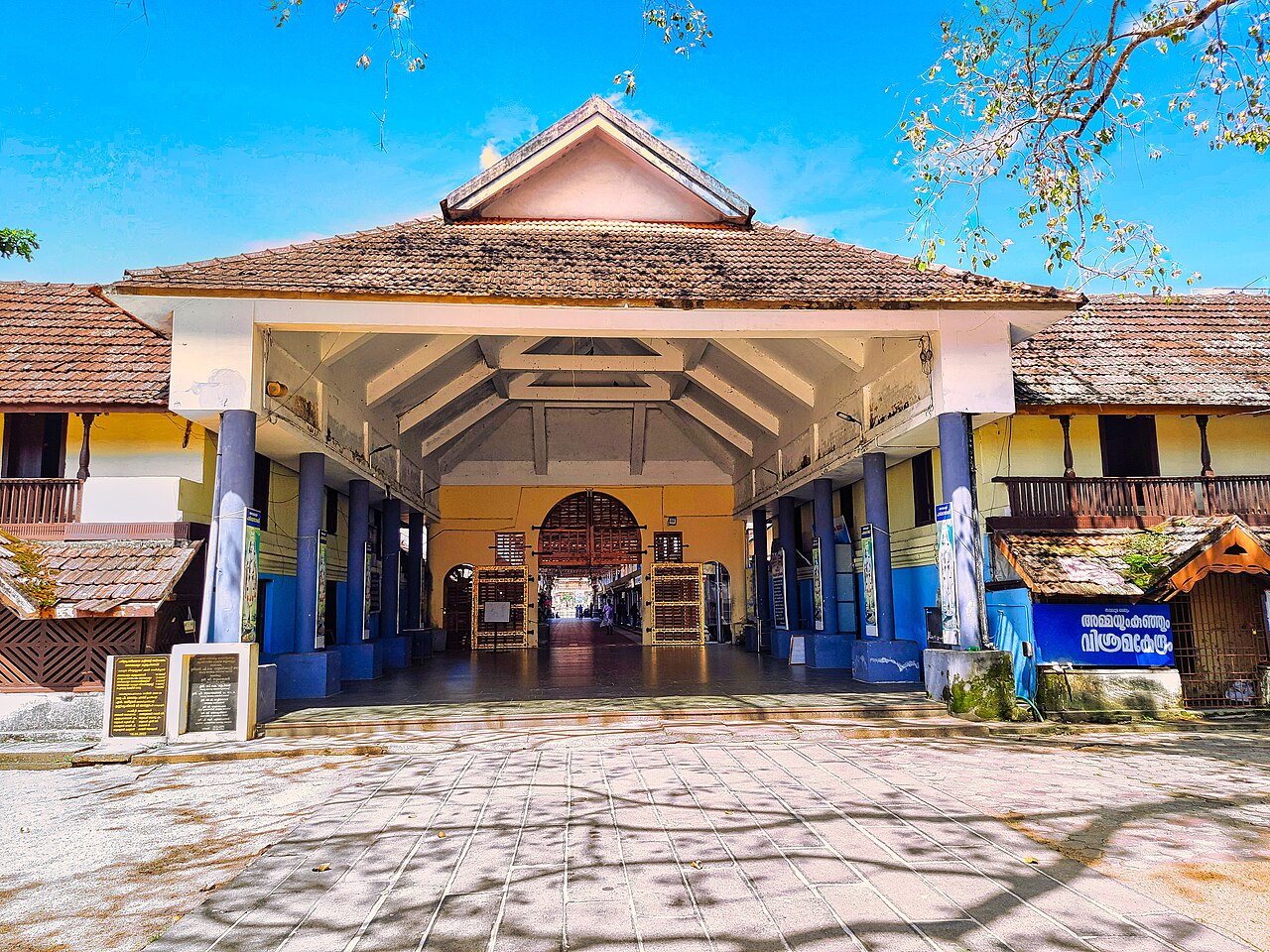
Ambalappuzha Sri Krishna Temple
Ambalappuzha · India · temple
A Vaishnava shrine on the Kerala backwaters consecrated to Sri Krishna in his Parthasarathy form, counted among the seven great Temples of the former kingdom of Travancore and famed across South India for its Ambalapuzha Paal Payasam offering.