
Nageshvara Temple, Begur
Naganatheshvara Temple · Panchalinga Nageshwara Temple · Begur Nageshwara Temple
About
Nestled in Begur, a quiet settlement within the Bangalore urban district of Karnataka, the Nageshvara Temple complex, also known locally as Naganātheshvara, shelters a cluster of shrines that together span more than a thousand years of living worship. The presiding deity is Lord Śiva venerated as Nageshvara, enshrined in a sanctum whose centrepiece is a linga, the timeless aniconic form of the god.
The principal shrine follows an ordered spatial progression: a square garbhagṛha (inner sanctum) gives way to an antarāla (vestibule), which opens into a maha-mantapa or navaranga (great closed hall), and finally into an agra-mantapa (open hall) reached by balustraded steps at the south-western and north-western corners. Six unevenly spaced pillars of white granite, each with a square pīṭha base and a fluted octagonal middle, support the open hall, where an image of Nandī, Śiva's sacred vehicle, rests upon a padma-pīṭha (lotus platform). A companion shrine, the Nageshvarasvāmi Temple, faces east and features a detached porch called a mukha-mantapa supported by eight pillars, with Nandī installed within it.
The carved ceiling of the closed hall carries the hallmark of Western Ganga craftsmanship: eight sculptural panels arranged in square grids, known as the aṣṭa-dik-pālaka, including a four-armed image of Umā-Maheshvara, Śiva alongside his consort Pārvatī. Among the sculptures preserved in the halls are Mahiṣāsuramardinī (Goddess Durgā in her triumph over the buffalo-demon), a two-armed Gaṇeśa of uncommon iconography, and Kālabhairava, another manifestation of Śiva. The doorframe sakha carries intricate carvings of flowering creepers inhabited by gaṇas, Śiva's attendants, with lotus motifs at each terminal. Crowning the lintel above the entrance is Gajalakṣmī, the goddess Lakṣmī flanked by elephants in an arrangement showing the influence of Chālukya–Rāṣṭrakūṭa artistic conventions.
History
The Western Ganga king Nitimarga I commissioned the main Nageshvara shrine around the ninth century CE, and his successor Ereyappa Nitimarga II added the neighbouring Nageshvarasvami shrine a generation later, after which the Chola, Hoysala, and Vijayanagara dynasties each left their own additions across the following centuries. In 1906 the epigraphist R. Narasimhachar found an Old Kannada inscription dated to around 890 CE among the Temple's stones, recording a conflict remembered as the Bengaluru war, the earliest surviving written evidence that a settlement called Bengaluru existed at all.
Significance
Lord Shiva has been worshipped here as Nageshvara for more than a thousand years, and the Temple's ceilings and doorframes still carry the sculptural vocabulary of the Western Ganga masons who first carved them, including a four-armed panel of Shiva together with his consort and a rare two-armed Ganesha. Beyond its standing as a place of daily worship, the Temple is treated as an irreplaceable civic record, for it was here that Bengaluru's own name first entered written history, a fact the city's archaeologists and devotees hold in common regard.
Architecture
Western Ganga dynasty Dravidian Temple architecture, with later Chola and Hoysala-period additions
Visiting
Hours
Hours not listed.
Contact
No contact details listed yet.
Engage with Nageshvara Temple, Begur
Through the four pathways
Seva सेवा — Service
Offer your time and skills here. The following opportunities are open at Nageshvara Temple, Begur:
No Seva offerings listed yet.
Sādhana साधना — Practice
Learn the worship and practice associated with Nageshvara Temple, Begur:
No Sādhana offerings listed yet.
Sandhāna सन्धान — Wisdom
Unite with the wisdom of this tradition:
No Sandhāna offerings listed yet.
Sādhya साध्य — Giving
Support this sacred place according to your means:
No Sādhya offerings listed yet.
All giving flows directly to Nageshvara Temple, Begur. Adisthan does not take a commission.
Gallery
Related sacred places
 Hinduism
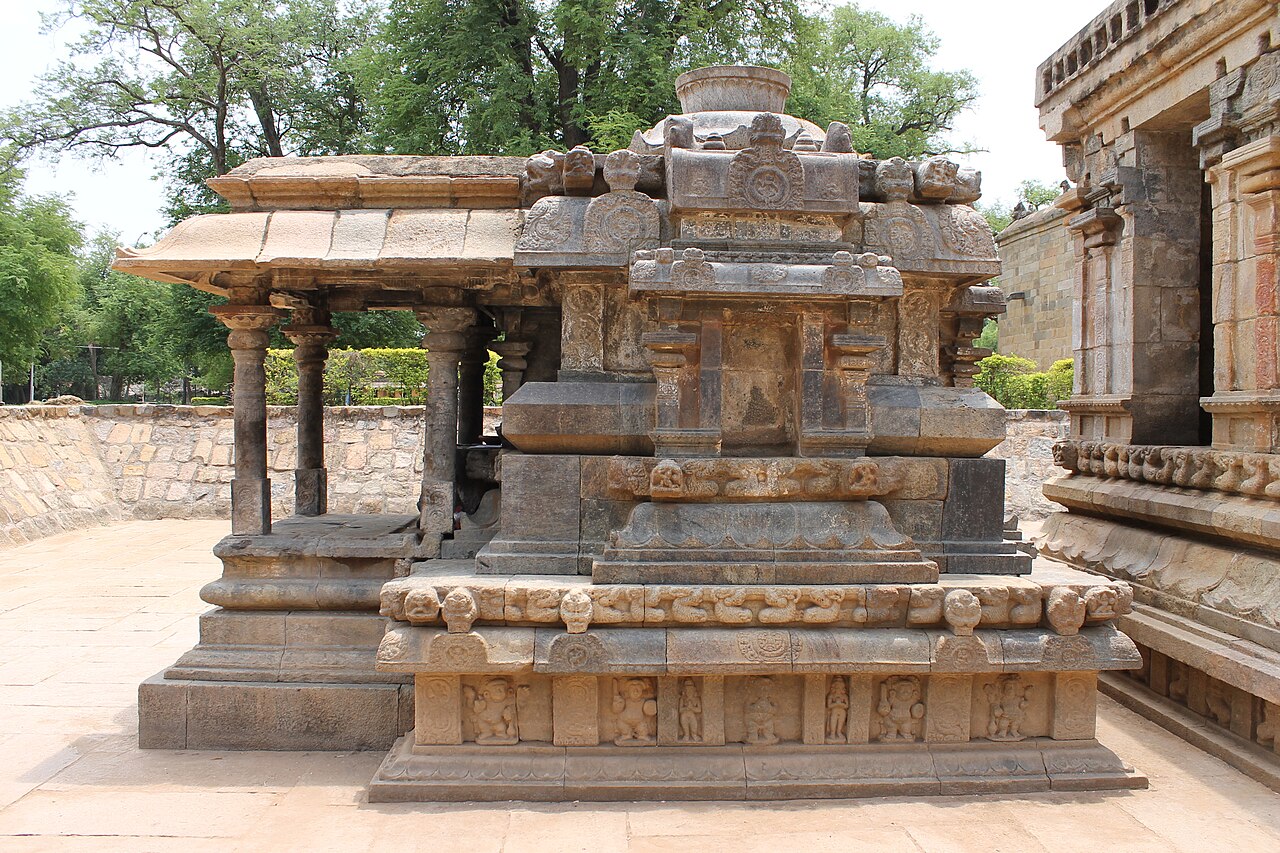
Airavatesvara Temple, Darasuram
Darasuram (Kumbakonam) · India · temple
The third of the Great Living Chola Temples, raised by Rajaraja Chola II around 1166 CE at Darasuram near Kumbakonam: a chariot-form shrine of Lord Shiva as Airavatesvara, famed for its carved stone wheels, its singing steps, and worship that has continued for over eight centuries.
Aisanyesvara Siva Temple
Bhubaneswar · India · temple
A living thirteenth-century Shiva shrine in the Old Town of Bhubaneswar, standing close to the western wall of the great Lingaraj Temple, where a Shivalinga set within a circular yonipitha still receives daily worship in the Kalinga architectural tradition.
 Hinduism
Akhadachandi Temple
Bhubaneswar · India · temple
A tenth-century Kalinga-style shrine on the southwestern bank of Bhubaneswar's sacred Bindusagar tank, Akhadachandi Temple honours Maa Mahishasuramardini, the Goddess in her form as slayer of the buffalo demon, within the dense cluster of ancient shrines that fills the city's Old Town.
 Hinduism
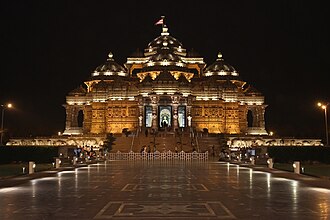
Akshardham
New Delhi · India · temple
A vast contemporary Hindu mandir campus on the Yamuna's west bank in East Delhi, raised without structural steel by 11,000 artisans and volunteers, and recognised by Guinness World Records in 2007 as the world's largest comprehensive Hindu Temple.
 Hinduism
Amarnath Temple
· India · temple
A high Himalayan cave shrine in Jammu and Kashmir where a naturally forming ice lingam is venerated as Lord Śiva, drawing one of India's great seasonal pilgrimages.
 Hinduism
Ambalappuzha Sri Krishna Temple
Ambalappuzha · India · temple
A Vaishnava shrine on the Kerala backwaters consecrated to Sri Krishna in his Parthasarathy form, counted among the seven great Temples of the former kingdom of Travancore and famed across South India for its Ambalapuzha Paal Payasam offering.