Negheriting Shiva Doul
Sivadol · Negheriting Sivadol
About
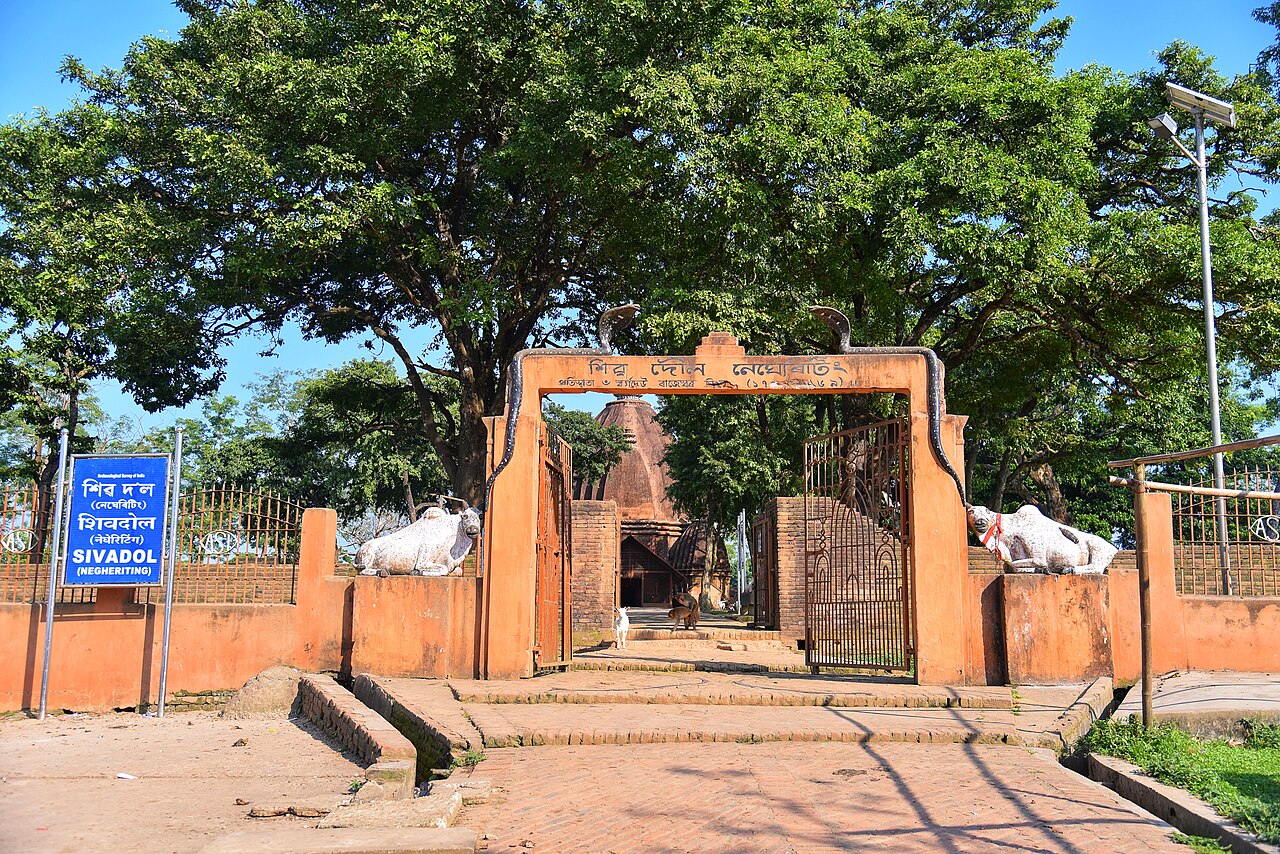
Rising on a small hill roughly a kilometre and a half north of National Highway 37, Negheriting Shiva Doul looks out over the plains of Golaghat district in Assam. The shrine now stands under national protection as a heritage monument, though its long history has not spared it from ruin: earlier structures on the site were repeatedly undone by flood and natural disaster before the present Temple took shape.
The sanctuary's roots reach back to an older stone Temple, referenced in the Buranjis, Assam's traditional chronicles, in accounts of conflict between local powers and the Kachari kingdom during the early 1500s. At that time, the land surrounding Dergaon lay within Kachari territory, only later coming under Ahom control after King Suhungmung extended his rule into the region. Centuries afterward, in 1765, the Ahom sovereign Swargadeo Rajeswar Singha commissioned a new brick Temple on the same ground, replacing the deteriorated stone original. Ghanashyam Khonikar, a noted architect of the period, was entrusted with overseeing the reconstruction.
Built in the Panchayatana style, the main shrine is flanked at its four corners by smaller Temples dedicated to Vishnu, Ganesha, Surya, and Maa Durga, a layout that groups several deities beneath one architectural scheme. Inside the central sanctum sits a Banalinga measuring about three feet across. Local tradition also connects the site to the sage Urva, who is said to have gathered numerous Shiva lingas here in hopes of founding a second Kashi. The place itself takes its name from a distinctive local bird once called Negheri, whose habitat gave rise to the name Negheriting.
Beyond its religious role, the Temple grounds are also known for hosting a notable population of rhesus monkeys, a familiar sight for visitors climbing the hillock.
History
An earlier stone Temple on this hill, built under the Ahom king Pratap Singha between 1603 and 1641, collapsed due to soil erosion, and King Rajeswar Singha rebuilt it in brick in 1765 under the architect Ghanashyam Khonikar, according to the Archaeological Survey of India's own account posted at the site. Rajeswar Singha appointed the priest Bhudhar Agamacharji to maintain the Temple and conduct its rites, and the Agamacharji family carries on that service today. Local memory also tells an older story of a stone Temple and linga recovered from the bed of the river Dihing after flood and years of ruin, a spot still called Sheetal Negheri.
Significance
Built in the Panchayatana form, the brick shikhara at Negheriting shelters a three-foot Banalinga of Lord Shiva at its centre while four corner shrines honour Vishnu, Ganesha, Surya, and Maa Durga under the same roof, an unusual gathering of four Hindu cults around one Shaiva sanctum. Now protected as a national monument, the Temple takes its name from the Negheri, a bird once native to this hill, and its grounds are home today to a resident troop of rhesus macaques as well as to pilgrims who still come for darshan.
Architecture
Panchayatana Temple in Ahom brick architecture, a curvilinear shikhara over the main shrine surrounded by four subsidiary corner shrines
Visiting
Hours
Hours not listed.
Contact
No contact details listed yet.
Engage with Negheriting Shiva Doul
Through the four pathways
Seva सेवा — Service
Offer your time and skills here. The following opportunities are open at Negheriting Shiva Doul:
No Seva offerings listed yet.
Sādhana साधना — Practice
Learn the worship and practice associated with Negheriting Shiva Doul:
No Sādhana offerings listed yet.
Sandhāna सन्धान — Wisdom
Unite with the wisdom of this tradition:
No Sandhāna offerings listed yet.
Sādhya साध्य — Giving
Support this sacred place according to your means:
No Sādhya offerings listed yet.
All giving flows directly to Negheriting Shiva Doul. Adisthan does not take a commission.
Gallery
Related sacred places
 Hinduism
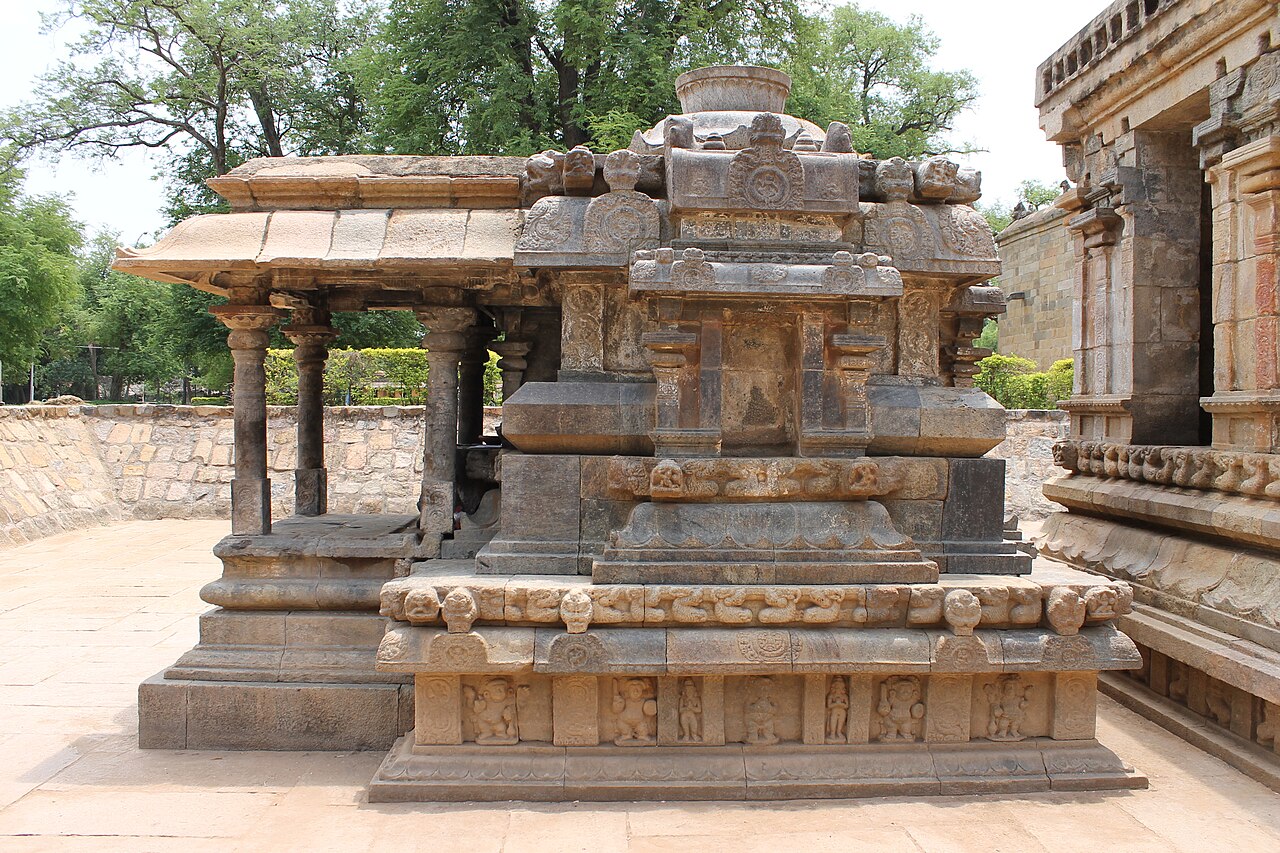
Airavatesvara Temple, Darasuram
Darasuram (Kumbakonam) · India · temple
The third of the Great Living Chola Temples, raised by Rajaraja Chola II around 1166 CE at Darasuram near Kumbakonam: a chariot-form shrine of Lord Shiva as Airavatesvara, famed for its carved stone wheels, its singing steps, and worship that has continued for over eight centuries.
Aisanyesvara Siva Temple
Bhubaneswar · India · temple
A living thirteenth-century Shiva shrine in the Old Town of Bhubaneswar, standing close to the western wall of the great Lingaraj Temple, where a Shivalinga set within a circular yonipitha still receives daily worship in the Kalinga architectural tradition.
 Hinduism
Akhadachandi Temple
Bhubaneswar · India · temple
A tenth-century Kalinga-style shrine on the southwestern bank of Bhubaneswar's sacred Bindusagar tank, Akhadachandi Temple honours Maa Mahishasuramardini, the Goddess in her form as slayer of the buffalo demon, within the dense cluster of ancient shrines that fills the city's Old Town.
 Hinduism
Akshardham
New Delhi · India · temple
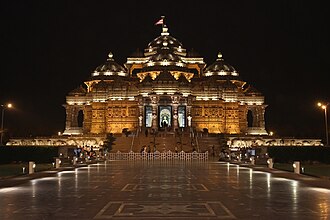
A vast contemporary Hindu mandir campus on the Yamuna's west bank in East Delhi, raised without structural steel by 11,000 artisans and volunteers, and recognised by Guinness World Records in 2007 as the world's largest comprehensive Hindu Temple.
 Hinduism
Amarnath Temple
· India · temple
A high Himalayan cave shrine in Jammu and Kashmir where a naturally forming ice lingam is venerated as Lord Śiva, drawing one of India's great seasonal pilgrimages.
 Hinduism
Ambalappuzha Sri Krishna Temple
Ambalappuzha · India · temple
A Vaishnava shrine on the Kerala backwaters consecrated to Sri Krishna in his Parthasarathy form, counted among the seven great Temples of the former kingdom of Travancore and famed across South India for its Ambalapuzha Paal Payasam offering.