
Nellaiappar Temple
Kanthimathi Nellaiappar Temple · Arulmigu Nellaiappar Temple · Venuvananathar Temple
About
At the northern edge of the Thamirabarani River stands one of South India's most cherished Śaiva places of worship. Here Lord Shiva receives devotion under the name Nellaiappar, also honoured as Venuvananathar, his presence enshrined through the sacred liṅgam, while Goddess Parvati is worshipped in her own magnificent shrine as Sri Kanthimathi Ammal. What distinguishes this Temple within the broader Hindu world is the veneration of Lord Vishnu alongside Shiva: according to sacred tradition, Vishnu personally attended the divine wedding of Shiva and Maa Parvati at this place, and this act of divine witness has earned the complex its revered status as an abhimana kshetram of Vaishnavism.
The precinct extends across roughly 5.9 hectares (14.5 acres), with all of its shrines enclosed within successive rectangular walls. Most celebrated among its structural glories is the Mani Mandapam, where two monolithic pillars, each quarried from a single massive stone, carry 48 finely carved subsidiary shafts that produce distinct musical tones when struck. Tamil poetic tradition holds that these columns embody together the qualities of Shruti, Gana, and Laya. Equally beloved is the Sangili Mandapam (Chain Hall), raised in 1647 by the Śaiva devotee Thiru Vadamalaiappa Pillaiyan to bridge what had previously been two independent Temple structures. At the heart of the flower garden stands a hundred-pillared Vasantha Mandapam, while a large Nandi statue presides over its own mandapam to the north.
Among its rarest distinctions, Nellaiappar Temple is counted among the Pancha Sabhai Sthalangal, five places where Lord Shiva is believed to have manifested the Cosmic Dance. Its stage is the Thamira Sabhai, the Copper Hall, placing it alongside the Silver, Ruby, Painting, and Gold Halls of Madurai, Thiruvaalangadu, Courtallam, and Chidambaram respectively. Tamil Nadu's Hindu Religious and Charitable Endowments Department oversees the Temple's administration today, ensuring that six daily worship sessions, from the early-morning Thiruvananthal to the midnight Palliarai, continue without interruption.
History
Tradition attributes the first shrine to the Pandya dynasty, and its gopurams and the musical Mani Mandapam are credited to the Pandya king Nindraseer Nedumaran in the seventh century, with further building by the Chola, Pallava, Chera, and Madurai Nayaka courts across the centuries that followed. Kulasekara Pandyan I raised the outer wall in the thirteenth century, and in 1647 the devotee Thiru Vadamalaiappa Pillaiyan joined the once-separate Nellaiappar and Kanthimathi shrines with the Sangili Mandapam, the Chain Hall, still lined with carved monkeys and scenes recalling the Ramayana's Vali. More than fifty inscriptions across the Temple, including records of the Chola emperors Rajendra I and Kulothunga I, trace this building across dynasties.
Significance
Saint Tirugnana Sambandar and Appar sang Nellaiappar's praises in the seventh-century Tevaram, and Sundarar added his own verses in the eighth century, placing the Temple among the Paadal Petra Sthalams glorified by the Nayanmar poet-saints. Tirunelveli is also one of the five Pancha Sabhai Sthalams where Lord Shiva is held to have danced his cosmic dance, its stage known as the Thamira Sabhai, the Copper Hall, and legend holds that Lord Vishnu himself witnessed the wedding of Shiva and Maa Parvati here, a memory that makes the Temple a revered abhimana kshetram for Vaishnavas as well as Saivas. Local legend also tells of a Brahmin named Vedha Sharma, whose prayer to shelter his drying paddy from rain was answered by Lord Shiva, giving the deity his name Nelvelinathar and the city its own name, Tirunelveli.
Architecture
Dravidian Temple architecture built up across Pandya, Chola, Pallava, Chera and Madurai Nayaka patronage, with five gopurams and multiple pillared mandapams across roughly 5.9 hectares
Visiting
Daily worship
| Thiruvananthal (Swamy Sannithi) | 06:30 to | |
| Kala Sannithi Pooja (Swamy Sannithi) | 09:30 to | |
| Uchikaalam (Swamy Sannithi) | 12:00 to | |
| Saayaratchai (Swamy Sannithi) | 18:00 to | |
| Ardhajama (Swamy Sannithi) | 20:30 to |
Hours
Hours not listed.
Engage with Nellaiappar Temple
Through the four pathways
Seva सेवा — Service
Offer your time and skills here. The following opportunities are open at Nellaiappar Temple:
No Seva offerings listed yet.
Sādhana साधना — Practice
Learn the worship and practice associated with Nellaiappar Temple:
No Sādhana offerings listed yet.
Sandhāna सन्धान — Wisdom
Unite with the wisdom of this tradition:
No Sandhāna offerings listed yet.
Sādhya साध्य — Giving
Support this sacred place according to your means:
No Sādhya offerings listed yet.
All giving flows directly to Nellaiappar Temple. Adisthan does not take a commission.
Festivals & Events
- Nov
Karthigai Deepam
24 November 2026 · annual
On the full moon of the Tamil month of Karthigai, the Temple lights lamps in the pan-Tamil Nadu festival of light that honours Lord Shiva's form as an infinite flame.
- Dec
Arudra Darisanam
24 December 2026 · annual
When the Arudra star meets the full moon of Margazhi, the Temple keeps darshan of Lord Shiva as Nataraja, the cosmic dancer, honoured here in the Temple's own Thamira Sabhai, the Copper Hall.
- Mar
Maha Shivaratri
6 March 2027 · annual
On the great night of Lord Shiva in the Tamil month of Maasi, devotees keep vigil at Nellaiappar's shrine through the dark of the new moon.
Gallery
Related sacred places
 Hinduism
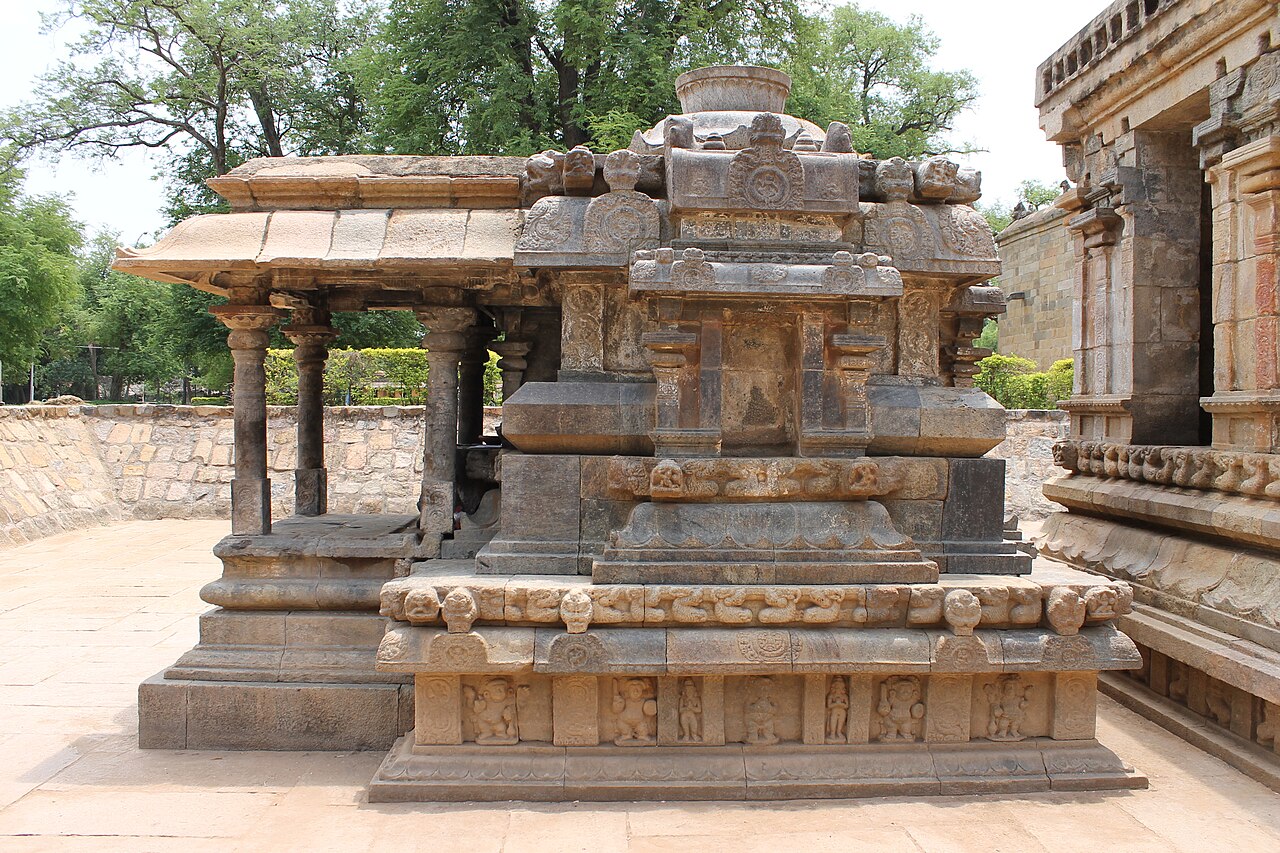
Airavatesvara Temple, Darasuram
Darasuram (Kumbakonam) · India · temple
The third of the Great Living Chola Temples, raised by Rajaraja Chola II around 1166 CE at Darasuram near Kumbakonam: a chariot-form shrine of Lord Shiva as Airavatesvara, famed for its carved stone wheels, its singing steps, and worship that has continued for over eight centuries.
Aisanyesvara Siva Temple
Bhubaneswar · India · temple
A living thirteenth-century Shiva shrine in the Old Town of Bhubaneswar, standing close to the western wall of the great Lingaraj Temple, where a Shivalinga set within a circular yonipitha still receives daily worship in the Kalinga architectural tradition.
 Hinduism
Akhadachandi Temple
Bhubaneswar · India · temple
A tenth-century Kalinga-style shrine on the southwestern bank of Bhubaneswar's sacred Bindusagar tank, Akhadachandi Temple honours Maa Mahishasuramardini, the Goddess in her form as slayer of the buffalo demon, within the dense cluster of ancient shrines that fills the city's Old Town.
 Hinduism
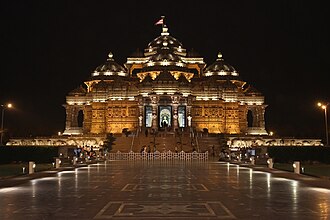
Akshardham
New Delhi · India · temple
A vast contemporary Hindu mandir campus on the Yamuna's west bank in East Delhi, raised without structural steel by 11,000 artisans and volunteers, and recognised by Guinness World Records in 2007 as the world's largest comprehensive Hindu Temple.
 Hinduism
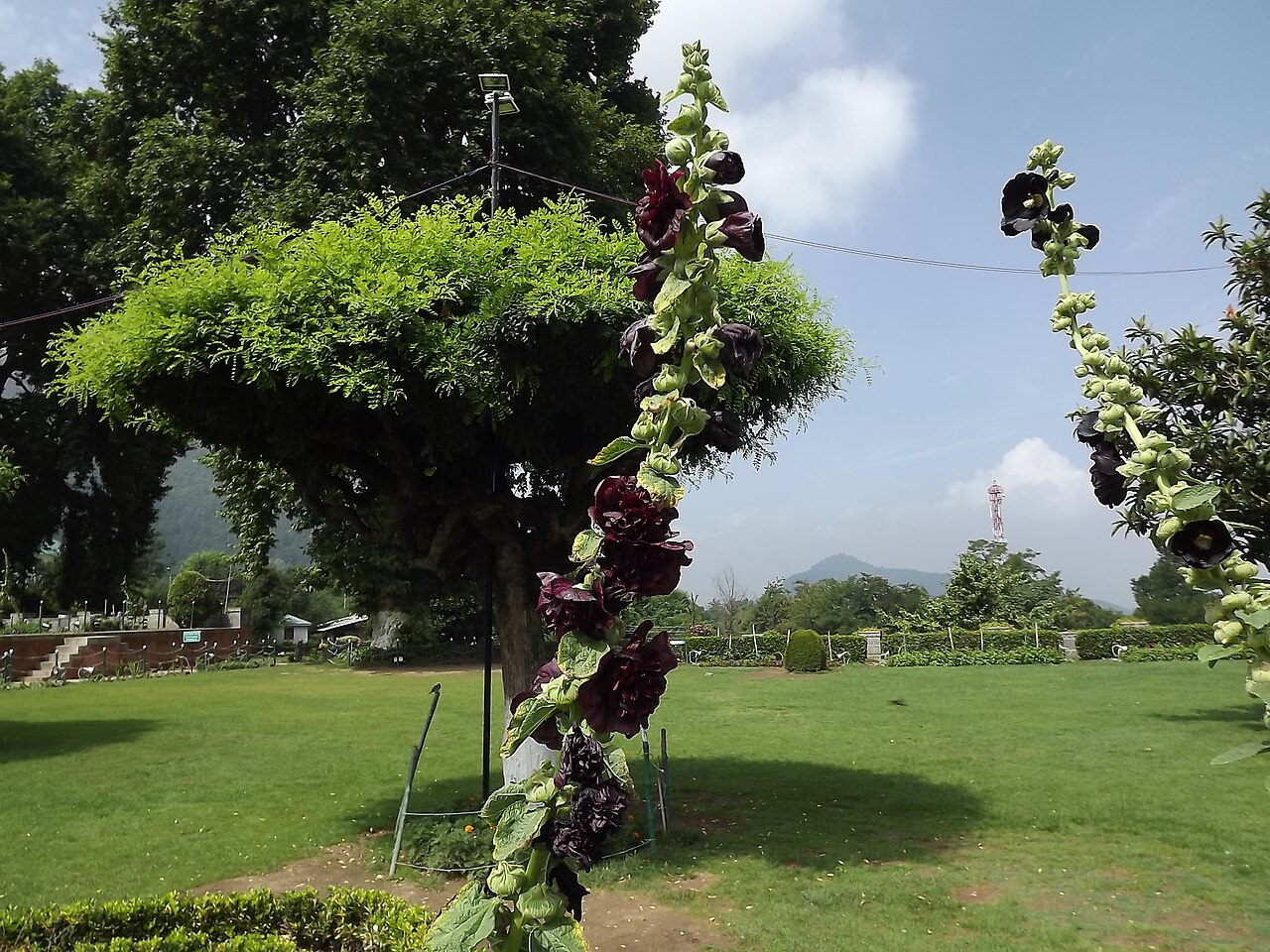
Amarnath Temple
· India · temple
A high Himalayan cave shrine in Jammu and Kashmir where a naturally forming ice lingam is venerated as Lord Śiva, drawing one of India's great seasonal pilgrimages.
 Hinduism
Ambalappuzha Sri Krishna Temple
Ambalappuzha · India · temple
A Vaishnava shrine on the Kerala backwaters consecrated to Sri Krishna in his Parthasarathy form, counted among the seven great Temples of the former kingdom of Travancore and famed across South India for its Ambalapuzha Paal Payasam offering.