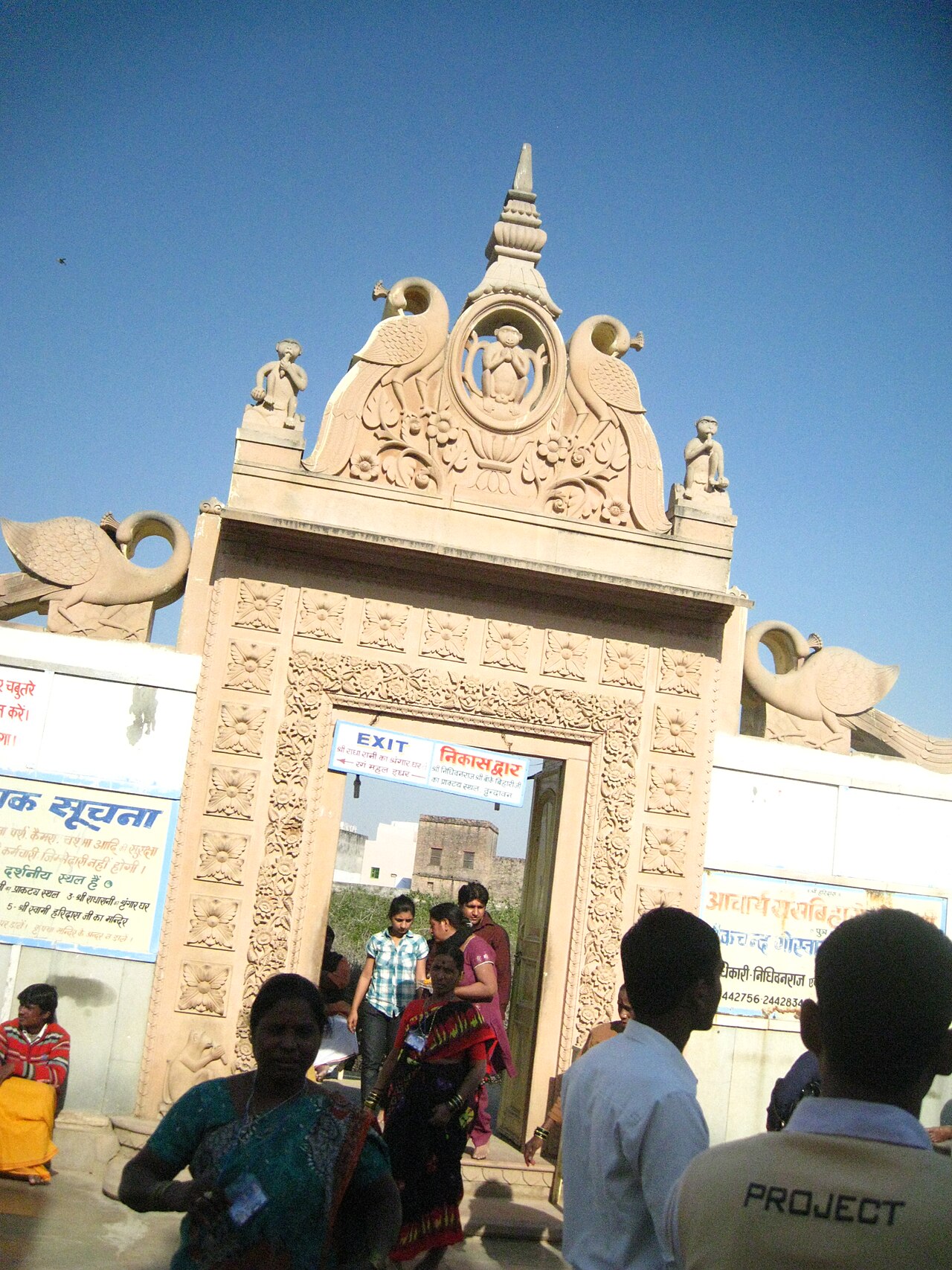
Nidhivan
Nidhi Van · Nidhuvan · Tulsi Van (Tulsi Forest)
About
Within the broader sacred landscape of Vrindavan, Nidhivan occupies a singular place as the forest most intimately associated with the divine play of Rādhā and Lord Kṛṣṇa and the circle of their cowherd companions, the Gopikās. The name itself, from Hindi, meaning Forest of Tulsi, points to the grove's most striking feature: a dense canopy of Tulasī trees, each revered as holy in Vaiṣṇava tradition, whose trunks are hollow and whose land beneath them remains dry even as their boughs stay laden with green leaves through every season. The trees grow in a characteristic downward-arching posture, each plant paired with another, an arrangement devotees understand as embodying the coupled forms of Kṛṣṇa and his Gopikā companions.
Within the walled precinct stand several sacred structures. Rang Mahal, the Colourful Palace, is a Temple where tradition holds that Rādhā and Kṛṣṇa withdraw each night to rest after the exhausting joy of the rāsa. Each evening, priests prepare the sandalwood beds with fresh flowers, garments, bangles, neem twigs, sweetmeats, and betel leaf and nut, then seal the doors from outside; by morning, the offerings bear unmistakable signs of use. Also within the grounds is the Śrī Bansichorī Rādhāraṇī Temple, a shrine marking the memory of the saint Swami Haridas, the Raslīlā Sthali where the dance is traditionally believed to unfold, and the Lalitā Pond, attributed by devotees to Kṛṣṇa's own hand when the cowherds sought water during their dance.
At nightfall the forest is sealed to visitors, and peacocks and monkeys, whose presence fills the grove by day, are said to depart on their own before the gates close. The atmosphere after dusk belongs, in the understanding of the faithful, entirely to the divine pair.
History
The grove is inseparable from the sixteenth century Vaishnava saint Swami Haridas, whose singing and sustained devotion to Radha and Krishna are said to have drawn the divine pair to appear before him within this forest. Tradition holds that at that appearance Radha and Krishna merged into a single image, the Banke Bihari, so that they might remain in Haridas's company, and for some years that murti was worshipped within Nidhivan itself before its enshrinement in a Temple of its own nearby.
Significance
Vaishnava devotees hold Nidhivan to be the most sacred of Vrindavan's forest sites because the rasa lila is believed to continue here nightly and invisibly rather than to have occurred once and ended. Out of reverence for this belief the grove is barricaded after sunset, neighbouring homes have sealed the windows that face it, and even the resident peacocks and monkeys are said to leave the trees before dusk. The Tulasi trees themselves, hollow trunked, bent low in pairs, and green through every season despite growing from dry sand, are venerated as the forest's living witnesses.
Architecture
A walled sacred grove (van) rather than a single building; small Vraj-region shrine structures, including the Rang Mahal, stand within its precinct
Visiting
Hours
Hours not listed.
Contact
No contact details listed yet.
Engage with Nidhivan
Through the four pathways
Seva सेवा — Service
Offer your time and skills here. The following opportunities are open at Nidhivan:
No Seva offerings listed yet.
Sādhana साधना — Practice
Learn the worship and practice associated with Nidhivan:
No Sādhana offerings listed yet.
Sandhāna सन्धान — Wisdom
Unite with the wisdom of this tradition:
No Sandhāna offerings listed yet.
Sādhya साध्य — Giving
Support this sacred place according to your means:
No Sādhya offerings listed yet.
All giving flows directly to Nidhivan. Adisthan does not take a commission.
Festivals & Events
- Oct
Sharad Purnima
25 October 2026 · annual
The autumn full moon night on which Vaishnava tradition holds that Lord Krishna performed the maha rasa, the great circling dance of divine love, with Radha Rani and the gopis, the very event Nidhivan is believed to re-enact each night of the year.
Gallery
Related sacred places
 Hinduism
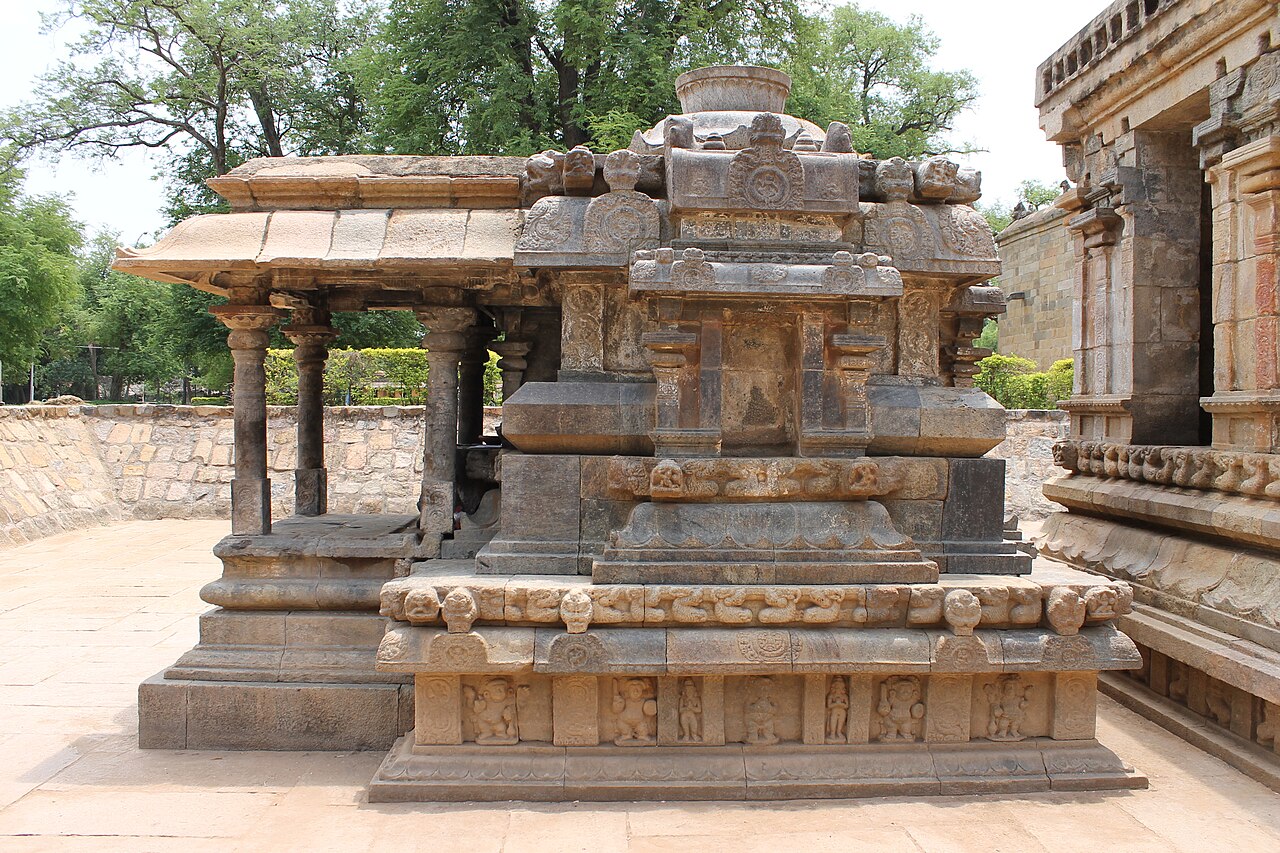
Airavatesvara Temple, Darasuram
Darasuram (Kumbakonam) · India · temple
The third of the Great Living Chola Temples, raised by Rajaraja Chola II around 1166 CE at Darasuram near Kumbakonam: a chariot-form shrine of Lord Shiva as Airavatesvara, famed for its carved stone wheels, its singing steps, and worship that has continued for over eight centuries.
Aisanyesvara Siva Temple
Bhubaneswar · India · temple
A living thirteenth-century Shiva shrine in the Old Town of Bhubaneswar, standing close to the western wall of the great Lingaraj Temple, where a Shivalinga set within a circular yonipitha still receives daily worship in the Kalinga architectural tradition.
 Hinduism
Akhadachandi Temple
Bhubaneswar · India · temple
A tenth-century Kalinga-style shrine on the southwestern bank of Bhubaneswar's sacred Bindusagar tank, Akhadachandi Temple honours Maa Mahishasuramardini, the Goddess in her form as slayer of the buffalo demon, within the dense cluster of ancient shrines that fills the city's Old Town.
 Hinduism
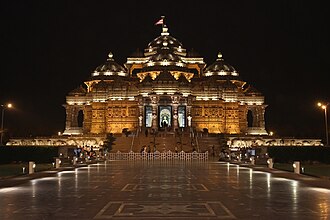
Akshardham
New Delhi · India · temple
A vast contemporary Hindu mandir campus on the Yamuna's west bank in East Delhi, raised without structural steel by 11,000 artisans and volunteers, and recognised by Guinness World Records in 2007 as the world's largest comprehensive Hindu Temple.
 Hinduism
Amarnath Temple
· India · temple
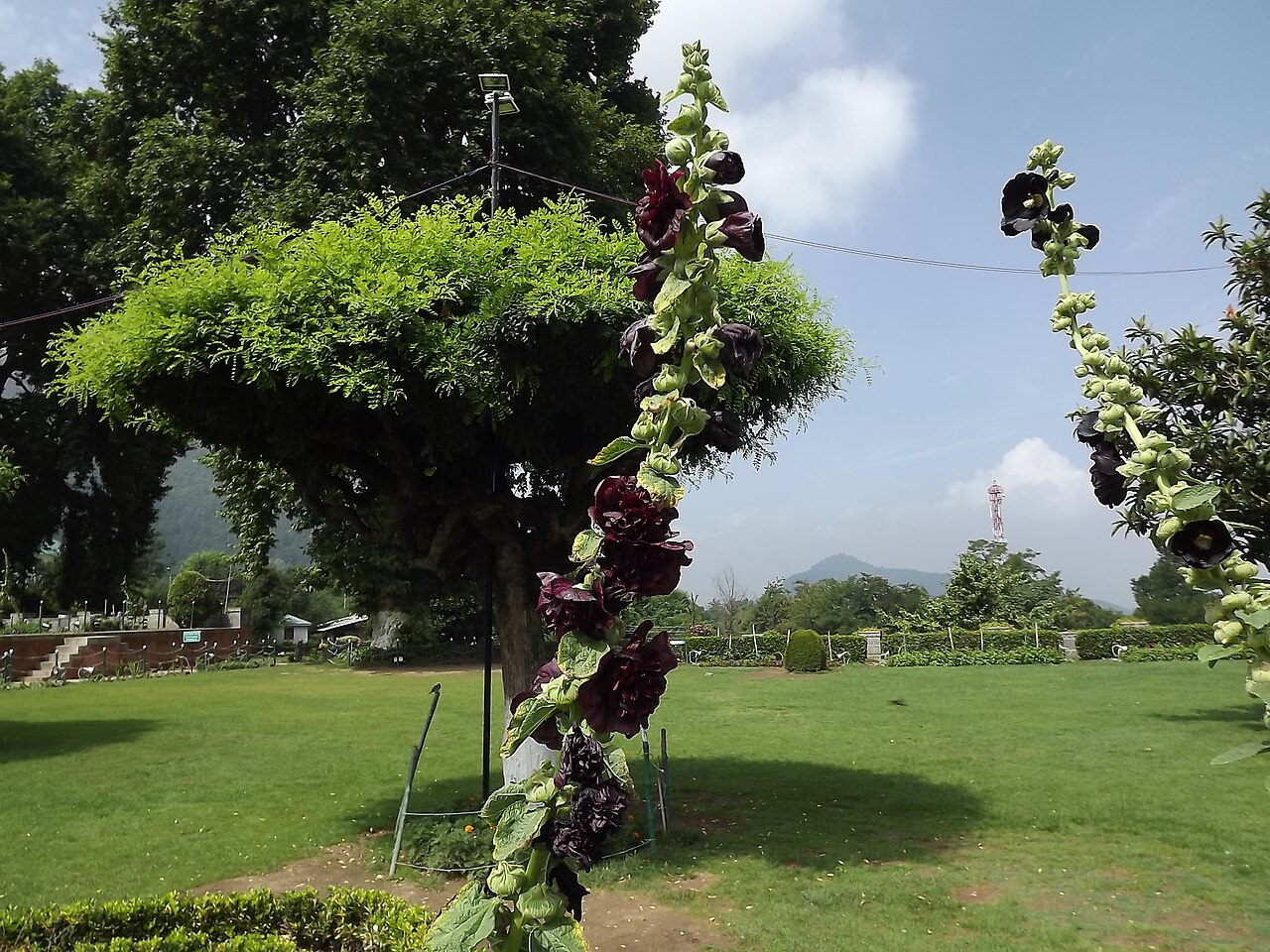
A high Himalayan cave shrine in Jammu and Kashmir where a naturally forming ice lingam is venerated as Lord Śiva, drawing one of India's great seasonal pilgrimages.
 Hinduism
Ambalappuzha Sri Krishna Temple
Ambalappuzha · India · temple
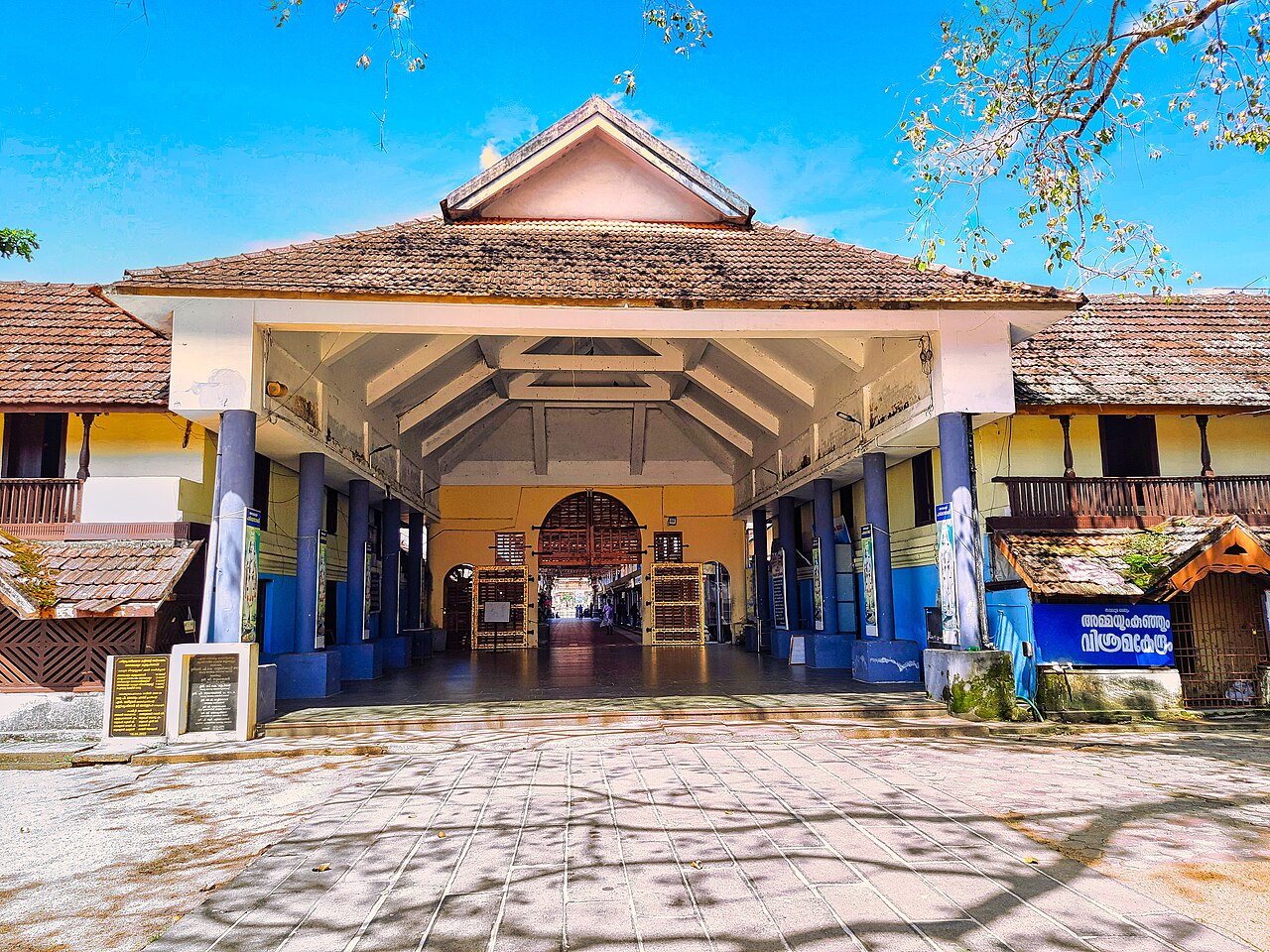
A Vaishnava shrine on the Kerala backwaters consecrated to Sri Krishna in his Parthasarathy form, counted among the seven great Temples of the former kingdom of Travancore and famed across South India for its Ambalapuzha Paal Payasam offering.