
Nyatapola Temple
Nyātāpola · Panchtale Mandir (Five-Storey Temple) · Nyātāpau
About
Nyatapola, whose name in Nepal Bhasa means a structure of five storeys, rises at the heart of Bhaktapur in the Kathmandu Valley as the tallest Temple in Nepal and one of only two five-tiered shrines in the valley alongside Kumbheshvara of Lalitpur. King Bhupatindra Malla commissioned the Temple, completed in a remarkable six months between December 1701 and July 1702.
The Temple rises on a five-level brick plinth, each tier guarded by a paired stone watch: at the bottom the wrestlers Jaya and Pratap, above them two elephants, then two singhas, then two sardulas, and at the top the Tantric lionesses Simhani and Vyaghrani, each pair held to be ten times stronger than the one below. Five Ganesha shrines stand at the corners, and 529 wind bells hang along the tiered roofs.
Its presiding deity is Maa Siddhi Lakshmi, Tantric mother goddess of the Newars of Bhaktapur and ancestral deity of the Malla royal house. The image is said to be at least three metres tall, standing on the shoulders of Bhairava with nine heads and eighteen arms. Because the goddess holds the highest position in the Tantric pantheon, her image is kept hidden and only Karmacharya priests may enter, the gates opening just once each year.
For centuries the silhouette of Nyatapola has shaped the skyline of Bhaktapur. It has stood through the great earthquakes of 1934 and April 2015, and its image is borne on the coats of arms of the municipality.
History
King Bhupatindra Malla laid the foundation himself on 4 January 1702, carrying three bricks to the site on his own shoulder, and construction was complete within six months, drawing timber, stone and labour donated from every district of Bhaktapur and beyond. A palm leaf ledger written in Nepal Bhasa, the siddhagni kotyahuti devala pratishtha, records the name and wage of every worker on the project, down to the woodcutters who felled its sal timber. The Temple has withstood the region's great earthquakes since, including 1934 and April 2015, its stepped brick plinth acting as a natural base isolator.
Significance
Nyatapola takes its name not from its deity but from its own five storeys, an honour almost no other Temple in the valley shares. Each of its five plinths is guarded by a pair of stone figures, wrestlers, elephants, lions, and griffin-like sardulas, and at the summit Maa Siddhi Lakshmi's own tantric lionesses, each pair believed ten times stronger than the one beneath it. So sacred is the goddess enshrined within that Her image is seen only by Karmacharya priests, and the Temple's doors open to anyone else only once each year.
Architecture
Newar pagoda architecture; a five-tiered brick and timber tower on a stepped five-level plinth, the tallest Temple structure in Nepal
Visiting
Hours
Hours not listed.
Contact
No contact details listed yet.
Engage with Nyatapola Temple
Through the four pathways
Seva सेवा — Service
Offer your time and skills here. The following opportunities are open at Nyatapola Temple:
No Seva offerings listed yet.
Sādhana साधना — Practice
Learn the worship and practice associated with Nyatapola Temple:
No Sādhana offerings listed yet.
Sandhāna सन्धान — Wisdom
Unite with the wisdom of this tradition:
No Sandhāna offerings listed yet.
Sādhya साध्य — Giving
Support this sacred place according to your means:
No Sādhya offerings listed yet.
All giving flows directly to Nyatapola Temple. Adisthan does not take a commission.
Gallery
Related sacred places
 Hinduism
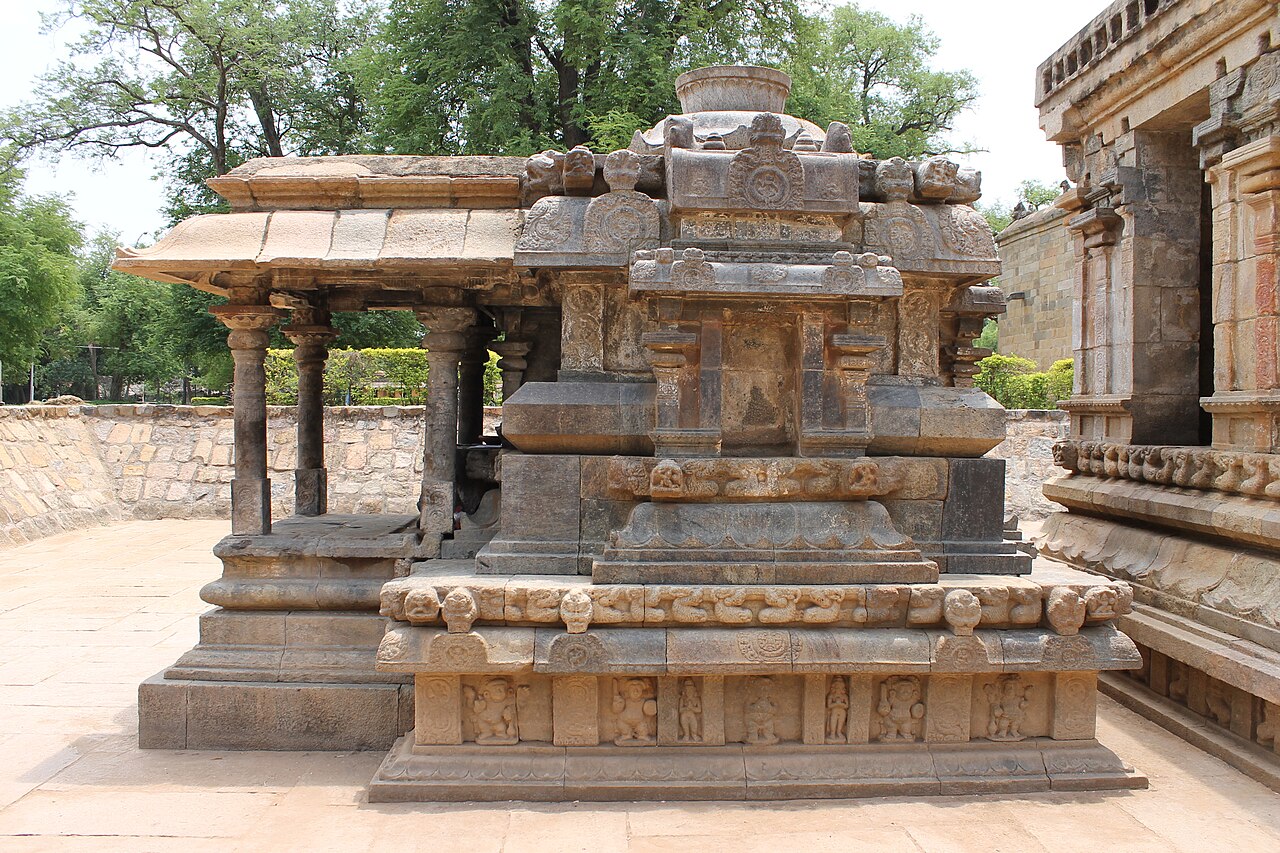
Airavatesvara Temple, Darasuram
Darasuram (Kumbakonam) · India · temple
The third of the Great Living Chola Temples, raised by Rajaraja Chola II around 1166 CE at Darasuram near Kumbakonam: a chariot-form shrine of Lord Shiva as Airavatesvara, famed for its carved stone wheels, its singing steps, and worship that has continued for over eight centuries.
Aisanyesvara Siva Temple
Bhubaneswar · India · temple
A living thirteenth-century Shiva shrine in the Old Town of Bhubaneswar, standing close to the western wall of the great Lingaraj Temple, where a Shivalinga set within a circular yonipitha still receives daily worship in the Kalinga architectural tradition.
 Hinduism
Akhadachandi Temple
Bhubaneswar · India · temple
A tenth-century Kalinga-style shrine on the southwestern bank of Bhubaneswar's sacred Bindusagar tank, Akhadachandi Temple honours Maa Mahishasuramardini, the Goddess in her form as slayer of the buffalo demon, within the dense cluster of ancient shrines that fills the city's Old Town.
 Hinduism
Akshardham
New Delhi · India · temple
A vast contemporary Hindu mandir campus on the Yamuna's west bank in East Delhi, raised without structural steel by 11,000 artisans and volunteers, and recognised by Guinness World Records in 2007 as the world's largest comprehensive Hindu Temple.
 Hinduism
Amarnath Temple
· India · temple
A high Himalayan cave shrine in Jammu and Kashmir where a naturally forming ice lingam is venerated as Lord Śiva, drawing one of India's great seasonal pilgrimages.
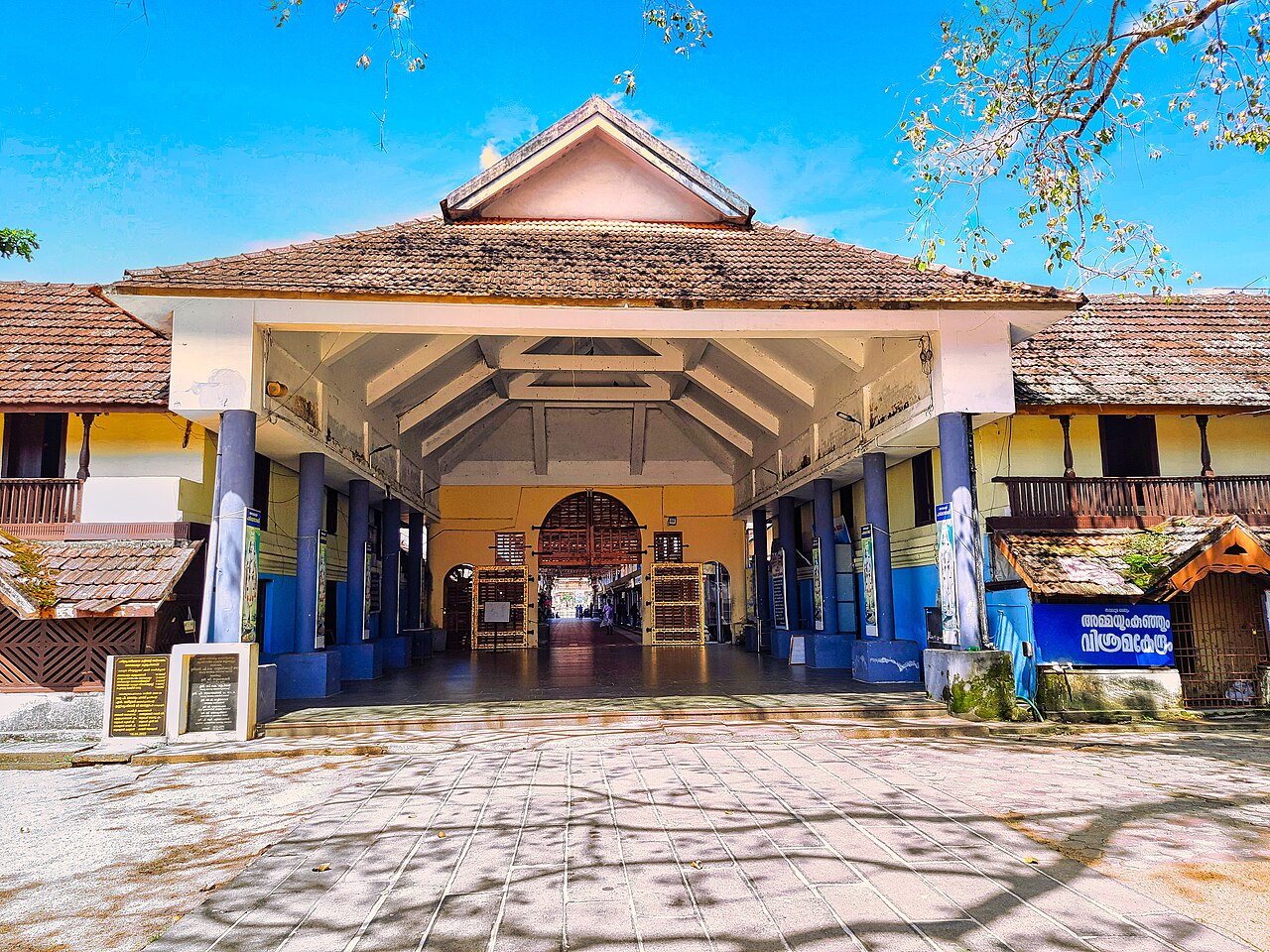 Hinduism
Ambalappuzha Sri Krishna Temple
Ambalappuzha · India · temple
A Vaishnava shrine on the Kerala backwaters consecrated to Sri Krishna in his Parthasarathy form, counted among the seven great Temples of the former kingdom of Travancore and famed across South India for its Ambalapuzha Paal Payasam offering.