Parsurameswara Temple
Parashurameshvara Temple · Parashurameswara Temple
About
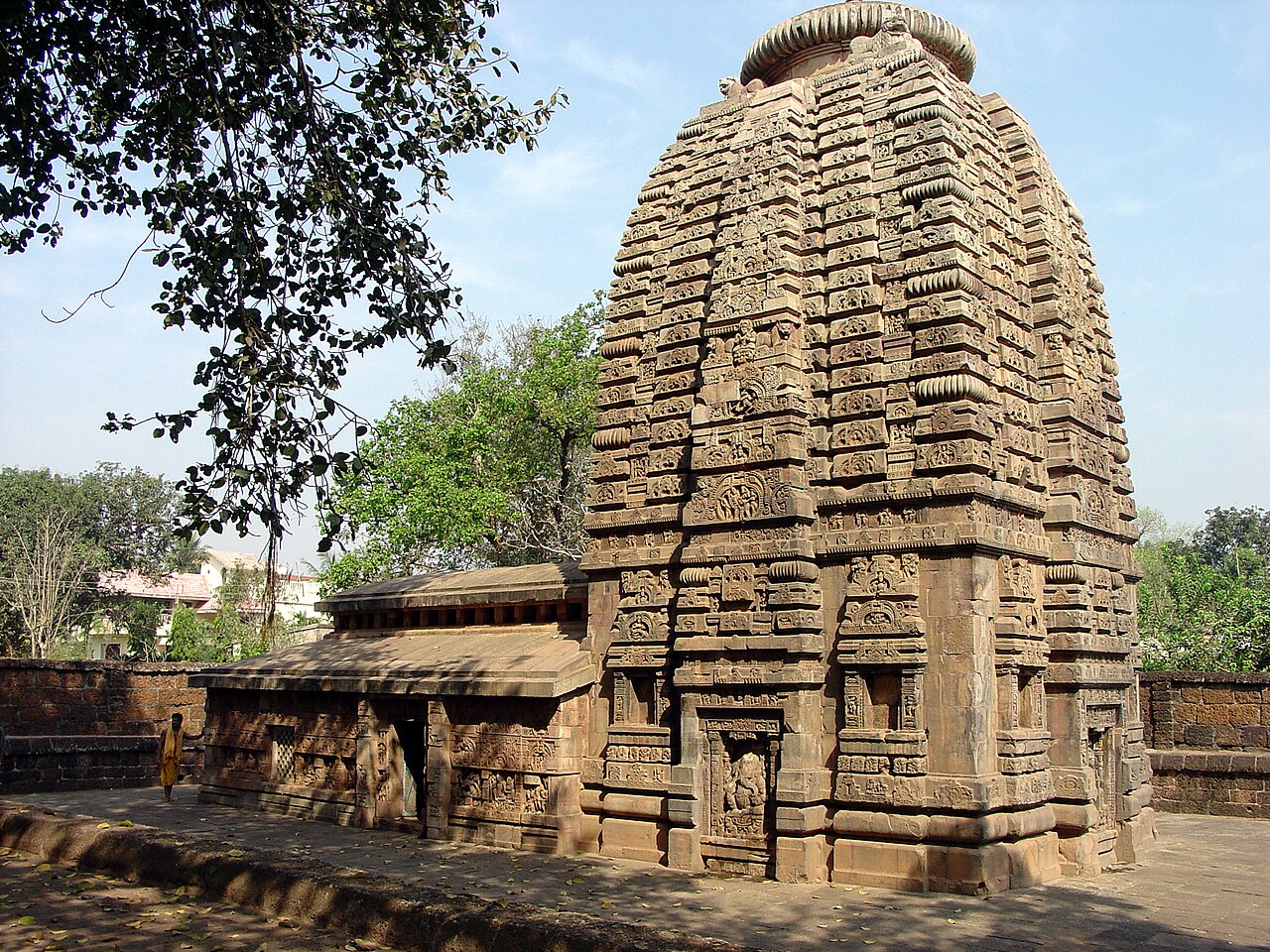
Standing in the heart of Bhubaneswar, Odisha's capital, Paraśurāmeśvara Temple (also rendered Parsurameswara) is consecrated to Lord Shiva and belongs to a cluster of some of the oldest places of worship to endure in the state. Scholars date its construction to approximately 650 CE, placing it within the flowering of the Shailodbhava dynasty, and its masonry remains a touchstone for understanding how Kalinga Temple craft looked before the tenth century.
Architecturally, the shrine introduces a structural innovation that would define Odishan sacred building for centuries to come: the addition of a rectangular entrance hall, the jagamohana, or hall of worshippers, beside the older form of a standalone sanctum tower. The vimana rises to roughly 40 feet through a curvilinear bada crowned by an amalaka, the ribbed stone disk that caps Nagara spires. Latticed stone windows filter daylight into the interior, their perforations framing carved panels of dancers and musicians, while the junction between hall and tower retains the unpretentious workmanship of a tradition still finding its mature grammar.
Though Shiva is the presiding deity, the outer walls carry an unusually rich assembly of Śākta figures. Paraśurāmeśvara holds the earliest known depiction of the Saptamātṛkās, the seven divine mothers Chamunda, Maa Varahi, Indrani, Vaishnavi, Kaumari, Shivani, and Brahmi, as well as the earliest surviving six-armed image of Maa Mahishamardini, the goddess vanquishing the buffalo demon. Elsewhere, Ardhanarishvara, Nataraja in multiple dance poses, Ganesha, Kartikeya, and scenes of Shiva subduing Ravana cover the stone surfaces with an animated theological world. The interiors, following Odishan convention, are left uncarved and calm, a deliberate quiet after the richness outside. The monument is under the stewardship of the Archaeological Survey of India.
History
The Shailodbhava dynasty, who held Lord Shiva as their family deity, raised the Temple in the seventh century, with most scholars settling on a date around 650 CE. Its builders introduced the jagamohana, a rectangular hall of worship attached before the sanctum tower, the earliest known example of a form that would shape Odishan Temple architecture for centuries afterward, culminating in the great Lingaraj and Sun Temples. Standing on the eastern coast, the Temple was largely spared the disruptions that reached inland sites in later centuries, and repairs in 1903 preserved its roof while leaving the original stonework largely undisturbed.
Significance
Though consecrated to Lord Shiva, the Temple's walls carry the earliest known depiction in Bhubaneswar of the Saptamatrikas, the seven divine mothers, and one of the earliest surviving images of Maa Mahishamardini vanquishing the buffalo demon. Each year during the month of Ashadha, the festival image of Lingaraja is carried here in a rite that recalls the Temple's founding legend, in which Lord Shiva granted his grace to Parashurama after a long penance.
Architecture
Kalinga Nagara Temple architecture; the earliest known example combining a vimana sanctum tower with an attached jagamohana hall
Visiting
Hours
Hours not listed.
Contact
No contact details listed yet.
Engage with Parsurameswara Temple
Through the four pathways
Seva सेवा — Service
Offer your time and skills here. The following opportunities are open at Parsurameswara Temple:
No Seva offerings listed yet.
Sādhana साधना — Practice
Learn the worship and practice associated with Parsurameswara Temple:
No Sādhana offerings listed yet.
Sandhāna सन्धान — Wisdom
Unite with the wisdom of this tradition:
No Sandhāna offerings listed yet.
Sādhya साध्य — Giving
Support this sacred place according to your means:
No Sādhya offerings listed yet.
All giving flows directly to Parsurameswara Temple. Adisthan does not take a commission.
Gallery
Related sacred places
 Hinduism
Airavatesvara Temple, Darasuram
Darasuram (Kumbakonam) · India · temple
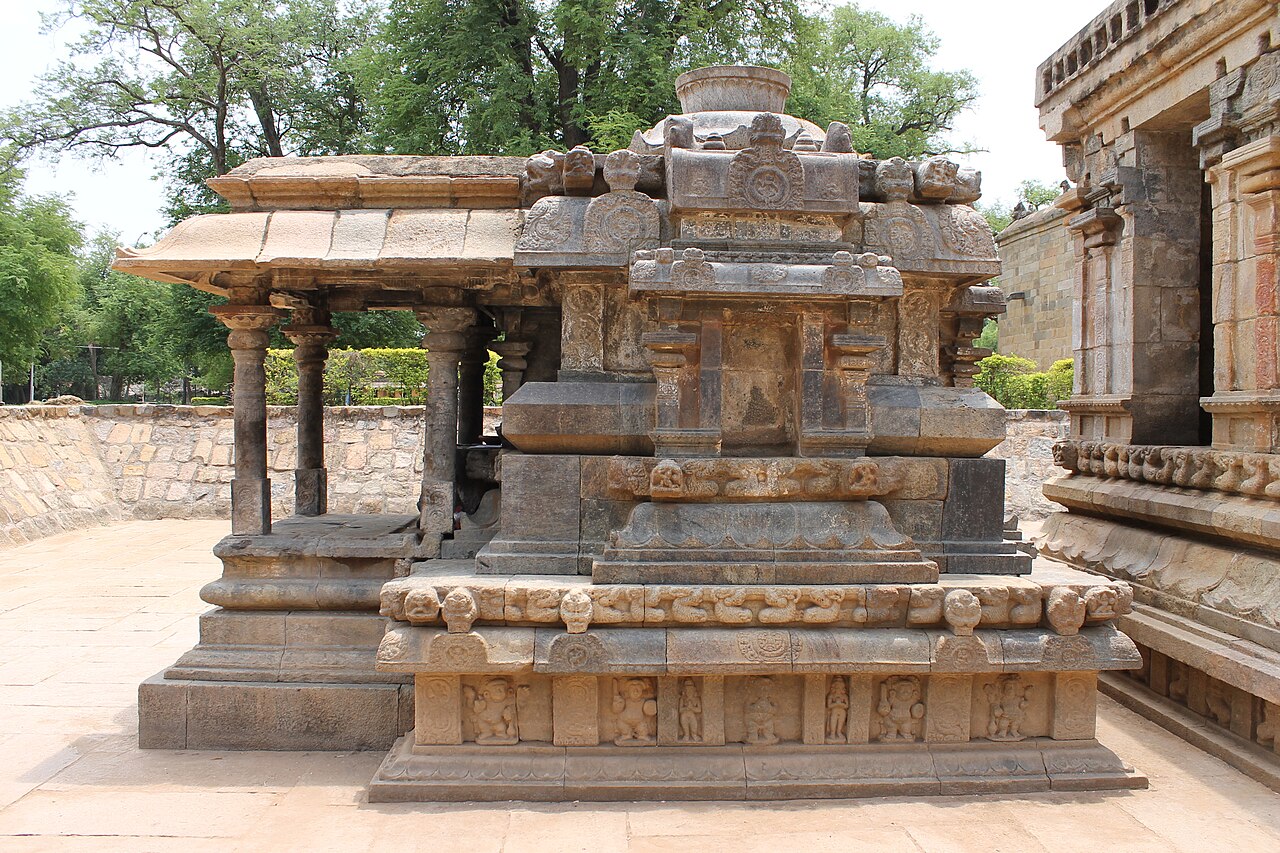
The third of the Great Living Chola Temples, raised by Rajaraja Chola II around 1166 CE at Darasuram near Kumbakonam: a chariot-form shrine of Lord Shiva as Airavatesvara, famed for its carved stone wheels, its singing steps, and worship that has continued for over eight centuries.
Aisanyesvara Siva Temple
Bhubaneswar · India · temple
A living thirteenth-century Shiva shrine in the Old Town of Bhubaneswar, standing close to the western wall of the great Lingaraj Temple, where a Shivalinga set within a circular yonipitha still receives daily worship in the Kalinga architectural tradition.
 Hinduism
Akhadachandi Temple
Bhubaneswar · India · temple
A tenth-century Kalinga-style shrine on the southwestern bank of Bhubaneswar's sacred Bindusagar tank, Akhadachandi Temple honours Maa Mahishasuramardini, the Goddess in her form as slayer of the buffalo demon, within the dense cluster of ancient shrines that fills the city's Old Town.
 Hinduism
Akshardham
New Delhi · India · temple
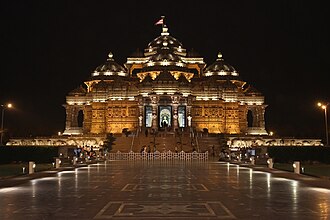
A vast contemporary Hindu mandir campus on the Yamuna's west bank in East Delhi, raised without structural steel by 11,000 artisans and volunteers, and recognised by Guinness World Records in 2007 as the world's largest comprehensive Hindu Temple.
 Hinduism
Amarnath Temple
· India · temple
A high Himalayan cave shrine in Jammu and Kashmir where a naturally forming ice lingam is venerated as Lord Śiva, drawing one of India's great seasonal pilgrimages.
 Hinduism
Ambalappuzha Sri Krishna Temple
Ambalappuzha · India · temple
A Vaishnava shrine on the Kerala backwaters consecrated to Sri Krishna in his Parthasarathy form, counted among the seven great Temples of the former kingdom of Travancore and famed across South India for its Ambalapuzha Paal Payasam offering.