Prahadisvarar Temple
About
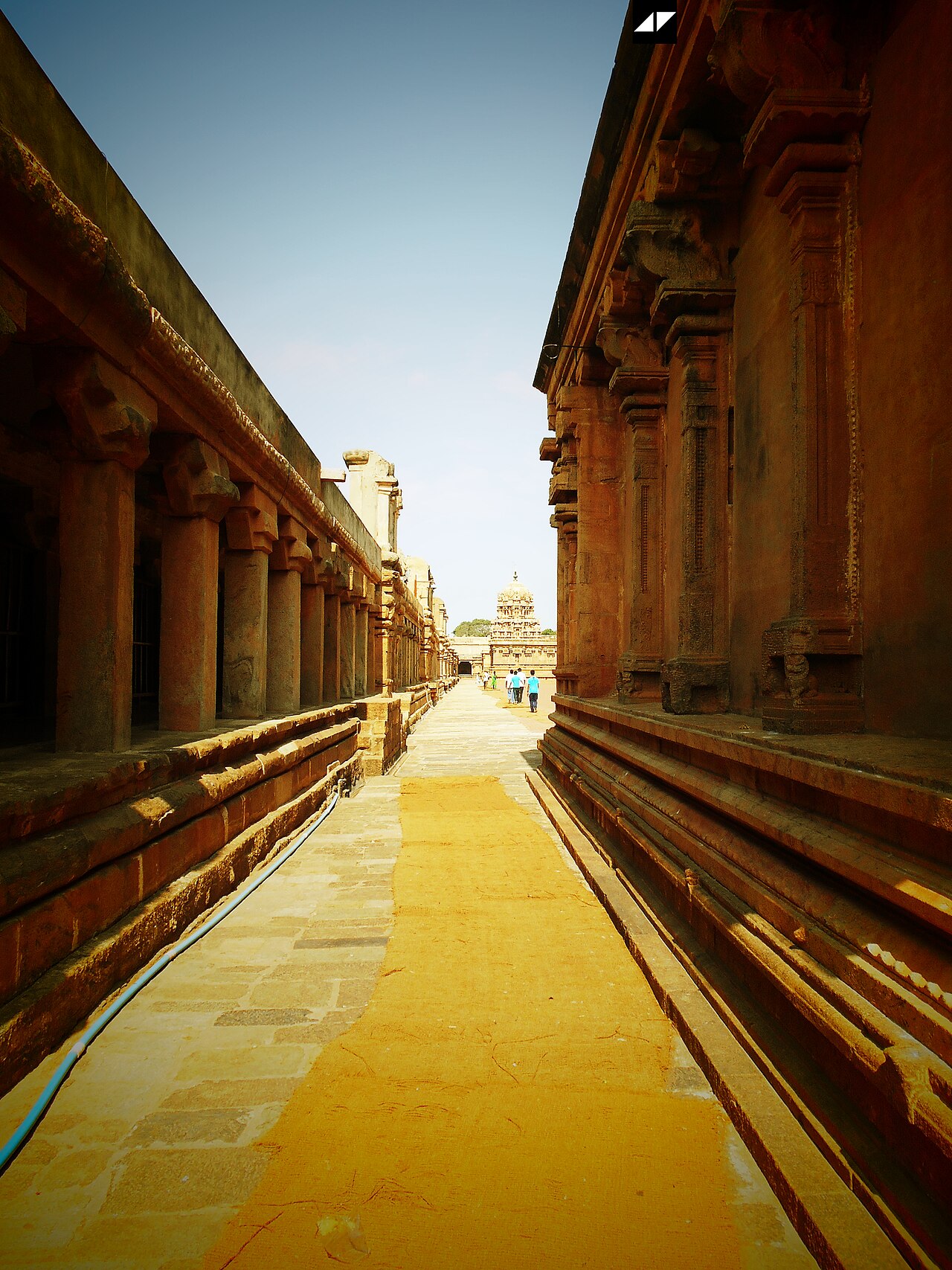
Rajaraja I named his crowning achievement Rajarajesvaram, 'the abode of the god of Rajaraja', though Thanjavur's faithful have long called it Thanjai Periya Kovil ('the great Temple of Thanjavur') or Peruvudaiyar Kovil ('Temple of the supreme lord'). Devotees also know it as Dakshina Meru, the southern counterpart of the cosmic mountain. Commissioned around 1003 CE and consecrated by 1010 CE, it shares UNESCO World Heritage status with two companion shrines, Gangaikonda Cholapuram and Airavatesvara, together designated the Great Living Chola Temples, a title that honours their unbroken continuation as active places of worship, pilgrimage, and classical art.
The Temple plan follows strict axial and bilateral geometry, extending roughly 241 metres from east to west and 122 metres from north to south. Five principal chambers compose the main axis: the inner sanctum (karuvarai, the Tamil 'womb chamber', equivalent to the Sanskrit garbha griha), a vestibule, a community gathering hall, a great assembly hall, and the Nandi pavilion facing the shrine. Soaring above the sanctum is a sixteen-storey granite vimana approximately 63 metres tall, a tapering, squared tower whose verticality contrasts with the curvilinear profile favoured at other Chola sites. Inside the sanctum resides one of India's largest monolithic Shiva lingas, extending nearly nine metres across two floors. A broad colonnaded promenade wraps the central court; two elaborately carved gopurams guard the eastern approach, the outer one bearing the royal epithet Keralantakan, a surname of Rajaraja himself.
Ringing the primary shrine are subsidiary sanctuaries for Maa Parvati, Murugan, Ganesha, Nandi, Maa Varahi, Chandeshvara, Dakshinamurti, and a celebrated brass Nataraja, Shiva as master of the cosmic dance, whose original casting here in the eleventh century helped define a sculptural tradition still revered worldwide. Along the upper corridor walls, 81 of the 108 dance postures described in the Natya Shastra are carved in stone, offering the earliest monumental record of the forms underlying classical Bharatanatyam. An inscription dated 1011 CE, preserved on the northern enclosure wall, lists over six hundred Temple servants, priests, lamp-tenders, musicians, weavers, jewellers, dancers, compensated in grants of land, preserving an unusually vivid record of sacred institutional life at the moment of the Temple's foundation.
History
Sacred architecture in South India accumulated across successive dynasties, from Chalukya excavations at Badami and Aihole through Pallava freestanding monuments at Mamallapuram, before the Cholas emerged as the region's dominant power between around 850 and 1280 CE. Earlier Chola rulers concentrated on military consolidation; by the tenth century their craftsmen had begun articulating a new formal vocabulary marked by multifaceted columns with projecting square capitals, which historians identify as the origin of a distinctly Chola stylistic idiom. That idiom achieved its fullest scale and refinement when Rajaraja I directed the construction of the present Temple, completed in 1010 CE as the apogee of his reign.
The complex accrued additions and absorbed damage across the following thousand years. Armed conflicts between the Madurai sultanate and Thanjavur's Hindu rulers inflicted losses that later dynasties repaired, sometimes painting fresh murals over older Chola frescoes, sometimes endowing new shrines. The major Karthikeya, Maa Parvati, and Nandi structures date to Nayaka patronage in the sixteenth and seventeenth centuries, while the Marathas of Thanjavur subsequently maintained the complex. In 1777, French colonial forces raised the present outer defensive wall, fitting it with gun-holes as the Temple briefly served as an arsenal. Beneath layered Nayaka murals, original Chola paintings in natural pigments set into wet limestone, covering perhaps 670 square metres in total, were rediscovered in 1931 by S. K. Govindasami of Annamalai University. The Archaeological Survey of India, which administers the monument, has since conserved approximately 112 square metres using a de-stucco process developed specifically for this site. In September 2010 the Temple celebrated its millennium with a gathering of a thousand Bharatanatyam dancers in concert, and commemorative stamps and coins were issued to mark the occasion.
Significance
Enshrined within UNESCO's Great Living Chola Temples World Heritage Site, a designation chosen precisely because these shrines remain living centres of devotion rather than inert ruins, Brihadisvara stands as what scholars call the supreme realisation of the Dravidian architectural tradition. For Shaiva devotees, the garbha griha housing the great linga remains a site of daily worship. The complex also integrates traditions beyond Shaivism: Vaishnavism and Shaktism are honoured within its walls, and the original Chola frescoes include depictions of Vishnu, Maa Durga, and scenes of courtly and common life alongside purely Shaiva themes. Every year around Mahashivaratri, the Brahan Natyanjali festival draws classical dancers from across India and abroad to perform at the Temple, sustaining the living continuum of sacred performance that the eleventh-century karana carvings first committed to stone. Tamil Nadu's Hindu Religious and Charitable Endowments Department oversees the Temple's religious administration, while the Archaeological Survey of India holds responsibility for its conservation as a protected national monument.
Visiting
Engage with Prahadisvarar Temple
Through the four pathways
Seva सेवा — Service
Offer your time and skills here. The following opportunities are open at Prahadisvarar Temple:
No Seva offerings listed yet.
Sādhana साधना — Practice
Learn the worship and practice associated with Prahadisvarar Temple:
No Sādhana offerings listed yet.
Sandhāna सन्धान — Wisdom
Unite with the wisdom of this tradition:
No Sandhāna offerings listed yet.
Sādhya साध्य — Giving
Support this sacred place according to your means:
No Sādhya offerings listed yet.
All giving flows directly to Prahadisvarar Temple. Adisthan does not take a commission.
Gallery
Related sacred places
 Hinduism
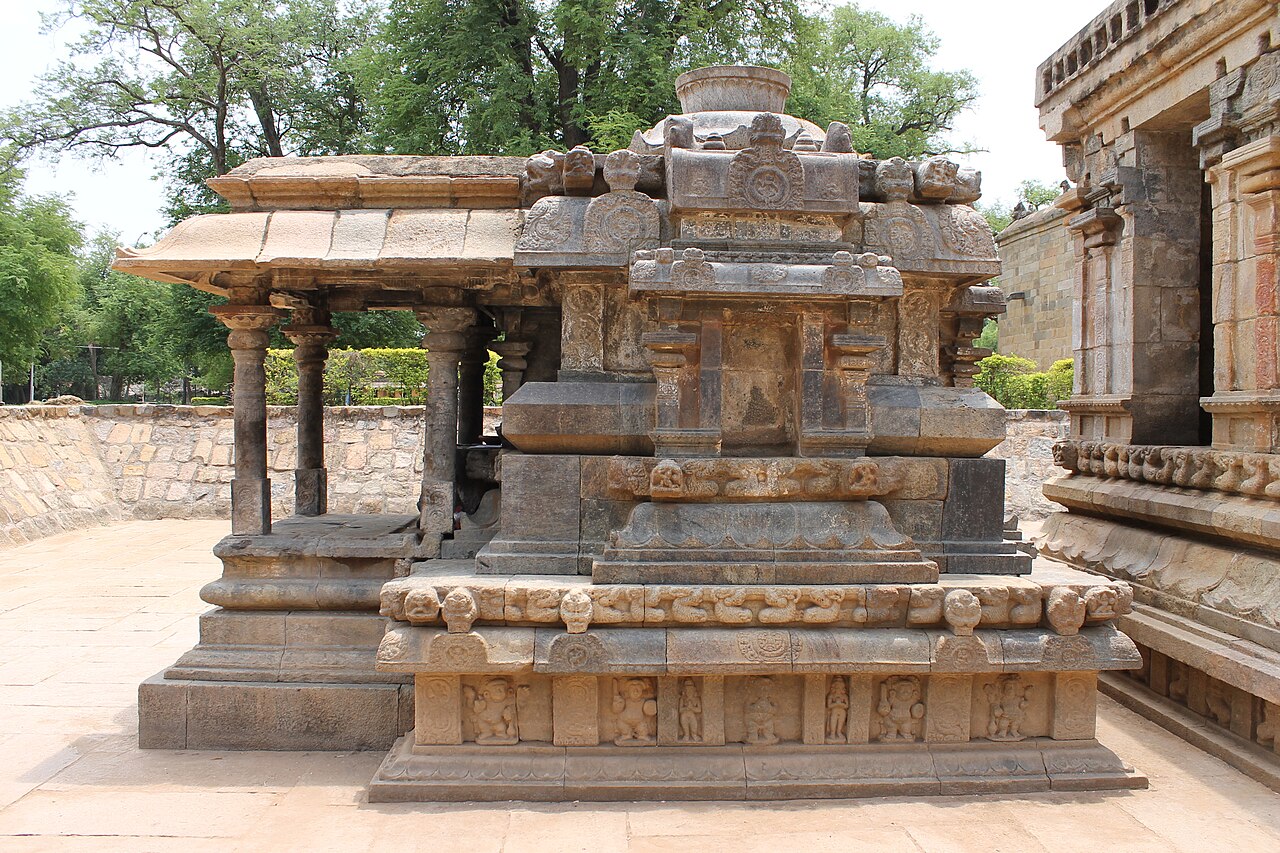
Airavatesvara Temple, Darasuram
Darasuram (Kumbakonam) · India · temple
The third of the Great Living Chola Temples, raised by Rajaraja Chola II around 1166 CE at Darasuram near Kumbakonam: a chariot-form shrine of Lord Shiva as Airavatesvara, famed for its carved stone wheels, its singing steps, and worship that has continued for over eight centuries.
Aisanyesvara Siva Temple
Bhubaneswar · India · temple
A living thirteenth-century Shiva shrine in the Old Town of Bhubaneswar, standing close to the western wall of the great Lingaraj Temple, where a Shivalinga set within a circular yonipitha still receives daily worship in the Kalinga architectural tradition.
 Hinduism
Akhadachandi Temple
Bhubaneswar · India · temple
A tenth-century Kalinga-style shrine on the southwestern bank of Bhubaneswar's sacred Bindusagar tank, Akhadachandi Temple honours Maa Mahishasuramardini, the Goddess in her form as slayer of the buffalo demon, within the dense cluster of ancient shrines that fills the city's Old Town.
 Hinduism
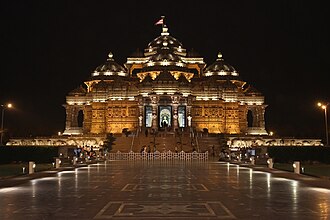
Akshardham
New Delhi · India · temple
A vast contemporary Hindu mandir campus on the Yamuna's west bank in East Delhi, raised without structural steel by 11,000 artisans and volunteers, and recognised by Guinness World Records in 2007 as the world's largest comprehensive Hindu Temple.
 Hinduism
Amarnath Temple
· India · temple
A high Himalayan cave shrine in Jammu and Kashmir where a naturally forming ice lingam is venerated as Lord Śiva, drawing one of India's great seasonal pilgrimages.
 Hinduism
Ambalappuzha Sri Krishna Temple
Ambalappuzha · India · temple
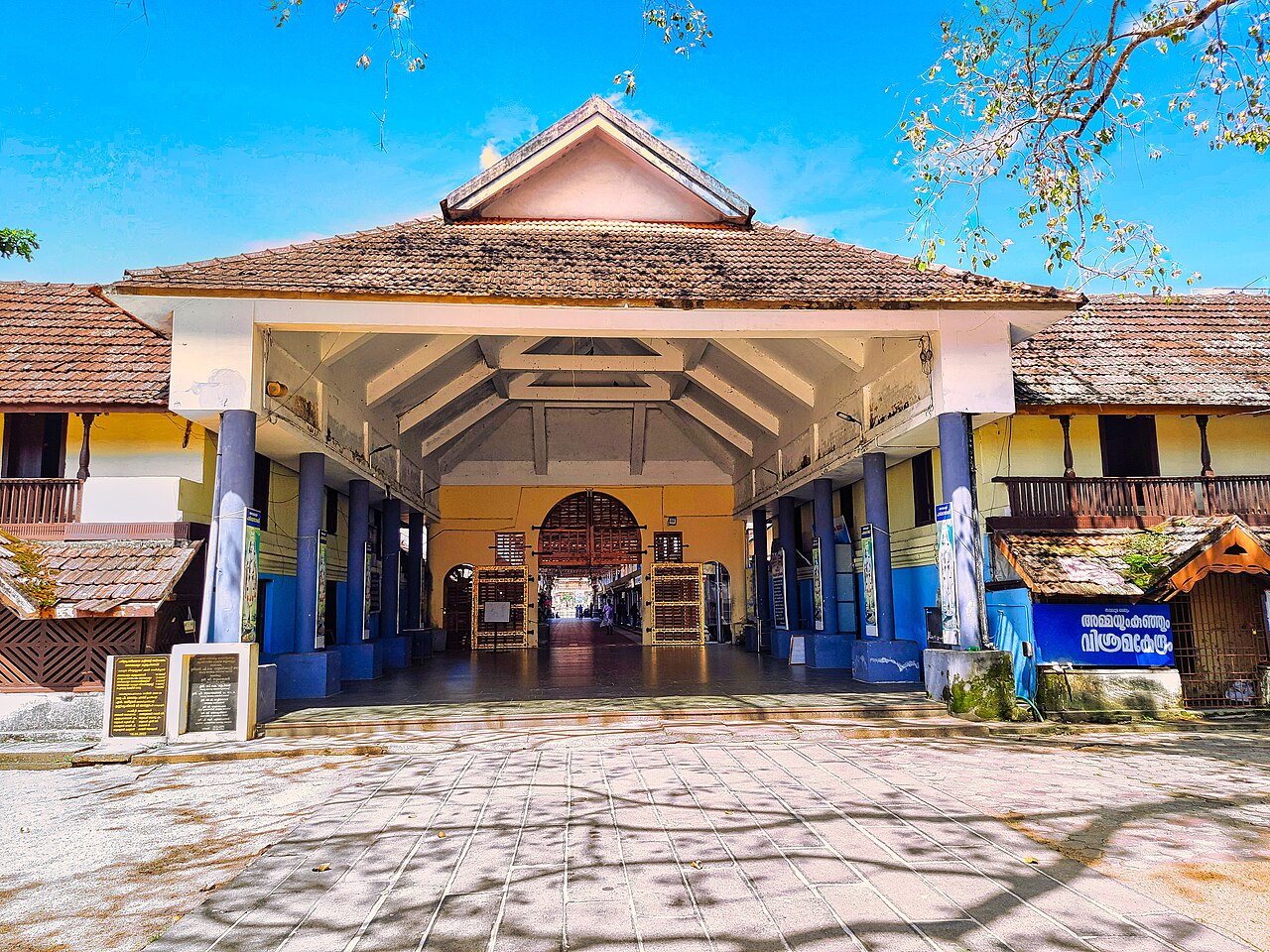
A Vaishnava shrine on the Kerala backwaters consecrated to Sri Krishna in his Parthasarathy form, counted among the seven great Temples of the former kingdom of Travancore and famed across South India for its Ambalapuzha Paal Payasam offering.