Prambanan Plain, Sleman · Special Region of Yogyakarta, Indonesia
Nine hundred and ninety-nine Temples rose before the false dawn; the thousandth still waits, and a goddess of stone stands in its place.
Be the first to check in
Coming up: Prambanan Shiva Festival (Mahashivaratri) · 6 MarEntry tended 24 May 2026
Grounds open 6:30 am to 5 pm 9th century · Sanjaya dynasty Shiva tower rises 47 metres Shiva Festival · 6 Mar 2027 Foreign entry Rp 400,000 (~$25)
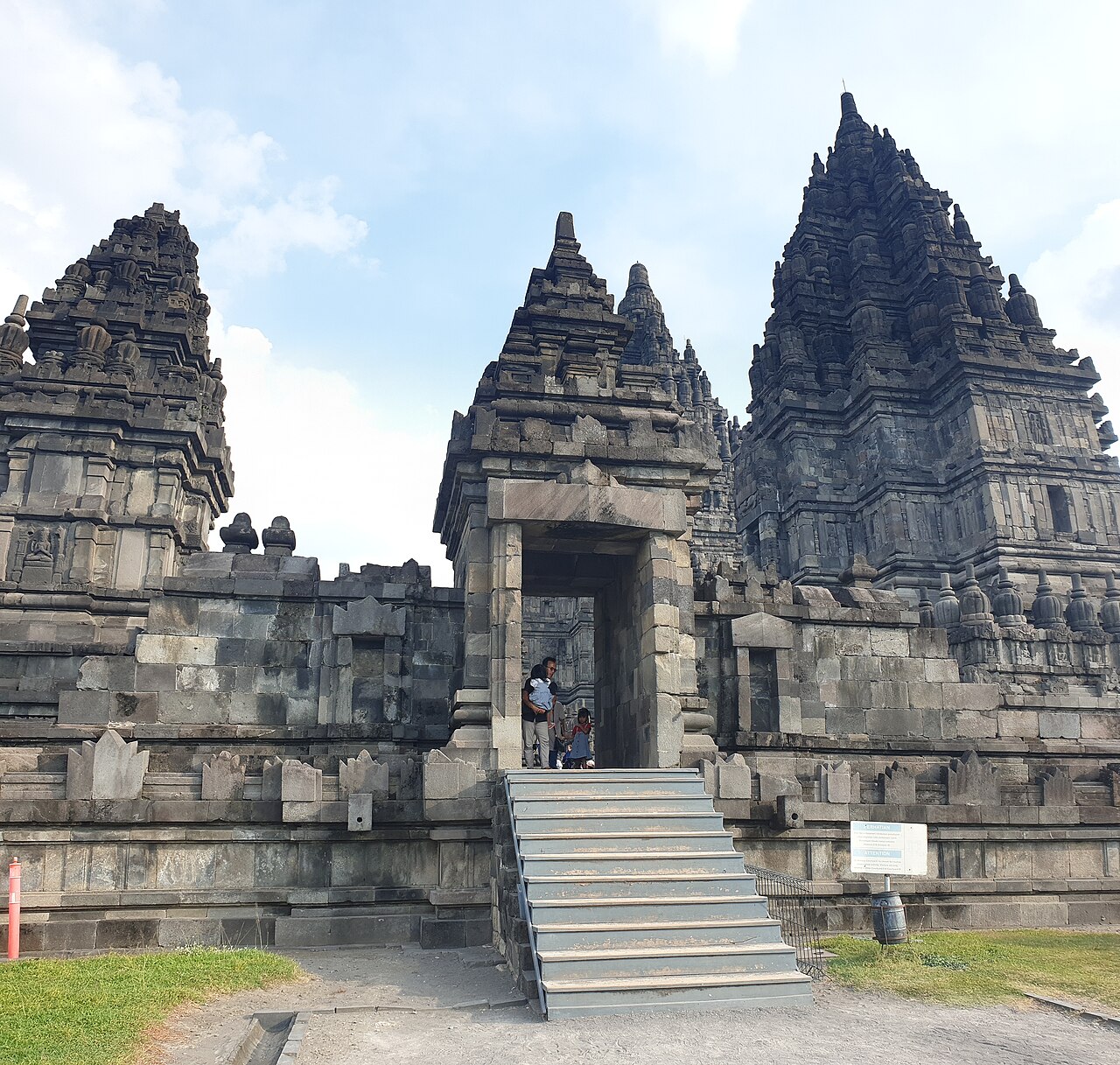
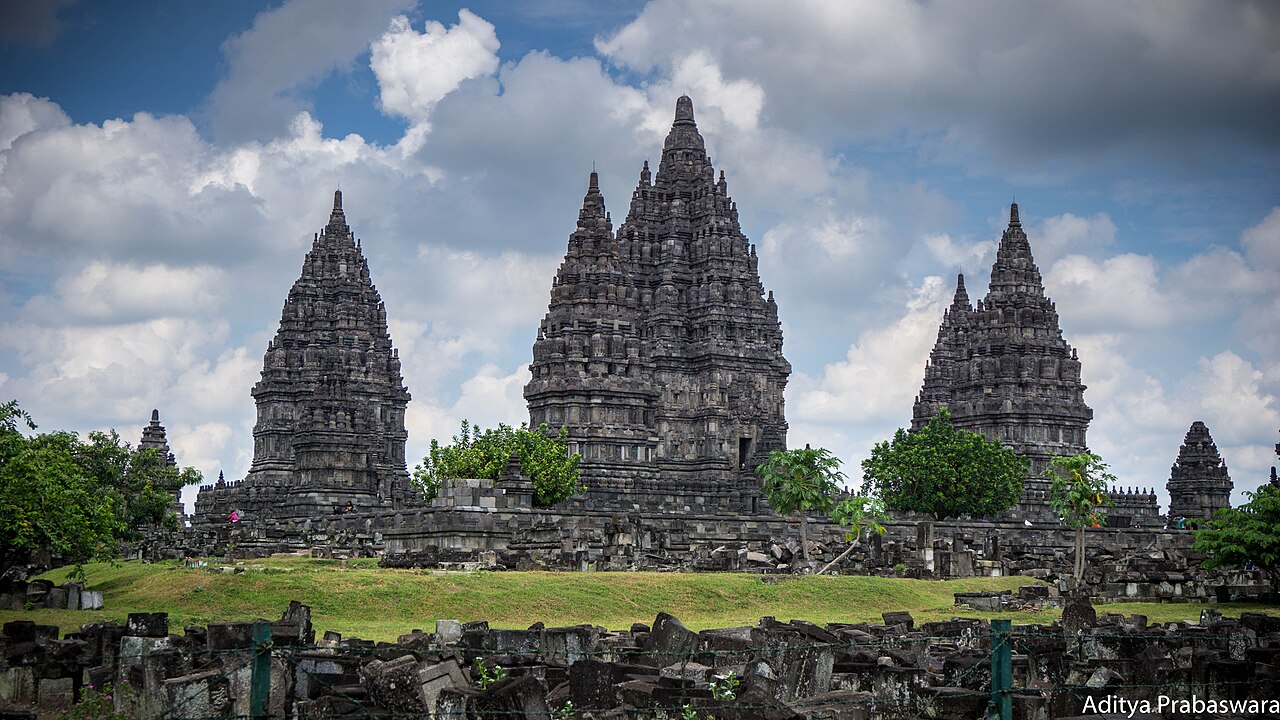
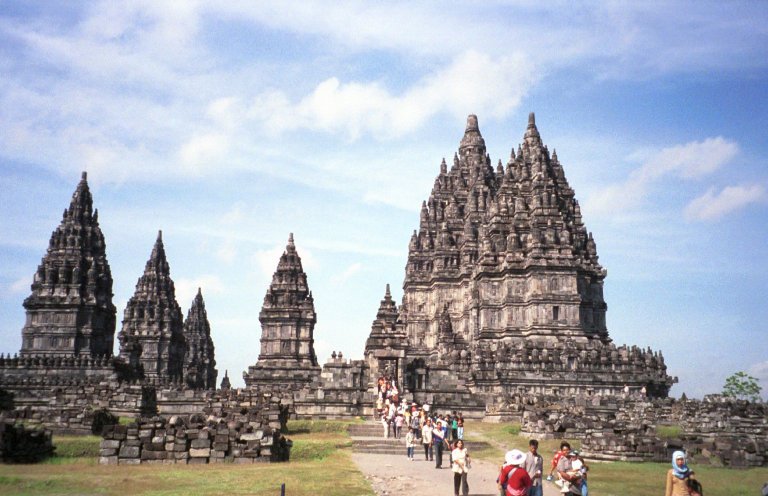
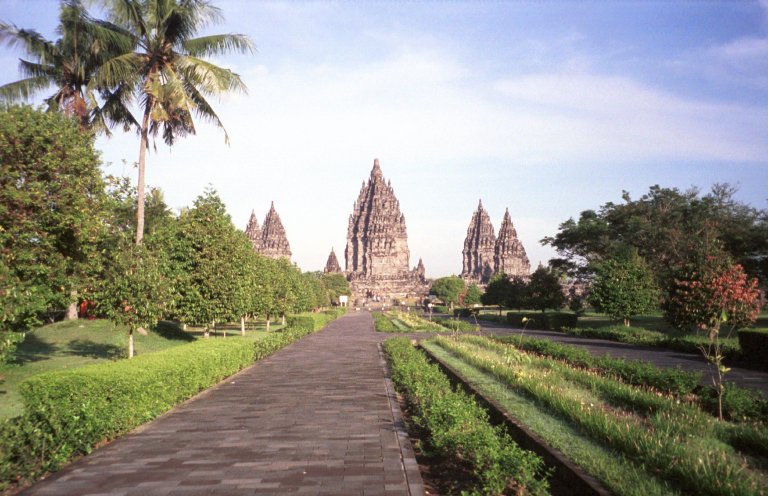
Three stone towers climb out of the Prambanan Plain long before you reach the gate, the tallest of them catching the morning sun forty-seven metres up. Egrets cross the grass between hundreds of smaller shrines, some rebuilt stone by stone, many still the rubble the restorers have not yet reached. Inside the central tower, down a dark stair, a three-metre Shiva waits behind a locked grille, one of four gods sharing the same sanctuary. This is a Temple built for three gods at once, and it very nearly wasn't finished.
Three towers for three gods at once: Lord Shiva's sanctuary climbs 47 metres at the centre, with Lord Brahma's shrine to the north and Lord Vishnu's to the south, together the largest Hindu Temple compound ever built in Indonesia.
Reliefs of the Ramayana run the full inner balustrade of the Shiva and Brahma Temples, continuing into scenes from the life of Krishna on the Vishnu Temple; read clockwise in pradakshina, it is one of the longest continuous narrative carvings in Hindu Temple art.
In the Shiva sanctuary's north chamber stands the goddess devotees know as Maa Durga, and in Java's own telling of the Rara Jonggrang legend, a princess who waited one Temple too long and was turned to stone.
A house for three gods, and a princess turned to stone
Sometime around 850 CE a Hindu king of the Sanjaya dynasty raised a sanctuary below Mount Merapi and called it Shivagrha, the House of Shiva. An inscription cut in 856 CE records the dedication in Old Javanese and Sanskrit. Building continued under later kings, layering the compound outward until 240 Temples stood inside its walls: three towers for the Trimurti at the centre, three shrines for their sacred mounts, and 224 modest perwara shrines ringing them in four rows.
Java tells a different story of how it came to be. The legend says a prince named Bandung Bondowoso, having conquered the neighbouring kingdom of Boko, asked its proud daughter Rara Jonggrang to marry him. To refuse without refusing outright, she set two impossible tasks: a well dug in one night, and a thousand Temples raised before dawn. Calling spirits from the earth, he nearly succeeded, nine hundred and ninety-nine towers standing by the darkest hour, so Rara Jonggrang and her maids lit fires and beat the rice pestles early, tricking the cocks into crowing. The spirits fled at the false dawn, the thousandth Temple stood unfinished, and the prince cursed the princess to stone. Tradition holds she stands there still, worshipped today as Maa Durga.
Within a hundred years the court moved east, perhaps driven out by an eruption of Merapi, and Prambanan slept in the jungle for eight centuries. European surveyors rediscovered it in the early 1800s, and reconstruction crept forward through the twentieth century: the Shiva Temple reopened in 1953 under President Sukarno, the Brahma and Vishnu towers by the early 1990s. A 2006 earthquake brought fresh damage and years of repair. In 2022 Hindu communities won back the right to worship here, and in July 2026 India's Archaeological Survey joined Indonesian conservators in a new restoration partnership.
What you'll actually see
1
The three towers and their mounts
Directly east of each principal shrine stands a smaller vahana Temple for its god's sacred mount: a couched Nandi bull before Lord Shiva, flanked inside by images of the sun and moon gods; a great eagle for Lord Vishnu's Garuda; a swan for Lord Brahma's Hamsa. Walk the plaza clockwise and you meet god and mount facing one another across the open ground, set exactly as the ninth-century masons placed them.
2
Into the dark, four chambers
Steep, narrow stairs climb into the Shiva tower's four cellas. Facing east, behind a locked grille, a three-metre Shiva Mahadeva stands at the Temple's heart. Around him wait smaller chambers: Ganesha to the west, the sage Agastya to the south, and, in the north, the goddess worshipped today as Maa Durga, catalogued by scholars as Durga Mahishasuramardini.
3
The Ramayana climbing the walls
The inner balustrade of the Shiva and Brahma Temples carries the story of the Ramayana in an unbroken run of relief panels. Step onto the terrace and turn right to follow them the way pilgrims have for over a thousand years, moving clockwise with the story always kept at your right hand.
A carved Ramayana relief panel on the inner balustrade of the Shiva Temple at PrambananThe goddess worshipped as Maa Durga, standing in the north chamber of the Shiva Temple at Prambanan
A Ramayana relief on the Shiva temple's balustrade, and Maa Durga in the north chamber · photos CC BY 2.0 Anandajoti Bhikkhu and CC BY-SA 4.0 Gunawan Kartapranata, Wikimedia Commons
Java's night for Lord Shiva
Prambanan Shiva Festival · Mahashivaratri
Each year, Hindu communities from as many as 36 Indonesian provinces converge on Prambanan for a festival built around Lord Shiva. A procession carries sacred water and fire from Kedulan Temple to Prambanan; through the night priests perform the Maha Gangga Tirta Gamana purification and recite Shiva mantras until dawn breaks over the towers, and the festival closes with 1,008 oil lamps lit together across the Wisnu Mandala courtyard. Prambanan times the climax to Mahashivaratri: in 2026 that fell on 15 February, and the same panchang calendar places the next Mahashivaratri on Saturday, 6 March 2027.
Attendance runs into the thousands; arrive early for a place near the lamp-lighting, and expect road closures around the Temple gates that evening.
Plan your visit
By air
Yogyakarta International Airport (YIA) is the main gateway, about 60 km / 75 min by car. Adisutjipto (JOG), now domestic-only, is much closer at about 10 km.
By rail
Brambanan railway station sits about 1.5 km from the compound, a short walk or becak ride from the gate.
By road
About 17 km northeast of Yogyakarta city on the Solo road. Grab/Gojek and Trans Jogja buses both run the route.
Timings
Daily 6:30 am to 5 pm, last entry 4:30 pm. The inner courtyard around the three main towers closes for routine maintenance every Monday.
Fees
Foreign visitors: Rp 400,000 (about USD 25) adult, Rp 250,000 child. Domestic: Rp 50,000 adult, Rp 25,000 child. A combined ticket with Ratu Boko Palace runs about Rp 675,000.
Dress
Modest dress, shoulders and knees covered. Unlike Bali's Temples, no sarong is required at the gate, though closed shoes help on the steep inner stairs.
The climb
The stairs into the inner chambers are steep and narrow with no handrail on one side. The outer plaza is flat and manageable by wheelchair with assistance; the towers themselves are not.
Ramayana Ballet
Tuesday, Thursday and Saturday evenings at 7:30 pm, outdoors at the Trimurti stage May to October and, when it rains, indoors at the covered theatre the rest of the year.
Prambanan's own name comes from the Shivagrha inscription of 856 CE, meaning House of Shiva; Java remembers the Temple through the Rara Jonggrang legend, but the sanctuary itself predates that story by centuries.
Of the 224 small perwara shrines that once ringed the three towers, only a handful stand rebuilt; restoring the rest, stone by stone, is expected to take generations.
Closed to ritual worship for decades, Prambanan reopened to Hindu and Buddhist religious use under a 2022 government agreement, and in July 2026 India's Archaeological Survey joined Indonesian conservators in a new restoration partnership.
Lockers near the main gate fill quickly on coach-tour mornings, so carry only what you need past the ticket barrier.
Questions pilgrims ask
Is there an idol to see inside?
Yes. The Shiva tower holds four statues: a three-metre Shiva Mahadeva facing east, and in the smaller chambers around him, Ganesha, the sage Agastya, and the goddess worshipped as Maa Durga in the north chamber.
Is Prambanan still a living place of Hindu worship?
Yes. A 2022 government agreement restored Hindu and Buddhist ritual use of the Temple, and personal prayer and offerings are part of an ordinary visit today. The Prambanan Shiva Festival and the Tawur Agung Kesanga ceremony before Nyepi both draw thousands of devotees each year.
Do I need a sarong, like at Bali's Temples?
No. Prambanan asks for modest dress, shoulders and knees covered, but does not require the sarong customary at Balinese Temples.
What is the Rara Jonggrang legend, and is it true?
It is a Javanese folk tale, likely centuries younger than the Temple itself, that explains the north chamber's statue as a cursed princess. Scholars identify the same statue as Durga Mahishasuramardini, and devotees today know her as Maa Durga; the legend and the goddess are honoured together, not one in place of the other.
Can I still climb into the Temples?
Yes, on most days. The inner courtyard around the three main towers closes every Monday for maintenance, and the stairs inside each tower are steep, narrow and unsuited to limited mobility.
Dharamshalas and guest houses near this Sthan, shared by devotees. Adisthan takes no bookings and no money; contact each stay directly.
No stays are listed here yet. Know one that serves pilgrims well?
Are you with PT Taman Wisata Candi, the Prambanan Hindu community, or the conservation teams keeping these towers standing? Claim this page to keep its hours, festival dates, and restoration news true for every devotee.