
Pura Goa Lawah
Goa Lawah Temple · Bat Cave Temple
About
Pura Goa Lawah stands in the coastal village of Pesinggahan in Klungkung Regency, its compound spreading northward from Jalan Raya Goa Lawah toward the Goa Lawah shoreline. The name translates roughly as Bat Cave Temple, and true to that epithet, the innermost sanctum draws its identity from a yawning cavern whose depths are alive with colonies of nectar bats, creatures whose ceaseless rustling forms an unbroken sacred murmur beneath the prayers of worshippers.
The compound is ordered in the classic Balinese threefold arrangement: an outer forecourt (jaba pisan, or nistaning mandala), a middle precinct (jaba tengah, or madya mandala), and the innermost enclosure (jero, or utamaning mandala). Entry to the complex is announced by a candi bentar split gate, with a bale kulkul drum pavilion standing to its west. Several open pavilions occupy the outer courtyard, including the bale gong where the gamelan ensemble is kept ready for ceremonial performance. Three paduraksa portals frame the passage into the inner sanctum, where a trio of meru towers rises, one consecrated to Shiva, and smaller shrines recede into the cave opening. The steps of one bale pavilion are flanked by carvings of Naga Basuki, the primordial serpent-dragon revered in Balinese cosmology as the keeper of cosmic equilibrium.
Early in the twentieth century it was common to embed porcelain ceramic plates into the gates and shrines of Pura Goa Lawah, a decorative tradition shared with other venerable Balinese Temples such as Pura Kehen. Over time this ornamental layer has been gradually reduced, though traces of the practice can still be encountered across the complex.
History
Tradition credits the founding of Pura Goa Lawah to Mpu Kuturan, the eleventh century priest who travelled through Bali establishing and ordering Hindu worship across the island, and holds that the cave itself first drew priests here as a seat of meditation before any Temple stood. In 1849 the compound found itself at the centre of the War of Kusamba, when Dutch colonial forces under Andreas Victor Michiels fought the army of the Klungkung kingdom, led by Dewa Agung Istri Kanya, near its walls.
Significance
The gods and Sanghyang Naga Basuki, the serpent-dragon said to hold the cosmos in balance, are held by Balinese belief to dwell within the cave itself, so that the bats stirring in its dark are not incidental to the pura's sanctity but part of it. As one of the Sad Kahyangan Jagad, the six holiest sanctuaries of Bali, Goa Lawah is understood to be one of the pivot points that keeps the island in spiritual equilibrium, and pilgrims from across Bali still gather here at every piodalan to renew that balance.
Architecture
Balinese Hindu Temple architecture in three courts, with a candi bentar split gate and meru towers built directly against a natural cave mouth
Visiting
Hours
Hours not listed.
Contact
No contact details listed yet.
Engage with Pura Goa Lawah
Through the four pathways
Seva सेवा — Service
Offer your time and skills here. The following opportunities are open at Pura Goa Lawah:
No Seva offerings listed yet.
Sādhana साधना — Practice
Learn the worship and practice associated with Pura Goa Lawah:
No Sādhana offerings listed yet.
Sandhāna सन्धान — Wisdom
Unite with the wisdom of this tradition:
No Sandhāna offerings listed yet.
Sādhya साध्य — Giving
Support this sacred place according to your means:
No Sādhya offerings listed yet.
All giving flows directly to Pura Goa Lawah. Adisthan does not take a commission.
Festivals & Events
- Jan
Galungan
13 January 2027 · annual
The day the Balinese believe Sang Hyang Widhi and the ancestors return to earth, marked at Pura Goa Lawah, as at every pura on the island, with offerings, penjor bamboo poles lining the roads, and family visits to the ancestral and village Temples.
- Jan
Kuningan
23 January 2027 · annual
The closing day of the Galungan season, ten days later, when the Balinese send the visiting gods and ancestors back to their heavenly abode with a final round of offerings, observed here in the rhythm shared by every pura in Bali.
Gallery
Related sacred places
 Hinduism
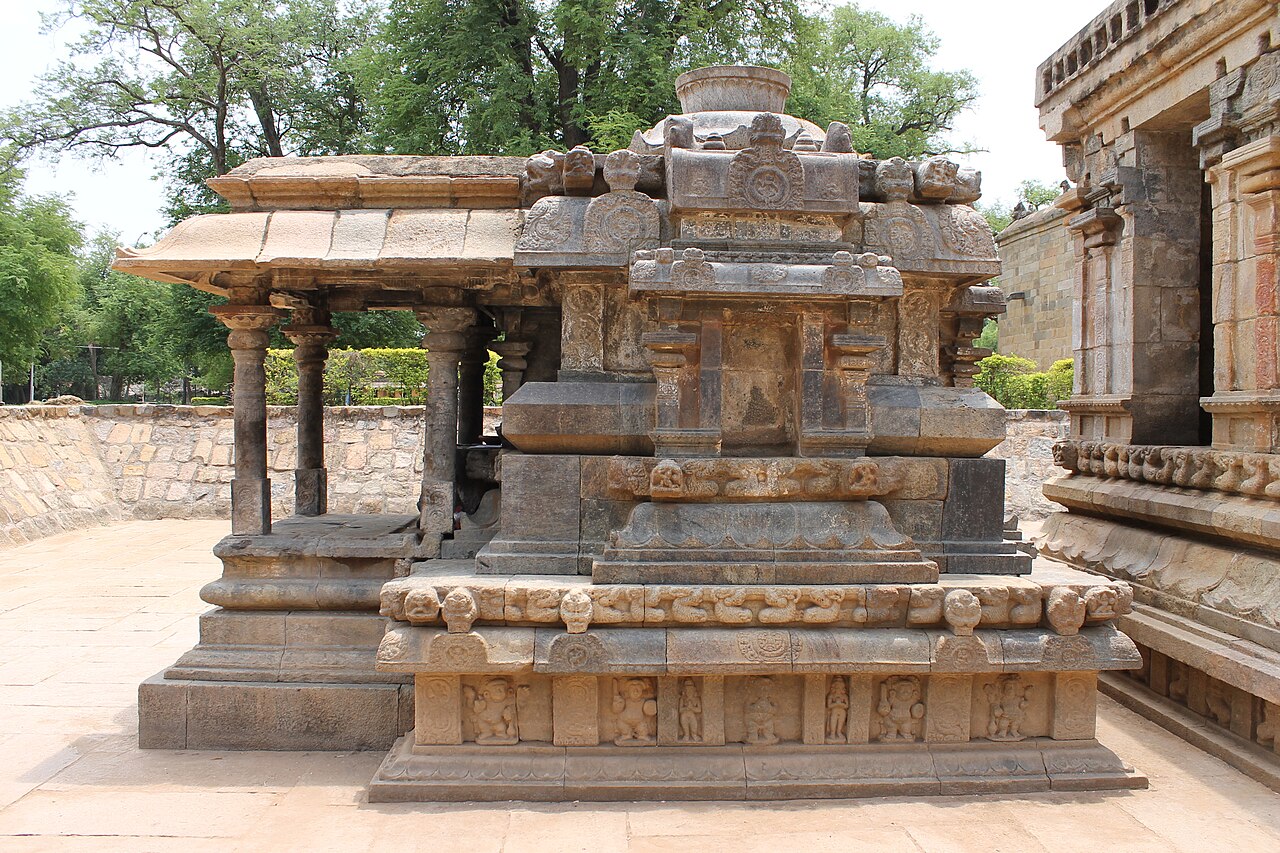
Airavatesvara Temple, Darasuram
Darasuram (Kumbakonam) · India · temple
The third of the Great Living Chola Temples, raised by Rajaraja Chola II around 1166 CE at Darasuram near Kumbakonam: a chariot-form shrine of Lord Shiva as Airavatesvara, famed for its carved stone wheels, its singing steps, and worship that has continued for over eight centuries.
Aisanyesvara Siva Temple
Bhubaneswar · India · temple
A living thirteenth-century Shiva shrine in the Old Town of Bhubaneswar, standing close to the western wall of the great Lingaraj Temple, where a Shivalinga set within a circular yonipitha still receives daily worship in the Kalinga architectural tradition.
 Hinduism
Akhadachandi Temple
Bhubaneswar · India · temple
A tenth-century Kalinga-style shrine on the southwestern bank of Bhubaneswar's sacred Bindusagar tank, Akhadachandi Temple honours Maa Mahishasuramardini, the Goddess in her form as slayer of the buffalo demon, within the dense cluster of ancient shrines that fills the city's Old Town.
 Hinduism
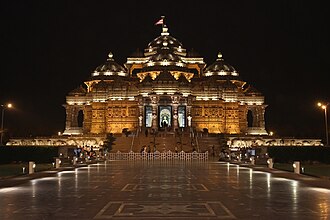
Akshardham
New Delhi · India · temple
A vast contemporary Hindu mandir campus on the Yamuna's west bank in East Delhi, raised without structural steel by 11,000 artisans and volunteers, and recognised by Guinness World Records in 2007 as the world's largest comprehensive Hindu Temple.
 Hinduism
Amarnath Temple
· India · temple
A high Himalayan cave shrine in Jammu and Kashmir where a naturally forming ice lingam is venerated as Lord Śiva, drawing one of India's great seasonal pilgrimages.
 Hinduism
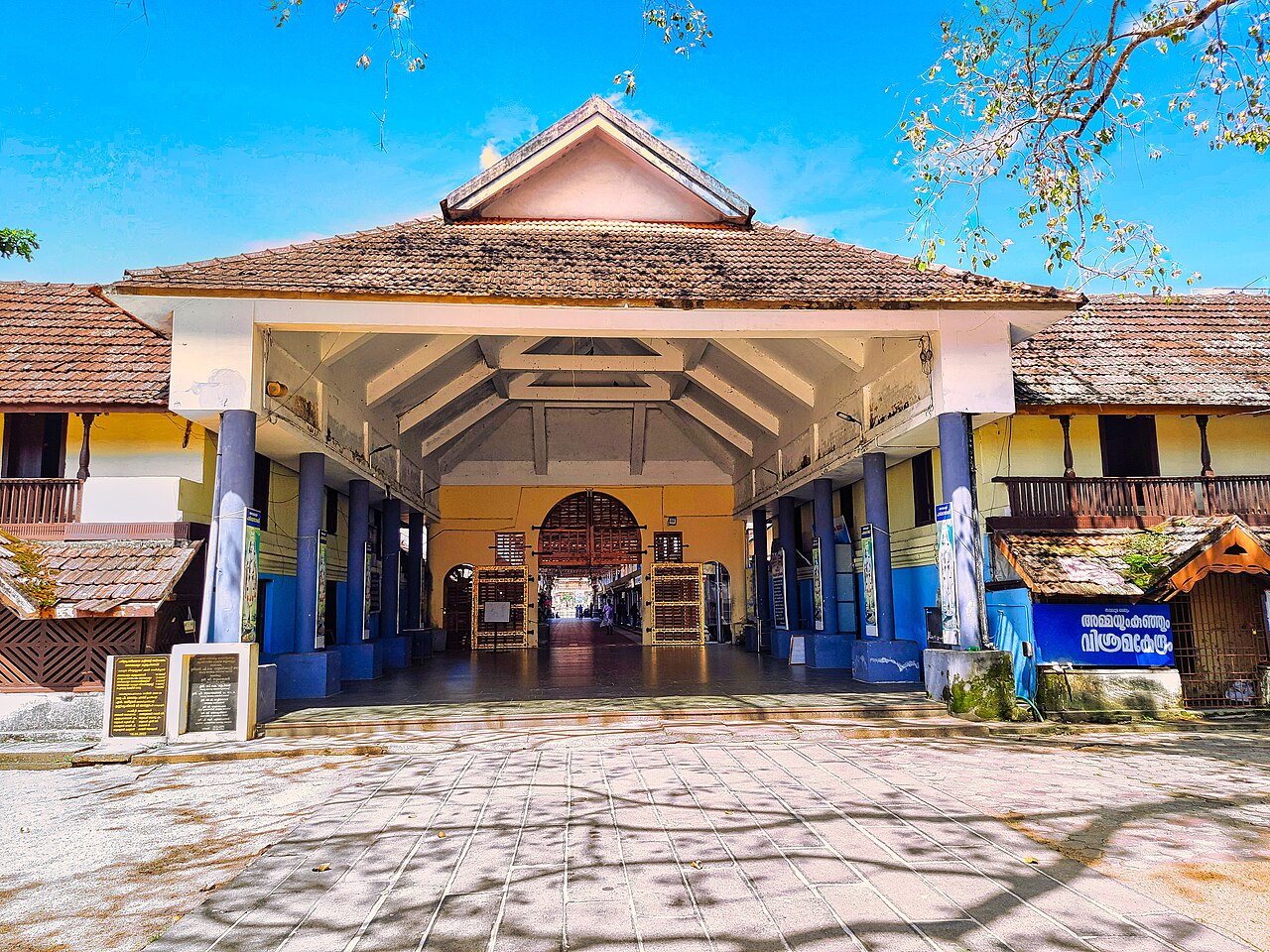
Ambalappuzha Sri Krishna Temple
Ambalappuzha · India · temple
A Vaishnava shrine on the Kerala backwaters consecrated to Sri Krishna in his Parthasarathy form, counted among the seven great Temples of the former kingdom of Travancore and famed across South India for its Ambalapuzha Paal Payasam offering.