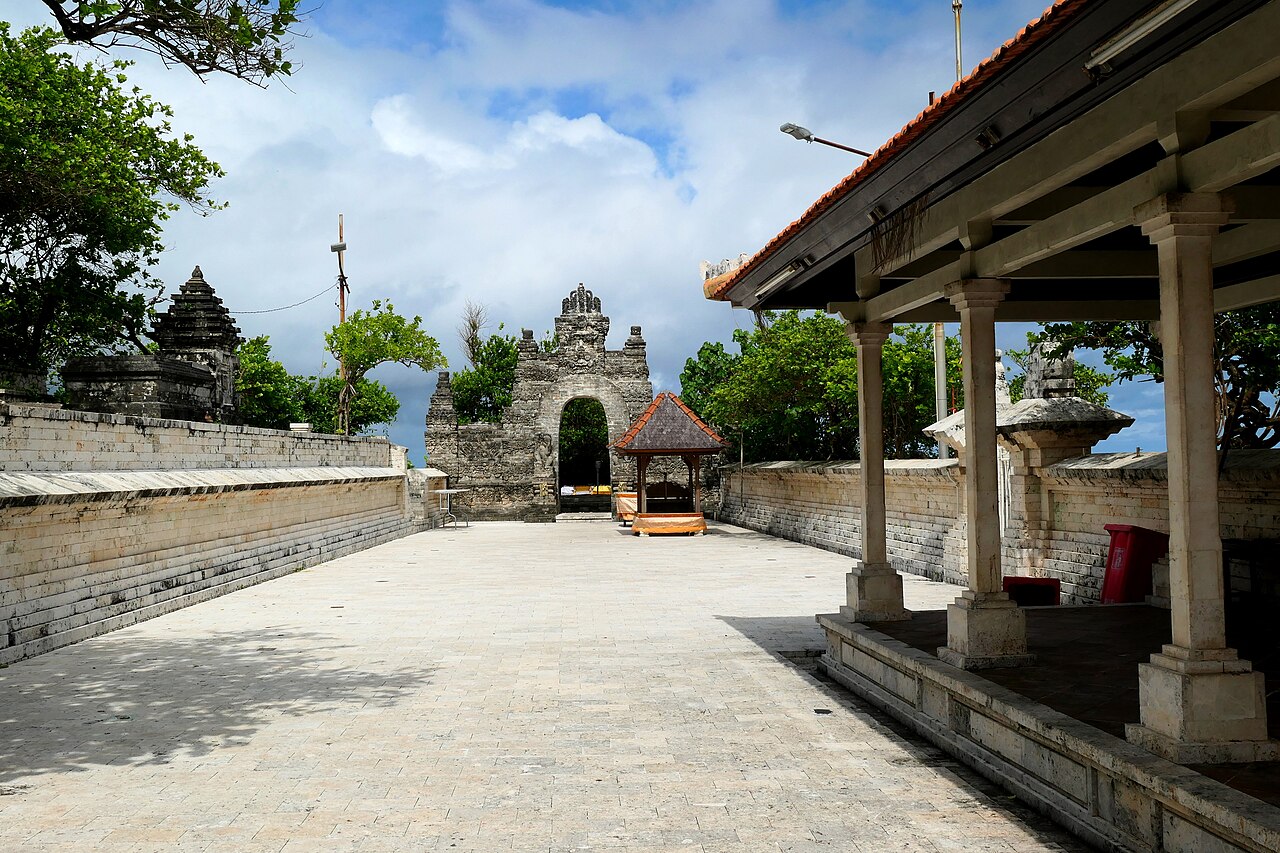
Pura Luhur Uluwatu
Uluwatu Temple · Pura Luhur
About
Pura Luhur Uluwatu rises on a high cliff at the south-western tip of the Bukit Peninsula in Bali, looking out across the open Indian Ocean. Founded in the long tradition of Balinese Hindu shrines that guard the perimeter of the island, the Temple sits where land meets sea and where the spiritual geography of Bali finds one of its most dramatic settings.
The Temple holds a particular place among the sacred sites of Bali as the only sea Temple, the pura segara, that is also counted among the nine kayangan jagat, the directional Temples that orient and protect the island. From its position above the surf the precinct is held to safeguard Bali from the south-western quarter, the direction of the sea and of the unseen powers that move with the tides.
Generations of Balinese Hindus have made pilgrimage here for ceremonies and for evening worship in the cool air above the waves. The cliffside complex of meru shrines, gateways, and stone walls continues to gather the devotion of the community at festival times and serves as a daily place of offering and prayer.
History
The earliest fragments on this cliff are thought to reach back to the tenth century, and Balinese tradition credits the Temple's formal founding to Mpu Kuturan in the eleventh, the same priest credited with much of Bali's early Temple order. At the turn of the sixteenth century the East Javanese sage Dang Hyang Nirartha arrived on a dharmayatra spreading Shaivite worship across Bali, and is said to have built the padmasana shrines that still stand here and to have attained moksha, liberation from the body, at this very point, an event Balinese tradition calls ngeluhur, to go up.
Significance
Pura Luhur Uluwatu is the only sea Temple, pura segara, among the nine kayangan jagat that Balinese cosmology sets to guard the island's directions, watching here over the southwest, the quarter of the sea and its unseen powers. Grey long-tailed macaques share the cliffside with the shrines, and at dusk the Temple's outer wall becomes the stage for kecak, the fire and chant dance performed against the sunset that has carried Uluwatu's name far beyond Bali.
Architecture
Balinese sea-temple architecture in grey coral limestone, terraced along a cliff edge
Visiting
Hours
Hours not listed.
Contact
No contact details listed yet.
Engage with Pura Luhur Uluwatu
Through the four pathways
Seva सेवा — Service
Offer your time and skills here. The following opportunities are open at Pura Luhur Uluwatu:
No Seva offerings listed yet.
Sādhana साधना — Practice
Learn the worship and practice associated with Pura Luhur Uluwatu:
No Sādhana offerings listed yet.
Sandhāna सन्धान — Wisdom
Unite with the wisdom of this tradition:
No Sandhāna offerings listed yet.
Sādhya साध्य — Giving
Support this sacred place according to your means:
No Sādhya offerings listed yet.
All giving flows directly to Pura Luhur Uluwatu. Adisthan does not take a commission.
Festivals & Events
- Jan
Galungan
13 January 2027 · annual
The day Balinese Hindus believe Sang Hyang Widhi and the ancestors descend to earth, observed at Pura Luhur Uluwatu, as at every pura on the island, with penjor raised along the roads and families carrying offerings to the Temples of their own villages.
- Jan
Kuningan
23 January 2027 · annual
Ten days after Galungan, the day the visiting gods and ancestors are sent back to the heavens with a closing round of offerings, kept at Uluwatu in the same rhythm as every pura across Bali.
Gallery
Related sacred places
 Hinduism
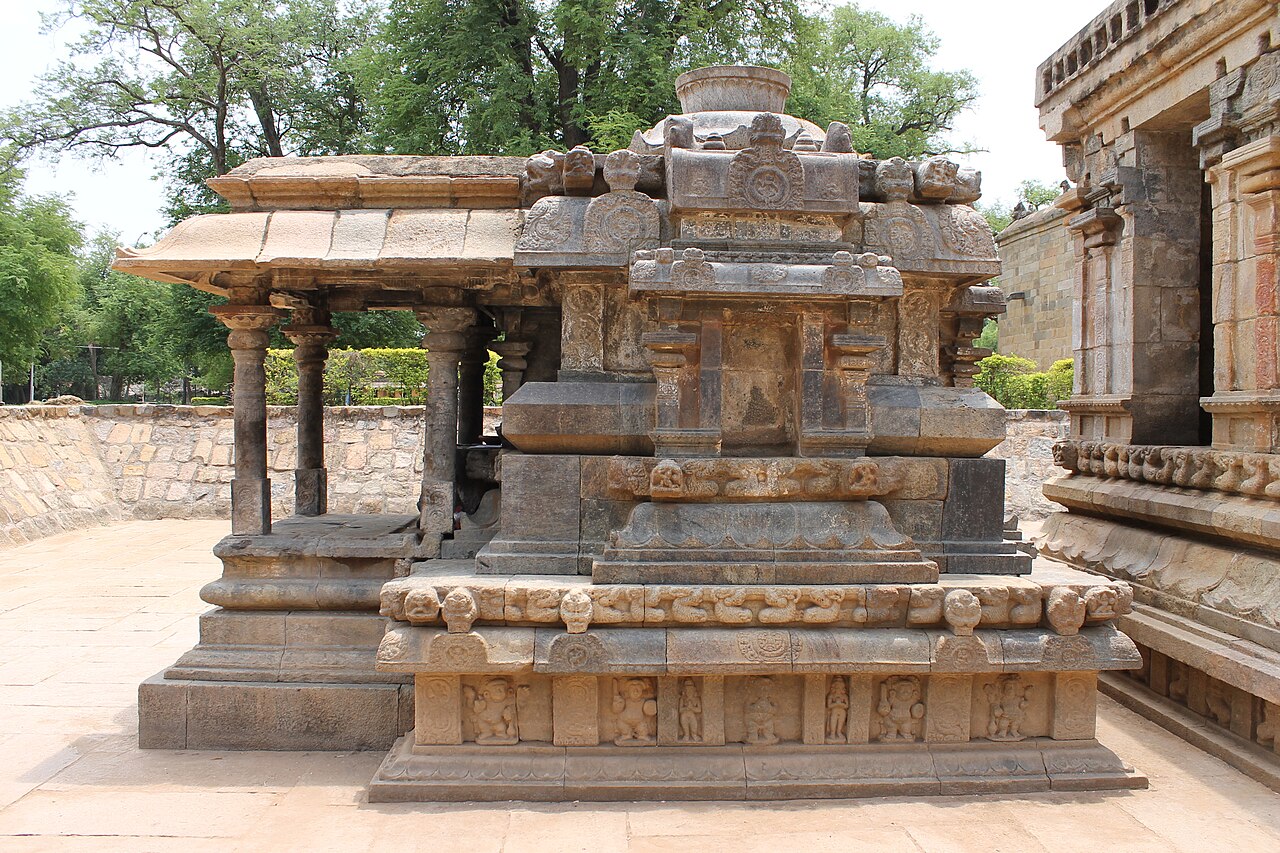
Airavatesvara Temple, Darasuram
Darasuram (Kumbakonam) · India · temple
The third of the Great Living Chola Temples, raised by Rajaraja Chola II around 1166 CE at Darasuram near Kumbakonam: a chariot-form shrine of Lord Shiva as Airavatesvara, famed for its carved stone wheels, its singing steps, and worship that has continued for over eight centuries.
Aisanyesvara Siva Temple
Bhubaneswar · India · temple
A living thirteenth-century Shiva shrine in the Old Town of Bhubaneswar, standing close to the western wall of the great Lingaraj Temple, where a Shivalinga set within a circular yonipitha still receives daily worship in the Kalinga architectural tradition.
 Hinduism
Akhadachandi Temple
Bhubaneswar · India · temple
A tenth-century Kalinga-style shrine on the southwestern bank of Bhubaneswar's sacred Bindusagar tank, Akhadachandi Temple honours Maa Mahishasuramardini, the Goddess in her form as slayer of the buffalo demon, within the dense cluster of ancient shrines that fills the city's Old Town.
 Hinduism
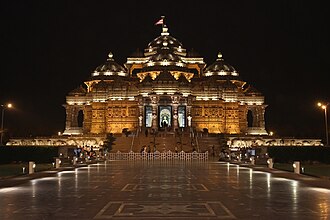
Akshardham
New Delhi · India · temple
A vast contemporary Hindu mandir campus on the Yamuna's west bank in East Delhi, raised without structural steel by 11,000 artisans and volunteers, and recognised by Guinness World Records in 2007 as the world's largest comprehensive Hindu Temple.
 Hinduism
Amarnath Temple
· India · temple
A high Himalayan cave shrine in Jammu and Kashmir where a naturally forming ice lingam is venerated as Lord Śiva, drawing one of India's great seasonal pilgrimages.
 Hinduism
Ambalappuzha Sri Krishna Temple
Ambalappuzha · India · temple
A Vaishnava shrine on the Kerala backwaters consecrated to Sri Krishna in his Parthasarathy form, counted among the seven great Temples of the former kingdom of Travancore and famed across South India for its Ambalapuzha Paal Payasam offering.