Pura Taman Ayun
Taman Ayun Temple
About
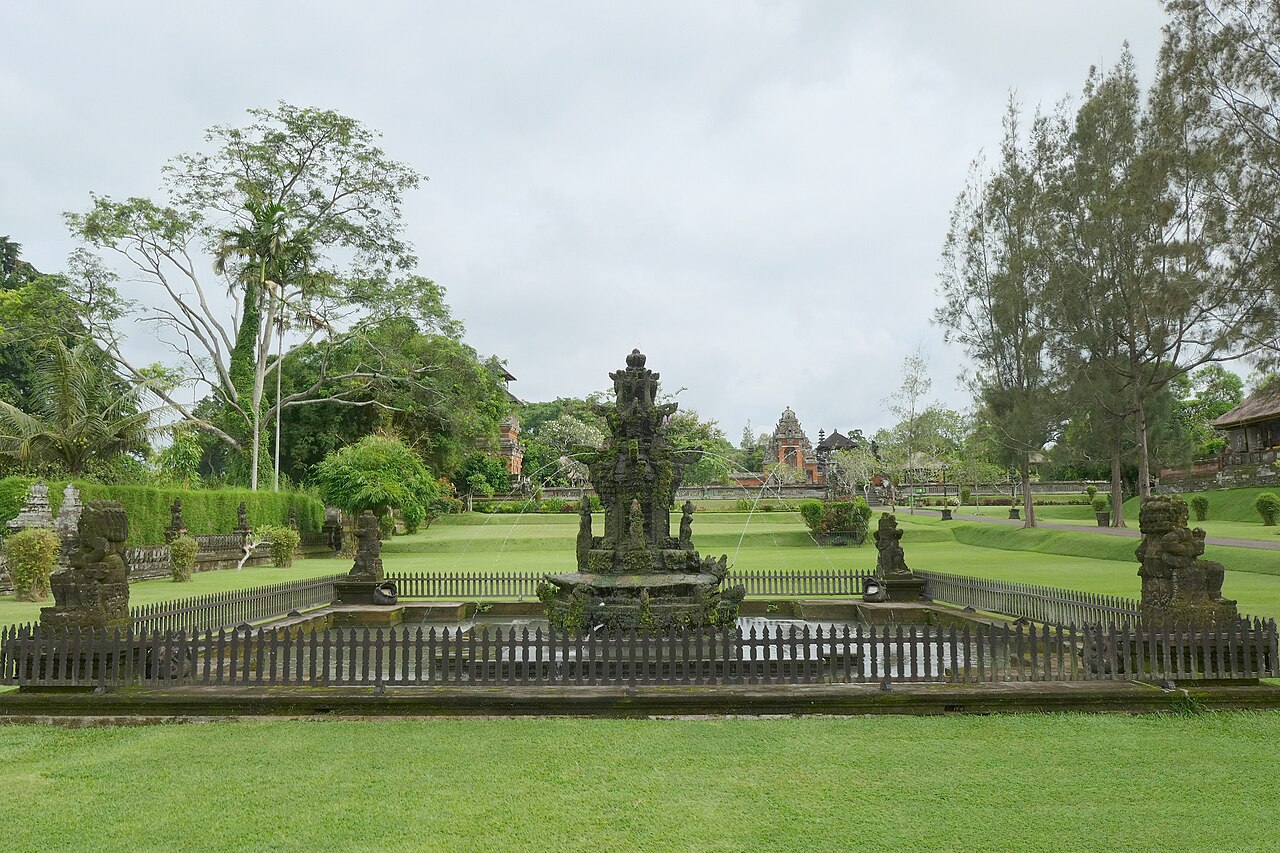
Named Taman Ayun, Balinese for "beautiful garden", this sacred compound stands at the centre of Mengwi town, roughly nineteen kilometres north of Denpasar. Bali's second-largest Hindu Temple, its grounds extend across 6.9 hectares of north-south-oriented land, with water bodies wrapping three sides, west, south, and east, while a bridge on the southern boundary offers the sole point of entry.
Moving inward, the compound reveals three nested sacred courts, a layout traditional to Balinese Temple architecture. The outermost enclosure, jabaan or Nista Mandala, gives way to the middle yard known as jaba tengah (Madia Mandala), and beyond that rises the innermost precinct, jeroan or Utama Mandala, reserved exclusively for worshippers. Candi bentar, the paired split-gate characteristic of Balinese sacred design, mark each boundary between courts. Inside the innermost enclosure, shrines climb to varying heights: the tallest reach eleven tiers, the shortest only two, together honoring Hindu deities alongside the ancestral founders of the Mengwi royal line.
Water shapes this place as much as stone does. Beyond the great outer moat, a smaller channel encircles the inner court, and ponds, basins, and fountains add further movement and reflection throughout the gardens. This union of sacred architecture with flowing water is no mere aesthetic choice, it reflects the Balinese conviction that the divine, humanity, and the natural world are inseparable, the principle known as Tri Hita Karana.
History
Cokorda Sakti Blambangan, known also as I Gusti Agung Putu, king of Mengwi, founded Taman Ayun in 1634 as a pura kawitan, a family Temple to honour his royal ancestors. The compound has been rebuilt more than once since: the historian Henk Schulte Nordholt records a major renovation in 1750 under an architect named Hobin Ho, and the Temple took its present form after a further restoration in 1937.
Significance
Water is not ornament here but structure: a broad moat wraps three sides of the Temple and a second, narrower channel rings the inner court, feeding ponds and fountains that Balinese belief holds inseparable from the shrines themselves, an expression of Tri Hita Karana, the harmony of the divine, the human, and the natural world. In July 2012 UNESCO inscribed Taman Ayun as one of five sites making up the Cultural Landscape of Bali Province, recognising the Temple's waters as living infrastructure that still feeds three subak irrigation collectives in Badung Regency today.
Architecture
Balinese royal water-temple and garden architecture: a moated compound in three courts behind candi bentar split gates, with meru shrines rising up to eleven tiers
Visiting
Hours
Hours not listed.
Contact
No contact details listed yet.
Engage with Pura Taman Ayun
Through the four pathways
Seva सेवा — Service
Offer your time and skills here. The following opportunities are open at Pura Taman Ayun:
No Seva offerings listed yet.
Sādhana साधना — Practice
Learn the worship and practice associated with Pura Taman Ayun:
No Sādhana offerings listed yet.
Sandhāna सन्धान — Wisdom
Unite with the wisdom of this tradition:
No Sandhāna offerings listed yet.
Sādhya साध्य — Giving
Support this sacred place according to your means:
No Sādhya offerings listed yet.
All giving flows directly to Pura Taman Ayun. Adisthan does not take a commission.
Festivals & Events
- Jan
Galungan
13 January 2027 · annual
The day the Balinese hold that Sang Hyang Widhi and the ancestors return to earth, observed at Taman Ayun, as at every pura on the island, with penjor bamboo poles raised along the roads and offerings carried to the Temples.
- Jan
Kuningan
23 January 2027 · annual
The closing day of the Galungan season, when the returning gods and ancestors are sent back to the heavens, marked here in the same rhythm kept at every pura in Bali.
Gallery
Related sacred places
 Hinduism
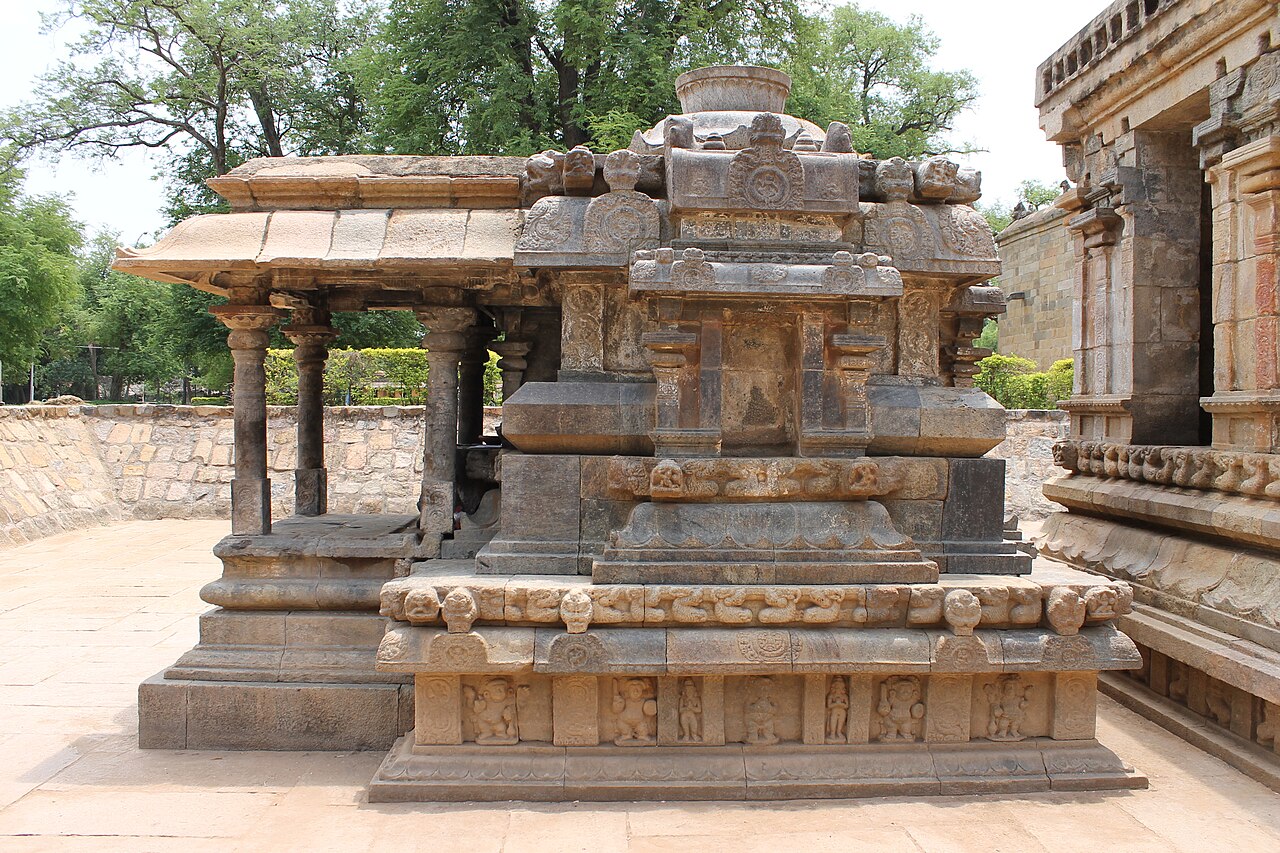
Airavatesvara Temple, Darasuram
Darasuram (Kumbakonam) · India · temple
The third of the Great Living Chola Temples, raised by Rajaraja Chola II around 1166 CE at Darasuram near Kumbakonam: a chariot-form shrine of Lord Shiva as Airavatesvara, famed for its carved stone wheels, its singing steps, and worship that has continued for over eight centuries.
Aisanyesvara Siva Temple
Bhubaneswar · India · temple
A living thirteenth-century Shiva shrine in the Old Town of Bhubaneswar, standing close to the western wall of the great Lingaraj Temple, where a Shivalinga set within a circular yonipitha still receives daily worship in the Kalinga architectural tradition.
 Hinduism
Akhadachandi Temple
Bhubaneswar · India · temple
A tenth-century Kalinga-style shrine on the southwestern bank of Bhubaneswar's sacred Bindusagar tank, Akhadachandi Temple honours Maa Mahishasuramardini, the Goddess in her form as slayer of the buffalo demon, within the dense cluster of ancient shrines that fills the city's Old Town.
 Hinduism
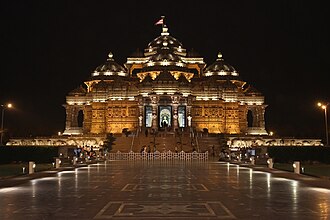
Akshardham
New Delhi · India · temple
A vast contemporary Hindu mandir campus on the Yamuna's west bank in East Delhi, raised without structural steel by 11,000 artisans and volunteers, and recognised by Guinness World Records in 2007 as the world's largest comprehensive Hindu Temple.
 Hinduism
Amarnath Temple
· India · temple
A high Himalayan cave shrine in Jammu and Kashmir where a naturally forming ice lingam is venerated as Lord Śiva, drawing one of India's great seasonal pilgrimages.
 Hinduism
Ambalappuzha Sri Krishna Temple
Ambalappuzha · India · temple
A Vaishnava shrine on the Kerala backwaters consecrated to Sri Krishna in his Parthasarathy form, counted among the seven great Temples of the former kingdom of Travancore and famed across South India for its Ambalapuzha Paal Payasam offering.