
Rudra Mahalaya Temple
Rudramal · Rudra Mala
About
Siddhpur in northern Gujarat holds the remnants of what was once among the most ambitious sacred complexes of medieval western India. The Rudra Mahalaya, reverently called Rudramal, was a Śaiva monument of considerable scale, raised under the patronage of the Chaulukya kings across nearly two hundred years. Mularaja, the dynasty's founder, is associated with its origins in 943 CE; it was brought to consecration in 1140 CE by Jayasimha Siddharaja, whose reign marked one of the high points of Chaulukya cultural achievement.
What greets the pilgrim today are fragments that nonetheless speak with architectural force: a pair of ceremonial torans, the ornamental gateways so characteristic of Gujarati sacred building, and four pillars belonging to what was once the central sanctum. These survivors, together with the complex's western section, which now serves as a congregational mosque, embody the Māru-Gurjara aesthetic: that eloquent northern Indian idiom in which sculpted stone rises in intricate vertical rhythms, holding the energy of devotion in every carved surface.
The site invites a contemplative encounter with layered time. It is a place where centuries of transformation, construction, consecration, destruction, repurposing, have not extinguished the devotional atmosphere that first animated its stones. The surviving remnants are protected as Monuments of National Importance.
History
An inscription of 986-987 CE records Mularaja, founder of the Chaulukya dynasty, coming to Siddhpur to worship at the Rudra Mahalaya, and colonial-era accounts hold that he raised a shrine here in atonement, though a sacred structure may already have stood on the spot. Jayasimha Siddharaja, one of the dynasty's most celebrated rulers, consecrated the completed Temple to Shiva in 1140 CE, by tradition a triple-storeyed sanctuary ringed by eleven subsidiary shrines to the Ekadasha Rudras. The Temple's destruction came in stages: sources record that Alauddin Khalji, Sultan of Delhi, damaged the Temple, and in the fifteenth century Ahmad Shah I of Gujarat besieged Siddhpur, demolished much of what remained, and had stone from the Temple built into a new Jami Masjid on part of the grounds. The Persian chronicle Mirat-i-Sikandari, the earliest surviving account of Ahmad Shah's campaigns, attributes the destruction to religious conviction.
Significance
The Rudra Mahalaya stands as one of the largest religious monuments raised anywhere in India in its own age, its Maru-Gurjara carving, intricate vertical rhythms in stone, ranked among the finest architectural achievements of the Chaulukya court. Today the site holds its layered history openly: Temple fragments and mosque stand within the same protected precinct, a visible record of Siddhpur's centuries rather than a single unbroken story. The surviving torans and pillars are protected as a Monument of National Importance.
Architecture
Maru-Gurjara Temple architecture of the Chaulukya (Solanki) era; the western range was later rebuilt as a congregational mosque using Temple stone
Visiting
Hours
Hours not listed.
Contact
No contact details listed yet.
Address
Engage with Rudra Mahalaya Temple
Through the four pathways
Seva सेवा — Service
Offer your time and skills here. The following opportunities are open at Rudra Mahalaya Temple:
No Seva offerings listed yet.
Sādhana साधना — Practice
Learn the worship and practice associated with Rudra Mahalaya Temple:
No Sādhana offerings listed yet.
Sandhāna सन्धान — Wisdom
Unite with the wisdom of this tradition:
No Sandhāna offerings listed yet.
Sādhya साध्य — Giving
Support this sacred place according to your means:
No Sādhya offerings listed yet.
All giving flows directly to Rudra Mahalaya Temple. Adisthan does not take a commission.
Gallery
Related sacred places
 Hinduism
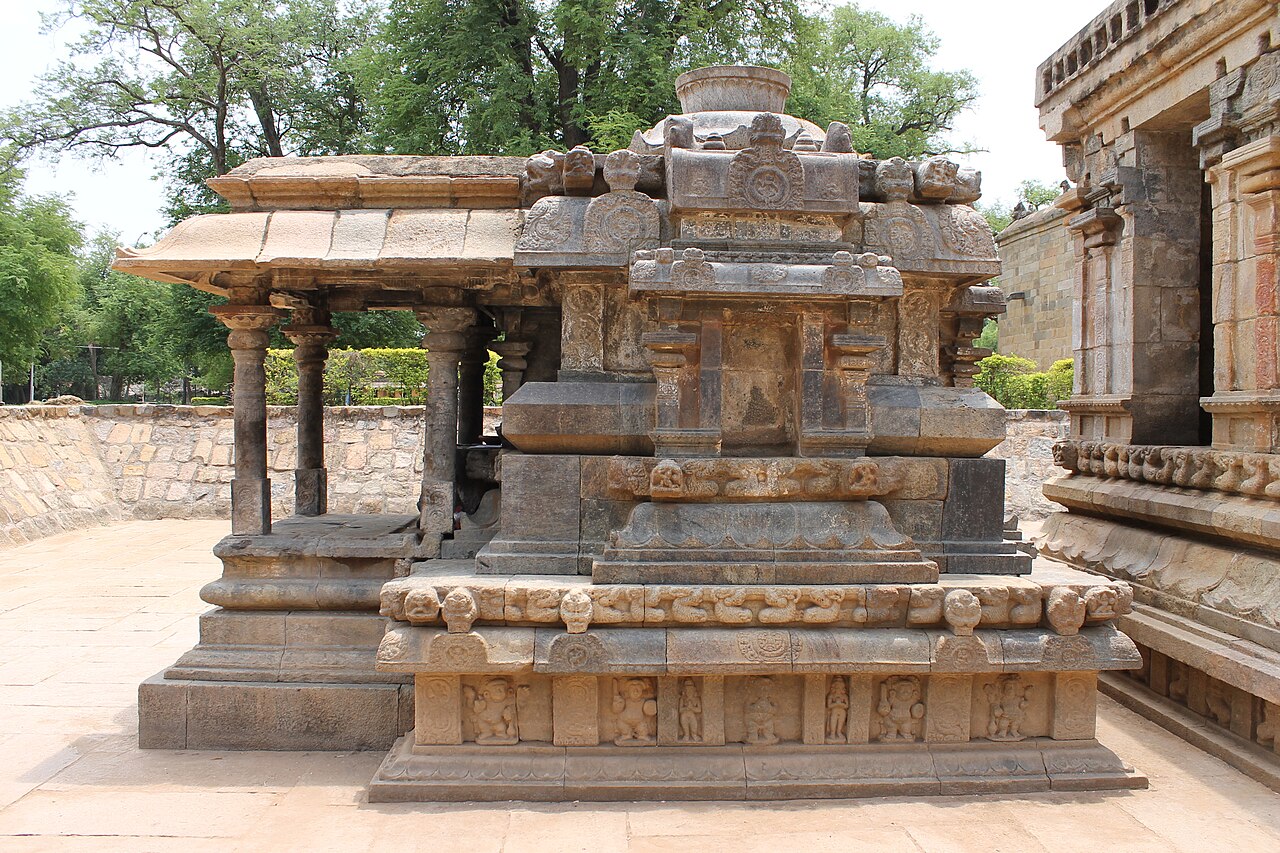
Airavatesvara Temple, Darasuram
Darasuram (Kumbakonam) · India · temple
The third of the Great Living Chola Temples, raised by Rajaraja Chola II around 1166 CE at Darasuram near Kumbakonam: a chariot-form shrine of Lord Shiva as Airavatesvara, famed for its carved stone wheels, its singing steps, and worship that has continued for over eight centuries.
Aisanyesvara Siva Temple
Bhubaneswar · India · temple
A living thirteenth-century Shiva shrine in the Old Town of Bhubaneswar, standing close to the western wall of the great Lingaraj Temple, where a Shivalinga set within a circular yonipitha still receives daily worship in the Kalinga architectural tradition.
 Hinduism
Akhadachandi Temple
Bhubaneswar · India · temple
A tenth-century Kalinga-style shrine on the southwestern bank of Bhubaneswar's sacred Bindusagar tank, Akhadachandi Temple honours Maa Mahishasuramardini, the Goddess in her form as slayer of the buffalo demon, within the dense cluster of ancient shrines that fills the city's Old Town.
 Hinduism
Akshardham
New Delhi · India · temple
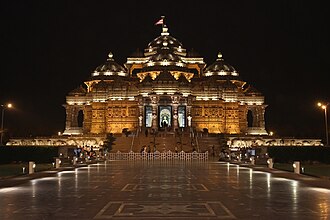
A vast contemporary Hindu mandir campus on the Yamuna's west bank in East Delhi, raised without structural steel by 11,000 artisans and volunteers, and recognised by Guinness World Records in 2007 as the world's largest comprehensive Hindu Temple.
 Hinduism
Amarnath Temple
· India · temple
A high Himalayan cave shrine in Jammu and Kashmir where a naturally forming ice lingam is venerated as Lord Śiva, drawing one of India's great seasonal pilgrimages.
 Hinduism
Ambalappuzha Sri Krishna Temple
Ambalappuzha · India · temple
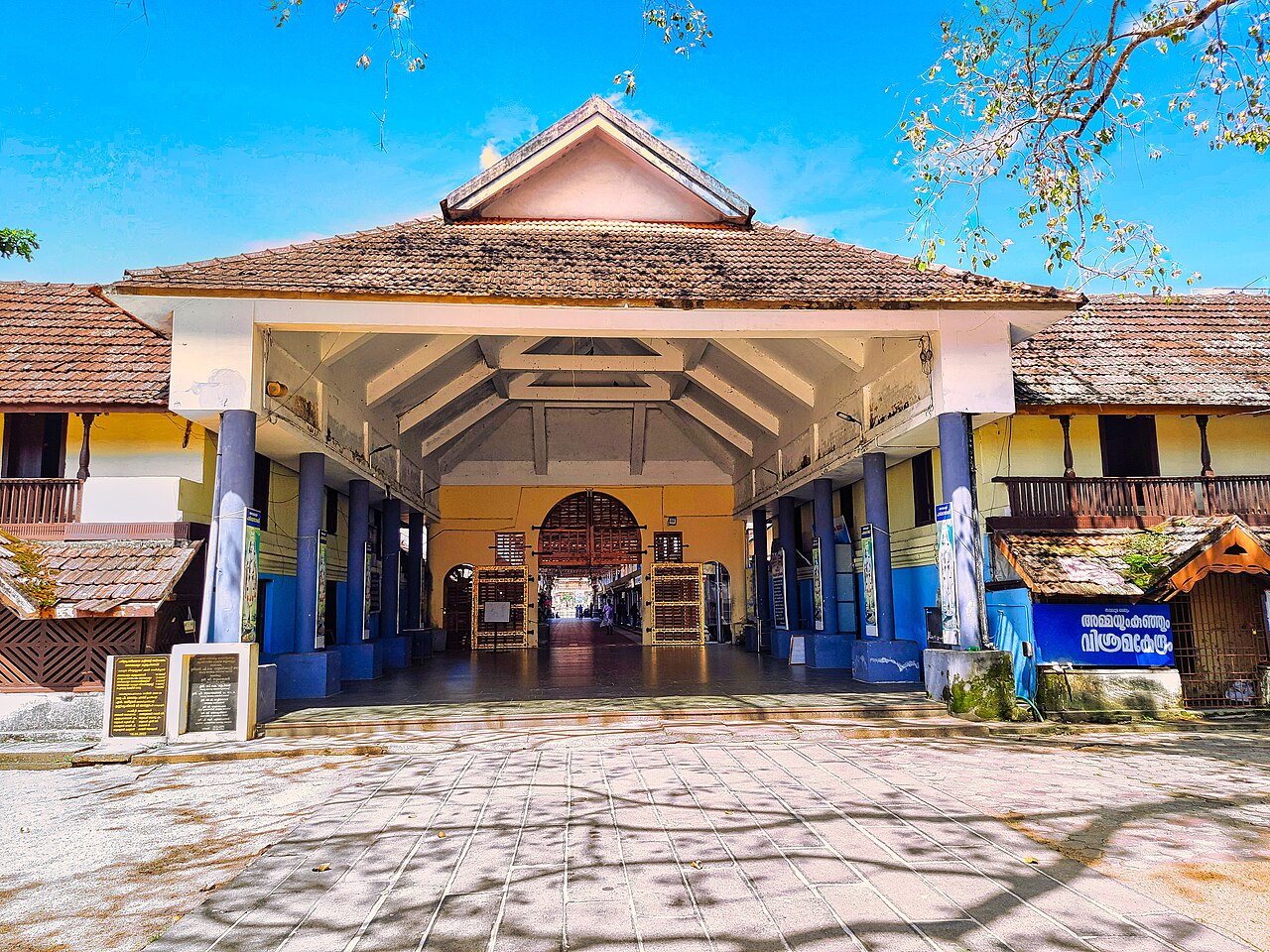
A Vaishnava shrine on the Kerala backwaters consecrated to Sri Krishna in his Parthasarathy form, counted among the seven great Temples of the former kingdom of Travancore and famed across South India for its Ambalapuzha Paal Payasam offering.