
Rukmini Devi Temple
Rukmini Mandir · Rukmani Devi Temple
About
Standing apart from the sacred city of Dwarka by roughly two kilometres, the Rukmini Devi Temple is devoted to Rukmini, revered as Krishna's chief queen and regarded as an embodiment of Goddess Lakshmi herself. The separation between this shrine and the Dwarkadhish Temple at the city's heart is no accident of geography; it reflects a legend of great antiquity that devotees carry in their hearts whenever they visit.
The exterior of the Temple is a testament to the skill of its craftsmen. The tower's base is encircled by sculptural friezes depicting naratharas, rows of human figures, and gajatharas, processional elephants, arranged in horizontal registers that draw the eye upward. The outer walls above are adorned with images of celestial beings and divine forms, creating a surface alive with sacred imagery.
Within the inner sanctum, a four-armed marble image of Rukmini holds the shankha (conch), chakra (discus), gadā (mace), and padma (lotus), the emblems associated with the divine and with Vishnu's cosmic sovereignty. The atmosphere within is one of quiet devotion, the marble idol receiving the prayers of pilgrims who believe that their journey to Dwarka cannot truly be considered complete without standing before Rukmini here.
The Temple is also known for a cherished ritual called jal dāna, the offering of water, in which visiting devotees are invited to contribute water to the Temple, an act that connects the living legend of the site to daily acts of piety.
History
Tradition holds that a shrine to Maa Rukmini has stood near Dwarka since the fifth century BCE, in the age of Krishna himself, though scholars date the Temple's present form to around the twelfth century and the structure seen today to the nineteenth. The Skanda Purana tells why Maa Rukmini is Worshipped apart from Her Lord: when the short-tempered sage Durvasa rode with Krishna and Rukmini to their home and found that She had drunk water before serving him, he cursed the couple to live separately. Maa Rukmini spent twelve years in meditation on this very ground before the curse lifted and She was reunited with Krishna.
Significance
For pilgrims to Dwarka, one of Hinduism's seven sacred cities, a visit to Maa Rukmini's shrine completes the journey to the Dwarkadhish Temple, honouring the divine feminine alongside the divine masculine. Devotees practice jal daan here, offering water to the Temple in quiet memory of the very thirst that once parted Maa Rukmini from Krishna, and carved friezes of naratharas and gajatharas ring the tower's base beneath Her sanctum.
Architecture
Nagara-style Gujarati Temple architecture, with a carved shikhara over sculptural friezes of naratharas and gajatharas, and a domed mandapa with square latticed windows unusual for the style
Visiting
Daily worship
| Darshan | 07:30 to 20:00 |
Hours
Hours not listed.
Contact
No contact details listed yet.
Engage with Rukmini Devi Temple
Through the four pathways
Seva सेवा — Service
Offer your time and skills here. The following opportunities are open at Rukmini Devi Temple:
No Seva offerings listed yet.
Sādhana साधना — Practice
Learn the worship and practice associated with Rukmini Devi Temple:
No Sādhana offerings listed yet.
Sandhāna सन्धान — Wisdom
Unite with the wisdom of this tradition:
No Sandhāna offerings listed yet.
Sādhya साध्य — Giving
Support this sacred place according to your means:
No Sādhya offerings listed yet.
All giving flows directly to Rukmini Devi Temple. Adisthan does not take a commission.
Festivals & Events
- Sept
Krishna Janmashtami
4 September 2026 · annual
The birth anniversary of Lord Krishna, observed at Maa Rukmini's shrine and across the Dwarka pilgrim town with special prayers, devotional song, and cultural performances.
Gallery
Related sacred places
 Hinduism
Airavatesvara Temple, Darasuram
Darasuram (Kumbakonam) · India · temple
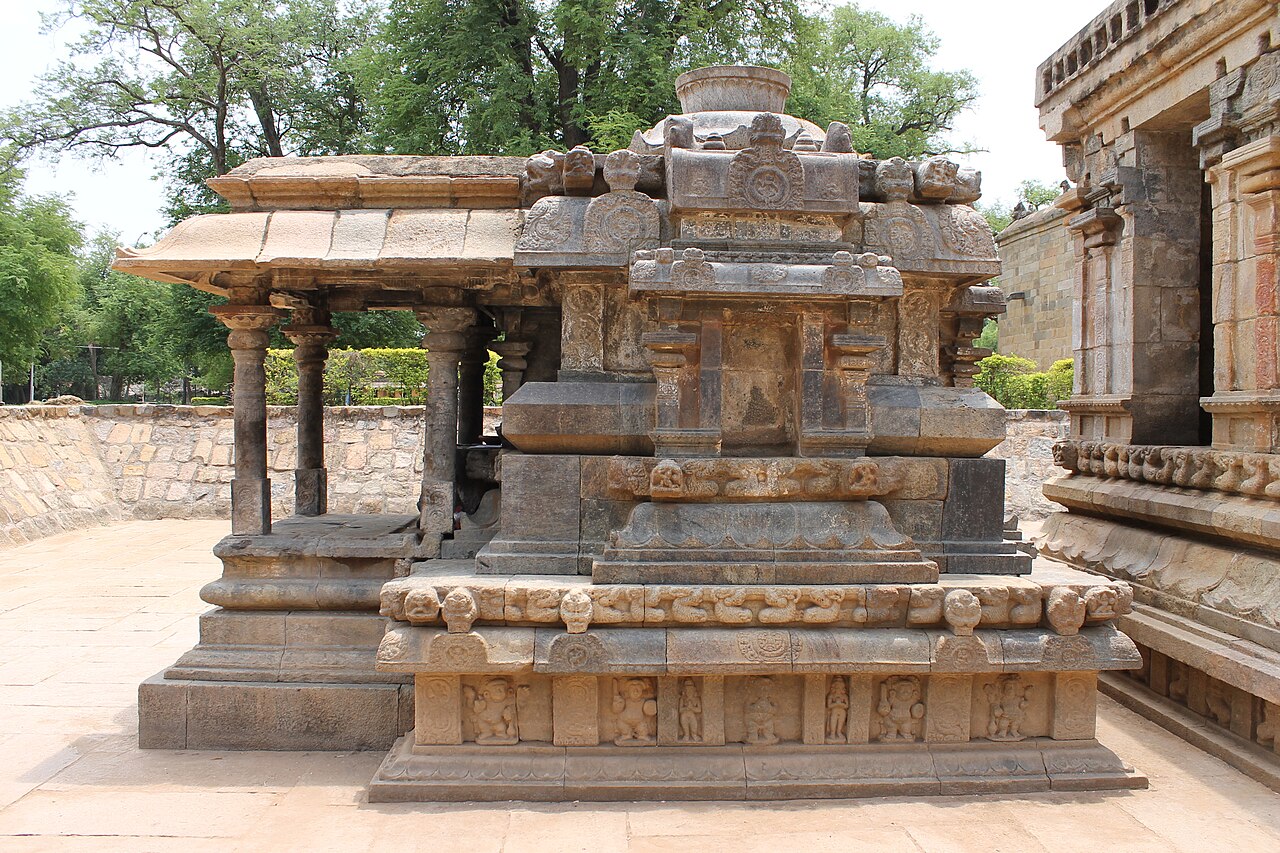
The third of the Great Living Chola Temples, raised by Rajaraja Chola II around 1166 CE at Darasuram near Kumbakonam: a chariot-form shrine of Lord Shiva as Airavatesvara, famed for its carved stone wheels, its singing steps, and worship that has continued for over eight centuries.
Aisanyesvara Siva Temple
Bhubaneswar · India · temple
A living thirteenth-century Shiva shrine in the Old Town of Bhubaneswar, standing close to the western wall of the great Lingaraj Temple, where a Shivalinga set within a circular yonipitha still receives daily worship in the Kalinga architectural tradition.
 Hinduism
Akhadachandi Temple
Bhubaneswar · India · temple
A tenth-century Kalinga-style shrine on the southwestern bank of Bhubaneswar's sacred Bindusagar tank, Akhadachandi Temple honours Maa Mahishasuramardini, the Goddess in her form as slayer of the buffalo demon, within the dense cluster of ancient shrines that fills the city's Old Town.
 Hinduism
Akshardham
New Delhi · India · temple
A vast contemporary Hindu mandir campus on the Yamuna's west bank in East Delhi, raised without structural steel by 11,000 artisans and volunteers, and recognised by Guinness World Records in 2007 as the world's largest comprehensive Hindu Temple.
 Hinduism
Amarnath Temple
· India · temple
A high Himalayan cave shrine in Jammu and Kashmir where a naturally forming ice lingam is venerated as Lord Śiva, drawing one of India's great seasonal pilgrimages.
 Hinduism
Ambalappuzha Sri Krishna Temple
Ambalappuzha · India · temple
A Vaishnava shrine on the Kerala backwaters consecrated to Sri Krishna in his Parthasarathy form, counted among the seven great Temples of the former kingdom of Travancore and famed across South India for its Ambalapuzha Paal Payasam offering.