Every *sankat* carried to this gate has, for five centuries, found somewhere else to go.
Be the first to check in
Coming up: Diwali · 8 NovEntry tended 28 Jun 2026
Open roughly 5 am to 11 pm On the Assi, by the Ganga Besan laddu prasad Hanuman Jayanti · 20 Apr 2027 16th-c. founding, rebuilt c. 1900 Free entry, always
Leave the boulevard behind and the city changes: flower sellers, laddu stalls, red pennants snapping over a courtyard gate crowned with carved peacocks. At the threshold you hand over your phone, your camera, even your watch, a rule the Temple has enforced since the day it proved it needed to. Inside, monkeys doze along the walls and bells answer bells without pause. In a small sanctum a sindoor-red form of Lord Hanuman waits low to the ground, facing His Lord Ram forever. Pilgrims do not come merely to see Him. They come to set something down.
Tradition holds that Goswami Tulsidas, the poet-saint who gave North India its Ramcharitmanas, met Lord Hanuman on this riverbank and raised a shrine at the spot, naming Him sankat mochan, He who releases devotees from trouble. Some accounts add that Tulsidas composed portions of his great poem within these grounds, though most historians place the bulk of that work as begun at Ayodhya.
Every Tuesday and Saturday, Lord Hanuman's own days, the courtyard fills long before dawn. Devotees recite the Hanuman Chalisa, carry home free booklets of the Sundarkand, and many come specifically seeking His help against the difficult influence of Shani, the planet Saturn, in Vedic astrology.
On 7 March 2006 a bomb exploded here during the evening aarti on a Tuesday, killing worshippers gathered for prayer. By the next morning devotees had returned to worship as before, and a police post has stood inside the gate ever since.
The vision on the Assi
Tradition holds that Goswami Tulsidas, the poet-saint whose Ramcharitmanas would become North India's best-loved telling of the Ramayana, was walking the bank of the Assi when Lord Hanuman appeared before him in the guise of an old man. Tulsidas is said to have recognised Him only after he had passed by, and it was here, at the place of that meeting, that he raised a shrine and named Him sankat mochan, the reliever of troubles. Devotees have carried their own sankat to this gate ever since. Some Temple accounts go further and hold that Tulsidas composed portions of the Ramcharitmanas within these same grounds, so that a poem telling of Hanuman's devotion was written, tradition says, under Hanuman's own gaze.
What Tulsidas raised in the sixteenth century was almost certainly a modest shrine, not the courtyard that stands today. Several published Temple histories hold that the present buildings date largely from around 1900, when Pandit Madan Mohan Malviya, the Banaras Hindu University founder and independence leader, oversaw their reconstruction and extension, though this claim rests on secondary accounts rather than the Temple's own primary records. What is well documented is the Temple's modern stewardship: in 1982 its Mahant, Veer Bhadra Mishra, who also headed civil engineering at IIT (BHU), founded the Sankat Mochan Foundation to campaign for the cleaning of the Ganga, work that earned him the United Nations' Global 500 Roll of Honour in 1992 and TIME magazine's Hero of the Planet title in 1999.
The Temple's daily devotion has continued past even its worst day. On 7 March 2006, during the evening aarti of a Tuesday, hundreds of pilgrims were gathered for prayer when a bomb exploded near the Temple's gate, one of three blasts that struck Varanasi that evening. Ten worshippers were killed and dozens more were wounded, some of them wedding guests caught in the crowd. By the following morning, large numbers of devotees had already returned to pray as they always had, and a permanent police post has stood inside the compound ever since. The Temple's memory of that day rests less on grievance than on what happened the next dawn: the bells rang, and people came.
What you'll actually see
1
The gate the monkeys guard
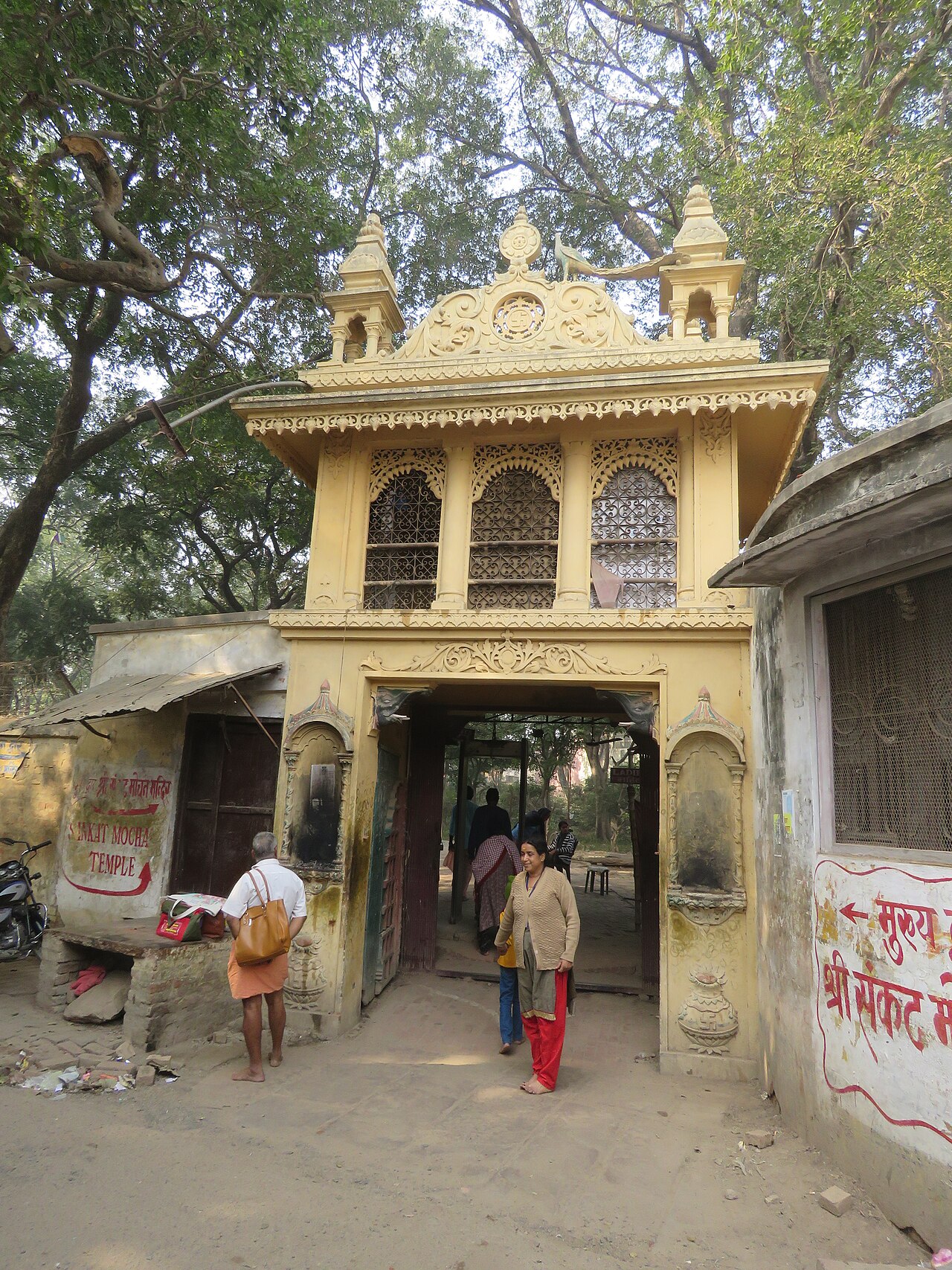
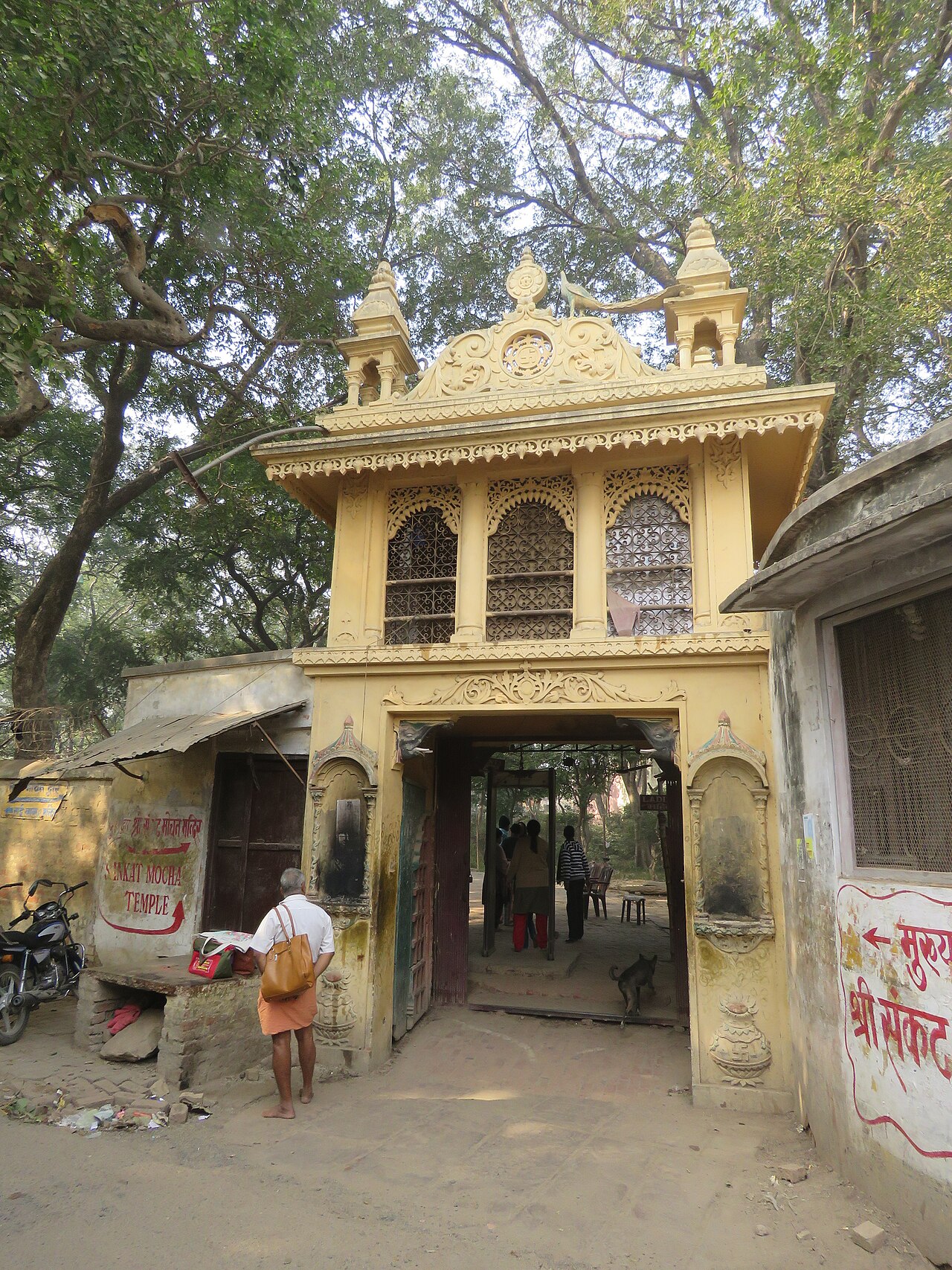
A yellow gateway crowned with carved peacocks and the banner Jai Shri Ram opens onto a paved courtyard lined with laddu stalls and flower sellers. Troupes of monkeys hold the walls and rooftops, alert to any unguarded bag, and devotees learn quickly to carry their prasad close.
2
The counter that remembers 2006
Before the sanctum, a security check and free cloakroom hold every phone, camera, smartwatch and bag; none may pass beyond this point. A uniformed police post has stood inside the compound since the bombing of March 2006, and nearby, free booklets of the Hanuman Chalisa and Sundarkand are handed out for anyone who wants to recite while they wait.
3
The sindoor-bright sanctum
In a small garbhagriha, modest beside the grand Temples of Kashi, the murti of Lord Hanuman stands coated in sindoor and oil, one hand raised in blessing, facing an unseen Lord Ram. Marigolds and besan laddus pile at His feet, replaced through the day as fast as devotees bring them.
The Temple's ornamented yellow entrance gateway, with its Sankat Mochan Temple signboard and an offerings counter beside the stepsDevotees passing through the Temple's entrance gate as one of the resident monkeys crosses the threshold
The temple's ornamented gateway, and devotees (with one of its resident monkeys) at the threshold · photos by Vinayaraj, CC BY-SA 4.0, Wikimedia Commons
THE FESTIVAL FOUND NOWHERE ELSE
Six nights when Kashi's classical music kneels to Hanuman
Every April since 1923, the Temple turns its own courtyard into one of India's most storied classical stages: singers, dancers and instrumentalists, many of them decorated with the Padma awards, perform for free before Lord Hanuman over five or six nights that run from around 7:30 in the evening toward dawn. The 102nd edition, in April 2025, opened with the flautist Pandit Hariprasad Chaurasia, the Temple's own Mahant, Vishwambhar Nath Mishra, keeping rhythm beside him on the pakhawaj; the following year's edition ran from 6 to 11 April 2026. Dates for the next edition are announced only closer to the event, but it falls each year in the weeks around Hanuman Jayanti.
Come for a single evening rather than all six if your visit is brief; seating is on mats in the open courtyard, so bring something to sit on, and the crowd thins only well after midnight.
Plan your visit
By air
Lal Bahadur Shastri International Airport, Babatpur, is about 25 to 30 km away, roughly 50 minutes to an hour by taxi.
Nearby landmarks
The Banaras Hindu University campus is about 3 km away; Varanasi Junction (Cantt) railway station is about 6 km, 20 to 30 minutes by auto-rickshaw.
Timings
Doors open around 5 am and close near 11 pm, with a midday closure roughly 12 to 3 pm; Tuesdays and Saturdays the Temple stays busy well into the evening.
Entry
Free, always; there is no paid or Sugam darshan lane.
Best time
Early weekday mornings are calmest. Tuesdays and Saturdays, Lord Hanuman's own days, draw the largest crowds of the week.
Dress
Modest dress; shoes go into the free cloakroom before the security check.
The security gate
Phones, cameras, smartwatches and bags are barred beyond the checkpoint; use the free lockers and carry only cash and an ID.
Sankat mochan means reliever of troubles; the Temple's whole reputation rests on that promise, kept one Tuesday queue at a time.
The Temple's resident monkeys are quick and used to visitors; hold prasad and bags close, and avoid letting anything dangle from your hands.
Every phone, camera, smartwatch and bag stays at the cloakroom before the sanctum, a rule that has held since a bomb struck the Temple during the evening aarti of 7 March 2006; devotees returned to pray again the very next morning.
Besan laddus sold at stalls just inside the gate are the customary prasad, offered first to Lord Hanuman before being carried home.
Questions pilgrims ask
Is this where Tulsidas wrote the Ramcharitmanas?
Partly, tradition says. Tulsidas is held to have had his vision of Lord Hanuman on this riverbank and raised the shrine here, and some Temple accounts add that he composed portions of the Ramcharitmanas within its grounds. Most historians place the bulk of that epic as begun at Ayodhya, so this page holds the fuller claim as devotional memory rather than settled history.
What happened here in 2006?
On 7 March 2006, a bomb exploded near the Temple gate during the evening aarti on a Tuesday, one of three blasts that struck Varanasi that night. Ten worshippers were killed and dozens more wounded. Devotees returned to worship the very next morning, and a police post has stood inside the gate ever since.
Can I bring my phone or camera inside?
No. Phones, cameras, smartwatches and bags are all held at the free cloakroom before the security check, a rule enforced strictly since 2006. Carry only cash and an ID.
Why do so many people come specifically on Tuesdays and Saturdays?
These are considered Lord Hanuman's own days. Many devotees also come seeking His help against the difficult influence of Shani, the planet Saturn, in Vedic astrology, and the Tuesday evening aarti draws the Temple's largest crowd of the week.
Dharamshalas and guest houses near this Sthan, shared by devotees. Adisthan takes no bookings and no money; contact each stay directly.
No stays are listed here yet. Know one that serves pilgrims well?
Are you a trustee or officer of the Sankat Mochan Foundation serving this Temple? Claim this page to keep timings, festival dates, and the Sangeet Samaroh's own story true for devotees worldwide.