Sasthamcotta Sree Dharma Sastha Temple
Sasthamkotta Sree Dharmasastha Temple · Sastha Temple, Sasthamkotta · ശാസ്താംകോട്ട ശ്രീ ധർമ്മശാസ്താക്ഷേത്രം
About
The Sasthamcotta Sree Dharma Sastha Temple rises beside the broad waters of Sasthamkotta Lake, the most expansive freshwater lake in Kerala, which embraces the Temple precincts on three sides and lends the sanctuary a setting of rare stillness and natural sanctity.
The presiding deity is Shri Dharma Sastha, attended in this shrine by his consort Prabha and their son Sathyaka. As a manifestation that unites the streams of Vaishnava and Saiva devotion, Dharma Sastha is approached here in his benevolent householder aspect rather than the celibate forest form worshipped at neighbouring sites.
Sasthamcotta is counted among the five most ancient Sastha Temples of Kerala, alongside Achankoil, Aryankavu, Kulathupuzha and Sabarimala. Together these sanctuaries map a sacred geography woven through the southern hills and lakes of the state, each shrine reflecting a distinct stage in the life of the deity.
The Temple is also known throughout Kerala for the troops of monkeys who dwell within its precincts and are regarded as holy companions of the shrine. In 1996 a trust was established to ensure these animals continue to be fed when natural forage grows scarce, weaving compassion for living beings into the daily rhythm of worship.
History
Local tradition carries the Temple's story back to the Treta Yuga, holding that Sri Rama, Sita, and Lakshmana rested here on their return from Lanka and that Rama himself offered pithru tharpan, ancestral rites, on the shore of a lake whose waters were held to equal the sanctity of Manasarovar. Rama is said to have entrusted Neelan, chief among his vanara army, to remain and serve the shrine, and devotees hold Neelan's descendants to be the monkeys that still live within the Temple grounds today. A trust was established in 1996 to see that these monkeys are fed even when natural forage runs short.
Significance
Sasthamcotta is counted among the five most ancient Sastha shrines of Kerala, alongside Achankoil, Aryankavu, Kulathupuzha, and Sabarimala, each marking a different stage in the life of Dharma Sastha, and here the deity is approached in his gentler, householder form, attended by his consort Prabha and their son Sathyaka. The Temple's ten-day utsavam each Kumbham month fills the grounds with folk art and kettukazhcha floats before culminating in the araattu, and the shrine's bond with the lake and its sheltered troop of monkeys makes worship at Sasthamcotta feel inseparable from care for the land and its creatures.
Architecture
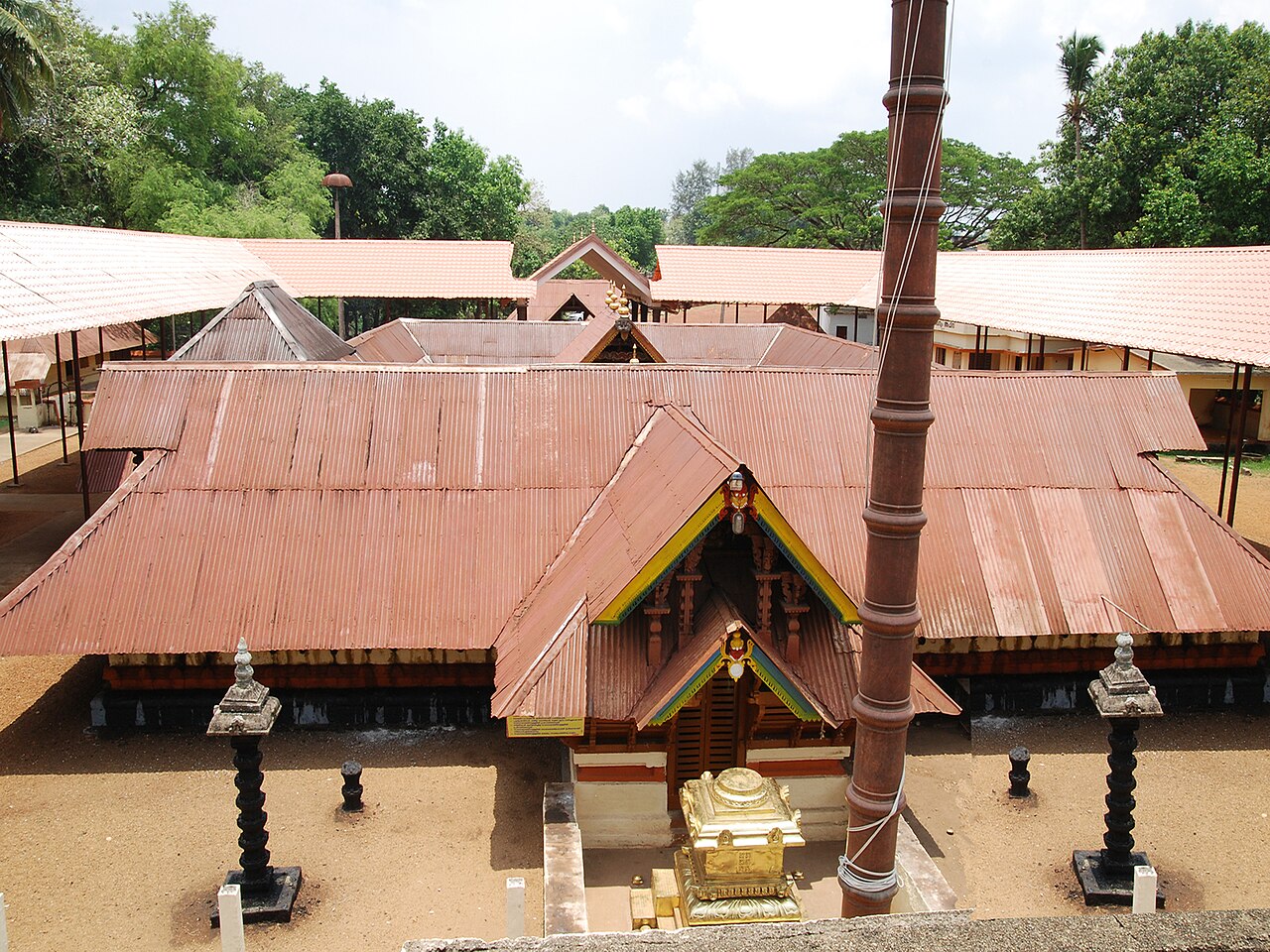
Traditional Kerala Temple architecture, a nalambalam complex beneath sloped tiled roofs
Visiting
Daily worship
| Morning darshan | 05:00 to 11:30 | |
| Evening darshan | 17:00 to 20:00 |
Hours
Hours not listed.
Contact
No contact details listed yet.
Engage with Sasthamcotta Sree Dharma Sastha Temple
Through the four pathways
Seva सेवा — Service
Offer your time and skills here. The following opportunities are open at Sasthamcotta Sree Dharma Sastha Temple:
No Seva offerings listed yet.
Sādhana साधना — Practice
Learn the worship and practice associated with Sasthamcotta Sree Dharma Sastha Temple:
No Sādhana offerings listed yet.
Sandhāna सन्धान — Wisdom
Unite with the wisdom of this tradition:
No Sandhāna offerings listed yet.
Sādhya साध्य — Giving
Support this sacred place according to your means:
No Sādhya offerings listed yet.
All giving flows directly to Sasthamcotta Sree Dharma Sastha Temple. Adisthan does not take a commission.
Festivals & Events
- Aug
Thiruvonam (Onam)
26 August 2026 · annual
Kerala's homecoming festival, marked at the Temple as across the state with special worship on the day the Thiruvonam star is held to bring King Mahabali back among his people.
- Oct
Navaratri
11 October 2026 · annual
Nine nights of worship leading into Vijayadashami, kept at the Temple among its annual religious observances.
Related sacred places
 Hinduism
Airavatesvara Temple, Darasuram
Darasuram (Kumbakonam) · India · temple
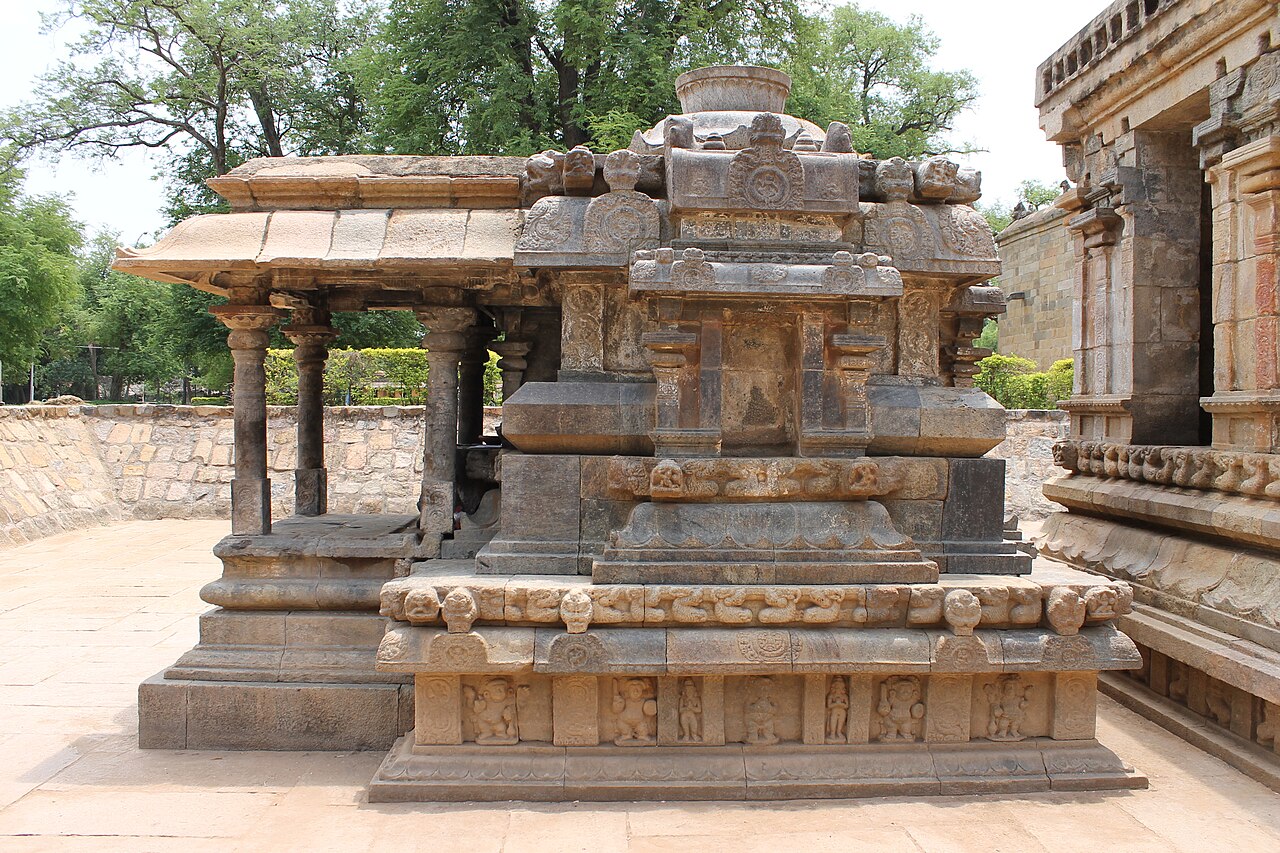
The third of the Great Living Chola Temples, raised by Rajaraja Chola II around 1166 CE at Darasuram near Kumbakonam: a chariot-form shrine of Lord Shiva as Airavatesvara, famed for its carved stone wheels, its singing steps, and worship that has continued for over eight centuries.
Aisanyesvara Siva Temple
Bhubaneswar · India · temple
A living thirteenth-century Shiva shrine in the Old Town of Bhubaneswar, standing close to the western wall of the great Lingaraj Temple, where a Shivalinga set within a circular yonipitha still receives daily worship in the Kalinga architectural tradition.
 Hinduism
Akhadachandi Temple
Bhubaneswar · India · temple
A tenth-century Kalinga-style shrine on the southwestern bank of Bhubaneswar's sacred Bindusagar tank, Akhadachandi Temple honours Maa Mahishasuramardini, the Goddess in her form as slayer of the buffalo demon, within the dense cluster of ancient shrines that fills the city's Old Town.
 Hinduism
Akshardham
New Delhi · India · temple
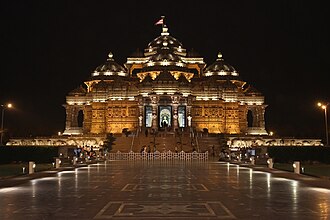
A vast contemporary Hindu mandir campus on the Yamuna's west bank in East Delhi, raised without structural steel by 11,000 artisans and volunteers, and recognised by Guinness World Records in 2007 as the world's largest comprehensive Hindu Temple.
 Hinduism
Amarnath Temple
· India · temple
A high Himalayan cave shrine in Jammu and Kashmir where a naturally forming ice lingam is venerated as Lord Śiva, drawing one of India's great seasonal pilgrimages.
 Hinduism
Ambalappuzha Sri Krishna Temple
Ambalappuzha · India · temple
A Vaishnava shrine on the Kerala backwaters consecrated to Sri Krishna in his Parthasarathy form, counted among the seven great Temples of the former kingdom of Travancore and famed across South India for its Ambalapuzha Paal Payasam offering.